 Quran
Quran
| Key Takeaways |
| Reading Quran strengthens a child’s bond with Allah while building focus, memory, and moral character simultaneously. |
| Children who read Quran regularly develop stronger Arabic literacy skills that support both religious and academic comprehension. |
| Early Quran exposure between ages 4 and 6 takes advantage of peak childhood memorization capacity and language absorption. |
| Consistent Quran reading habits protect children’s Islamic identity while surrounded by competing cultural influences in Western environments. |
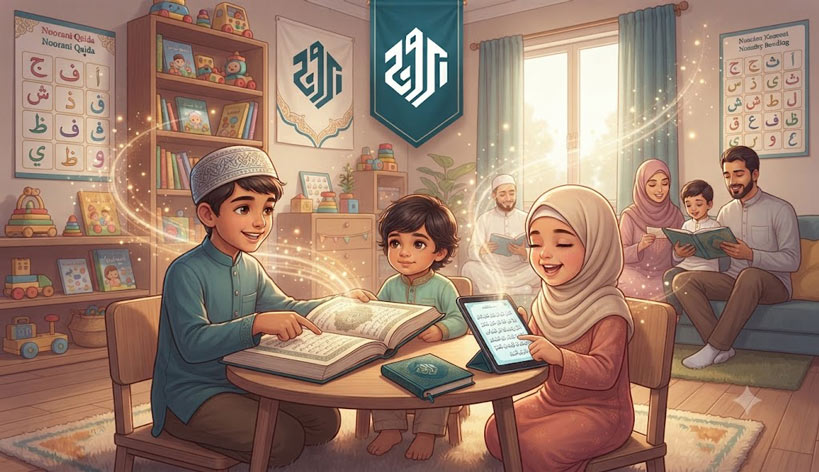
| Reciting Quran together as a family builds emotional security and creates lasting shared spiritual routines at home. |
Many Muslim parents raising children in the West share the same worry: how do we keep our kids connected to the Quran when everything around them pulls in a different direction?
Between school schedules, screen time, and limited access to Arabic-speaking communities, building a lasting relationship with the Quran can feel like an uphill climb.
Reading Quran gives children spiritual grounding, sharper cognitive skills, moral clarity, and a lasting connection to their Islamic identity. These benefits compound when reading starts early and continues consistently through structured, age-appropriate instruction.
Table of Contents:
1. Reading Quran Builds a Child’s Personal Connection with Allah
A child’s relationship with Allah develops through consistent, meaningful contact with His words, and daily Quran reading provides exactly that. Each recitation session becomes a quiet act of worship, one the child returns to repeatedly, deepening their awareness of Allah’s presence in daily life.
We have noticed something specific in our sessions at Buruj Academy: children who read Quran daily, even for just ten minutes, begin asking spontaneous questions about Allah’s names and attributes within a few weeks. This curiosity rarely appears in children who only encounter the Quran occasionally.
Regular reading also normalizes turning to the Quran during ordinary life moments, not only formal prayer times. A child who reads Surah Al-Fatiha before bed or Surah Al-Ikhlas during a car ride starts to see the Quran as accessible rather than distant.
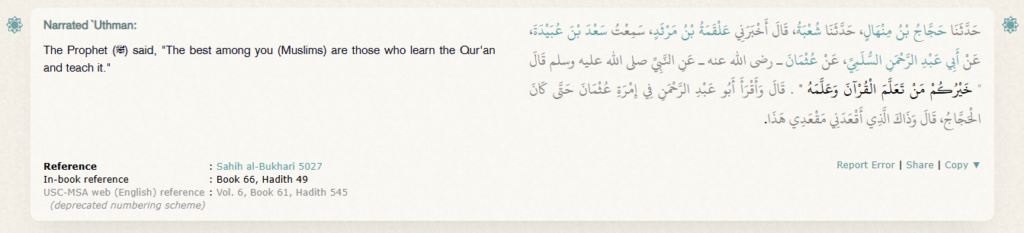
The Prophet Muhammad (ﷺ) emphasized the elevated status given to those engaged with the Quran. As narrated in Sahih al-Bukhari, he said the best among Muslims are those who learn the Quran and teach it — a principle that extends naturally to guiding children.
اِنَّ هٰذَا الْقُرْاٰنَ يَهْدِيْ لِلَّتِيْ هِيَ اَقْوَمُ وَيُبَشِّرُ الْمُؤْمِنِيْنَ الَّذِيْنَ يَعْمَلُوْنَ الصّٰلِحٰتِ اَنَّ لَهُمْ اَجْرًا كَبِيْرًا
Inna hazal-Qur’ana yahdi lillati hiya aqwamu wa yubashshirul-mu’mininal-lazina ya’maloonas-saalihaati anna lahum ajran kabeera
“Indeed, this Quran guides to that which is most suitable and gives good tidings to the believers who do righteous deeds that they will have a great reward.” (Al-Isra 17:9)
The Quran’s foundational role as a direct source of guidance—a concept simplified for children by connecting daily reading to “Allah’s own instructions for how to live.”
Parents seeking structured support for this early bond often find that our Online Quran Classes for Kids provide the consistency young learners need.
Personalized 1-on-1 sessions help children build a genuine relationship with the Quran rather than treating it as a school subject.
Help your child start learning the Quran with a FREE trial
2. Reading Quran Sharpens Children’s Memory and Concentration Skills
Quran reading strengthens working memory and sustained attention because Arabic recitation demands precise sound recognition, sequencing, and recall simultaneously. These three cognitive processes activate together during every reading session, creating repeated mental exercise.
Children processing unfamiliar Arabic phonetics build neural pathways differently than those reading only their native language. This dual-language engagement is documented to support broader cognitive flexibility during early childhood development stages.
We consistently observe this pattern in our classrooms. Students who read Quran daily for several months typically show improved ability to memorize school material, spelling lists, and multiplication tables compared to before starting.
This happens because Quran reading trains a specific memory muscle: holding multiple new sounds in sequence while connecting them to meaning. That skill transfers directly to other academic memorization tasks children face.
Read also:Quranic Studies for Children Online
| Cognitive Skill | How Quran Reading Builds It | Observable Age Range |
| Working memory | Holding verse sequences while recalling meaning | 5–9 years |
| Sustained attention | Maintaining focus through longer recitation passages | 7–12 years |
| Phonetic discrimination | Distinguishing similar Arabic letter sounds | 4–7 years |
| Sequential recall | Remembering verse order across a surah | 6–10 years |
Table: Cognitive development patterns commonly observed as children progress through structured Quran reading.
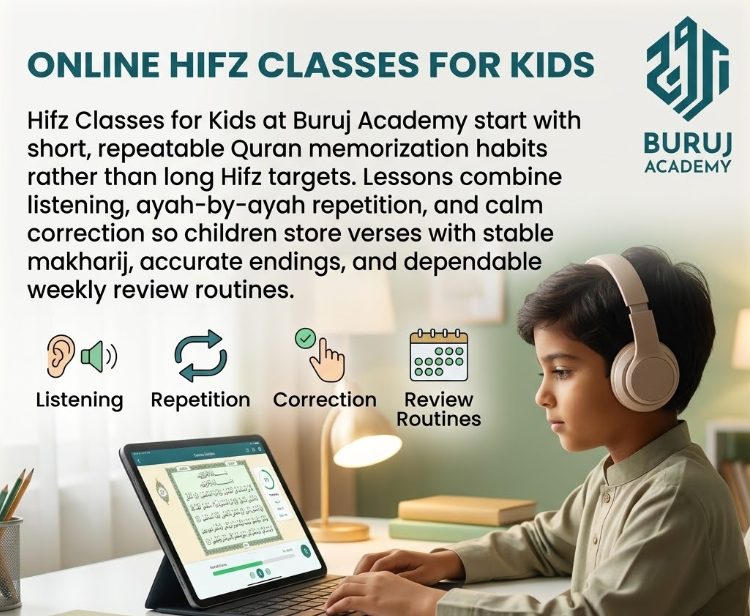
Parents interested in structured memory-building alongside recitation often explore our Hifz for Kids program, which uses age-appropriate techniques and gamified review to reinforce retention without overwhelming young learners.
Start your child’s Hifz classes with a FREE session
3. Quran Reading Instills Core Islamic Moral Values in Children
Regular Quran reading exposes children to concrete moral instruction — honesty, patience, kindness, and justice — embedded directly within the verses they read. Unlike abstract lessons, these values arrive through stories and direct commands children encounter repeatedly.
Children absorb values through repetition far more effectively than through single conversations. A child who reads verses about honesty weekly internalizes the concept differently than one who hears “be honest” said once.
The Quran’s narrative sections particularly reinforce this. Stories of the Prophets model specific character traits in action rather than presenting values as disconnected rules to memorize.
Parents can reinforce this pattern by pairing daily Quran reading with related Islamic topics for kids and youth that expand on the values encountered in recitation.
We often remind parents that character formation through Quran reading compounds slowly. A single session teaches little, but three years of consistent reading shapes a child’s instinctive moral compass in ways formal lecturing rarely achieves.
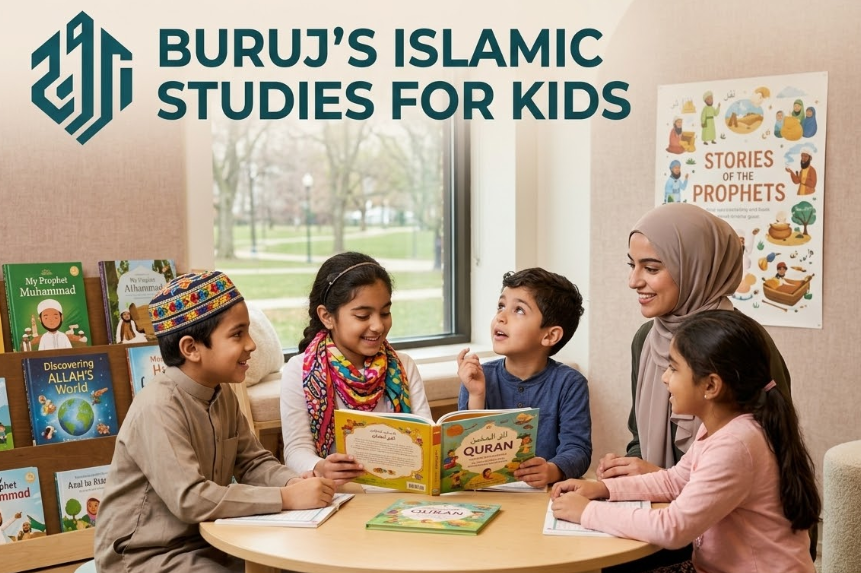
Our online Islamic studies classes for kids complement recitation by helping children understand the meaning and context behind the values they encounter in their daily reading.
The first session is free in Buruj’s Islamic Studies Classes for Kids
Discover the Buruj Academy Difference
Step into our virtual classrooms and see how our expert instructors make learning Quran and Arabic intuitive and clear. We focus on overcoming the specific hurdles non-native speakers face, building your confidence and connection with the Quran
Excel in Your Quranic Studies
Join Buruj Academy and master the Quran with our structured, professional curriculum.
Book Your Free Trial4. Reading Quran Strengthens Children’s Arabic Language Foundation
Quran reading builds Arabic literacy by exposing children to letter forms, diacritical marks, and root-word patterns through repeated visual and phonetic contact. This foundation supports both religious recitation and broader Arabic language acquisition simultaneously.
Children who read Quran regularly typically recognize Arabic script faster than peers who only study Arabic through textbooks alone. The repetitive structure of Quranic Arabic reinforces letter recognition through genuine context rather than isolated drills.
This matters significantly for non-Arabic speaking families. Many parents in Western countries worry their children will never gain real comfort with Arabic script, yet daily Quran reading provides consistent, low-pressure exposure.
Read also:Best Quran Recitations by Kids
How Does Quran Reading Compare to Standalone Arabic Study for Kids?
Quran reading and standalone Arabic lessons serve complementary but distinct purposes for language development. Quran reading builds recognition through spiritual repetition, while structured Arabic classes explain grammar rules and conversational vocabulary explicitly.
| Approach | Primary Strength | Best Used For |
| Quran reading alone | Phonetic exposure, script familiarity | Building reading fluency and reverence |
| Structured Arabic classes | Grammar rules, vocabulary, sentence construction | Comprehension and conversational ability |
| Combined approach | Reinforces both fluency and understanding | Long-term retention and confidence |
Table: Comparing Quran reading and formal Arabic instruction for children’s language development.
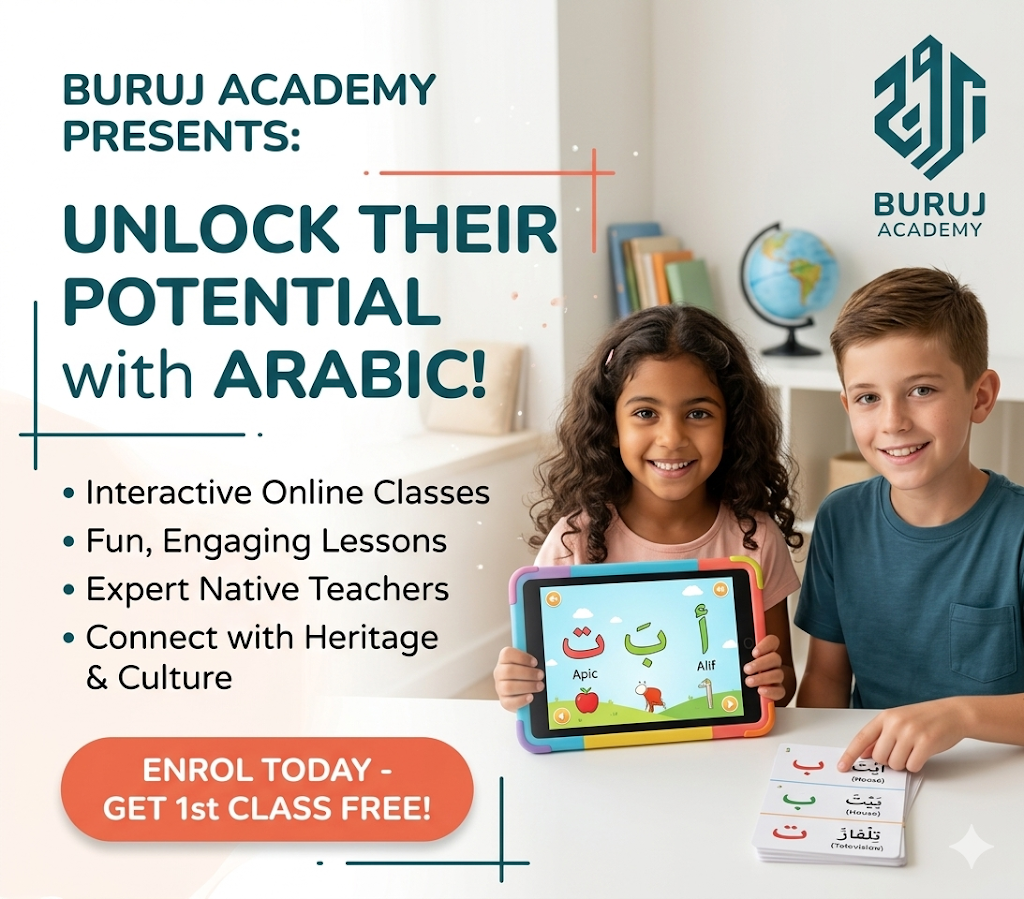
Combining both approaches produces the strongest outcomes. Our online Arabic classes for kids use the context-before-abstraction method, helping children connect the letters they see in Quran reading to meaningful words and phrases from day one.
Book a FREE Arabic trial for your Child
5. Quran Reading Provides Emotional Comfort and Stability for Children
Children who read Quran regularly report greater emotional calm, largely because recitation introduces a rhythmic, meditative structure to their day. The repeated cadence of Quranic Arabic has a naturally soothing effect distinct from ordinary reading.
This calming effect becomes especially valuable during stressful periods — exam weeks, family transitions, or the general anxieties children experience growing up. A consistent Quran reading routine offers an anchor point regardless of external circumstances.
We have seen this pattern repeatedly with anxious young learners. Children who initially struggle to sit still for five minutes often settle into calm focus once Quran reading becomes a predictable daily ritual rather than an occasional task.
Establishing this routine early prevents Quran reading from feeling like a chore introduced only during difficult moments. Consistency built during calm periods pays off when children need that stability most.
Parents can explore how to make reading Quran fun for kids to build positive associations before relying on the routine for emotional support.
6. Reading Quran Protects Children’s Islamic Identity in Western Environments
Consistent Quran reading gives Muslim children a daily point of connection to their faith identity, countering the constant cultural pressure to blend in or minimize their Islamic practice. This matters intensely for families raising children outside majority-Muslim countries.
Children who lack regular religious touchpoints often struggle with identity confusion during adolescence, unsure how their faith fits alongside their broader social environment. Daily Quran reading interrupts that drift before it takes hold.
We regularly hear this concern directly from parents at Buruj Academy: they fear their children will feel embarrassed by their faith once school social pressures intensify. Establishing Quran reading as a normal, non-negotiable part of daily life earlier reduces this risk substantially.
This identity anchor becomes particularly important as children encounter and process how Islamic identity can be maintained for kids growing up in environments where their peers may not share the same religious practices.
7. Family Quran Reading Sessions Build Stronger Parent-Child Bonds
Reading Quran together as a family creates dedicated connection time built around shared spiritual purpose rather than everyday logistics or screen-based entertainment. This shared ritual strengthens the parent-child relationship in ways separate from typical daily interactions.
Children remember these sessions distinctly precisely because they differ from ordinary parenting moments like homework help or bedtime routines. The spiritual weight of the activity elevates its emotional significance in a child’s memory.
We frequently hear from parents that children specifically request their Quran reading time together, treating it as protected, valued time rather than an obligation. This reaction rarely happens with schoolwork-related activities.
This bonding compounds over years. Families who maintain weekly or daily Quran reading sessions consistently report their children associating the practice with warmth and security rather than pressure.
Introducing the best Quran Tafseer for kids alongside family reading sessions can deepen these conversations, giving parents accessible material to discuss meaning together with their children.
Read also:Quran Verses About Children
Learn Quran Reading with Buruj Academy’s Expert Instructors
Every benefit above depends on consistent, correctly guided reading — something self-study rarely achieves for young children learning independently. Structured instruction from qualified teachers makes the difference between sporadic effort and lasting connection to the Quran.
Buruj Academy’s Online Quran Classes for Kids deliver exactly this structure. Our Ijazah-certified instructors and Al-Azhar University graduates bring over 12 years of experience teaching non-Arabic speaking children worldwide.
We apply the Buruj Method — sound-before-rules, patience-before-performance — through personalized 1-on-1 sessions tailored to your child’s age and learning pace.
Flexible 24/7 scheduling fits any family’s routine, with real-time correction ensuring proper habits form early.
Book a free trial lesson today and give your child a lasting foundation with the Quran, guided by instructors who understand exactly what young learners need to succeed.
Take the next step in your learning journey today by enrolling in one of our specialized programs:
- Online Quran Classes
- Online Quran Classes for Beginners
- Online Quran Classes for Adults
- Online Quran Classes for Ladies
- Online Quran Classes for Kids
- Quran Reading Course
- Quran Recitation Course
- Online Ijazah Course
- Online Qirat Course
Don’t wait to transform your relationship with the Holy Quran. Join our global community of students and book your free evaluation session now!
Discover the Buruj Academy Difference
Step into our virtual classrooms and see how our expert instructors make learning Quran and Arabic intuitive and clear. We focus on overcoming the specific hurdles non-native speakers face, building your confidence and connection with the Quran.
Excel in Your Quranic Studies
Join Buruj Academy and master the Quran with our structured, professional curriculum.
Book Your Free TrialConclusion
Raising a child with a genuine love for the Quran rarely happens by accident; it grows from small, repeated moments of guided reading built into everyday family life. The cognitive, emotional, and spiritual advantages outlined here reinforce one another, meaning consistency matters more than intensity.
Parents who start early and stay patient through the inevitable challenges — restlessness, mispronunciation, distraction — give their children something that compounds for a lifetime. What begins as a daily habit gradually becomes an inseparable part of a child’s identity and character.
Frequently Asked Questions About Reading Quran for Kids
How Can I Encourage My Children to Read the Quran?
Encourage consistency over intensity by scheduling short, predictable daily sessions rather than occasional long ones. Pair reading with positive reinforcement, family participation, and engaging Quranic games and activities to build enthusiasm naturally over time.
Why Have Kids Read the Quran in Arabic?
Reading in Arabic preserves the Quran’s original meaning, rhythm, and linguistic precision, which translations cannot fully replicate. It also builds authentic Arabic literacy skills and connects children directly to the language their faith’s primary text was revealed in.
What Is the Best Age to Start Teaching Kids to Read the Quran?
Most instructors recommend introducing basic Quran reading between ages 4 and 6, when children show strong receptiveness to letter recognition and repetition. Formal structured lessons typically begin once a child demonstrates consistent attention and basic speech comprehension.
Does Reading Quran Help with a Child’s Behavior?
Many parents and instructors observe improved patience and emotional regulation in children who read Quran consistently, largely due to the calming rhythm of recitation. This effect strengthens with routine rather than appearing after a single session.
Should Non-Arabic Speaking Parents Read Quran with Their Kids?
Yes, parental involvement remains valuable even without fluent Arabic, since reading together models commitment and creates shared spiritual routine. Enrolling in structured lessons designed for non-Arabic speaking kids helps parents support their children’s progress more effectively.