 Quran
Quran
| Key Takeaways |
| The Quran names children as “adornment” (zeenah) in 18:46, warning that lasting good deeds outweigh this worldly attachment. |
| Surah At-Tahrim 66:6 commands parents to actively protect their families from Hellfire through structured religious guidance. |
| Luqman’s advice to his son in 31:13 models how parents should introduce Tawhid before any other lesson. |
| Surah Al-Ahqaf 46:15 quantifies a mother’s pregnancy and nursing hardship at thirty months, establishing her elevated status. |
| Surah Al-Furqan 25:74 teaches parents to pray specifically for righteous children who become “comfort of our eyes.” |
Raising a child who loves the Quran while living far from the Arabic-speaking world brings a specific kind of pressure. Many parents in the West quietly wonder whether their efforts are even rooted in anything the Quran itself commands.
The Quran addresses children directly across at least seven distinct verses, covering their worldly value, a parent’s spiritual duty toward them, and the exact prayers parents should make on their behalf. These verses form a complete framework for raising Muslim children with clarity rather than guesswork.
Table of Contents:
1. Children Are Described in a Quranic Verse as an Adornment of This Worldly Life
Surah Al-Kahf 18:46 states plainly that wealth and children are temporary adornments of this life, while lasting good deeds carry far greater weight with Allah.
This is not a dismissal of children’s worth but a recalibration of where a parent’s deepest hope should rest.
الْمَالُ وَالْبَنُونَ زِينَةُ الْحَيَاةِ الدُّنْيَا وَالْبَاقِيَاتُ الصَّالِحَاتُ خَيْرٌ عِندَ رَبِّكَ ثَوَابًا وَخَيْرٌ أَمَلًا
Al-mālu wal-banūna zīnatul-ḥayātid-dunyā wal-bāqiyātuṣ-ṣāliḥātu khayrun ‘inda Rabbika thawāban wa khayrun amalā
“Wealth and children are [but] adornment of the worldly life. But the enduring good deeds are better to your Lord for reward and better for [one’s] hope.” (Al-Kahf 18:46)
This verse pairs zeenah, meaning “adornment” or “ornament,” with wealth, placing children in the same category of worldly attachment that requires spiritual balance.
In our sessions at Buruj Academy, we often meet parents who feel guilty for finding joy in their children, worried this contradicts piety. This verse resolves that tension directly. Loving your children is natural; the verse simply redirects ultimate hope toward lasting righteous deeds, of which raising a Quran-literate child is itself one.
Parents pursuing this balance benefit from structured Quran instruction rather than piecing together lessons alone.
Buruj Academy’s Online Quran Classes for Kids use age-appropriate gamification so children encounter the Quran as a source of joy, not obligation.
| Worldly Adornment | Lasting Good Deed |
| Children’s presence and companionship | Raising a child to recite and understand Quran |
| Family wealth and comfort | Charity given consistently over years |
| Social status through offspring | A child’s du’a for parents after their passing |
Help your child start learning the Quran with a FREE trial
2. Quran Verse Command Parents to Protect Their Families from Hellfire
Surah At-Tahrim 66:6 instructs believers to guard themselves and their families from a Fire whose fuel is people and stones. This is a direct command, not a suggestion, placing an active parenting duty on every believing household.
يَا أَيُّهَا الَّذِينَ آمَنُوا قُوا أَنفُسَكُمْ وَأَهْلِيكُمْ نَارًا وَقُودُهَا النَّاسُ وَالْحِجَارَةُ
Yā ayyuhal-ladhīna āmanū qū anfusakum wa ahlīkum nāran waqūduhan-nāsu wal-ḥijārah
“O you who have believed, protect yourselves and your families from a Fire whose fuel is people and stones.” (At-Tahrim 66:6)
The verb “qū” derives from wiqāyah, meaning active protection or shielding, indicating parents must take deliberate steps rather than hope children absorb faith passively.
We consistently observe that non-Arabic speaking parents assume Islamic identity will transfer naturally through home environment alone. This verse states otherwise. Protection requires deliberate teaching, correction, and structured religious education from early childhood.
Systematic Tajweed and Quran instruction becomes one practical fulfillment of this verse’s command.
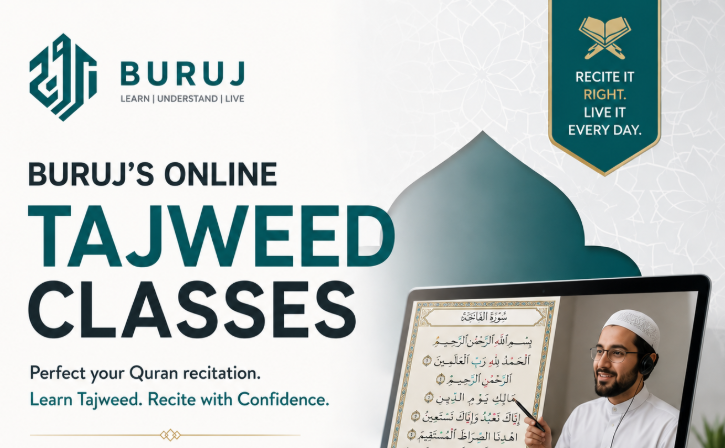
Through Buruj Academy’s Online Tajweed Classes, children learn correct recitation under Ijazah-certified instructors, building the foundation this verse demands parents establish. Read more on how to teach Islam to a child for a fuller framework.
Book Your FREE Trial Lesson to Begin Your Tajweed Journey
Surah Al-Furqan 25:74 teaches the prayer asking Allah for offspring who become “comfort of our eyes.” This supplication is widely memorized by parents seeking righteous, God-conscious children.
Discover the Buruj Academy Difference
Step into our virtual classrooms and see how our expert instructors make learning Quran and Arabic intuitive and clear. We focus on overcoming the specific hurdles non-native speakers face, building your confidence and connection with the Quran
Excel in Your Quranic Studies
Join Buruj Academy and master the Quran with our structured, professional curriculum.
Book Your Free TrialRead also:6 Quranic Principles for Disciplining a Child
3. Luqman’s Advice in the Quran Shows Parents What the First Lesson Should Be
Surah Luqman 31:13 records the wise man Luqman instructing his son that associating partners with Allah is a great injustice. This verse establishes Tawhid, belief in Allah’s oneness, as the foundational lesson before any other Islamic teaching.
يَا بُنَيَّ لَا تُشْرِكْ بِاللَّهِ إِنَّ الشِّرْكَ لَظُلْمٌ عَظِيمٌ
Yā bunayya lā tushrik billāhi innash-shirka lazhulmun ‘aẓīm
“O my son, do not associate [anything] with Allah. Indeed, association [with him] is great injustice.” (Luqman 31:13)
The diminutive “yā bunayya” carries deep tenderness in Arabic, showing that firm theological correction and parental warmth are not contradictory but complementary.
Students who begin Quran memorization without first understanding Tawhid often recite beautifully while missing the meaning entirely. Our instructors prioritize meaning-based learning from day one, following the same sequence Luqman modeled for his son.
This sequencing matters especially for children raised outside Arabic-speaking countries, where Tawhid concepts require deliberate explanation rather than cultural osmosis.
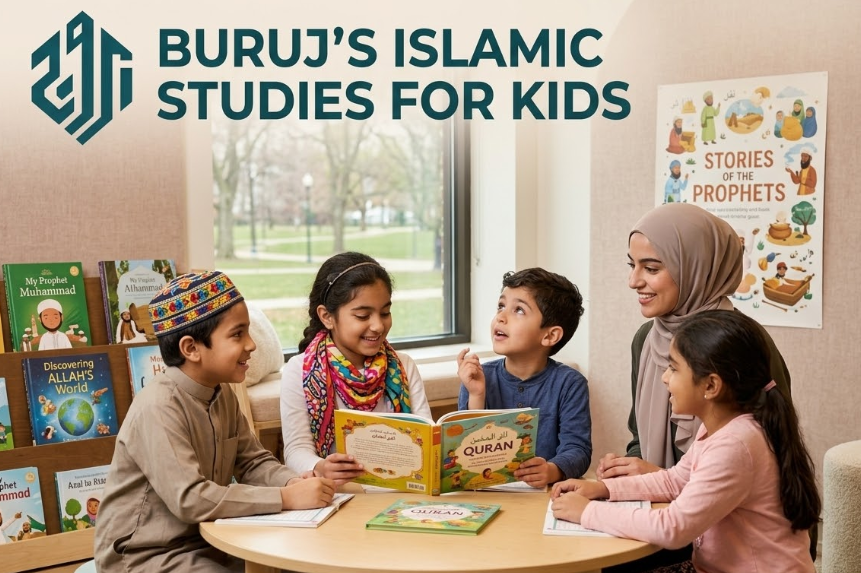
Buruj Academy’s Islamic Studies Classes for Kids build this foundation systematically, pairing core beliefs with age-appropriate examples. For further reading, explore Islamic topics for kids and youth.
The first session is free in Buruj’s Islamic Studies Classes for Kids
Common Misstep Parents Make
Many parents delay theological conversations, assuming children are “too young” for concepts like Tawhid. Luqman’s example shows the opposite; wisdom-based instruction begins early, wrapped in love rather than lecture.
Read also:The Revelation of the Quran for Kids
4. A Mother’s Hardship in Raising Children Is Quantified Precisely in Quranic Verses
Surah Al-Ahqaf 46:15 states that a mother’s pregnancy and weaning period together total thirty months, a specific figure establishing the depth of maternal sacrifice. This verse commands children to show good treatment toward parents in direct response to this hardship.
حَمَلَتْهُ أُمُّهُ كُرْهًا وَوَضَعَتْهُ كُرْهًا وَحَمْلُهُ وَفِصَالُهُ ثَلَاثُونَ شَهْرًا
Ḥamalat-hu ummuhū kurhan wa waḍa’at-hu kurhan wa ḥamluhū wa fiṣāluhū thalāthūna shahrā
“His mother carried him with hardship and gave birth to him with hardship, and his gestation and weaning [period] is thirty months.” (Al-Ahqaf 46:15)
Classical scholars cross-reference this verse with Al-Baqarah 2:233, which sets full weaning at two full years, allowing jurists to calculate a minimum viable pregnancy term of six months.
We teach this verse to parents specifically because it reframes discipline conversations at home. When children understand the numeric weight of their mother’s sacrifice, gratitude becomes concrete rather than abstract.
This verse also reminds parents that their own effort in raising children mirrors a sacred pattern already honored in the Quran. Consistency matters more than perfection, a principle central to Buruj Academy’s Hifz for Kids program, which builds memorization habits gradually rather than through pressure. See our guide on the importance of memorizing Quran for kids for supporting context.
5. Parents Are Taught in Quranic Verses to Pray for Children Who Bring Comfort to Their Eyes
Surah Al-Furqan 25:74 records the prayer of Allah’s righteous servants asking for spouses and offspring who become “comfort of our eyes.” This phrase describes a specific kind of contentment reserved for witnessing a child’s righteousness firsthand.
رَبَّنَا هَبْ لَنَا مِنْ أَزْوَاجِنَا وَذُرِّيَّاتِنَا قُرَّةَ أَعْيُنٍ وَاجْعَلْنَا لِلْمُتَّقِينَ إِمَامًا
Rabbanā hab lanā min azwājinā wa dhurriyyātinā qurrata a’yunin waj’alnā lil-muttaqīna imāmā
“Our Lord, grant us from among our wives and offspring comfort to our eyes and make us an example for the righteous.” (Al-Furqan 25:74)
(Qurrata a’yun literally means “coolness of the eyes,” an Arabic idiom for deep contentment, distinct from mere pride in a child’s worldly achievements.)
This is one prayer we actively encourage parents to memorize and repeat, especially during difficult parenting seasons. It shifts focus from outcomes parents cannot control toward a sincere request Allah has promised to answer.
Children raised with consistent Quranic grounding are more likely to become sources of this described comfort.
Explore how to make reading Quran fun for kids for practical activity ideas.
6. Zakariya’s Prayer Models How to Long for Righteous Offspring
Surah Al-Anbiya 21:89 records Prophet Zakariya’s supplication asking Allah not to leave him without an heir, despite his advanced age. This verse teaches that desiring righteous children is a Prophetic quality, not a worldly weakness to suppress.
رَبِّ لَا تَذَرْنِي فَرْدًا وَأَنتَ خَيْرُ الْوَارِثِينَ
Rabbi lā tadharnī fardan wa anta khayrul-wārithīn
“My Lord, do not leave me alone [with no heir], while you are the best of inheritors.” (Al-Anbiya 21:89)
Zakariya’s prayer was answered with Yahya, a Prophet himself, showing that sincere du’a for righteous offspring can yield results beyond a parent’s own expectations.
Parents facing fertility struggles or raising an only child often find comfort in this specific supplication. It validates the emotional weight of wanting a righteous legacy without framing that desire as spiritually deficient.
For parents already raising children, this verse reframes the goal: righteousness matters more than mere presence of offspring.
Read also:Quranic Studies for Children Online
Build Your Child’s Quran Foundation with Buruj Academy’s Expert Instructors
These verses show that raising righteous children is both a command and a supplication, requiring structured effort alongside sincere prayer.
Buruj Academy helps parents fulfill this responsibility through Ijazah-certified instructors and Al-Azhar University graduates with 12+ years teaching non-Arabic speakers globally.
Our Buruj Method applies sound-before-rules pedagogy, ensuring children build authentic connection to Quran before memorizing abstract rules.
Every Online Quran Classes for Kids session offers personalized learning plans, real-time correction, and flexible 24/7 scheduling for families anywhere in the world.
Book a free trial lesson today and let our teachers help your child become the comfort of your eyes that Surah Al-Furqan describes.
Discover Quran Verses About Children with authentic Quranic verses, meanings, parenting lessons, and duas for raising righteous children.
Take the next step in your learning journey today by enrolling in one of our specialized programs:
- Online Quran Classes
- Online Quran Classes for Beginners
- Online Quran Classes for Adults
- Online Quran Classes for Ladies
- Online Quran Classes for Kids
- Quran Reading Course
- Quran Recitation Course
- Online Ijazah Course
- Online Qirat Course
Don’t wait to transform your relationship with the Holy Quran. Join our global community of students and book your free evaluation session now!
Ready to elevate your spiritual journey from the comfort of your home?
At Buruj Academy, we offer a comprehensive range of programs designed to bring the beauty of the Quran into your daily life, regardless of your age or current level. Whether you are seeking a supportive environment for sisters, a fun and engaging curriculum for your children, or a structured path toward professional certification, our expert instructors provide personalized guidance to help you reach your goals with confidence and clarity.
Excel in Your Quranic Studies
Join Buruj Academy and master the Quran with our structured, professional curriculum.
Book Your Free TrialRead also:The Benefits of Reading Quran for Kids
Conclusion
These seven verses reveal a complete Quranic vision for children: they are cherished blessings, yet a parent’s ultimate hope must rest in lasting righteous deeds rather than worldly attachment alone. Protection from harm, early Tawhid instruction, and sincere prayer for righteousness together form the framework Allah has outlined for every family.
Raising children within this framework does not require perfection, only consistent, deliberate effort paired with trust in Allah’s promise. Every verse examined here offers both practical guidance and emotional reassurance for parents navigating this responsibility far from Arabic-speaking communities.
Frequently Asked Questions About Quran Verses on Children
What Does the Quran Say About Loving Your Children?
The Quran validates parental love while cautioning against making children the ultimate source of hope, as seen in Surah Al-Kahf 18:46. Surah Al-Furqan 25:74 further encourages parents to pray specifically for children who become sources of righteous joy.
Which Quran Verse Talks About Protecting Children from Hellfire?
Surah At-Tahrim 66:6 commands believers to protect themselves and their families from Hellfire through active religious guidance. This verse places direct responsibility on parents to teach and correct rather than assume faith develops passively.
Is There a Quran Verse About a Mother’s Sacrifice for Her Child?
Yes, Surah Al-Ahqaf 46:15 specifically quantifies a mother’s combined pregnancy and weaning period at thirty months. This precise figure establishes the depth of maternal hardship and forms part of the Quranic basis for honoring mothers.
What Prayer Does the Quran Teach Parents to Say for Their Children?
Surah Al-Furqan 25:74 teaches the prayer asking Allah for offspring who become “comfort of our eyes.” This supplication is widely memorized by parents seeking righteous, God-conscious children.