 Quran
Quran
| Key Takeaways |
| Children’s brains retain Quranic memorization more effectively than adults, making early hifz a scientifically supported investment. |
| Quran memorization builds Arabic language foundations in children, accelerating reading fluency and comprehension simultaneously. |
| The Prophet ﷺ promised specific intercession for parents whose children become Huffaz, making hifz a gift spanning both worlds. |
Every Muslim parent in the West faces the same quiet worry: how do we pass on something this sacred in an environment that pulls our children in every other direction? The Quran is not simply a book — it is the preserved word of Allah, and raising a child who carries it in their heart is among the greatest acts of parenthood.
The importance of memorizing Quran for kids goes far beyond religious obligation. It shapes cognition, character, language, and identity in ways that compound with every passing year — and the earlier children begin, the deeper those roots grow.
Table of Contents:
1. Children’s Brains Are Biologically Wired for Quran Memorization
Children between the ages of 4 and 12 are in a critical neurological window where memory formation, language acquisition, and pattern recognition operate at peak efficiency.
Memorizing Quran during this period is not simply easier — it is qualitatively different from adult memorization. Verses absorbed at this age tend to stay for life with far less review.
In Buruj’s Azhari Quran tutors’ experience, students who began hifz before age 10 retain their portions with significantly less daily revision than those who begin in their teens or adulthood.
This is not anecdotal — it aligns with established childhood cognitive development research on early language immersion.
Book a FREE trial session with one of Buruj’s Azhari Quran tutors

What Does “Neurological Readiness” Mean Practically?
A child who memorizes Surah Al-Mulk at age 7 is not just memorizing sounds. Their brain is forming phonological patterns, rhythm recognition, and semantic memory pathways that reinforce Arabic literacy simultaneously.
You can read more about choosing the right starting point for young learners to understand how age intersects with readiness.
| Age Range | Memorization Capacity | Recommended Daily Target |
| 4–6 years | Short surahs, repetition-based | 1–3 ayat per session |
| 7–10 years | Sustained retention, rapid uptake | 3–5 ayat per session |
| 11–14 years | Structured hifz possible | 5–10 ayat per session |
This table reflects our instructors’ general observations — individual variation always applies.
2. Quran Memorization Is an Act of Worship That Earns Reward for the Whole Family
The spiritual incentive for teaching children to memorize Quran is not secondary — it is foundational. The Prophet Muhammad ﷺ said, as recorded in Sunan Abu Dawud 1453, that whoever recites the Quran and acts upon it, their parents will be crowned on the Day of Resurrection with a light brighter than the sun.

This hadith is the reason countless parents sacrifice time and resources to give their children this gift.
Understanding this reward reframes the effort entirely. Every session your child sits with their teacher, every ayah they review before bed, every morning they open the mushaf — these are acts of worship generating reward for both parent and child simultaneously.
We encourage parents at Buruj Academy to share this meaning with their children in age-appropriate language.
A seven-year-old who understands that their memorization brings light to their parents on the Day of Judgment approaches their lesson differently than one who simply knows it is “important.”
3. Memorizing Quran Builds Arabic Language Skills That Last a Lifetime
One of the most overlooked dimensions of the importance of memorizing Quran for kids is its direct impact on Arabic language acquisition.
Every surah a child memorizes is a bank of authentic classical Arabic — vocabulary, grammatical structures, and phonetic patterns absorbed through repetition before formal instruction even begins.
Children enrolled in Buruj Academy’s Hifz for kids course consistently demonstrate stronger Arabic reading fluency than peers who study Arabic without hifz. The Quranic Arabic they carry becomes the foundation their grammar lessons build upon, rather than an abstract subject studied in isolation.
Start your child’s Hifz classes with free session
How Hifz Accelerates Arabic Reading
When a child already knows Surah Al-Fatiha by heart, teaching them to read it from the page is dramatically faster. The sounds are familiar. The rhythm is internalized. The letters have meaning attached to them.
This is why our Al-Azhar-trained instructors always recommend beginning easy surahs to memorize before or alongside formal Arabic reading instruction — the two systems reinforce each other powerfully.
4. Consistent Memorization Builds Discipline and Focus in Children
The daily practice of sitting, repeating, reviewing, and self-correcting is one of the most rigorous cognitive exercises a child can engage in. Quran memorization teaches children that mastery requires patience — that there are no shortcuts to something precious.
In our sessions, we consistently observe that children who maintain even a modest hifz routine of 10–20 minutes daily develop measurably stronger concentration spans within 4–6 weeks. This is a transferable skill. The same child who learns to focus on ayat review applies that focus to schoolwork, sports, and social challenges.
Practical Discipline-Building Techniques for Young Memorizers
- Fixed daily timing: Morning after Fajr or evening after Maghrib creates a conditioned routine
- Short, consistent sessions: 10–20 minutes daily outperforms 60-minute weekly cramming
- Visual progress charts: Children respond powerfully to seeing their memorized surahs accumulate
- Celebration of milestones: Completing each surah deserves acknowledgment — not just finishing Juz 30
A structured Quran memorization schedule designed for children’s attention spans makes this process sustainable rather than exhausting.
Excel in Your Quranic Studies
Join Buruj Academy and master the Quran with our structured, professional curriculum.
Book Your Free Trial5. Memorizing Quran Gives Children a Strong Islamic Identity in Western Environments
Muslim children growing up in Western countries face constant identity pressure. When a child carries the Quran in their heart, they carry something no external environment can take from them. Their identity is anchored to something far deeper than cultural fashion or peer acceptance.
We see this effect clearly at Buruj Academy. Children who progress in hifz develop a sense of belonging to the global Muslim community — the ummah — that transcends their geographic minority status.
They stand in salah and recite from memory. They hear their surah during Tarawih and recognize it. These moments build self-respect and pride rooted in something real and lasting.
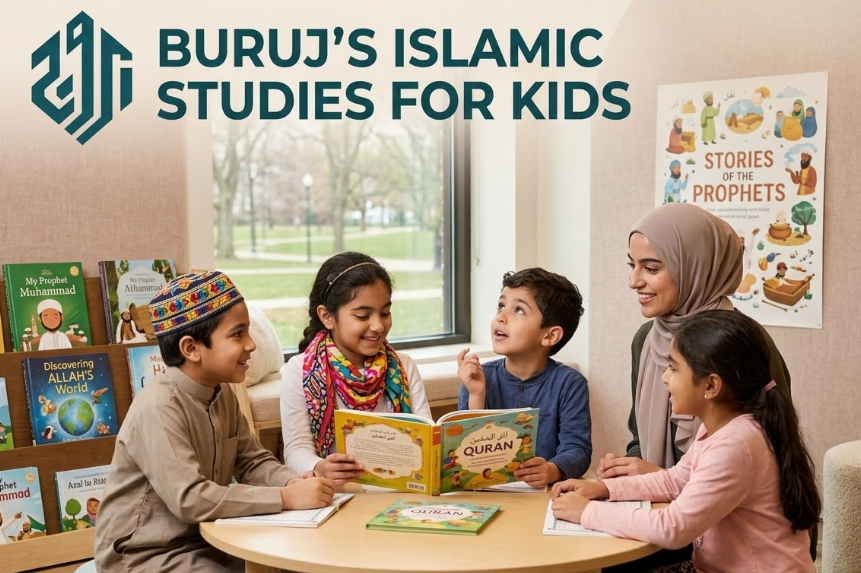
This is why combining hifz with Islamic Studies classes for kids provides compounding benefit — knowledge contextualizes what they are memorizing, and memorization gives knowledge a home in the heart.
The first session is free in Buruj’s Islamic Studies Classes for Kids
6. Starting with Short Surahs Creates Early Wins That Sustain Motivation
One of the most practically important facts about children’s hifz is that early success determines long-term commitment.
A child who memorizes Surah Al-Ikhlas, Al-Falaq, and An-Nas in their first week experiences a powerful motivational rush — they have done something real and sacred, and they know it.
This is precisely why we structure Buruj Academy’s approach around the shortest surahs to memorize first. Not because those surahs are less valuable — they are among the most recited in daily prayer — but because accessible early wins create the psychological scaffolding children need for longer-term commitment.
| Surah | Ayat Count | Typical Memorization Time (Age 7–10) |
| Al-Ikhlas (112) | 4 | 1–2 sessions |
| Al-Falaq (113) | 5 | 1–2 sessions |
| An-Nas (114) | 6 | 1–2 sessions |
| Al-Kawthar (108) | 3 | 1 session |
| Al-Asr (103) | 3 | 1 session |
These timeframes are estimates based on our instructors’ experience with motivated beginners. Individual pace varies.
Read also: How to Make Your Child Memorize the Quran?
7. Quran Memorization Develops a Child’s Relationship with Allah from an Early Age
Beyond the cognitive and identity benefits, memorizing Quran is fundamentally a spiritual practice. A child who memorizes “قُلْ هُوَ اللَّهُ أَحَدٌ” understands something profound about Tawhid before they can articulate it theologically. The words of Allah shape a child’s inner world in ways that no curriculum can replicate.
Qul Huwa Allahu Ahad
“Say, He is Allah, [who is] One.” (Al-Ikhlas 112:1)
This is among the most memorized ayat by young children worldwide — its simplicity and depth make it an ideal first memorization.
Children who grow up reciting Quran in salah are not merely performing ritual. They are communicating with Allah using His own words — a relationship that, when nurtured with understanding, becomes the anchor of their adult faith.
Pair hifz with age-appropriate Quran activities for kids to bring meaning to what they are memorizing.
8. The Importance of Maintaining Memorization of Quran Begins in Childhood
Teaching children to memorize is only the first responsibility — the second is teaching them to maintain what they have learned. The importance of maintaining memorization of Quran cannot be overstated, because Quran memorized and then forgotten carries a serious warning in Islamic scholarship.
The best time to build revision habits is childhood, when routines form most naturally. A child who learns from age 7 to review their memorized portions daily will carry that habit into adulthood — making maintenance almost effortless.
An adult who memorized without learning systematic revision faces a far harder path.
Practical Revision Systems for Children
- Daily listening: Play their memorized surahs during car rides or meals — passive reinforcement works
- Prayer integration: Encourage children to recite their memorized surahs in their own salah
- Weekly spot checks: A brief session where they recite from memory without prompting builds confidence
- Peer recitation: Children who recite to each other retain more and enjoy the process more
Our instructors at Buruj Academy implement structured revision alongside new memorization in every session — new learning never replaces review. You can explore what the best way to memorize Quran is to understand how revision integrates with acquisition.
9. Quran Memorization Introduces Children to Tajweed from the Very Beginning
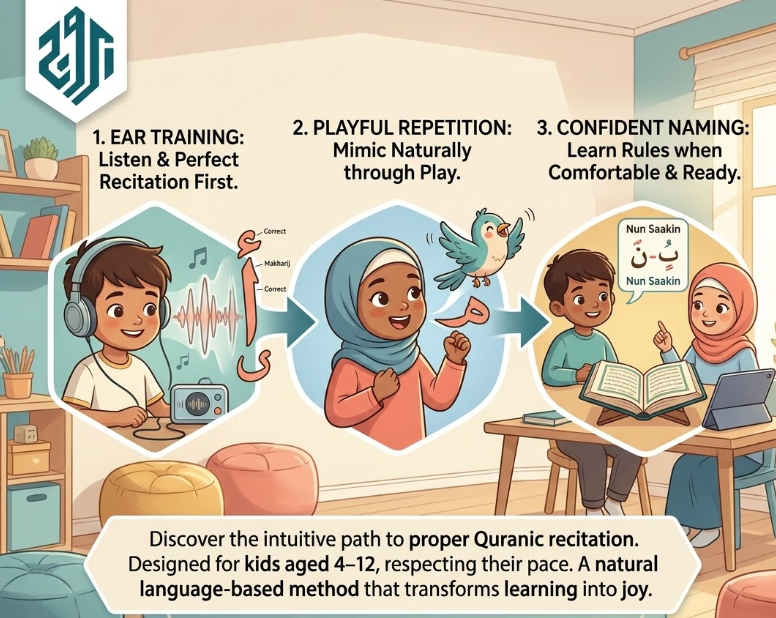
Every child who memorizes Quran is also learning Tajweed — whether or not they know it by name. The rhythm, elongations, nasalization, and stops they absorb through repetition are the rules of Tajweed being internalized before they are formally named.
Children who memorize with a qualified teacher absorb correct articulation naturally. Those who memorize from audio recordings alone often develop difficult-to-correct habits.
A qualified instructor corrects a child’s makhraj of the letter ع or the ghunnah in إنَّ in real time — and the child’s brain locks in the correct sound effortlessly.
Buruj Academy’s Tajweed for kids courseformally introduces the rules children have already been practicing instinctively — making the transition from intuitive to explicit Tajweed knowledge smooth and confidence-building.
For families exploring foundational reading first, our Noorani Qaida for kids course builds the phonetic foundation that makes Tajweed acquisition significantly faster.
Book your child’s free Tajweed trial lesson today
10. Quran Memorization Connects Children to the Prophetic Legacy and Islamic History
A child who memorizes Quran joins an unbroken chain of huffaz stretching back to the Companions of the Prophet ﷺ. This is not a metaphor — it is a living historical reality. The very surahs your child recites were memorized by Bilal ibn Rabah, by Aisha, by generations of scholars whose names are recorded in the chains of transmission (isnad) connecting every Quran teacher to the Prophet ﷺ himself.
Understanding this history gives children a sense of sacred belonging that no school subject can provide.
We recommend pairing hifz milestones with age-appropriate stories about Prophets in Islam for kids — connecting the words they are memorizing to the lives of those who first lived them.
When a child understands that Surah Al-Fatihah was recited in salah by the Prophet ﷺ, their memorization becomes participation in something eternal.
Discover the Buruj Academy Difference
Step into our virtual classrooms and see how our expert instructors make learning Quran and Arabic intuitive and clear. We focus on overcoming the specific hurdles non-native speakers face, building your confidence and connection with the Quran.
Read also: Juz Amma Memorization for Kids
Give Your Child the Gift of Hifz with Buruj Academy’s Expert Instructors
The importance of memorizing Quran for kids is clear — and the right guidance makes all the difference between a sustainable hifz journey and a frustrating one.
Buruj Academy’s Hifz for kids course is taught by Al-Azhar University graduates and Ijazah-certified instructors with 12+ years of experience teaching non-Arabic speaking children globally. We offer:
- Personalized 1-on-1 online sessions tailored to your child’s pace and learning style
- Structured revision systems built into every session
- Child-friendly teaching methods with positive reinforcement
- Flexible scheduling across all time zones
- The Buruj Method: Consistency-before-speed, ensuring lasting retention
Book your child’s free trial lesson today and take the first step toward the greatest gift you can give them.
Take the first step toward this lifelong blessing by enrolling in a program tailored to your pace:
- Online Hifz Program (Comprehensive Quran Memorization)
- Juz 30 Memorization Course (Perfect for focused starts)
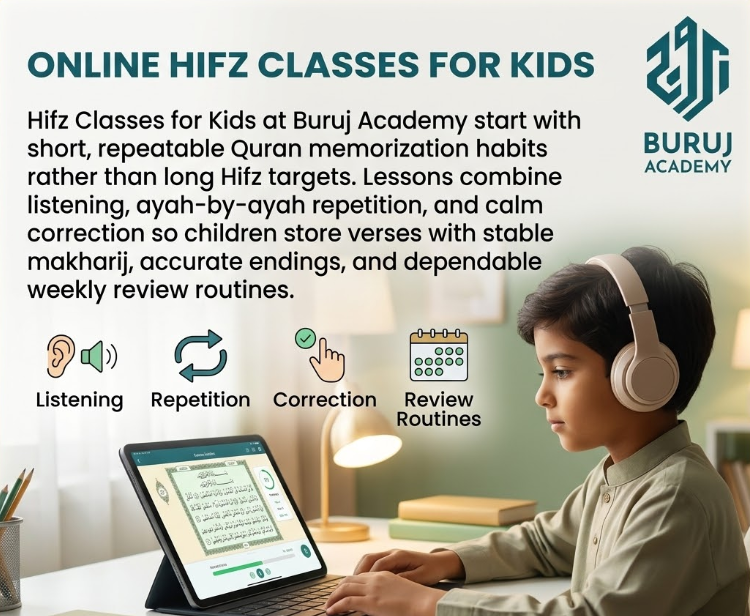
- Hifz Classes for Kids (Engaging and interactive)
- Hifz Classes for Adults (Flexible scheduling for busy lives)
- Hifz Classes for Sisters (Private, supportive learning)
- Short Surah Memorization Course (Ideal for daily prayers)
- Hifz Ijazah Course (For advanced students seeking certification)
Don’t let another day pass without moving closer to your goal. Join Buruj Academy today and schedule your free trial session to begin your Hifz journey!
Excel in Your Quranic Studies
Join Buruj Academy and master the Quran with our structured, professional curriculum.
Book Your Free TrialConclusion
The importance of memorizing Quran for kids reaches far beyond any single benefit — it is cognitive, spiritual, linguistic, and identity-forming all at once. Children who begin this path early carry advantages that multiply over a lifetime, from stronger Arabic foundations to an unshakeable connection with Allah.
The responsibility of the parent is not simply to enroll a child in lessons — it is to build a home environment where Quran is lived, heard, and honored daily.
When instruction, routine, and love work together, hifz becomes not a burden but a source of genuine joy for children and families alike.
Frequently Asked Questions About the Importance of Memorizing Quran for Kids
What Is the Best Age for a Child to Start Memorizing Quran?
Most Quran education specialists consider ages 4–7 to be an ideal entry point for structured memorization. At this age, children have sufficient attention spans for short sessions, their phonological memory is highly receptive, and consistent early exposure creates lasting retention that far exceeds what is achievable later in life.
How Long Should a Child’s Daily Hifz Session Be?
For children aged 4–8, sessions of 10–20 minutes daily are most effective. Children aged 9–12 can sustain 20–30 minute focused sessions. Consistency matters more than duration — five short daily sessions outperform one long weekly session in both retention and confidence building.
Can a Child Memorize Quran Online Effectively?
Yes — provided the instructor is qualified, sessions are 1-on-1, and real-time correction is part of every lesson. Online hifz for kids has proven highly effective when children have a dedicated, distraction-free space and a consistent schedule. The key variable is always instructor quality, not the medium.
What Is the Importance of Maintaining Memorization of Quran for Children?
Maintaining memorization is as important as initial learning. Children who memorize without systematic daily revision lose their portions within weeks. Building revision habits in childhood — through daily recitation in salah, listening, and weekly review — creates lifelong retention patterns that sustain the hifz into adulthood effortlessly.
How Do I Keep My Child Motivated During Quran Memorization?
Celebrate every milestone visibly — a completed surah deserves recognition. Use visual progress tracking, connect memorized surahs to their use in salah, and share the spiritual significance in age-appropriate language. Children stay motivated when they understand why what they are doing matters and when effort is consistently acknowledged.