 Arabic

| Key Takeaways |
| Arabic speaking begins with mastering 28 letters and their distinct sounds before attempting full sentences or conversation. |
| Modern Standard Arabic (MSA) is the universal spoken form understood across all 22 Arab countries, making it the ideal starting point. |
| Daily 20–30 minute speaking practice with a structured approach produces measurable fluency gains within 8–12 weeks for most adult beginners. |
| Common beginner mistakes include ignoring guttural sounds like ع and غ, which native speakers immediately notice and which affect comprehension. |
| Pairing vocabulary learning with sentence templates allows beginners to speak real Arabic from week one, not just after months of grammar study. |
Most people trying to learn how to speak Arabic feel stuck at the same point: they recognize letters, they’ve memorized a few words, but actual conversation feels impossibly far away. That gap between knowing Arabic and speaking Arabic is real — and it has a very specific cause.
Speaking Arabic fluently is achievable for any dedicated learner when approached through the right sequence: sounds first, then high-frequency vocabulary, then sentence patterns, then conversation.
Table of Contents:
Step 1: Train Your Mouth to Pronounce Arabic
Before learning a single Arabic word, you need to build the physical sounds Arabic uses — sounds that English simply does not have.
Arabic contains several sounds produced deep in the throat and at the back of the mouth that require deliberate muscle training. Skipping this step is the single most common reason beginners plateau.
The four sounds that require the most focused attention are:
| Arabic Letter | Name | Description | English Approximation |
| ع | Ayn | Deep throat constriction | No English equivalent — like a voiced squeeze |
| غ | Ghayn | Uvular fricative | Similar to a French “r” (gargled) |
| خ | Kha | Voiceless uvular fricative | Like clearing your throat softly |
| ح | Ha | Pharyngeal fricative | Breathed “h” from very deep in throat |
In our sessions at Buruj Academy, we observe that students who spend one dedicated week on these four sounds progress twice as fast in conversation as those who skip to vocabulary.
The mouth needs to learn new positions, and that takes deliberate repetition — not just passive listening.
Practical Exercise — Week 1:
Say each of these sounds 20 times per day in isolation, then embed them in simple words:
- ع → عَرَبِي (ʿArabī — “Arabic”)
- غ → غُرْفَة (ghurfa — “room”)
- خ → خُبْز (khubz — “bread”)
- ح → حَلِيب (ḥalīb — “milk”)
Record yourself. Compare to a native speaker. Adjust. Repeat.
Our Arabic for Beginners course dedicates the first two sessions entirely to sound production — because we have seen, consistently, that pronunciation habits formed in week one define a student’s accent for months.
Begin learning Arabic at Buruj with a FREE trial lesson

Step 2: Learn the 100 Most Useful Arabic Words for Speaking First
To speak Arabic for beginners, vocabulary must be strategic — not random. You do not need thousands of words to hold a basic conversation.
Research in applied linguistics consistently shows that the 100–200 most frequent words in any language cover the vast majority of daily speech. In Arabic, mastering the right 100 words allows you to build sentences immediately.
Here are the most essential Arabic word categories for speaking beginners:
| Category | Arabic Word | Transliteration | Meaning |
| Greetings | مرحبًا | Marḥaban | Hello |
| Greetings | كيف حالك؟ | Kayfa ḥālak? | How are you? |
| Response | بِخَيْر، شُكْرًا | Bi-khayr, shukran | Fine, thank you |
| Agreement | نَعَم | Naʿam | Yes |
| Negation | لَا | Lā | No |
| Request | مِن فَضْلِك | Min faḍlik | Please |
| Apology | آسِف | Āsif | Sorry |
| Numbers | وَاحِد، اثْنَان، ثَلَاثَة | Wāḥid, ithnān, thalātha | One, two, three |
| Time | الآن، غَدًا، أَمْس | Al-ān, ghadan, ams | Now, tomorrow, yesterday |
| Places | بَيْت، مَدِينَة، مَدْرَسَة | Bayt, madīna, madrasa | Home, city, school |
Read also: Learn Spoken Arabic with Expert Classes
Practical Exercise — Week 2:
Write five sentences per day using only words from the table above. Do not wait until you have grammar. Use the pattern:
- “أَنَا [name].” (Anā [name] — “I am [name].”)
- “أَنَا مِن [city].” (Anā min [city] — “I am from [city].”)
- “هَذَا [object].” (Hādhā [object] — “This is [object].”)
Vocabulary learned through sentence use is retained up to three times more effectively than vocabulary learned through lists alone. For a broader vocabulary strategy, our guide on mastering Arabic vocabulary provides a full retention system built on context-first learning.
Our instructors at Buruj Academy have guided hundreds of non-Arabic speakers through exactly this process, and this step-by-step guide delivers the same framework we use in our Arabic Speaking Course.
Book your free trial to start speaking Arabic fluently

Step 3: Master Three Core Arabic Sentence Structures That Cover 80% of Conversation
Understanding Arabic sentence structure is not about memorizing grammar rules — it is about learning the skeleton patterns that Arabic speakers use constantly. Once you internalize three patterns, you can generate dozens of sentences immediately.
For a deeper foundation, our article on Arabic sentence structure for beginners covers these patterns with full explanations.
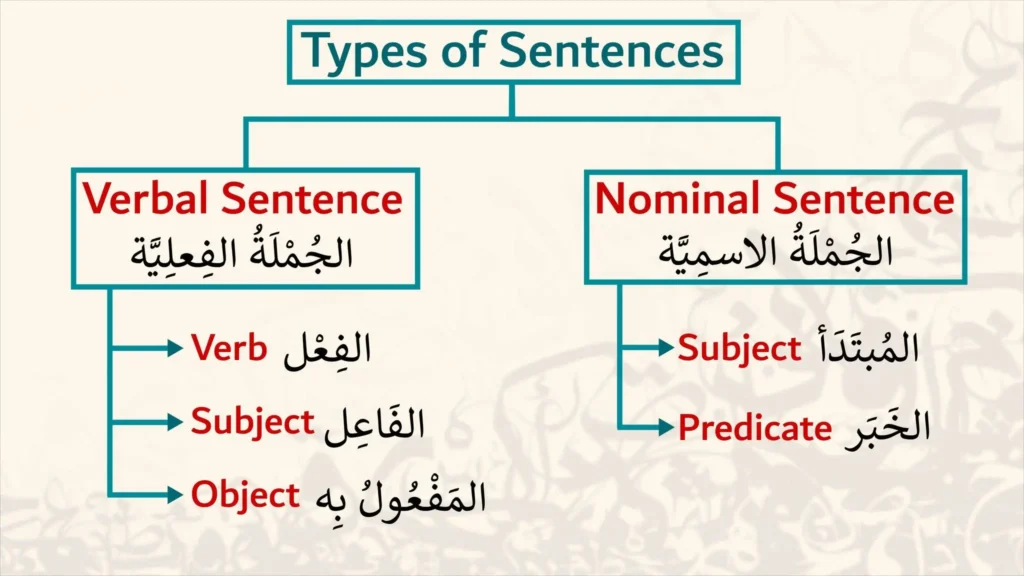
Pattern 1: The Arabic Nominal Sentence (Jumla Ismiyya)
The nominal sentence states what something is, without any verb. Arabic does not use “is” or “are” the way English does.
Structure: Subject + Predicate (no verb needed)
| Arabic | Transliteration | Meaning |
| الطَّقْسُ جَمِيلٌ | Al-ṭaqsu jamīlun | The weather is beautiful |
| البَيْتُ كَبِيرٌ | Al-baytu kabīrun | The house is big |
| أَنَا مُعَلِّمٌ | Anā muʿallimun | I am a teacher |
Practice: Build 5 nominal sentences daily describing your surroundings.
Pattern 2: The Arabic Verbal Sentence (Jumla Fiʿliyya)
The verbal sentence starts with a verb, followed by the subject. This is the reverse of English word order.
Structure: Verb + Subject + Object
| Arabic | Transliteration | Meaning |
| يَشْرَبُ أَحْمَد القَهْوَةَ | Yashrabu Aḥmad al-qahwata | Ahmad drinks coffee |
| أَكَلَتِ الطِّفْلَةُ التُّفَّاحَةَ | Akalati al-ṭifla al-tuffāḥata | The girl ate the apple |
Practice: Take 5 actions you do every day and describe them in Arabic verbal sentences.
Pattern 3: The Arabic Question Sentence
Questions in Arabic are formed by placing a question word at the beginning of the sentence. The most important question words for speaking are:
| Question Word | Arabic | Transliteration |
| What? | مَاذَا | Mādhā |
| Where? | أَيْنَ | Ayna |
| When? | مَتَى | Matā |
| How? | كَيْفَ | Kayfa |
| Who? | مَن | Man |
| How much? | كَم | Kam |
Practice: Ask yourself 5 questions in Arabic every morning: “Ayna dhahaba [person]?” (“Where did [person] go?”) / “Mādhā akullu al-yawm?” (“What will I eat today?”)
Read also: Arabic Alphabet Cursive
Discover the Buruj Academy Difference
Step into our virtual classrooms and see how our expert instructors make learning Quran and Arabic intuitive and clear. We focus on overcoming the specific hurdles non-native speakers face, building your confidence and connection with the Quran.
Master the Arabic Language
Join our expert-led courses and build a strong foundation in Classical and Modern Arabic.
Get Your Free TrialStep 4: Understand How Arabic Tenses Work So You Can Speak in Time
Knowing how to speak Arabic words is not enough — you need to place actions in time. Arabic has two primary tenses that cover all spoken communication: the past tense and the present/future tense (with a future marker added).
This is actually simpler than English in some respects, because Arabic does not have progressive or perfect tenses in the same complex way.
How Does the Arabic Past Tense Work?
The Arabic past tense is formed from a three-letter root. The root for “to write” is كَتَبَ (kataba). You modify it by adding suffixes for different subjects:
| Subject | Arabic | Transliteration | Meaning |
| He | كَتَبَ | Kataba | He wrote |
| She | كَتَبَتْ | Katabat | She wrote |
| I | كَتَبْتُ | Katabtu | I wrote |
| You (m) | كَتَبْتَ | Katabta | You wrote |
| We | كَتَبْنَا | Katabnā | We wrote |
How Does the Arabic Present Tense Work?
The Arabic present tense adds prefixes to the root:
| Subject | Arabic | Transliteration | Meaning |
| He | يَكْتُبُ | Yaktubu | He writes |
| She | تَكْتُبُ | Taktubu | She writes |
| I | أَكْتُبُ | Aktubu | I write |
| We | نَكْتُبُ | Naktubu | We write |
For the Arabic future tense, simply add سَـ (sa-) before the present tense verb: سَيَكْتُبُ (Sayaktubu — “He will write”).
Practical Exercise: Take one verb you know — such as ذَهَبَ (dhahaba — “to go”) — and conjugate it in past, present, and future for all six persons above.
Do this with one new verb each day for two weeks. Within 14 days, you will have internalized the pattern instinctively.
Step 5: Build a Daily Arabic Speaking Habit Using Structured Repetition
Learning how to speak Arabic fast is not about intensity — it is about consistency. Our native Arabic instructors at Buruj Academy have observed that students who practice 20 minutes daily outperform students who practice 2 hours once per week, consistently and measurably. Language acquisition is biological — it requires repeated neural activation at intervals.
Here is the daily speaking schedule we recommend for weeks 3–8:
| Time Block | Activity | Duration |
| Morning (wake-up) | Describe 3 things you see in Arabic | 5 minutes |
| Midday | Read 5 sentences aloud from that day’s lesson | 5 minutes |
| Evening | Recall the day’s events using Arabic past tense sentences | 10 minutes |
| Night | Shadow one Arabic audio clip (repeat after a native speaker) | 5 minutes |
Shadowing is particularly effective for pronunciation improvement. Find a simple Arabic dialogue, listen to it, then repeat it simultaneously or immediately after — matching the rhythm, intonation, and pace of the speaker. This technique bridges the gap between knowing sounds and producing them fluently under natural speech conditions.
For structured support in building this habit, Buruj Academy’s Arabic Speaking Course provides live conversation practice with real-time instructor feedback — the fastest way to eliminate hesitation and build spoken fluency.
Book your free trial to start speaking Arabic fluently

Step 6: Use an Arabic Translator Strategically Without Becoming Dependent on It
Many beginners ask about using an Arabic translator while learning to speak. Translation tools like Google Translate or Arabic-English dictionaries are genuinely useful — when used correctly.
The key distinction is using them to confirm understanding versus using them as a crutch that prevents actual speaking.
Use a translator to:
- Verify the meaning of a new word you encountered in context
- Check the correct spelling or transliteration of a word you heard
- Find the Arabic equivalent of a concept you want to express
Avoid using a translator to:
- Translate entire sentences you want to say (this creates dependence, not fluency)
- Check every word before speaking (this destroys natural speech rhythm)
- Substitute for memorization (translation tools cannot build long-term vocabulary)
A more effective approach is to learn Arabic words in Arabic — through images, context, and repetition rather than constant English equivalents.
When you think bayt and see a house in your mind without translating, you are speaking Arabic.
When you think “house” and then recall bayt, you are still thinking in English with an Arabic layer on top.
For those wondering how to speak Arabic for free, consistent use of structured audio resources, language exchange partners, and articles like this one can take you far — and resources like our beginners’ guide to Modern Standard Arabic provide a strong self-study foundation.
Step 7: Expand Into Real Conversations Using High-Frequency Topics
Once you have your sentence patterns, tense system, and core vocabulary in place, the next step is practicing real conversational topics. Real conversations cluster around a small number of recurring themes — and preparing for those themes gives you the highest return on speaking practice time.
Introducing Yourself in Arabic
This is the most important conversational skill for a beginner. Learn this template and fill in your own information:
أَنَا [اسمك].
أَنَا مِن [بلدك].
أَنَا أَتَعَلَّمُ العَرَبِيَّة.
Anā [ismuka].
Anā min [baladika].
Anā atʿallamu al-ʿArabiyya.
“I am [your name].
I am from [your country].
I am learning Arabic.”
Extend it further:
أُحِبُّ [هوايتك].
عُمْرِي [رقم] سَنَة
Uḥibbu [hawāyatuka].
ʿUmrī [raqam] sana.
“I like [your hobby].
I am [your age] years old.”
Read also: Do Muslims Around the World Speak Arabic
Asking for Directions and Locations
| Arabic Phrase | Transliteration | Meaning |
| أَيْنَ المَحَطَّة؟ | Ayna al-maḥaṭṭa? | Where is the station? |
| كَيْفَ أَذْهَبُ إِلَى…؟ | Kayfa adhhabu ilā…? | How do I get to…? |
| عَلَى اليَمِين | ʿAlā al-yamīn | On the right |
| عَلَى اليَسَار | ʿAlā al-yasār | On the left |
| قَرِيب مِن هُنَا | Qarīb min hunā | Near here |
Read also: Non-Connecting Letters in Arabic
Shopping and Numbers
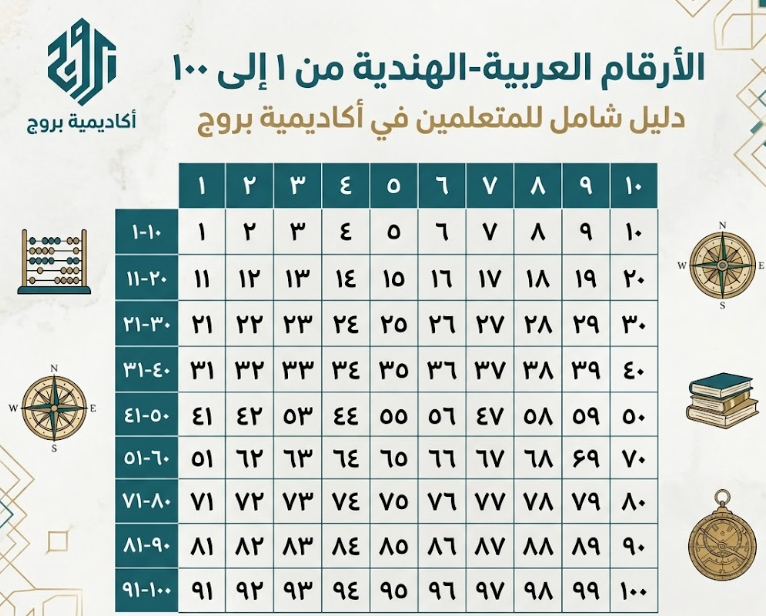
Arabic numbers are one of the most practically useful areas to master quickly for spoken Arabic. Knowing numbers 1–100 fluently allows you to understand prices, ages, times, and quantities in conversation. Our resource on numbers in Arabic covers the full number system with pronunciation.
Step 8: Address Grammar Systematically Without Letting It Block Your Speaking
Grammar is not the enemy of speaking — but premature grammar obsession is. Many students delay speaking until they feel their grammar is “correct enough,” which means they never speak at all.
The better approach is to speak with imperfect grammar, then layer in grammatical accuracy progressively.
Two grammar points that directly affect spoken Arabic most noticeably:
Masculine and Feminine Agreement
Arabic nouns are either masculine or feminine, and adjectives must agree with them. Most feminine nouns end in ة (-a / tā marbūṭa). This directly affects how you describe things:
| Arabic | Transliteration | Meaning |
| بَيْتٌ كَبِيرٌ | Baytun kabīrun | A big house (masculine) |
| غُرْفَةٌ كَبِيرَةٌ | Ghurfatun kabīratun | A big room (feminine) |
Our article on masculine and feminine nouns in Arabic explains this system thoroughly for spoken contexts.
Verb-Subject Agreement in Speech
When speaking, Arabic verbs change based on who is performing the action. In informal speech, the subject pronoun is often dropped because the verb ending already indicates who is acting:
Katabtu (كَتَبْتُ) already means “I wrote” — you do not need to say anā katabtu unless emphasizing the subject.
For a broader view of how Arabic grammar works in practice, our guide on how to learn Arabic grammar easily breaks down the system for complete beginners in accessible, practical terms.
Start Speaking Arabic with Buruj Academy’s Expert Instructors
Speaking Arabic fluently requires the right sequence, consistent practice, and real-time feedback from qualified instructors — not just passive study. At Buruj Academy, our Arabic Speaking Course is built specifically for non-Arabic speakers who want to move from silence to genuine conversation.
Our Al-Azhar University graduates with 12+ years teaching non-native speakers use the Buruj Method — Context-before-abstraction, Consistency-before-speed — to build genuine speaking fluency through personalized 1-on-1 sessions.
Every student receives a custom learning plan, flexible scheduling, and real-time pronunciation correction from the very first lesson.
Book your free trial lesson today and speak your first real Arabic sentences with a qualified instructor — no prior knowledge required.
Begin your transformation today by choosing the path that fits your goals:
- Online Arabic Classes (General & Comprehensive)
- Arabic Course for Beginners
- Arabic Alphabet Learning Course
- Online Arabic Classes for Kids
- Arabic Classes for Adults
- Arabic Grammar Course (Nahw & Sarf)
- Intermediate Arabic Course (B1/B2)
- Arabic Speaking Course (Conversational Fluency)
- Arabic Reading Course (Literary Excellence)
- Learn Arabic Writing Course (Calligraphy & Composition)
Ready to speak with confidence? Join the global community at Buruj Academy and book your free placement interview today!
Master the Arabic Language
Join our expert-led courses and build a strong foundation in Classical and Modern Arabic.
Get Your Free TrialConclusion
Speaking Arabic is not a mystery reserved for linguists or heritage speakers. It follows a learnable sequence: sounds, vocabulary, sentence patterns, tenses, and conversation topics — each stage building naturally on the last. The students who succeed are not the ones with the most natural talent; they are the ones who practice consistently, correct their pronunciation honestly, and resist the temptation to wait until everything is “perfect” before speaking.
Start with the sounds. Build your sentence skeletons. Speak imperfectly and improve. With the right method and the right guidance, Arabic conversation is well within your reach — Insha’Allah.
Frequently Asked Questions About How to Speak Arabic
How Long Does It Take to Learn to Speak Arabic as a Complete Beginner?
Most adult beginners can hold basic Arabic conversations within 3–6 months of daily structured practice — typically 20–30 minutes per day. Reaching intermediate conversational fluency usually takes 12–18 months. The timeline depends on consistency, quality of instruction, and how actively you practice speaking, not just listening or reading.
What Is the Easiest Way to Speak Arabic for Beginners?
The most effective approach for beginners is to learn sounds first, then 100 core vocabulary words, then three sentence patterns — and begin speaking immediately, even imperfectly. Delaying speaking until grammar feels mastered is the most common mistake. Structured 1-on-1 sessions with a qualified instructor accelerate this process significantly compared to self-study alone.
Can I Learn to Speak Arabic for Free?
Yes — foundational Arabic speaking skills can be developed using free resources: structured articles, YouTube channels from Arabic educators, language exchange apps, and audio shadowing exercises. However, free resources lack real-time pronunciation correction and personalized feedback, which are the two factors that produce the fastest measurable improvement in spoken Arabic.
How Do I Say Basic Arabic Words in English Transliteration?
Common Arabic phrases in transliteration include: Marḥaban (Hello), Kayfa ḥālak? (How are you?), Shukran (Thank you), Afwan (You’re welcome), Naʿam (Yes), Lā (No), Min faḍlik (Please), and Maʿa al-salāma (Goodbye). Transliteration is a useful bridge for beginners, but learning to read Arabic script directly improves pronunciation accuracy significantly.
How to Say I Don’t Know How to Speak Arabic in Arabic?
For saying I don’t know how to speak Arabic in Arabic you have to pronounce: لا أعرف كيف أتكلم العربية — La A’rif Kayfa Atakalm al’Arabiya.
Related Articles
Arabic