 Arabic
| Key Takeaways |
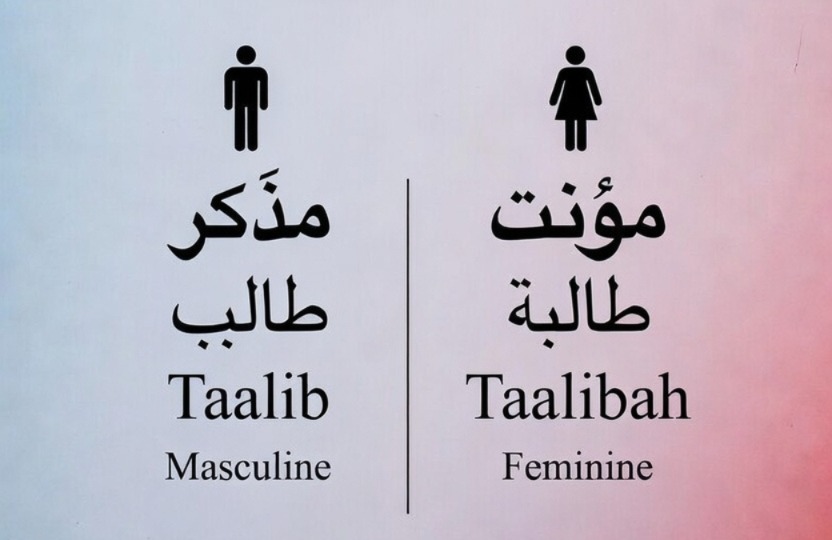
| Arabic assigns grammatical gender — masculine (مُذَكَّر) or feminine (مُؤَنَّث) — to every noun, not just living beings. |
| The feminine marker تاء مربوطة (tā’ marbūṭa) ending in ـة is the most reliable signal of feminine nouns in Arabic. |
| Arabic adjectives must match the gender of the noun they describe, making gender agreement a core grammar rule. |
| Arabic gender pronouns differ by gender: هو (huwa) for masculine and هي (hiya) for feminine third-person singular. |
Arabic learners often discover early that every noun in the language carries a gender — and that this gender affects pronouns, adjectives, and verb forms around it. Unlike English, which reserves gendered language mostly for people and animals, Arabic assigns grammatical gender to objects, concepts, and abstractions with equal consistency.
Understanding gender in Arabic is the foundation of correct sentence construction. Once you grasp how masculine and feminine work in Arabic words, agreements across the sentence begin to click naturally into place.
Table of Contents:
What Is Gender in the Arabic Language?
Gender in Arabic is a grammatical category that classifies every noun as either masculine (مُذَكَّر — mudhakkar) or feminine (مُؤَنَّث — mu’annath). This classification determines how pronouns, adjectives, and verbs are shaped around that noun. Arabic has no neuter gender — every single noun belongs to one of two categories, whether it refers to a person, an animal, or an inanimate object.
This is one of the most important structural differences between Arabic and English. A table (طاولة — ṭāwila) is grammatically feminine. A door (باب — bāb) is grammatically masculine. Neither has a biological sex — but both carry a grammatical gender that the entire sentence must reflect.
In our Online Arabic Classes at Buruj Academy, we find this is where many beginners hit their first real wall. The mistake is treating gender as a random assignment to memorize word by word.
In reality, Arabic gives you reliable visual cues — especially the iconic feminine ending — that allow you to identify gender for the majority of nouns on sight.
Arabic gender is divided into two types:
| Type | Arabic Term | Description |
| Real Gender (Haqiqi) | حقيقي | Biological sex — applies to humans and animals |
| Figurative Gender (Majazi) | مجازي | Grammatical gender assigned to inanimate nouns |
Understanding this distinction immediately reduces confusion: when a student asks “why is the sun feminine?”, the answer is simply convention — Arabic figurative gender follows usage patterns, not logic we can always explain.
Book your FREE Arabic trial online Arabic class at Buruj

What Is the Masculine Gender in Arabic?
The masculine gender in Arabic — مُذَكَّر (mudhakkar) — is the default grammatical form. A noun is masculine when it refers to a male person or animal, or when it belongs to the category of nouns that Arabic tradition treats as masculine by convention.
Masculine nouns do not carry a consistent visible marker. They are identified primarily by the absence of feminine endings.
In practice, if a noun does not end in ـة (tā’ marbūṭa), ـاء (alif mamdūda), or ـى (alif maqṣūra), it is almost certainly masculine.
Common Examples of Masculine Nouns in Arabic
| Arabic | Transliteration | Meaning |
| بَيْت | bayt | house |
| كِتاب | kitāb | book |
| بَاب | bāb | door |
| قَلَم | qalam | pen |
| رَجُل | rajul | man |
| وَلَد | walad | boy |
| نَهْر | nahr | river |
| قَمَر | qamar | moon |
Notice that the moon — قَمَر — is masculine in Arabic, while the sun — شَمْس — is feminine. These assignments matter not only for agreement but also for the moon and sun letters in Arabic, where the grammatical gender of these two words gave their names to a foundational pronunciation category.
For male gender in Arabic referring to humans and animals, the word for “male” itself is ذَكَر (dhakar), and the adjective masculine is مُذَكَّر (mudhakkar).
What Is the Feminine Gender in Arabic?
The feminine gender in Arabic — مُؤَنَّث (mu’annath) — applies to female humans and animals, and to a large category of inanimate nouns. The word for “female” in Arabic is أُنْثى (unthā).
The most reliable way to identify feminine nouns is by looking for one of three feminine markers. Mastering these three endings accounts for the vast majority of feminine nouns you will encounter as a learner.
The Three Feminine Markers in Arabic
| Marker | Arabic Name | Example | Meaning |
| ـة | تاء مربوطة (tā’ marbūṭa) | مَدْرَسَة (madrasa) | school |
| ـاء | ألف ممدودة (alif mamdūda) | صَحْرَاء (ṣaḥrā’) | desert |
| ـى | ألف مقصورة (alif maqṣūra) | كُبْرى (kubrā) | the greatest (f.) |
The tā’ marbūṭa (ـة) is by far the most common feminine marker. It appears as a ت with two dots above it, and when followed by a vowel in connected speech, it is pronounced as a t sound. In paused speech (waqf), it is typically silent.
Arabic Feminine Nouns Without Feminine Markers (Sema’i)
Some nouns are feminine by convention — called سَمَاعِي (samā’ī), meaning “heard” — despite carrying no feminine ending. These must be memorized. The most common ones are:
- شَمْس (shams) — sun ← feminine
- أَرْض (arḍ) — earth ← feminine
- نَار (nār) — fire ← feminine
- رِيح (rīḥ) — wind ← feminine
- دَار (dār) — house/abode ← feminine
- عَيْن (ʿayn) — eye / spring ← feminine
For a deeper treatment of how feminine and gender interact across noun types, our full guide on masculine and feminine nouns in Arabic covers irregular cases and dual forms in detail.
How Does Gender Work in Arabic Letters?
Gender in Arabic letters refers not to the letters themselves carrying gender, but to how letter-ending patterns signal the gender of a word. This concept often confuses beginners who expect letters to have inherent gender, as in some European languages.
The key insight is this: Arabic uses specific letters and letter combinations at the end of words to signal feminine gender, while the absence of these endings signals masculine.
This is why learning Arabic letter endings — particularly the tā’ marbūṭa — is one of the first practical gender skills a learner acquires.
Gender Signals Through Letter Patterns
| Ending Pattern | Gender Signal | Example |
| No special ending | Usually masculine | كِتاب (kitāb) — book |
| ـة (tā’ marbūṭa) | Feminine | كِتَابة (kitāba) — writing |
| ـاء | Feminine | حَمْرَاء (ḥamrā’) — red (f.) |
| ـى (alif maqṣūra) | Often feminine | ذِكْرى (dhikrā) — memory |
In our Arabic Grammar Course experience, students who invest two focused sessions in identifying letter-ending patterns can classify the gender of roughly 80% of new vocabulary they encounter — without memorizing each word individually. This pattern recognition is a cornerstone of the Buruj Method’s context-before-abstraction approach.
Understand the Arabic Grammar with Buruj’s free trial lesson
A Practical List of Masculine and Feminine Nouns in Arabic
The table below covers high-frequency vocabulary across multiple categories, showing masculine-feminine pairs where they exist and standalone gendered nouns where they do not.
Paired Masculine and Feminine in Arabic (People and Animals)
| Masculine | Transliteration | Feminine | Transliteration | Meaning |
| مُعَلِّم | muʿallim | مُعَلِّمة | muʿallima | teacher |
| طَالِب | ṭālib | طَالِبة | ṭāliba | student |
| طَبِيب | ṭabīb | طَبِيبة | ṭabība | doctor |
| أَخ | akh | أُخْت | ukht | brother / sister |
| أَب | ab | أُمّ | umm | father / mother |
| مَلِك | malik | مَلِكَة | malika | king / queen |
| قط | Qitt | قطة | Qitta | male cat / emale cat |
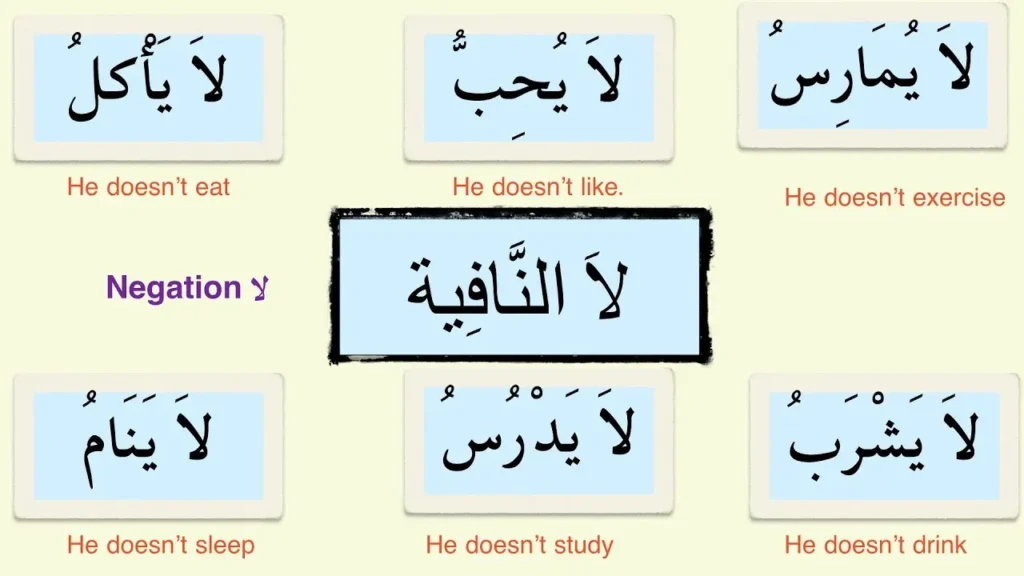
Read also: Negation in Arabic
Arabic Inanimate Nouns with Grammatical Gender
| Masculine | Meaning | Feminine | Meaning |
| قَمَر (qamar) | moon | شَمْس (shams) | sun |
| بَحْر (baḥr) | sea | أَرْض (arḍ) | earth |
| بَيْت (bayt) | house | غُرْفة (ghurfa) | room |
| باب (bāb) | door | نَافِذة (nāfidha) | window |
| قَلَم (qalam) | pen | صَفْحة (ṣafḥa) | page |
For a structured look at how dual nouns in Arabic are affected by gender — where the dual suffix changes by gender — that article walks through the dual system clearly.
Do Gender-Neutral Arabic Names Exist?
Arabic grammar does not have a gender-neutral grammatical system. The concept of gender-neutral Arabic names refers to names that are used for both males and females across different Arabic-speaking communities — not to names that are grammatically neuter.
The word itself may carry a feminine marker or no marker, but usage determines whether it functions as a gender-neutral name socially. This varies by region and family tradition significantly.
Read also: Understanding Adjectives in Arabic
Common Arabic Gender-Neutral Names
| Name | Arabic | Common Usage |
| Nour / Nur | نور | Used for both boys and girls across the Arab world |
| Rida | رضا | More common for boys, but used for boys in some regions |
| Islam | إسلام | Used for both, particularly in Levantine communities |
When parents ask us about choosing names for children, we always clarify that the grammatical gender of a name and its social usage as a name are two separate questions.
A name like نور (Nour), though grammatically masculine, is widely used for girls — and this is fully accepted.
Discover the Buruj Academy Difference
Step into our virtual classrooms and see how our expert instructors make learning Quran and Arabic intuitive and clear. We focus on overcoming the specific hurdles non-native speakers face, building your confidence and connection with the Quran.
Master the Arabic Language
Join our expert-led courses and build a strong foundation in Classical and Modern Arabic.
Get Your Free TrialWhat Are the Arabic Gender Pronouns?
Arabic gender pronouns are distinct for masculine and feminine in all persons — first, second, and third — making Arabic pronoun use more gender-specific than English. Every pronoun in Arabic signals the gender of the person or thing being referred to.
Arabic Personal Pronouns by Gender
| Person | Masculine | Transliteration | Feminine | Transliteration |
| 3rd singular | هو | huwa | هي | hiya |
| 2nd singular | أنتَ | anta | أنتِ | anti |
| 1st singular | أنا | anā | أنا | anā |
| 3rd dual | هُما | humā | هُما | humā |
| 3rd plural (m.) | هُم | hum | هُنَّ | hunna |
| 2nd plural (m.) | أنتُم | antum | أنتُنَّ | antunna |
The first-person singular أنا (anā) is the same for both genders — the verb or adjective following it reveals the speaker’s gender through agreement.
A common experience in our classrooms: students who speak languages with gendered second-person pronouns (like French tu/vous) adapt quickly to Arabic’s أنتَ / أنتِ distinction.
English speakers, however, initially find it unfamiliar to specify gender when addressing someone directly. Within two to three weeks of consistent use, it becomes instinctive.
How Does Gender Agreement Work in Arabic Words?
Gender agreement in Arabic words means that adjectives, verbs, and pronouns must match the grammatical gender of the noun they refer to. This is the practical core of the entire gender system — understanding it allows you to construct grammatically correct Arabic sentences.
The rule is straightforward: a feminine noun takes a feminine adjective, a feminine verb form, and is replaced by a feminine pronoun.
Gender Agreement in Adjective-Noun Pairs
| Masculine Noun + Adjective | Meaning | Feminine Noun + Adjective | Meaning |
| وَلَدٌ كَبِير (walad kabīr) | a big boy | بِنْتٌ كَبِيرة (bint kabīra) | a big girl |
| كِتَابٌ جَدِيد (kitāb jadīd) | a new book | مَدْرَسةٌ جَدِيدة (madrasa jadīda) | a new school |
| بَيْتٌ قَدِيم (bayt qadīm) | an old house | سَيَّارةٌ قَدِيمة (sayyāra qadīma) | an old car |
Notice the pattern: the masculine adjective (kabīr, jadīd, qadīm) gains a tā’ marbūṭa to become feminine (kabīra, jadīda, qadīma). This same logic applies to most regular adjectives in Arabic.
Gender agreement also extends to verbs. In Arabic tenses, past and present tense verb forms change based on the gender of the subject.
Our guide on Arabic tenses and our Arabic for Beginners course covers these verb conjugation shifts across masculine and feminine subjects in detail.
Begin learning Arabic at Buruj with a FREE trial lesson

Practice Exercises: Test Your Gender Recognition in Arabic
Applying gender rules actively is far more effective than passive reading. The exercises below are the same type we use in the first week of our Arabic for Beginners course at Buruj Academy to build pattern recognition quickly.
Exercise 1: Identify the Gender
Look at each word and classify it as masculine (M) or feminine (F) based on its ending:
| Word | Transliteration | Your Answer |
| مَدِينة | madīna | ? |
| قَلَم | qalam | ? |
| صَحْرَاء | ṣaḥrā’ | ? |
| مَسْجِد | masjid | ? |
| ذِكْرى | dhikrā | ? |
Answers: F — M — F — M — F
Exercise 2: Make the Adjective Agree
Rewrite the adjective to match the noun’s gender:
| Noun | Base Adjective | Correct Form |
| بِنْت (girl) | جَمِيل (jamīl — beautiful) | جَمِيلة (jamīla) |
| كِتَاب (book) | قَدِيم (qadīm — old) | قَدِيم (qadīm) |
| سَيَّارة (car) | سَرِيع (sarīʿ — fast) | سَرِيعة (sarīʿa) |
Exercise 3: Choose the Right Pronoun
Replace the underlined noun with the correct pronoun (هو or هي):
- الشَّمْس ساطِعة — The sun is bright → ـ___ ساطِعة
- الكِتَاب جَدِيد — The book is new → ___ جَدِيد
- المُعَلِّمة مَاهِرة — The teacher (f.) is skilled → ___ مَاهِرة
Answers:
1. هي — 2. هو — 3. هي
For learners who want to build on these fundamentals, our full guide on how to learn Arabic grammar provides a beginner-friendly roadmap through the grammar system.
Read also: Is Arabic Written Right to Left?
Start Learning Arabic the Right Way with Buruj Academy’s Expert Instructors
Gender in Arabic is one of the grammar pillars that, once properly understood, makes every other structure easier. Connecting the right pronoun, adjective, and verb form to the right noun is a skill that comes with guided practice — not just reading.
At Buruj Academy, our Arabic Grammar Course and Arabic for Beginners course are taught by Al-Azhar University graduates with 12+ years of experience teaching non-native speakers.
We use the Buruj Method — context-before-abstraction — so gender rules are introduced through real words and sentences, not isolated grammar charts.
Our Online Arabic Classes offer flexible 1-on-1 sessions, personalized to your level, with real-time correction from the first lesson.
Book your free trial lesson today and experience structured Arabic learning built specifically for English speakers.
Begin your transformation today by choosing the path that fits your goals:
- Online Arabic Classes (General & Comprehensive)
- Arabic Course for Beginners
- Arabic Alphabet Learning Course
- Online Arabic Classes for Kids
- Arabic Classes for Adults
- Arabic Grammar Course (Nahw & Sarf)
- Intermediate Arabic Course (B1/B2)
- Arabic Speaking Course (Conversational Fluency)
- Arabic Reading Course (Literary Excellence)
- Learn Arabic Writing Course (Calligraphy & Composition)
Ready to speak with confidence? Join the global community at Buruj Academy and book your free placement interview today!
Master the Arabic Language
Join our expert-led courses and build a strong foundation in Classical and Modern Arabic.
Get Your Free TrialConclusion
Gender in Arabic is a system, not a maze. Once you recognize the feminine endings — especially the tā’ marbūṭa — and internalize how agreement works across adjectives, pronouns, and verbs, the language opens up considerably. The conventions for inanimate nouns and the handful of samā’ī feminines require some memorization, but the underlying logic is consistent.
Arabic gender pronouns, noun classification, and adjective agreement are all connected strands of the same system. Master the thread, and the rest of the grammar follows naturally, Insha’Allah.
Frequently Asked Questions About Gender in Arabic
Does Arabic Have a Gender-Neutral Pronoun?
Arabic does not have a grammatical gender-neutral pronoun in the traditional sense. The language operates on a strict masculine-feminine binary. In formal Modern Standard Arabic (MSA), the masculine plural is used as a default when referring to mixed groups.
Why Is the Sun Feminine and the Moon Masculine in Arabic?
The sun (شَمْس) is feminine and the moon (قَمَر) is masculine in Arabic by linguistic convention — a classification established through centuries of Arabic usage and not based on any systematic logic. These are classic examples of samā’ī gender: nouns whose gender is learned through hearing and usage rather than through a grammatical rule.
How Do I Know the Gender of a New Arabic Word?
Check the word’s ending first. If it ends in ـة (tā’ marbūṭa), ـاء (alif mamdūda), or ـى (alif maqṣūra), it is almost certainly feminine. If it carries none of these endings, it is most likely masculine — with a small group of samā’ī feminine exceptions to memorize. Our beginners’ guide to Modern Standard Arabic covers this identification process in practical depth.
Do Verbs in Arabic Change Based on Gender?
Yes. Arabic verbs conjugate differently for masculine and feminine subjects in both past and present tense. For example, “she wrote” is كَتَبَتْ (katabat) while “he wrote” is كَتَبَ (kataba). This gender-based conjugation applies across all Arabic tenses and is one of the features that makes gender awareness essential for speaking and writing correctly.
Related Articles
Arabic