 Arabic
| Key Takeaways |
| Arabic adjectives always follow the noun they describe, unlike English where adjectives come before the noun. |
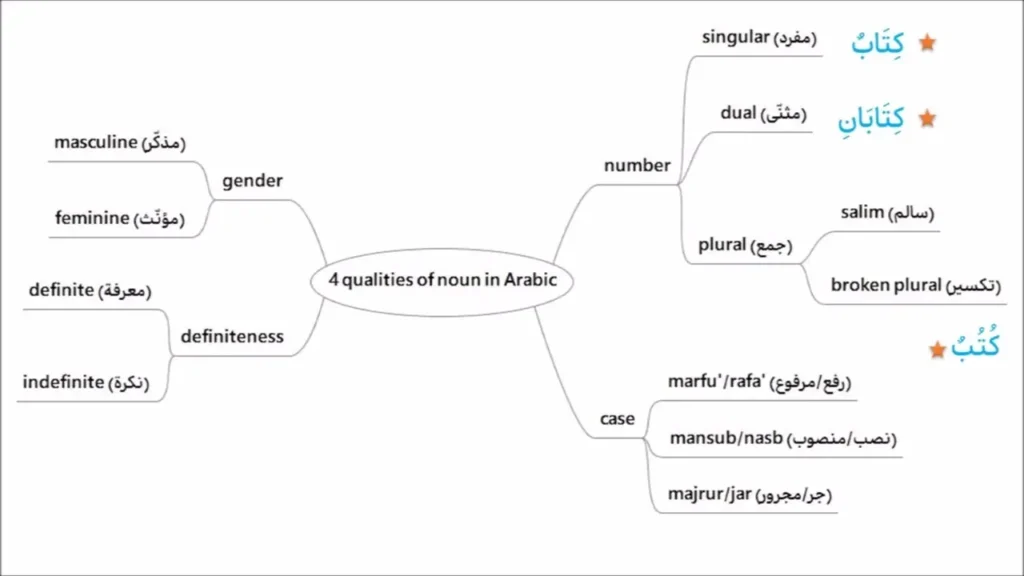
| Every Arabic adjective must match its noun in gender, number, definiteness, and grammatical case — four agreements total. |
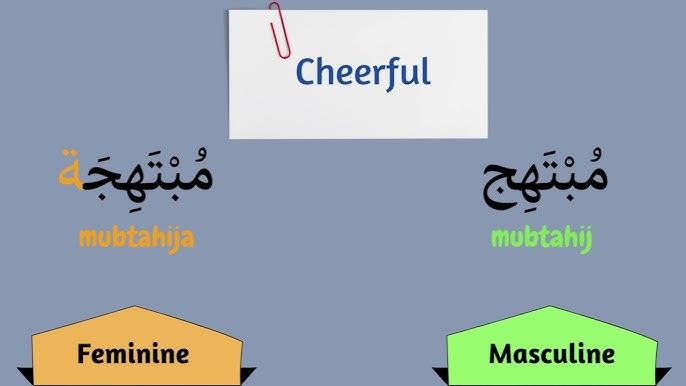
| Most feminine adjectives in Arabic are formed by adding the suffix ة (taa marbouta) to the masculine base form. |
| Arabic has three number agreements for adjectives: singular, dual, and plural — each with distinct masculine and feminine forms. |
Arabic learners often discover early that describing things — a beautiful city, a kind teacher, a difficult exam — requires more than just memorizing vocabulary. The moment you put an adjective next to a noun in Arabic, a set of precise grammatical agreements activates.
In Arabic, adjectives (called النعت an-na’t or الصفة as-sifa) follow the noun they describe and must agree with it in four categories: gender, number, definiteness, and case.
Master these four agreements, and you hold the key to describing people, places, feelings, and ideas across any Arabic context.
Table of Contents:
What Are Adjectives in Arabic?
Adjectives in Arabic are describing words that follow the noun they modify and agree with it grammatically in gender, number, definiteness, and case. This four-way agreement is the foundation of Arabic adjective use and differs fundamentally from English, where adjectives are invariable and precede the noun.
In English, you say “a beautiful house” and “beautiful houses” — the adjective beautiful never changes. In Arabic, the adjective form shifts depending on what it is describing. This makes Arabic adjectives a system, not just a list of words to memorize.
The term الصفة (as-sifa) literally means “the attribute” — and that framing is useful. An Arabic adjective doesn’t just name a quality; it attributes that quality to a specific noun with precision.
You can read more about how Arabic builds meaning through Arabic sentence structure to see how adjectives fit into the wider system.
How Do Adjectives Agree With Nouns in Arabic?
Every Arabic adjective must agree with its noun in four categories simultaneously: gender (masculine or feminine), number (singular, dual, or plural), definiteness (definite with ال or indefinite), and grammatical case (nominative, accusative, or genitive).
Missing any one of these agreements produces a grammatically incorrect sentence.
| Agreement Category | What It Means | Example |
| Gender | Adjective matches masculine or feminine noun | كتابٌ كبيرٌ / مدرسةٌ كبيرةٌ |
| Number | Singular, dual, or plural form used | طالبٌ ذكيٌّ / طالبان ذكيّان / طلابٌ أذكياءُ |
| Definiteness | Both noun and adjective carry ال or neither does | الكتابُ الكبيرُ / كتابٌ كبيرٌ |
| Case | Nominative ضمّة / Accusative فتحة / Genitive كسرة | رأيتُ الطالبَ الذكيَّ |
Think of these four agreements as a checklist you run through every time you place an adjective in a sentence.
In our Arabic classes for beginners at Buruj Academy, we teach students to ask four questions in sequence: Is the noun masculine or feminine? Singular, dual, or plural? Definite or indefinite? What case is the noun in?
That four-question habit builds accuracy faster than any other approach.
Begin learning Arabic at Buruj with a FREE trial lesson

What Is the Basic Arabic Adjectives List Every Beginner Needs?
The most practical starting point for any learner is a solid core list of Arabic adjectives covering the qualities most frequently needed in everyday description — appearance, size, emotion, and character.
These are the adjectives that appear in textbooks, conversations, and literature alike.
| Meaning | Masculine | Feminine |
| Big / Large | كبيرٌ kabīr | كبيرةٌ kabīra |
| Small / Little | صغيرٌ saghīr | صغيرةٌ saghīra |
| New | جديدٌ jadīd | جديدةٌ jadīda |
| Old (thing) | قديمٌ qadīm | قديمةٌ qadīma |
| Beautiful | جميلٌ jamīl | جميلةٌ jamīla |
| Good / Kind | طيّبٌ tayyib | طيّبةٌ tayyiba |
| Easy | سهلٌ sahl | سهلةٌ sahla |
| Difficult | صعبٌ sa’b | صعبةٌ sa’ba |
| Long / Tall | طويلٌ tawīl | طويلةٌ tawīla |
| Short | قصيرٌ qasīr | قصيرةٌ qasīra |
| Fast | سريعٌ sarī’ | سريعةٌ sarī’a |
| Slow | بطيءٌ batī’ | بطيئةٌ batī’a |
| Hot | حارٌّ hārr | حارّةٌ hārra |
| Cold | باردٌ bārid | باردةٌ bārida |
| Happy | سعيدٌ sa’īd | سعيدةٌ sa’īda |
Notice the consistent pattern: the feminine form nearly always adds ة (taa marbouta) to the masculine base. This regularity makes building a large adjective vocabulary straightforward once you understand the rule.
Why Do Most Feminine Adjectives End With the Letter ة?
Most feminine adjectives in Arabic end with ة (taa marbouta) because this suffix is the primary marker of feminine gender in Arabic grammar. When a masculine adjective is converted to feminine, ة is appended to the base form, and the final vowel of the masculine word typically receives a short a sound (fatha) before it.
This is one of the most learner-friendly patterns in Arabic. Once you know the masculine form of an adjective, producing the feminine version is almost automatic for the vast majority of words:
- كبيرٌ (kabīr — big, masculine) → كبيرةٌ (kabīra — big, feminine)
- جديدٌ (jadīd — new, masculine) → جديدةٌ (jadīda — new, feminine)
- سعيدٌ (sa’īd — happy, masculine) → سعيدةٌ (sa’īda — happy, feminine)
You can explore how this same feminine marker works across nouns in our guide to masculine and feminine nouns in Arabic.
Are There Arabic Adjectives That Don’t Follow the Taa Marbouta Pattern?
Yes — a smaller set of adjectives has an inherently feminine form that does not use ة. These are called الصفة المشبّهة (as-sifa al-mushabbaha) of the pattern أفعل (af’al), primarily used for colors and physical defects.
| Color / Quality | Masculine (أفعل) | Feminine (فَعلاء) |
| Red | أحمرُ ahmar | حمراءُ hamrā’ |
| White | أبيضُ abyad | بيضاءُ baydā’ |
| Black | أسودُ aswad | سوداءُ sawdā’ |
| Green | أخضرُ akhdar | خضراءُ khadrā’ |
| Blue | أزرقُ azraq | زرقاءُ zarqā’ |
| Yellow | أصفرُ asfar | صفراءُ safrā’ |
The feminine form of these adjectives ends in ـاء (-ā’), not ة. These adjectives are also non-fully declinable (ممنوع من الصرف), which means they don’t take tanween or certain case endings — an advanced point worth knowing as you progress.
Read also: How to Use Arabic Possessive Pronouns
How Do You Use Arabic Adjectives to Describe a Person?
To describe a person in Arabic, the adjective follows the noun, matches its gender and definiteness, and carries the correct case marker.
For human nouns, adjectives also follow the number — singular for one person, dual for two, and plural for groups.
1. Describing a Single Person in Arabic
For a single person, match the adjective’s gender to the person’s gender:
- الرجلُ الطويلُ — ar-rajulu t-tawīlu — “the tall man”
- المرأةُ الطويلةُ — al-mar’atu t-tawīlatu — “the tall woman”
- طالبٌ مجتهدٌ — tālibun mujtahidun — “a hardworking student (male)”
- طالبةٌ مجتهدةٌ — tālibatun mujtahidatun — “a hardworking student (female)”
2. Describing Two People (Dual) in Arabic
The dual noun takes a dual adjective. Dual adjectives add ـان in the nominative case or ـين in accusative/genitive:
- الطالبان المجتهدان — at-tālibāni l-mujtahidāni — “the two hardworking male students”
- الطالبتان المجتهدتان — at-tālibitāni l-mujtahidatāni — “the two hardworking female students”
Our blog on dual nouns in Arabic explains the dual system in full, which directly impacts how you form dual adjective agreements.
Arabic Adjectives to Describe a Person’s Character
| English | Arabic (Masculine) | Arabic (Feminine) |
| Intelligent / Smart | ذكيٌّ dhakiyyun | ذكيّةٌ dhakiyyatun |
| Kind / Generous | كريمٌ karīmun | كريمةٌ karīmatun |
| Patient | صبورٌ sabūrun | صبورةٌ sabūratun |
| Honest | أمينٌ amīnun | أمينةٌ amīnatun |
| Hardworking | مجتهدٌ mujtahidun | مجتهدةٌ mujtahidatun |
| Shy | خجولٌ khajūlun | خجولةٌ khajūlatun |
| Brave | شجاعٌ shujā’un | شجاعةٌ shujā’atun |
| Funny | مضحكٌ mudh-hikun | مضحكةٌ mudh-hikatun |
Buruj Academy’s Arabic Grammar course covers all adjective types with structured practice from the very first level, guided by Al-Azhar-trained instructors with 12+ years of experience teaching non-native speakers.
Understand the Arabic Grammar with Buruj’s free trial lesson
What Are the Types of Adjectives in Arabic?
Arabic grammar classifies adjectives into several types based on their grammatical function and form. The two most important functional categories are the descriptive adjective (النعت الحقيقي) and the causative adjective (النعت السببي). Beyond function, adjectives also vary by their morphological pattern.
1. The Descriptive Adjective: النعت الحقيقي
This is the standard adjective type that directly describes the noun it follows. It must agree fully in all four categories. This is what most learners mean when they say “adjective”:
- المعلّمُ الصبورُ — “the patient teacher” (masculine, singular, definite, nominative)
- بنتٌ جميلةٌ — “a beautiful girl” (feminine, singular, indefinite, nominative)
2. The Causative Adjective: النعت السببي
This adjective type describes a noun by attributing a quality to something associated with it — typically a body part or possession. The adjective agrees with that associated word, not the main noun. This is a more advanced point, but learners encounter it in reading:
- جاء رجلٌ طويلةٌ قامتُه — “A man came whose stature is tall” — here طويلةٌ is feminine because قامة (stature) is feminine, even though رجل (man) is masculine.
Adjective Patterns Worth Recognizing
| Pattern | Example | Meaning |
| فَعيل | كريم، جميل، طويل | Often indicates a stable quality |
| فَعول | صبور، شكور، غيور | Indicates intensity or habitual quality |
| فَعّال | عمّال، فعّال | Very active or doing something frequently |
| أفعل / فعلاء | أحمر / حمراء | Colors and physical attributes |
| فَعِل | فَرِح، حَذِر | Describes temporary states |
Recognizing these patterns helps you predict meanings and genders of unfamiliar adjectives — a skill that grows with exposure to Arabic vocabulary.
Read also: Is Arabic Written Right to Left?
What Is the Rule for Plural Adjectives in Arabic?
Plural adjectives in Arabic follow two completely different rules depending on whether the noun refers to human beings or non-human entities. Human plurals take a proper plural adjective; non-human plurals always take a feminine singular adjective.
1. Human Plural Nouns: Use Plural Adjectives
When describing a group of people, use the proper plural form of the adjective:
- الطلابُ المجتهدون — “the hardworking students (male group)”
- الطالباتُ المجتهداتُ — “the hardworking students (female group)”
- المعلمون المتميّزون — “the distinguished teachers (male)”
Sound plurals for masculine human adjectives typically add ـون / ـين; for feminine human adjectives, ـات.
2. Non-Human Plural Nouns: Always Feminine Singular
This is the rule that surprises almost every learner: any plural noun that does not refer to human beings — objects, animals, abstract concepts — takes a feminine singular adjective.
- الكتبُ الجديدةُ — “the new books” (كتب = books, plural but non-human → feminine singular adjective)
- بيوتٌ قديمةٌ — “old houses”
- السياراتُ السريعةُ — “the fast cars”
- أشجارٌ طويلةٌ — “tall trees”
In our experience at Buruj Academy, this rule causes the most consistent errors among intermediate students. Learners naturally want to write الكتبُ الجديدون or الكتبُ الجديدات with a broken plural adjective — but the correct form is always the feminine singular for non-human nouns.
Read also:The Best 5-Minute Routine to Learn Arabic
How Does Definiteness Change Arabic Adjectives?
Definiteness — the distinction between “a book” and “the book” — directly affects the adjective form. When a noun is definite (carries ال), its adjective must also carry ال. When a noun is indefinite, its adjective must also be indefinite (carrying tanween).
This pairing creates two distinct structural patterns with completely different meanings:
| Structure | Example | Meaning |
| Noun + ال + Adjective + ال | الكتابُ الكبيرُ | “the big book” (description) |
| Noun (indefinite) + Adjective (indefinite) | كتابٌ كبيرٌ | “a big book” (description) |
| Definite Noun + Indefinite Adjective | الكتابُ كبيرٌ | “The book is big” (predicate sentence) |
That third structure is critical: when the noun has ال but the adjective does not, you are no longer describing the noun — you are making a complete predicate sentence. الكتابُ كبيرٌ means “The book is big,” not “the big book.”
Understanding this distinction is foundational to both reading and writing Arabic correctly. It connects directly to Arabic sentence structure and the nominal sentence system.
Discover the Buruj Academy Difference
Step into our virtual classrooms and see how our expert instructors make learning Quran and Arabic intuitive and clear. We focus on overcoming the specific hurdles non-native speakers face, building your confidence and connection with the Quran.
Master the Arabic Language
Join our expert-led courses and build a strong foundation in Classical and Modern Arabic.
Get Your Free Trial100 Arabic Adjectives Organized by Theme
Building a vocabulary of 100 adjectives in Arabic becomes manageable when words are grouped by meaning. Below is a thematic reference you can use for active practice — masculine forms listed, with feminine formed by adding ة unless otherwise noted.
| Theme | Arabic (M) | Transliteration | Meaning |
| Size | كبير | kabīr | big |
| صغير | saghīr | small | |
| طويل | tawīl | tall / long | |
| قصير | qasīr | short | |
| ضخم | dakhm | huge | |
| نحيف | nahīf | thin / slim | |
| سمين | samīn | fat / heavy | |
| واسع | wāsi’ | wide / spacious | |
| ضيّق | dayyiq | narrow / tight | |
| عميق | ‘amīq | deep | |
| Character | كريم | karīm | generous |
| بخيل | bakhīl | stingy | |
| أمين | amīn | honest / trustworthy | |
| ذكيّ | dhakiyy | intelligent | |
| غبيّ | ghabiyy | foolish | |
| شجاع | shujā’ | brave | |
| جبان | jabān | cowardly | |
| صبور | sabūr | patient | |
| عنيد | ‘anīd | stubborn | |
| متواضع | mutawādi’ | humble | |
| Emotions | سعيد | sa’īd | happy |
| حزين | hazīn | sad | |
| غاضب | ghādib | angry | |
| خائف | khā’if | afraid | |
| قلق | qaliq | anxious / worried | |
| مندهش | mundahish | amazed | |
| ممتنّ | mumtann | grateful | |
| خجول | khajūl | shy | |
| متحمّس | mutahammis | enthusiastic | |
| متعب | muta’ab | tired | |
| Appearance | جميل | jamīl | beautiful |
| قبيح | qabīh | ugly | |
| نظيف | nazīf | clean | |
| وسخ | wasikh | dirty | |
| جديد | jadīd | new | |
| قديم | qadīm | old | |
| ممزّق | mumazzaq | torn / ripped | |
| أنيق | anīq | elegant | |
| Colors | أحمر / حمراء | ahmar / hamrā’ | red |
| أزرق / زرقاء | azraq / zarqā’ | blue | |
| أخضر / خضراء | akhdar / khadrā’ | green | |
| أصفر / صفراء | asfar / safrā’ | yellow | |
| أبيض / بيضاء | abyad / baydā’ | white | |
| أسود / سوداء | aswad / sawdā’ | black | |
| بنّيّ | bunniyy | brown | |
| رماديّ | ramādiyy | grey |
This thematic approach mirrors how we structure vocabulary in Buruj Academy’s Online Arabic Classes — clustering words by semantic field so that each new word reinforces others already learned.
Book your FREE Arabic trial online Arabic class at Buruj

Practical Exercises to Practice Arabic Adjectives
Learning adjectives in Arabic without active practice is like learning to swim on dry land. The following exercises move from recognition to production — the same progression we use in Buruj Academy‘s structured courses.
Exercise 1: Gender Agreement Drill
Convert each masculine adjective phrase to feminine. Write both the Arabic and the transliteration.
- رجلٌ طويلٌ → ؟
- طالبٌ ذكيٌّ → ؟
- كتابٌ جديدٌ → ؟ (Hint: كتاب is masculine — try making it a feminine noun like مجلّة)
- معلّمٌ صبورٌ → ؟
- ولدٌ سعيدٌ → ؟
Answers:
(1) امرأةٌ طويلةٌ / (2) طالبةٌ ذكيّةٌ / (3) مجلّةٌ جديدةٌ / (4) معلّمةٌ صبورةٌ / (5) بنتٌ سعيدةٌ
Exercise 2: Definiteness Transformation
Change each indefinite phrase to a definite phrase, then rewrite it as a predicate sentence with a different meaning.
| Indefinite Phrase | Definite Phrase | Predicate Sentence |
| بيتٌ كبيرٌ | البيتُ الكبيرُ | البيتُ كبيرٌ |
| طالبٌ مجتهدٌ | ؟ | ؟ |
| سيّارةٌ سريعةٌ | ؟ | ؟ |
| درسٌ صعبٌ | ؟ | ؟ |
Exercise 3: The Non-Human Plural Rule
Correct the adjective in each sentence — some are right, some are wrong. Identify the error and explain why:
- الكتبُ الجديدون ← Is this correct?
- السياراتُ السريعةُ ← Is this correct?
- الطلابُ المجتهدون ← Is this correct?
- الأشجارُ الطويلون ← Is this correct?
Answers:
(1) Wrong — كتب is non-human plural → الكتبُ الجديدةُ /
(2) Correct / (3) Correct /
(4) Wrong — أشجار is non-human → الأشجارُ الطويلةُ
Exercise 4: Build Your Own Descriptions
Describe each of the following using at least two adjectives. Write the full Arabic phrase with correct agreement:
- Your city
- Your teacher
- A book you own
- The weather today
- A friend’s character
This kind of open production practice — moving beyond fill-in-the-blank into real description — is where real fluency builds. If you are working through how to learn Arabic grammar, adjective agreement exercises like these belong at the centre of your daily practice.
Master Arabic Grammar With Buruj Academy’s Expert-Led Courses
Arabic adjective agreement is learnable — but it rewards consistent, guided practice far more than self-study alone. The four-way agreement system becomes natural only when you hear, read, speak, and write it in context repeatedly, with expert correction.
Buruj Academy’s Arabic Grammar course is taught by Al-Azhar University graduates with 12+ years of experience teaching non-native Arabic speakers globally. We use the Buruj Method — context-before-abstraction — so you encounter grammar working in real sentences before you study the rule labels.
- Personalized 1-on-1 sessions with flexible 24/7 scheduling
- Real-time correction and individualized feedback
- Proven progression from beginner to advanced mastery
- Ijazah-certified instructors trained in Arabic linguistics and pedagogy
Book your free trial lesson today and experience the difference structured, expert-led instruction makes.
Begin your transformation today by choosing the path that fits your goals:
- Online Arabic Classes (General & Comprehensive)
- Arabic Course for Beginners
- Arabic Alphabet Learning Course
- Online Arabic Classes for Kids
- Arabic Classes for Adults
- Arabic Grammar Course (Nahw & Sarf)
- Intermediate Arabic Course (B1/B2)
- Arabic Speaking Course (Conversational Fluency)
- Arabic Reading Course (Literary Excellence)
- Learn Arabic Writing Course (Calligraphy & Composition)
Ready to speak with confidence? Join the global community at Buruj Academy and book your free placement interview today!
Master the Arabic Language
Join our expert-led courses and build a strong foundation in Classical and Modern Arabic.
Get Your Free TrialConclusion
Arabic adjectives are not simply vocabulary items to memorize — they are a grammatical system that reflects how Arabic describes the world with precision. The four agreements of gender, number, definiteness, and case, combined with the non-human plural rule and the distinctive color patterns, give Arabic its descriptive richness.
Approach adjectives as a system, practice them in real sentences, and build your vocabulary thematically. Every new adjective you master opens up hundreds of new descriptions across Modern Standard Arabic and everyday conversation. The framework is logical — and with consistent practice, it becomes instinctive.
Frequently Asked Questions About Adjectives in Arabic
Do Arabic Adjectives Come Before or After the Noun?
Arabic adjectives always come after the noun they describe — the opposite of English word order. You say كتابٌ كبيرٌ (a book, big) rather than “a big book.” This post-noun position applies to all adjective types in Arabic without exception.
What Does It Mean for a Noun and Adjective to Agree in Arabic?
Agreement in Arabic means the adjective matches the noun in four categories: gender (masculine/feminine), number (singular/dual/plural), definiteness (with or without ال), and case (nominative, accusative, or genitive). All four must align for the phrase to be grammatically correct.
Why Do Non-Human Plural Nouns Take a Feminine Singular Adjective in Arabic?
This is an established rule of classical Arabic grammar — non-human plural nouns (objects, animals, abstract concepts) are treated grammatically as feminine singular for the purposes of adjective agreement. So كتب (books) takes جديدةٌ (feminine singular), not a plural adjective form.
What Is the Difference Between a Descriptive Phrase and a Predicate Sentence With Adjectives?
When both the noun and adjective are definite (البيتُ الكبيرُ), you have a descriptive noun phrase meaning “the big house.” When the noun is definite but the adjective is indefinite (البيتُ كبيرٌ), you have a complete predicate sentence meaning “The house is big.” The presence or absence of ال on the adjective determines which structure you are using.
How Do I Learn Arabic Adjectives Faster?
Group adjectives thematically (character, appearance, emotions, size), learn masculine and feminine forms together from the start, and practice them immediately in full sentences — not isolated lists. Using adjectives in real descriptions, such as describing your surroundings or people you know, accelerates retention far faster than flashcard-only methods. Enrolling in Arabic Classes for Beginners with a qualified instructor provides structured progression and immediate error correction that self-study cannot replicate.