 Quran
Quran

Bedtime in a Western household rarely feels quiet. Between school pickup, dinner negotiations, and one more episode before lights out, faith can slip quietly to the bottom of a parent’s list.
The best bedtime Quran stories fix this by turning ten unhurried minutes into a child’s most consistent Islamic memory of the day. Prophet Yunus, the Elephant Army, the Cave, baby Musa’s basket, and Sulaiman’s ant each work well.
They are short, visual, and every one of them ends in mercy rather than fear.
Table of Contents:
1. The Story of Prophet Yunus Teaches Kids That Allah Answers Those Who Turn Back to Him in Distress
Prophet Yunus left his people before Allah gave him permission to leave, and a storm at sea led sailors to cast him overboard. A great fish swallowed him whole.
Inside three layers of darkness, he called out one sincere dua, and Allah forgave him. He was returned safely to land soon after.
We tell this one on the nights our own children feel like a mistake is too big to fix. Sitting with your child under the blanket, ask them to guess what could possibly be darker than the deep sea.
Then reveal there was a third darkness waiting inside: the belly of the fish itself. Children usually go quiet right at that detail.
Why Prophet Yunus’s Story Resonates So Strongly With Children Who Feel They Have Done Wrong
In our sessions with families, the detail that lands hardest with kids aged five to nine is the three darknesses. Most children already know what it feels like to sit alone with a mistake they are afraid to admit.
Ask your child to whisper the short dua Yunus said inside the fish. Then let them repeat it back to you before lights out.
لَّآ إِلَـٰهَ إِلَّآ أَنتَ سُبْحَـٰنَكَ إِنِّى كُنتُ مِنَ ٱلظَّـٰلِمِينَ
La ilaha illa anta subhanaka inni kuntu minaz-zalimin
“There is no deity except You; exalted are You. Indeed, I have been of the wrongdoers.” (Al-Anbiya 21:87)
This is the exact dua Yunus recited from inside the fish, and it is short enough for even a four-year-old to memorize after a few repeated nights.
This story pairs naturally with a broader conversation about du’a as a nightly habit, not just an emergency button reserved for the worst moments.
Our Islamic Topics for Kids and Youth guide has more everyday scenarios like this one.
They turn ordinary nights into small, steady faith-building moments your child will carry forward.
How to Handle the Part of the Story Where Does Prophet Yunus Make a Mistake?
Some parents worry that highlighting a prophet’s mistake might confuse a child about who prophets are. We reassure families that this worry is exactly backwards.
Seeing a beloved prophet make a mistake and then recover through sincere dua is what makes the story feel real to a child. It shows repentance as a path forward, not a punishment.
Frame it simply: even someone Allah loved deeply still turned back with a sincere heart, and Allah answered him. That framing keeps the prophet’s honor intact.
It also gives your child permission to make mistakes without feeling unlovable afterward, which matters most right at bedtime.
Buruj Academy’s Online Quran Classes for Kids course builds directly on stories like this one. Children move from hearing a surah recited at bedtime to eventually reading and understanding it themselves.
Help your child start learning the Quran with a FREE trial

2. The Story of the Elephant Army is One of the Best Bedtime Quran Stories for Kids
A powerful ruler named Abraha marched a massive army with war elephants toward the Kaaba, intending to destroy it. No human force stood in his way.
Allah sent small flocks of birds carrying tiny stones, and the entire army was defeated. It never reached the sacred house it came to destroy.
This is a surah many children already half-recognize from prayer, which makes bedtime the perfect moment to explain what it means. Small birds defeating a trained army sounds impossible to an eight-year-old.
That contrast between the size of the threat and the size of Allah’s help is the point worth sitting with.
How to Explain a Story About War to a Young Child Without Frightening Them
We keep this telling gentle by focusing on the birds and the outcome rather than the army itself. Young children respond far better to “the birds protected the sacred house” than to detail about soldiers.
The elephant refusing to move forward is usually the moment that makes children giggle and relax. It becomes a natural pause point in the retelling.
وَأَرْسَلَ عَلَيْهِمْ طَيْرًا أَبَابِيلَ
Wa arsala ‘alayhim tayran ababil
“And He sent against them birds in flocks.” (Al-Fil 105:3)
We let children picture the birds as small and ordinary, since the miracle is not their size but that Allah chose them to do something an army could not.
If your child asks how a handful of birds could stop sixty thousand soldiers, that curiosity is worth following rather than brushing aside. Our Quran Facts for Kids post has more surprising, true details from stories exactly like this one.
It was written for exactly this kind of follow-up question that curious children tend to ask.
3. The Story of the People of the Cave Teaches Kids That Standing Firm in Faith Is Worth Any Wait
A small group of young men refused to worship anything but Allah in a society that demanded they do otherwise. So they fled together to a cave for safety.
Allah caused them to sleep there for many years, protecting them completely, until real danger had finally passed.
We save this one for children old enough to understand peer pressure, usually seven and up. It gives them a real example of young people, not adults, choosing faith over fitting in.
That detail alone tends to change how seriously older kids take the story, since they see themselves in the young men rather than in a distant adult figure.
Read also:Can We Read Quran Sitting on Bed?
Why the Dog at the Cave Entrance Is the Detail Kids Remember Most
A detail children never expect is that a loyal dog stayed with the young men at the cave entrance the entire time they slept. The Quran describes it resting with its paws stretched out.
In our experience, this small detail is often what makes seven-to-ten-year-olds ask to hear the whole story again the very next night.
إِذْ أَوَى ٱلْفِتْيَةُ إِلَى ٱلْكَهْفِ فَقَالُوا۟ رَبَّنَآ ءَاتِنَا مِن لَّدُنكَ رَحْمَةً وَهَيِّئْ لَنَا مِنْ أَمْرِنَا رَشَدًا
Idh awal-fityatu ilal-kahfi fa qalu rabbana atina mil ladunka rahmatan wa hayyi’ lana min amrina rashada
“When the young men fled for refuge to the cave and said, ‘Our Lord, give us mercy from Your presence and shape for us right conduct in our plight.'” (Al-Kahf 18:10)
This dua is worth teaching your child by heart, since it is short and fits almost any situation where they feel outnumbered, unsure, or afraid to stand alone.
For families building a regular Friday habit around this surah, our How to Make Reading Quran Fun for Kids article has practical, weekly ideas that beat treating it as one more checklist task.
Through Buruj Academy’s Tajweed for Kids course, children eventually learn to recite passages like this one themselves. Correct pronunciation is guided step by step by Ijazah-certified instructors.
Book your child’s free Tajweed trial lesson today
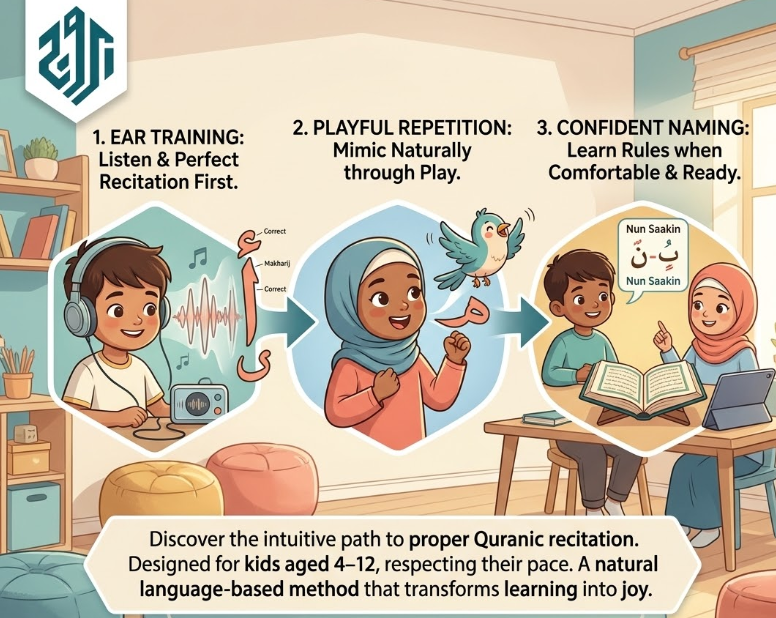
Discover the Buruj Academy Difference
Step into our virtual classrooms and see how our expert instructors make learning Quran and Arabic intuitive and clear. We focus on overcoming the specific hurdles non-native speakers face, building your confidence and connection with the Quran.
Excel in Your Quranic Studies
Join Buruj Academy and master the Quran with our structured, professional curriculum.
Book Your Free Trial4. The Story of Baby Musa on the River Teaches Kids That Allah’s Plan Unfolds Even When a Parent Feels Powerless
Musa’s mother was inspired by Allah to place her infant son in a basket on the river. A ruler wanted every newborn boy killed, and this was his only path to safety.
She obeyed despite her fear, and Allah returned her baby safely into her own arms that very same day, exactly as He had promised.
This story works especially well with toddlers and preschoolers, since the image of a baby in a basket on gentle water is simple to follow. There is no danger in the telling itself, only quiet, steady trust.
Read also:How to Teach Islamic Manners and Values to Kids
Why The Story of Baby Musa Often Moves Parents as Much as Their Children
Parents reading this one aloud often find themselves just as moved as their child. The story mirrors every parent’s own fear of losing control over a child’s safety.
We have watched grown adults pause mid-sentence right where the basket disappears from view, just before Allah’s promise is fulfilled.
وَأَوْحَيْنَآ إِلَىٰٓ أُمِّ مُوسَىٰٓ أَنْ أَرْضِعِيهِ فَإِذَا خِفْتِ عَلَيْهِ فَأَلْقِيهِ فِى ٱلْيَمِّ
Wa awhayna ila ummi musa an ardi’ihi fa idha khifti ‘alayhi fa alqihi fil-yamm
“And We inspired to the mother of Musa, ‘Suckle him, and when you fear for him, cast him into the river.'” (Al-Qasas 28:7)
We tell this part slowly, since it shows a frightened mother receiving direct comfort from Allah, which is a feeling many parents in the room recognize instantly.
This story pairs naturally with a wider conversation about trusting Allah through hard decisions. That trust applies not only in dramatic moments but in ordinary daily choices too.
Our How to Teach Islam to a Child guide expands on translating these bigger themes into everyday parenting language your child will actually understand.
How Musa’s Sister Becomes the Real Hero for Many Young Listeners
Children often latch onto Musa’s older sister rather than Musa himself, since she is closest to their own age and does something brave in real time.
She follows the basket quietly along the riverbank and later offers to find a nurse for the baby, all without giving away the family’s secret.
We point this detail out on purpose, especially to children with younger siblings. It shows that protecting someone you love does not require being the biggest or strongest person in the story.
Sometimes it just requires paying close attention and speaking up at the right moment.
Read also:The Benefits of Reading Quran for Kids
5. The Story of Sulaiman and the Ant Teaches Kids That Every Creature Matters to Allah No Matter How Small
Prophet Sulaiman was given the ability to understand the speech of animals, and one day his army approached a valley filled with ants. A single ant called out to warn the others to hide.
Sulaiman smiled with gratitude that Allah had let him witness such quiet care between creatures. It was a small moment that clearly moved him deeply.
This is our go-to story for the youngest listeners, usually three to six years old. It is short, gentle, and features an insect most children already find fascinating.
There is no danger in it at all, just a small, warm moment of wonder before sleep.
Why Younger Children Connect Best With This Story Over Any Other
In our teaching, the youngest children almost always ask the same question after hearing this one: can ants really talk to each other? We simply tell them Allah gave Sulaiman a special gift to understand them.
That answer is usually enough to satisfy their curiosity right before sleep.
قَالَتْ نَمْلَةٌ يَٰٓأَيُّهَا ٱلنَّمْلُ ٱدْخُلُوا۟ مَسَٰكِنَكُمْ لَا يَحْطِمَنَّكُمْ سُلَيْمَٰنُ وَجُنُودُهُۥ وَهُمْ لَا يَشْعُرُونَ
Qalat namlatun ya ayyuhan-namlu-dkhulu masakinakum la yahtimannakum sulaymanu wa junuduhu wa hum la yash’urun
“An ant said, ‘O ants, enter your dwellings that you not be crushed by Sulaiman and his soldiers while they perceive not.'” (An-Naml 27:18)
This is our favorite verse to close a bedtime rotation on, since it ends the night on gentleness rather than danger, which tends to help children settle down and fall asleep calmer.
For more animal-centered stories your child will love at this age, our Best Quran Tafseer for Kids collection has several gentle explanations.
Read also:How to teach the Quran for kids in a fun way?
They are written in the same warm, age-appropriate spirit as the story above.
How Do You Choose Which Bedtime Quran Story to Tell First?
Start with your child’s age rather than your own favorite story. A story that feels calming to a ten-year-old can feel confusing or even frightening to a toddler still working out what is real.
Sulaiman’s ant and baby Musa’s basket both work well for children under six. The Cave and Yunus suit children seven and older, who can sit comfortably with slightly heavier themes.
Once you find one story your child asks for by name, that is the story worth repeating for a full week. Only introduce the next one once this first favorite feels familiar.
Resist the urge to rush through all five stories in a single week just to feel like progress is being made. Slow repetition builds far more than speed ever does.
What Should I Do if My Child Asks a Question I Cannot Answer?
It is completely fine to say you are not sure and look it up together, since this models honest curiosity rather than pretending to know everything. Enrolling in a structured Online Islamic Studies Course for Kids also gives your family a reliable place to bring these bigger questions.
The first session is free in Buruj’s Islamic Studies Classes for Kids

What to Do When Your Child Wants a Different Story Every Single Night
Some children genuinely do prefer variety over repetition, and that preference is worth honoring rather than fighting against every evening. In these cases, rotate through all five stories on a weekly cycle.
Then circle back and notice which one your child brings up unprompted during the day. That unprompted mention, at breakfast or in the car, is usually the clearest sign of which story actually took root.
Our How to Learn Quran for Non-Arabic Speaking Kids guide walks through building this kind of gentle, repeatable rhythm at home. It avoids turning story time into another item on a checklist.
Master Bedtime Quran Stories With Buruj Academy’s Expert Instructors
Bedtime stories plant the seed, but a real relationship with the Quran grows through structured, guided learning alongside a caring teacher.
Buruj Academy’s Online Quran Classes for Kids pair every child with Ijazah-certified, Al-Azhar-trained instructors who specialize in teaching non-Arabic speaking children aged four to fifteen.
Our approach follows the Buruj Method, sound-before-rules, so pronunciation feels natural rather than memorized.
Sessions are personalized, flexible around your family’s schedule, and delivered one-on-one with real-time correction.
If your child already loves the stories above, book a free trial lesson and see how bedtime moments grow into real Quran reading ability.
Take the next step in your learning journey today by enrolling in one of our specialized programs:
- Online Quran Classes
- Online Quran Classes for Beginners
- Online Quran Classes for Adults
- Online Quran Classes for Ladies
- Online Quran Classes for Kids
- Quran Reading Course
- Quran Recitation Course
- Online Ijazah Course
- Online Qirat Course
Don’t wait to transform your relationship with the Holy Quran. Join our global community of students and book your free evaluation session now!
Expand Your Islamic Knowledge
Join our structured online courses led by qualified instructors to deepen your understanding of the Deen.
Join a Free Trial ClassDiscover the Buruj Academy Difference
Step into our virtual classrooms and see how our expert instructors make learning Quran and Arabic intuitive and clear. We focus on overcoming the specific hurdles non-native speakers face, building your confidence and connection with the Quran.
Conclusion
A handful of well-chosen stories, told with warmth and repeated often, can shape how a child relates to their faith for years to come. What matters most is not covering every surah.
It is making the ones you do share feel personal, safe, and worth remembering long after the light goes out.
Start with one story tonight. Let your child ask questions, retell it back to you in their own words, and choose which one they want to hear again tomorrow.
That small nightly habit, more than any single lesson, is what keeps faith close to a child’s heart as they grow.
Frequently Asked Questions About Bedtime Quran Stories
What Age Should Kids Start Hearing Quran Stories at Bedtime?
Most children can follow simple Quran stories from around age three, starting with short, gentle stories like Sulaiman and the ant. As children grow older, around seven and up, they can handle stories with more emotional weight, such as the People of the Cave.
How Long Should a Bedtime Quran Story Be?
Five to seven minutes is usually enough for a young child’s attention span right before sleep. Keeping the story short and ending on a calm note helps children drift off peacefully rather than becoming overstimulated by too much detail.
Should I Read the Same Bedtime Quran Story More Than Once?
Yes, repeating the same story across several nights actually helps children retain both the plot and the lesson far better than hearing a brand new one every single night. Children often start requesting repeats on their own once a story becomes a genuine favorite.
Is It Okay to Simplify Quran Stories for Very Young Children?
Yes, simplifying language and softening intense details is appropriate for toddlers and preschoolers, as long as the core facts and the lesson itself stay accurate. As your child grows older, you can gradually add back detail and depth to the very same stories.