 Islamic
| Key Takeaways |
| Islamic manners for kids rest on akhlaq, a Quranic and Prophetic framework of character built through daily, repeated practice. |
| Saying salam, honoring parents, and speaking gently are among the ten core habits every Muslim child can learn early. |
| The Prophet ﷺ taught that the best believers are those with the best manners, per Sahih al-Bukhari 6029. |
| Children learn Islamic etiquette best through modeling, short daily reminders, and connecting each manner to a Quran verse or Hadith. |
| Structured Quran and Islamic Studies classes reinforce these manners by rooting them in text the child can read themselves. |
Many parents in the West notice the same pattern: their child can recite Surahs beautifully but still struggles with patience, gentle speech, or respect for elders in daily life. This gap between recitation and conduct is exactly what Islamic manners for kids — akhlaq — is meant to close.
Islamic manners for kids are the practical habits derived from Quran and Sunnah that shape a child’s character: honesty, respect, gentleness, gratitude, and self-control. Teaching them early, through modeling and short daily reminders, builds a foundation that supports both faith and everyday behavior.
Table of Contents:
Every Good Manner Begins With Loving Allah and His Messenger
Good akhlaq is not a separate subject from faith — it is one of the clearest signs of it. A child who understands that manners are acts of worship, not just social rules, internalizes them far more deeply than one who is simply told to “be polite.”
The Prophet ﷺ made this connection explicit. He said the believers most complete in faith are those with the best manners and character, as recorded in Sahih al-Bukhari 3559. This single narration reframes every manner on this list as a matter of faith, not etiquette.
For parents raising children in Western countries, this reframing matters. Kids absorb “manners” messaging constantly from school and media. Teaching them that Islamic good manners for kids flow from loving Allah gives the habit staying power that generic politeness training lacks.
In our sessions at Buruj Academy, we’ve noticed that children retain akhlaq lessons longest when they first understand why — the love of Allah and the Prophet ﷺ — rather than jumping straight to what to do.
Pairing this foundation with structured learning through our Online Islamic Studies Classes for Kids course gives children a consistent framework where every manner connects back to its source in Quran and Hadith, rather than floating as an isolated rule.
The first session is free in Buruj’s Islamic Studies Classes for Kids
1. Saying Salam Spreads Peace and Strengthens the Muslim Community
Islamic etiquette for kids starts with the greeting of salam, and it is far more than a polite hello. The Prophet ﷺ instructed Muslims to spread the greeting of Salam, feed others, uphold the ties of kinship, and pray during the night when people are sleeping, linking this greeting to entering Paradise, as narrated in Sunan Ibn Majah 3251.
Teaching a child to say “Assalamu Alaikum” consistently — to family, teachers, and other Muslims — does two things at once. It builds a habit of warmth toward others, and it quietly reinforces Muslim identity in environments where the child may be one of few Muslims present.
We’ve also found it helpful to teach children the etiquette around who greets first. The Prophet ﷺ said the young should greet the elderly, a rider should greet a pedestrian, and a small group should greet a larger one, according to a hadith agreed upon by Al-Bukhari and Muslim. This detail turns salam into a lesson in humility, not just a phrase.
Table: Salam Etiquette by Situation
| Situation | Who Greets First |
| Young person meets an elder | The young person greets first |
| Someone walking meets someone seated | The walker greets first |
| A small group meets a larger group | The smaller group greets first |
This structure teaches children that manners often involve noticing others before expecting to be noticed.
2. Good Habits in Islam for Kids Place Obedience and Kindness to Parents at an Extraordinarily High Level
Good habits in Islam for kids place obedience and kindness to parents at an extraordinarily high level — directly after the command to worship Allah alone. This is not incidental placement; it signals how central this manner is to a child’s entire moral formation.
Allah commands in the Quran:
وَقَضَىٰ رَبُّكَ أَلَّا تَعْبُدُوا إِلَّا إِيَّاهُ وَبِالْوَالِدَيْنِ إِحْسَانًا
Wa qada rabbuka alla ta’budu illa iyyahu wa bil-walidayni ihsana
“And your Lord has decreed that you not worship except Him, and to parents, good treatment.” (Al-Isra 17:23)
For children specifically, this means small daily actions: lowering the voice when a parent corrects them, helping without being asked twice, and never showing impatience even when a parent repeats an instruction. These are teachable, concrete behaviors rather than abstract values.
Parents pursuing this foundation alongside memorization often ask how the two connect — our guide on the importance of memorizing Quran for kids explains how verses like this one become internalized character anchors once a child has memorized them, not just heard them.
3. Islamic Teachings for Kids Include Speaking Gently
Islamic teachings for kids on speech center on one of the most quoted parenting passages in the Quran — Luqman’s advice to his son. Children are naturally loud, but Islam teaches that volume and harshness are not virtues, and moderation in speech is a mark of good character.
Allah quotes Luqman’s counsel:
وَاقْصِدْ فِي مَشْيِكَ وَاغْضُضْ مِن صَوْتِكَ ۚ إِنَّ أَنكَرَ الْأَصْوَاتِ لَصَوْتُ الْحَمِيرِ
Waqsid fi mashyika waghdud min sawtik, inna ankaral-aswati lasawtul-hamir
“And be moderate in your pace and lower your voice; indeed, the most disagreeable of sounds is the voice of donkeys.” (Luqman 31:19)
Children respond well to this verse specifically because the imagery is memorable rather than abstract.
In our experience, we introduce this ayah alongside simple role-play: showing a child the difference between asking for something calmly versus shouting for it, then connecting that difference directly to Luqman’s words.
This verse also opens naturally into broader Quranic vocabulary work. Our Arabic words for beginners resources build the foundation children need to eventually read and understand ayat like this one directly in Arabic, through our Quranic Arabic Course for Kids course.
Try Buruj’s Quranic Arabic Course for Kids for free now
4. Kindness to Animals Is a Sign of Mercy in Islam
10 good manners in Islam consistently include how a child treats creatures weaker than themselves, and animals are a frequent, tangible test of this. Islam ties mercy toward animals directly to a person’s standing before Allah, making this manner both practical and spiritually significant.
The Prophet ﷺ taught that mercy is central to how Muslims are meant to live, and that this mercy is not limited to human relationships. Classical scholarship on this topic consistently draws on Prophetic teaching that links compassion toward all living things — including animals — to a believer’s overall character and reward.
For children, this translates into concrete actions: feeding a family pet before eating themselves, not causing unnecessary harm to insects or birds, and treating animals gently rather than roughly during play. These are small, daily-life tests of mercy that a child can practice without needing to fully grasp the theological weight behind them yet.
We’ve noticed that children who practice mercy toward animals often show measurably more patience toward younger siblings — the habit of gentleness generalizes across relationships once it becomes routine.
Read also:Islamic Stories for Kids
Discover the Buruj Academy Difference
Step into our virtual classrooms and see how our expert instructors make learning Quran and Arabic intuitive and clear. We focus on overcoming the specific hurdles non-native speakers face, building your confidence and connection with the Quran.
Expand Your Islamic Knowledge
Join our structured online courses led by qualified instructors to deepen your understanding of the Deen.
Join a Free Trial Class5. Respecting Elders and Showing Mercy to the Young Builds Social Harmony
Islamic manners for kids book collections almost universally include the pairing of two duties: mercy toward those younger, and respect toward those older. This dual instruction teaches a child their place in a community that spans generations, not just their immediate family.
A well-known narration captures this balance: the Prophet ﷺ said he is not one of us who does not have mercy on our young and does not respect our elders, as recorded in Jami’ at-Tirmidhi 1919. Scholars have noted some debate over this narration’s chain of transmission, though its meaning is widely accepted and consistently reinforced elsewhere in Sunnah.
This is a manner children can practice immediately and visibly: standing to offer a seat to a grandparent, listening without interrupting when an elder speaks, and being extra patient and gentle with younger cousins or siblings. The visibility of this manner makes it one of the easiest for parents to reinforce and praise in the moment.
Children learning about the Prophet’s ﷺ own example with elders and the young often find it easier to connect abstract manners to lived behavior — our piece on the Prophet Muhammad story for kids walks through several moments where his ﷺ character modeled exactly this balance.
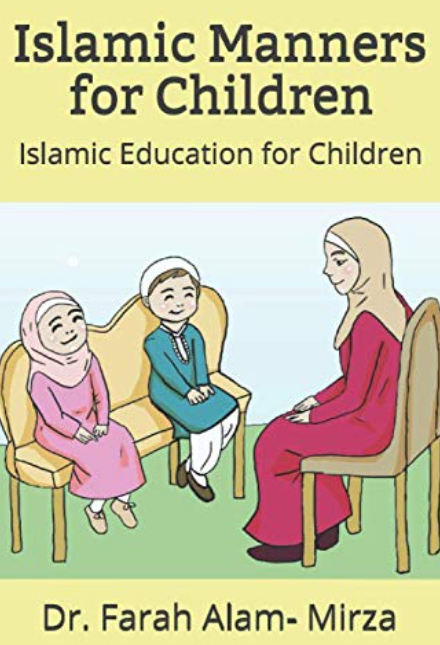
Islamic Manners for Kids Book
Whether you are teaching them about daily prayers, respect for elders, kindness, or general sunnahs, finding the right Islamic manners for kids book provides a beautiful, relatable foundation to help shape their character and everyday behavior.
6. Honesty in Small Things Prevents Dishonesty in Large Things
Akhlaq for kids treats honesty as a habit built in small, low-stakes moments — not something that suddenly appears when it matters most. A child who is taught to admit small mistakes without fear grows into someone who tells the truth under real pressure.
Islam places extraordinary weight on truthfulness as a defining trait of a believer, warning strongly against its opposite. For children specifically, the practical application is straightforward: owning up to breaking something, telling a parent the real reason homework wasn’t finished, and not exaggerating stories to seem more impressive to friends.
In our teaching experience, the most common mistake parents make here is punishing every honest confession the same way they’d punish the original mistake.
When a child tells the truth about something wrong and is met with the same harsh response as if they’d lied, they quickly learn that honesty doesn’t pay — and stop offering it.
Buruj Academy’s instructors consistently recommend praising the honesty explicitly, separate from any consequence for the action itself.
This habit connects directly to the trustworthiness expected of anyone learning the Quran, a theme explored further in our guide on how to teach Islam to a child.
7. Sharing and Generosity Reflect the Prophet’s ﷺ Own Character
Islamic good manners for kids place heavy emphasis on generosity, modeled directly on the Prophet’s ﷺ own well-documented character. Sharing is taught not as an optional nicety but as a defining trait of someone who takes their faith seriously.
The same narration establishing salam as a path to Paradise also ties it to feeding others: exchange greetings of peace, feed people, strengthen ties of kinship, and pray while others sleep, and you will enter Paradise in peace, as recorded in Riyad as-Salihin 848. Feeding and generosity sit alongside salam as core, connected practices — not separate categories of good behavior.
For a child, generosity starts small: sharing snacks without being asked, letting a sibling choose the game first, or giving up a toy temporarily so a guest can play with it.
Parents often worry that constant sharing will make a child feel taken advantage of — in our experience, framing generosity as choosing to give rather than being forced to give preserves the child’s sense of agency while still building the habit.
Read also:Islamic Vocabulary for Kids
8. Modesty in Dress and Behavior Protects a Child’s Dignity
Islamic teachings for kids introduce modesty gradually, long before it becomes a matter of formal religious obligation at puberty. Early modesty habits — in dress, speech, and behavior — build comfort with the concept well before it carries higher stakes.
For young children, this manner looks different from adult modesty requirements. It includes basic privacy habits (knocking before entering a room, changing clothes privately), moderate and respectful speech, and avoiding boastfulness about possessions or achievements in front of others.
We’ve found that introducing modesty as a form of self-respect, rather than restriction, helps children — especially those growing up surrounded by different cultural norms in Western schools — feel confident rather than singled out.
This framing matters particularly for families balancing Islamic identity with life in a non-Muslim-majority environment, a challenge our guide on how to keep Islamic identity for kids addresses directly.
9. Patience During Difficulty Reflects Trust in Allah’s Plan
Good habits in Islam for kids must include patience, since children encounter frustration constantly — a hard math problem, a lost game, a sibling’s teasing. Teaching patience as a spiritual practice, not just a personality trait, gives children a framework for handling these moments that outlasts any single incident.
Islam frames patience, sabr, as a quality Allah loves and rewards, closely tied to trust in His wisdom during hardship.
For a child, this becomes practical through simple phrases and habits: saying “Alhamdulillah” after a disappointment rather than only after good news, and pausing before reacting in anger.
Patience-Building Habits by Age Group
| Age Group | Practical Patience Habit |
| Ages 4–6 | Waiting turns in games; short breathing pause before reacting |
| Ages 7–10 | Saying a dua when frustrated; identifying feelings before acting |
| Ages 11+ | Reflecting on setbacks in a journal; discussing sabr in real situations |
This table reflects general developmental patterns; individual children will progress at their own pace.
Patience also plays a direct role in memorization consistency, which is why we often connect this manner to our resources on the best age to memorize Quran, since sustained memorization itself is a long-term exercise in sabr.
10. Gratitude to Allah Shapes a Child’s Entire Outlook on Life
10 good manners in Islam conclude naturally with gratitude, because shukr — thankfulness — is the attitude that makes every other manner sustainable rather than resentful.
A grateful child obeys parents, shares generously, and speaks gently because they recognize these as responses to blessings already received, not burdens imposed on them.
Allah opens the Quran itself with a declaration of His mercy, and the Quran repeatedly ties gratitude to increased blessing and inner contentment.
For children, gratitude practice can be as simple as naming three specific things they’re thankful for before sleep, or thanking Allah aloud after small daily events — a good meal, a fun day, a recovered lost item.
We’ve observed that children introduced to gratitude as a daily, named practice — rather than an occasional reminder — develop noticeably more contentment during ordinary disappointments, since they’ve built a habit of noticing what’s present rather than only what’s missing.
Read also:Islamic Science for Kids
Build Lasting Akhlaq With Buruj Academy’s Expert Instructors
Teaching Islamic manners for kids works best when paired with structured Quran and Islamic Studies instruction that roots each habit in its textual source. Buruj Academy makes this connection explicit in every lesson.
Our Al-Azhar University graduate instructors, many holding Ijazah certification, bring 12+ years of experience teaching non-Arabic speaking children the Quran, Arabic, and Islamic Studies. Through the Buruj Method — Patience-before-performance — children build akhlaq without pressure or rushing.
Our Online Islamic Studies Classes for Kids course combines personalized 1-on-1 sessions, flexible 24/7 scheduling, and real-time guidance tailored to your child’s age and pace.
Book a free trial lesson today and give your child a foundation in both Quran and character that lasts a lifetime.
Deepen Your Faith with Comprehensive Islamic Scholarship
Nurture your soul and expand your understanding of the Divine message with a structured approach to sacred knowledge. At Buruj Academy, we believe that learning the foundations of our faith is a lifelong journey that brings clarity, purpose, and peace to every believer.
Our curriculum is designed to go beyond the basics, offering profound insights into the interpretation of the Quran, the wisdom of the Prophetic tradition, and the practical application of Islamic principles in the modern world.
Join a global community of learners and find the path that best supports your spiritual and intellectual growth:
- Online Studies Islamic Classes (General & Flexible)
- Islamic Studies Course for Beginners (Foundational Knowledge)
- Islamic Studies Classes for Kids (Engaging & Values-Based)
- Islamic Studies Classes for Adults (In-Depth Theological Discussion)
- Islamic Studies Classes for Ladies (Sisterhood & Specialized Learning)
- Islamic Studies Classes for New Muslims (Guided Support & Essentials)
- Tafseer Al Quran Course (Unlocking Divine Meanings)
- Quranic Sciences (Uloom Al Quran) Course (Advanced Linguistic & Historical Context)
Ready to enrich your life with sacred knowledge? Connect with Buruj Academy today and book your free introductory session to begin your journey!
Expand Your Islamic Knowledge
Join our structured online courses led by qualified instructors to deepen your understanding of the Deen.
Join a Free Trial ClassDiscover the Buruj Academy Difference
Step into our virtual classrooms and see how our expert instructors make learning Quran and Arabic intuitive and clear. We focus on overcoming the specific hurdles non-native speakers face, building your confidence and connection with the Quran.
Conclusion
Raising a child with strong Islamic manners is less about a single lesson and more about weaving akhlaq into daily life until it becomes second nature. Each habit here — from salam to gratitude — draws directly from Quran and Sunnah, giving parents a textually grounded starting point rather than vague moral advice.
What makes these manners lasting is repetition paired with understanding: a child who knows why Luqman told his son to lower his voice retains that lesson far longer than one simply told to be quiet. Small, consistent practice, modeled by parents and reinforced through structured learning, builds the character every family hopes to pass on.
Frequently Asked Questions About Islamic Manners for Kids
What Age Should Parents Start Teaching Islamic Manners to Children?
Parents can begin as early as ages 3–4 with simple habits like saying salam and sharing. Deeper concepts, such as patience tied to trust in Allah, develop gradually as the child’s understanding matures, typically strengthening significantly between ages 7 and 10.
How Can Parents Teach Islamic Manners Without Constant Lecturing?
Modeling the behavior consistently works better than repeated verbal instruction. Children absorb manners by watching parents say salam, show patience, and speak gently, then imitating these patterns naturally during everyday family interactions and routines.
Are Islamic Manners Different From General Good Manners?
Islamic manners share overlap with universal politeness but are rooted specifically in Quran and Sunnah, carrying spiritual weight beyond social convenience. A child taught akhlaq understands manners as worship, which tends to build more consistent, internally motivated behavior.
What Is the Difference Between Akhlaq and Adab?
Akhlaq refers to a person’s overall character and moral disposition, while adab describes the specific etiquette and manners within particular situations, such as eating or greeting. Adab practices are the practical expressions that shape and reveal akhlaq.