 Islamic
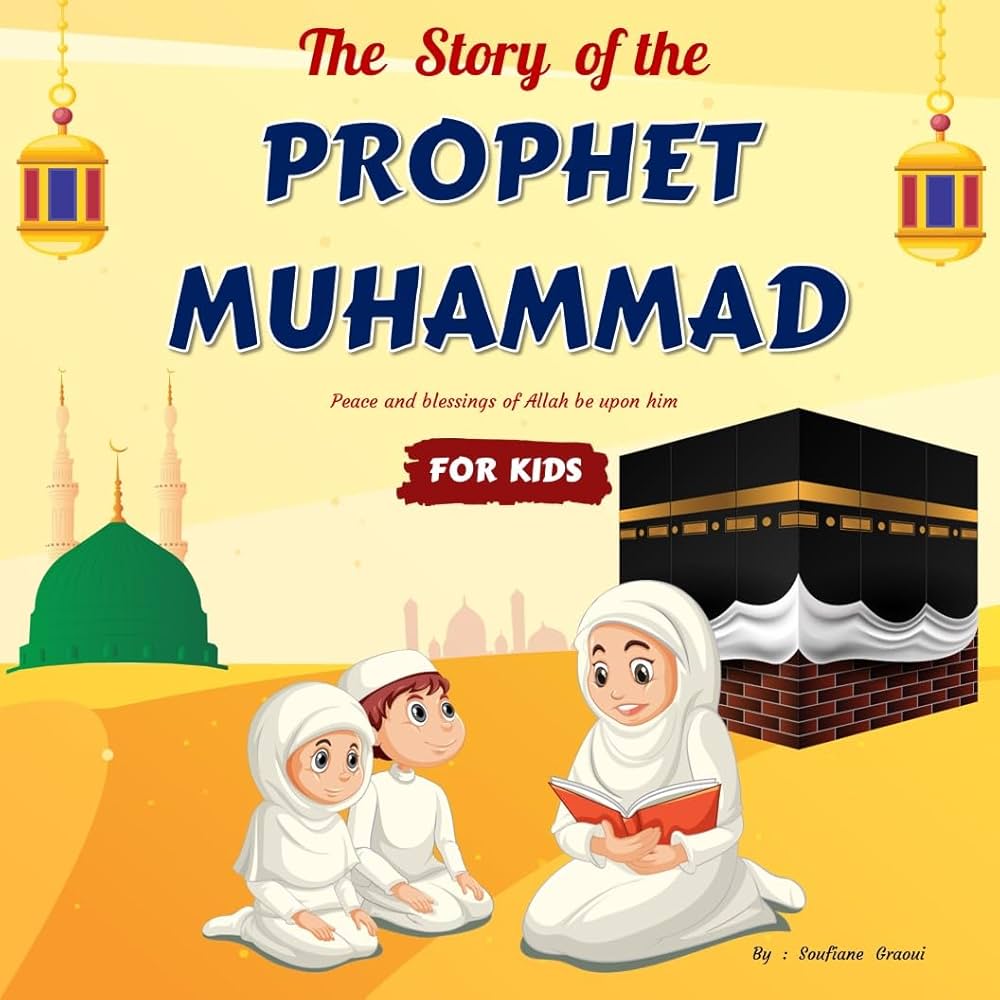
Every Muslim parent in the West faces the same quiet challenge: how do you make the Prophet’s story feel alive for a child growing up surrounded by superheroes and storybooks? The answer is simpler than most parents realize — tell it the way it happened, in stages, with heart.
Buruj Academy’s teaching team has guided hundreds of children through Islamic studies, and we consistently see that children who learn the Prophet’s story in structured, age-appropriate phases develop a lasting emotional bond with him ﷺ — not just factual knowledge. Here is exactly how to do it.
Table of Contents:
1. Before the Prophet Was Born, Something Amazing Happened in Makkah
The Prophet’s story begins even before his birth, and this pre-story detail captivates children immediately. In the year 570 CE — called the Year of the Elephant — a powerful army led by Abraha marched toward Makkah with war elephants to destroy the Kaaba. Allah sent flocks of birds carrying small stones that drove the entire army away.
This event is recorded in the Quran:
أَلَمْ تَرَ كَيْفَ فَعَلَ رَبُّكَ بِأَصْحَٰبِ ٱلْفِيلِ
Alam tara kayfa fa’ala rabbuka bi-as-habil-feel
“Have you not considered how your Lord dealt with the companions of the elephant?” (Al-Fil 105:1)
This surah refers to the Year of the Elephant — the very year the Prophet ﷺ was born. Children find it powerful that Allah protected Makkah for his arrival.
Ask your child: “Why do you think Allah protected the Kaaba that year?” Let them wonder. That wondering is the beginning of love.
2. A Baby Named Muhammad Was Born Into a Family Full of Love and Honor
Prophet Muhammad ﷺ was born in Makkah into the noble Quraysh tribe, in the family of Banu Hashim — a family known for its generosity and honor. His father, Abdullah, had passed away before his birth, and his mother, Aminah, raised him with deep love.
Following Arab custom, he was sent to the desert to live with a foster mother named Halimah Al-Sa’diyah. Children love this part — it felt like an adventure. He lived with her tribe, learned to speak pure Arabic, and breathed clean desert air.
| Stage | Who Cared for Him | Age |
| Birth – 2 years | Mother Aminah + Foster mother Halimah | 0–2 |
| Early childhood | Halimah’s desert tribe | 2–6 |
| After mother passed | Grandfather Abd al-Muttalib | 6–8 |
| After grandfather passed | Uncle Abu Talib | 8+ |
Sadness came early for Muhammad ﷺ. His mother passed away when he was just six years old. His grandfather cared for him with tremendous love, then also passed away two years later.
Help your child understand: Allah was preparing him, not abandoning him. Loss taught him empathy — the same empathy he would show the world as a prophet.
3. The Young Muhammad Was Known as Al-Amin — the Most Trustworthy Person in Makkah
Long before prophethood, the people of Makkah gave Muhammad ﷺ a title no one else held: Al-Amin — “the Trustworthy.” He never lied. He never cheated. Even his enemies trusted him with their valuables.
Children grasp this beautifully. Ask them: “If everyone in your school called you ‘the honest one,’ how would that feel?”
He worked as a merchant and traveled trade routes with his uncle Abu Talib. At twenty-five, he married Khadijah رضي الله عنها, a wise and successful businesswoman who had noticed his extraordinary character. She was fifteen years older than him and became his greatest supporter — a fact that teaches children that strength and love come in many forms.
Buruj Academy’s Islamic Studies Classes for Kids course covers the Prophet’s character and Seerah in a structured, age-appropriate curriculum taught by Al-Azhar graduates — giving children both the story and its lessons together.
The first session is free in Buruj’s Islamic Studies Classes for Kids
4. One Night in a Cave Changed the Whole World Forever
When Muhammad ﷺ was forty years old, he often retreated to Cave Hira on a mountain called Jabal al-Nour — the Mountain of Light — to think and reflect in solitude. One night in the month of Ramadan, the Angel Jibreel (Gabriel) appeared to him and squeezed him tightly, then commanded:
ٱقْرَأْ بِٱسْمِ رَبِّكَ ٱلَّذِى خَلَقَ
Iqra bismi rabbikal-lathee khalaq
“Read in the name of your Lord who created.” (Al-Alaq 96:1)
Muhammad ﷺ was frightened. He ran home trembling and told Khadijah what had happened. She wrapped him in a blanket and said words every child should hear: “Allah will never disgrace you. You maintain family ties, speak truthfully, and help the poor.”
She believed in him immediately — and became the first Muslim.
Use a blanket prop when telling this story to young children. Have them imagine being wrapped up while something scary just happened. That physical detail creates emotional memory.
In our sessions at Buruj Academy, we find children who engage with the story through imagination remember it for years.
5. The First Muslims Were Brave Because Believing Was Not Easy
The early years of Islam were difficult. The Prophet ﷺ began sharing his message quietly, then publicly. Most people of Makkah rejected him. Some laughed. Some threatened. Some hurt the Muslims who had less power to protect themselves.
Among the first believers were:
- Khadijah — his wife, the first adult woman
- Abu Bakr — his closest friend
- Ali ibn Abi Talib — his young cousin
- Bilal ibn Rabah — a formerly enslaved man who was tortured for his faith
Bilal’s story deserves its own telling for children. He was placed in the burning desert sun with a heavy rock on his chest to force him to deny Islam.
He said only one word: “Ahad, Ahad” — “One, One” — meaning Allah is One. Abu Bakr purchased his freedom, and Bilal later became the first person to call the Adhan.
Ask your child: “What would you say if someone tried to make you forget Allah?”
6. Prophet Muhammad ﷺ Traveled to Jerusalem and Then to the Heavens
One miraculous night, Allah took Prophet Muhammad ﷺ on an extraordinary journey. First, he traveled from Makkah to Jerusalem (Al-Aqsa) — a distance that would take weeks — in a single night, riding a creature called Al-Buraq. Then he ascended through the heavens, meeting earlier prophets along the way.
Allah gave the Prophet ﷺ the gift of the five daily prayers on this night. Originally fifty prayers were commanded. Prophet Musa advised the Prophet to ask for a reduction, and Allah reduced them to five — while preserving the full reward of fifty.
Children love this story. It shows that prophets cared for each other, that Allah is merciful, and that prayer is a gift — not a burden.
You can explore Quran activities for kids that bring stories like this to life through crafts, maps, and visual timelines.
Read also: Islamic Studies Books for Kids
7. When the Prophet Left Everything He Loved to Protect His Community
After thirteen years of hardship in Makkah, the leaders of Quraysh plotted to kill the Prophet ﷺ. By Allah’s permission, he and his closest friend Abu Bakr رضي الله عنه slipped away at night and hid in Cave Thawr for three days while their enemies searched.
The Quran captures that moment:
إِذْ يَقُولُ لِصَـٰحِبِهِۦ لَا تَحْزَنْ إِنَّ ٱللَّهَ مَعَنَا
Ith yaqoolu lisahibihi la tahzan inna Allaha ma’ana
“When he said to his companion: Do not grieve; indeed Allah is with us.” (At-Tawbah 9:40)
Enemies reached the mouth of the cave — and then turned back, because Allah had caused a spider to spin a web and a dove to build a nest at the entrance, making it look undisturbed.
Children find this detail astonishing. Allah used the smallest of creatures to protect His prophet. Nothing is too small for Allah to use. This is the lesson parents should anchor — trust in Allah even when the situation looks impossible.
This migration to Madinah is called the Hijra, and it marks the beginning of the Islamic calendar.
Expand Your Islamic Knowledge
Join our structured online courses led by qualified instructors to deepen your understanding of the Deen.
Join a Free Trial Class8. In Madinah, the Prophet Built a Community Based on Brotherhood and Justice
Madinah welcomed the Muslims with joy. The Prophet ﷺ immediately did something remarkable — he paired each Muslim who had migrated (Muhajirun) with a Muslim already living in Madinah (Ansar) as brothers. These pairs shared homes, food, and wealth.
He also built the first masjid — Masjid al-Nabawi — with his own hands alongside his companions. Children should know: the Prophet ﷺ did not stand aside and watch others work. He carried bricks himself.
In Madinah, he established a written agreement — the Charter of Madinah — that protected the rights of Muslims, Jews, and other communities living together. This document is considered one of history’s earliest constitutional agreements.
For families wanting to connect this history to Quran learning, our Quran course for kids teaches children to read and recite the same Quran the Prophet ﷺ received, guided by Ijazah-certified instructors.
Help your child start learning the Quran with a FREE trial
9. Prophet Muhammad Faced Several Battles After the Hijra
The early Muslims faced several battles after the Hijra. These can be challenging to explain to children, but the key lesson is straightforward: the Muslims fought to defend themselves and their right to practice Islam — not to force anyone.
| Battle | Year | Core Lesson for Kids |
| Badr | 624 CE | Small number of believers can overcome great odds with Allah’s help |
| Uhud | 625 CE | Even when we make mistakes, we can return to Allah and recover |
| Khandaq (Trench) | 627 CE | Smart planning (digging a trench) is part of trusting Allah |
At Badr, 313 Muslims faced an army of over 1,000. Allah sent angels to assist them — and they won. The Prophet ﷺ wept with gratitude after the battle.
At Uhud, archers left their posts against the Prophet’s orders, and the Muslims suffered losses. Even then, the Prophet ﷺ showed concern for his companions before himself. His character held even in pain. That is the lesson to share with your child.
Exploring prophets in Islam for kids alongside the Seerah helps children see the full pattern of prophethood across all messengers.
10. The Conquest of Makkah is the Day Mercy Won Over Revenge
In 630 CE, the Prophet ﷺ returned to Makkah with an army of ten thousand Muslims — the same city that had driven him out, harmed his companions, and buried his loved ones. The Quraysh expected punishment.
Instead, he asked: “What do you think I will do to you?”
They said: “A generous brother and the son of a generous brother.”
He replied: “Go — you are free.”
Every child needs to hear this moment read slowly. This is the man who had been mocked, starved, pelted with rocks, and whose followers had been killed — and he forgave them all.
He entered the Kaaba and destroyed the idols inside it, reciting:
وَقُلْ جَآءَ ٱلْحَقُّ وَزَهَقَ ٱلْبَـٰطِلُ إِنَّ ٱلْبَـٰطِلَ كَانَ زَهُوقًا
Wa qul jaa-al haqqu wa zahaqal-batil, innal-batila kana zahouqa
“And say: Truth has come, and falsehood has departed. Indeed, falsehood is bound to depart.” (Al-Isra 17:81)
Ask your child: “Has anyone ever been mean to you? What would forgiving them feel like?”
11. The Final Sermon Was a Message the Prophet Left for All of Us
In his final years, Prophet Muhammad ﷺ performed his one and only Hajj — the Farewell Pilgrimage — in 632 CE. Standing on the plain of Arafat before over 100,000 Muslims, he delivered his final sermon.
His words were simple and timeless, and children can understand them:
- “Your lives and your property are sacred to one another.”
- “No Arab is superior to a non-Arab, and no non-Arab is superior to an Arab.”
- “I leave behind two things — if you hold to them, you will never go astray: the Book of Allah and the Sunnah of His Prophet.”
He then asked: “Have I delivered the message?” And the crowd answered: “Yes!”
He looked toward the sky and said: “O Allah, be my witness.”
Shortly after, the final verse of the Quran was revealed. The message was complete.
As recorded in Sahih Muslim, the Prophet ﷺ described the pillars of this farewell address in his own words during the Hajj — a moment Muslims across generations have held as a covenant.
12. The Prophet Passed Away, But His Legacy Lives in Every Muslim Heart
On the 12th of Rabi al-Awwal, 632 CE, Prophet Muhammad ﷺ passed away in Madinah at the age of sixty-three. He was in the arms of Aisha, his wife.
Abu Bakr came out to the Muslims, many of whom were in shock. He said words that echo across Islamic history:
“Whoever worshipped Muhammad — Muhammad has died. Whoever worshipped Allah — Allah is alive and will never die.”
Then he recited the verse:
وَمَا مُحَمَّدٌ إِلَّا رَسُولٌ قَدْ خَلَتْ مِن قَبْلِهِ ٱلرُّسُلُ
Wa ma Muhammadun illa rasoolun qad khalat min qablihi ar-rusul
“Muhammad is not but a messenger. Other messengers have passed on before him.” (Aal-Imran 3:144)
Tell your child: “He left us the Quran, the Sunnah, and the love of millions across 1,400 years. Every time you pray, you are connected to him.”
Encourage your child to begin learning the Quran he left behind. Our Hifz course for kids helps children memorize the words of Allah that the Prophet ﷺ recited — guided by Al-Azhar-trained Hifz specialists using gentle, age-appropriate methods.
Start your child’s Hifz classes with a FREE session
Read also: Tajweed Games and Activities for Kids
Discover the Buruj Academy Difference
Step into our virtual classrooms and see how our expert instructors make learning Quran and Arabic intuitive and clear. We focus on overcoming the specific hurdles non-native speakers face, building your confidence and connection with the Quran.
Start Your Child’s Connection to the Prophet ﷺ with Buruj Academy’s Islamic Studies Course for Kids
The Prophet’s story is the most important story a Muslim child will ever learn — and how they first encounter it shapes their relationship with Islam for life. Teaching it in phases, as we have outlined here, ensures children grow with the story rather than being overwhelmed by it.
Buruj Academy’s Islamic Studies Classes for Kids course provides:
- Al-Azhar University graduates with 12+ years of Islamic education experience
- Structured Seerah curriculum adapted for children aged 4–15
- Personalized 1-on-1 online sessions with flexible scheduling
- Real-time engagement tailored to your child’s age and attention span
- A safe, encouraging environment where children ask questions freely
Book your child’s free trial lesson and let our instructors bring the Prophet’s story to life — the way it deserves to be told.
Enroll your child in one of our specialized, kid-friendly tracks today:
- Online Quran Classes for Kids
- Tajweed Classes for Kids
- Hifz Classes for Kids
- Online Arabic Classes for Kids
- Quranic Arabic Course for Kids
- Noorani Qaida Course for Kids
- Islamic Studies Classes for Kids
Ready to watch your child grow in knowledge and character? Join the Buruj Academy family and book a free trial session for your child today!
Expand Your Islamic Knowledge
Join our structured online courses led by qualified instructors to deepen your understanding of the Deen.
Join a Free Trial ClassConclusion
The story of Prophet Muhammad ﷺ is a living relationship. When children learn it phase by phase, absorbing the mercy of his forgiveness, the courage of his companions, and the gentleness of his character, they do not just know about him. They love him.
Parents in the West often feel the weight of passing this love on in an environment full of distractions. The phases above are designed to make that responsibility manageable — one story at a time, one conversation at a time. Alhamdulillah, the tools, the stories, and the guidance are all available. What remains is simply to begin.
Frequently Asked Questions About the Prophet Muhammad Story for Kids
At What Age Should I Start Teaching My Child About Prophet Muhammad ﷺ?
You can begin as early as age three with simple statements — “Prophet Muhammad ﷺ was the kindest person” — and short stories like his love for cats or his gentleness with children. Structured phase-by-phase storytelling works well from age five onward, with deeper historical context introduced gradually from age eight or nine.
How Do I Explain the Prophet’s Battles to Young Children Without Scaring Them?
Frame battles as moments of protection, not aggression. Emphasize that Muslims were defending their right to pray and live freely. Focus on character moments — the Prophet’s concern for the injured, his mercy after victory — rather than graphic details. The lesson is always: Muslims protect, forgive, and trust Allah.
What Is the Best Way to Help Kids Remember the Seerah Long-Term?
Repetition through stories, not memorization of dates. Retell the same phases across different ages with more depth each time. Use visual timelines, crafts, and Quran verses that connect to each event. Checking out Quran learning tools for kids can help reinforce the connection between Seerah and Quran.
Should I Connect the Prophet’s Story to Quranic Verses When Teaching Kids?
Yes — and this is one of the most powerful approaches we use at Buruj Academy. When children hear the verse “Iqra” and know it was the first word revealed to the Prophet ﷺ, the Quran becomes personal to them. Connecting story to scripture builds emotional Quran attachment from an early age. See our guide on reading the Quran for the first time for how to take that next step.
How Is the Prophet Muhammad ﷺ Different from Other Prophets in Islam?
Prophet Muhammad ﷺ is the final prophet — the Seal of the Prophets — and his message is universal and permanent, while earlier prophets were sent to specific nations. His Quran remains fully preserved without change. Children can explore the full context of prophethood through our article on prophets in Islam for kids to understand how all prophets connect.