 Islamic
Choosing a gift for a Muslim child often means sorting through generic toys that hold no lasting meaning. Parents want something that reflects their child’s identity and faith.
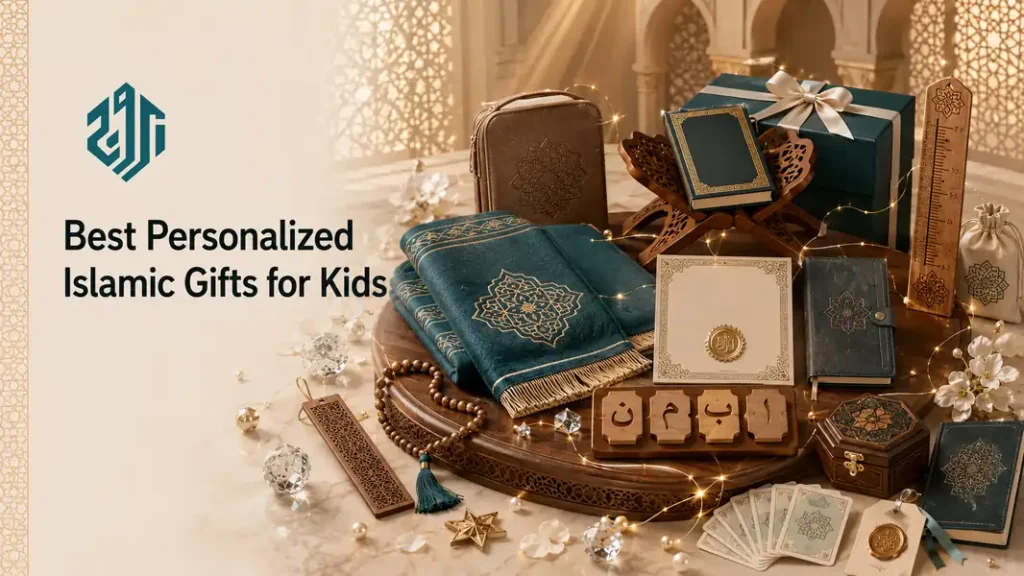
Personalized Islamic gifts for kids work best when they combine a child’s name or achievement with a tool they will actually use, such as an engraved prayer mat, a custom memorization journal, or a name-personalized Quran cover. These gifts turn a one-time present into a daily reminder of identity and worship.
Table of Contents:
1. A Name-Engraved Prayer Mat Turns Salah Into a Personal Ritual for Young Children
A prayer mat engraved with a child’s name gives salah a sense of ownership from the very first use. Children as young as four begin recognizing their own name on objects, and seeing it woven or stitched into their own mat reinforces that prayer belongs to them personally, not just to the adults around them.
In our experience at Buruj Academy, children who have a designated, personal prayer space at home tend to ask to join family prayer more consistently than those who share an unmarked mat.
A name-engraved mat, paired with a soft-textured surface sized for small knees, works especially well for children between ages three and seven who are just beginning to imitate the prayer movements of their parents.
Pairing a prayer mat gift with early instruction in the pillars of Islam for kids helps a child understand why the mat matters, not just how to use it.
2. A Custom Quran Memorization Journal Gives Children a Visual Record of Their Hifz Progress
A memorization journal personalized with a child’s name and a dedicated tracking system helps children see their own progress in a concrete, motivating way. Rather than relying on a parent’s memory of what has been reviewed, the child holds physical proof of every surah completed.
Since the Quran contains 604 pages across 30 Juz’ in the standard Madani mushaf layout, a well-designed journal breaks that structure into small, checkable milestones rather than one overwhelming number.
A journal that lets a child color in, stamp, or sign off on each completed surah turns memorization into a series of achievable wins.
This kind of gift pairs naturally with structured guidance from a Hifz for kids course, where an instructor helps set the actual pace behind the pages the child is filling in.
Start your child’s Hifz classes with a FREE session
| Journal Feature | Why It Matters for Children |
| Named cover or first page | Builds personal ownership over the memorization goal |
| Surah checklist by Juz’ | Breaks 604 pages into manageable, visible sections |
| Space for teacher or parent notes | Reinforces accountability and encouragement |
3. A Personalized Islamic Storybook Introduces Prophetic Stories in a Format Children Return To
A storybook that inserts a child’s name into retellings of prophetic stories keeps young readers engaged far longer than generic Islamic story collections. Children are more likely to ask for a repeat reading when they see themselves as part of the narrative.
Stories built around the lives of the prophets give children moral anchors they can reference in everyday situations, from patience to honesty.
A gift like this works well alongside a broader collection of Prophet Muhammad stories for kids or a wider set of prophets in Islam for kids, so the personalized book becomes an entry point rather than a standalone item.
Read More: The Best Online Quran Classes for Kids
4. An Engraved Quran Cover or Stand Encourages Children to Treat Their Mushaf as a Personal Possession
An engraved wooden Quran stand or a fabric cover personalized with a child’s name signals that the Quran in their hands is truly theirs, not a shared household copy. This small distinction matters more than it may first appear.
We have noticed in Buruj Academy’s Online Quran Classes for Kids that children who have their own labeled copy of the Quran, kept in their own space, tend to develop a stronger sense of responsibility toward handling it with care.
A stand also gives younger children proper posture during recitation practice, reducing the habit of reading with the mushaf flat on the floor.
Help your child start learning the Quran with a FREE trial
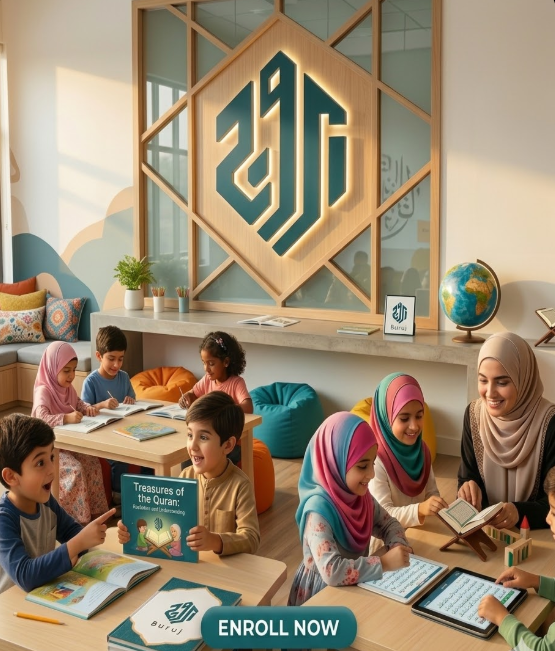
Discover the Buruj Academy Difference
Step into our virtual classrooms and see how our expert instructors make learning Quran and Arabic intuitive and clear. We focus on overcoming the specific hurdles non-native speakers face, building your confidence and connection with the Quran.
Expand Your Islamic Knowledge
Join our structured online courses led by qualified instructors to deepen your understanding of the Deen.
Join a Free Trial Class5. A Personalized Arabic Alphabet Puzzle or Flashcard Set Builds Early Letter Recognition Through Play
An Arabic alphabet puzzle or flashcard set with a child’s name included on the packaging or a personalized bonus card makes early letter learning feel like a gift rather than a lesson. Young children respond well to tactile, repeatable materials during the earliest stage of Quran reading readiness.
Letter recognition is the foundation every child needs before Tajweed rules become meaningful, so a well-designed puzzle set focused on shapes and sounds gives parents a low-pressure way to build that foundation at home.
This category pairs naturally with tajweed games and activities for kids for families ready to add structured practice on top of open play.
6. A Custom Islamic Milestone Certificate Celebrates a Child’s First Completed Surah or Juz’
A certificate personalized with a child’s name, the date, and the specific surah or Juz’ completed gives children tangible recognition for an accomplishment that otherwise exists only in memory. Children respond strongly to visible markers of achievement.
Framing and displaying a completed-Juz’ certificate in a child’s room reinforces that memorization is a real accomplishment worth celebrating, not an invisible chore.
This works especially well as a companion gift alongside ongoing instruction, since a Quran memorization schedule gives families a structured target to work toward before the next certificate is earned.
Read More: How to Learn to Read the Quran Online for Kids?
7. A Personalized Islamic Growth Chart or Height Ruler Ties Physical Growth to Spiritual Milestones
A wall-mounted growth chart that combines height measurements with space to note Islamic milestones, such as a first completed surah or a first fast, links a child’s physical development to their spiritual one. Parents mark height the same way they mark memorization progress.
This gift works particularly well for families with more than one child, since each child’s line and milestones appear side by side on the same chart, creating a shared family record rather than a series of separate items.
8. A Custom Dua Book With a Child’s Name Makes Daily Supplications Feel Personal
A dua collection personalized with a child’s name on the cover or the first page turns memorizing daily supplications into something a child associates with themselves specifically, not a generic booklet handed to every student in a class.
In our sessions, children tend to memorize duas faster when the book includes both the transliteration and a short, simple explanation of when each dua is used, rather than Arabic text alone.
Pairing this gift with broader guidance on how to teach Islam to a child helps parents introduce each dua at the right moment rather than all at once.
9. A Personalized Islamic Identity Bracelet or Keychain Reinforces a Child’s Sense of Belonging
A bracelet or keychain engraved with a child’s name alongside a simple Islamic phrase, such as “Masha’Allah” or a short dua, gives children a wearable reminder of identity they can carry outside the home, including at school.
For children navigating environments where they may be one of few Muslim students, small identity markers like this can support confidence without requiring explanation.
This category connects naturally with broader efforts around how to keep Islamic identity for kids in Western or non-Muslim-majority settings.
Read More: Kids Islamic Poems in Arabic With Translation and Meaning
10. A Personalized Arabic Name Calligraphy Print Adds Meaning to a Child’s Bedroom Wall
A calligraphy print rendering a child’s Arabic name in decorative script gives a bedroom wall Islamic significance beyond typical nursery decor. Many parents choose this as a lasting gift precisely because it does not require active use to hold meaning.
Choosing a print that also includes the meaning of the child’s name in English adds an educational layer, giving parents a natural opening to explain the significance behind the name they chose.
Build a Complete Learning Habit Around Buruj Academy’s Personalized Islamic Education Programs
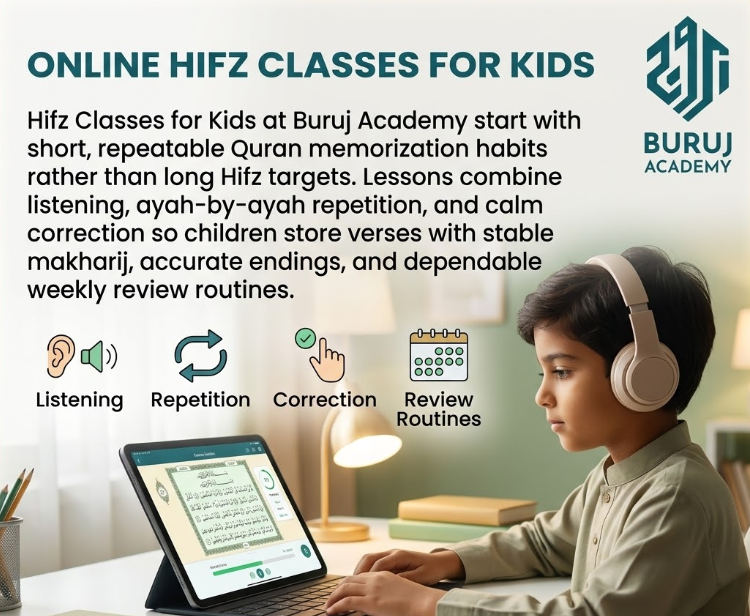
The gifts above work best as an entry point, not a finish line. Buruj Academy’s Online Quran Classes for Kids and Hifz for Kids program pair every physical gift with structured, 1-on-1 guidance from Ijazah-certified instructors.
Using the Buruj Method — patience before performance, consistency before speed — our instructors help children turn a memorization journal or dua book into an actual, tracked learning habit.
Families can book a free trial lesson to see how personalized instruction complements a personalized gift.
Enroll your child in one of our specialized, kid-friendly tracks today:
- Online Quran Classes for Kids
- Tajweed Classes for Kids
- Hifz Classes for Kids
- Online Arabic Classes for Kids
- Quranic Arabic Course for Kids
- Noorani Qaida Course for Kids
- Islamic Studies Classes for Kids
Ready to watch your child grow in knowledge and character? Join the Buruj Academy family and book a free trial session for your child today!
Expand Your Islamic Knowledge
Join our structured online courses led by qualified instructors to deepen your understanding of the Deen.
Join a Free Trial ClassConclusion
A gift becomes meaningful to a Muslim child when it connects directly to something they do every day, not just something they own. Prayer mats, memorization journals, and dua books earn their place by turning ordinary objects into daily touchpoints with faith.
The strongest gifts pair naturally with guided instruction, since a journal or growth chart only tracks progress that structured learning actually produces. Choosing personalization with purpose gives children both a keepsake and a habit worth keeping.
Frequently Asked Questions About Personalized Islamic Gifts for Kids
What Age Is Best to Start Giving Personalized Islamic Gifts?
Most families begin around age three or four, when children start recognizing their own name and imitating prayer movements. Sensory-focused items work best at this stage, while goal-tracking gifts like memorization journals suit children aged seven and older.
Are Personalized Quran Journals Suitable for Children Who Cannot Read Arabic Yet?
Yes, many journals use surah names in transliteration or English alongside a simple checklist format. This allows non-reading children to track progress visually before formal reading instruction begins through a structured Noorani Qaida course.
How Can Parents Make a Personalized Gift Part of a Daily Routine Rather Than a One-Time Item?
Parents can pair the gift with a fixed daily moment, such as filling in a journal after Asr prayer or reading one dua from a personalized book before bed. Consistency, not the gift itself, builds the lasting habit.
Do Personalized Islamic Gifts Replace the Need for Structured Quran or Arabic Instruction?
No, gifts support motivation but do not teach reading, Tajweed, or memorization technique on their own. They work best alongside guided instruction from a qualified teacher who can correct pronunciation and pace progress appropriately.