 Arabic
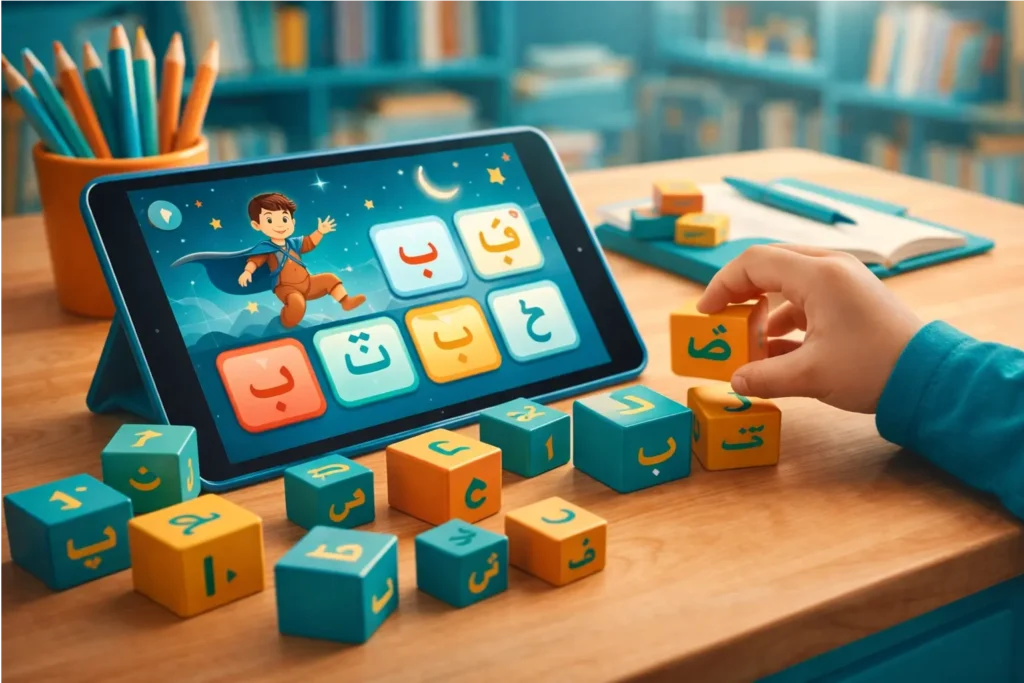
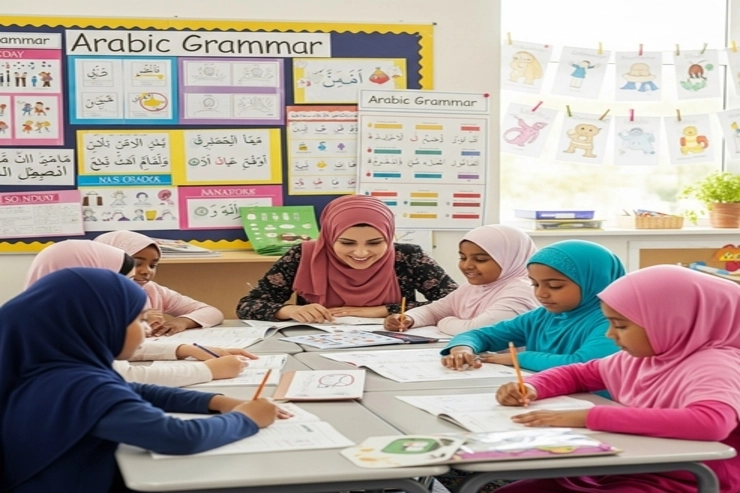
Many learners ask whether Arabic is actually enjoyable to study — or whether it is simply an obligation they must push through. The honest answer surprises most beginners: Arabic, when taught correctly, is one of the most intellectually satisfying languages a non-native speaker can pursue.
Yes, Arabic is fun to learn — especially when structured methods replace frustrating guesswork.
Its elegant root system, its direct connection to the Quran, and the immediate reward of understanding words you hear daily in worship make Arabic deeply engaging for motivated learners at every stage.
Table of Contents:
Is Arabic Fun to Learn?
Yes, Arabic is genuinely fun to learn for most students when they experience early wins — recognizing a word in the Quran, holding a basic conversation, or decoding a sign.
The root system (known as the jidhr system) means one three-letter root generates entire families of words, so progress feels exponential rather than slow.
Most of our students at Buruj Academy describe a turning point — usually within the first few weeks — where Arabic starts clicking rather than feeling like a wall.
That said, fun depends heavily on method. Arabic taught through rote grammar tables feels dry and discouraging. Arabic taught through real words, meaningful sentences, and immediate application feels alive.
The difference in learning experience often comes down to whether a learner starts with context or abstraction.
1. Start With the Arabic Alphabet Using Rhythmic Chants and Visual Aids
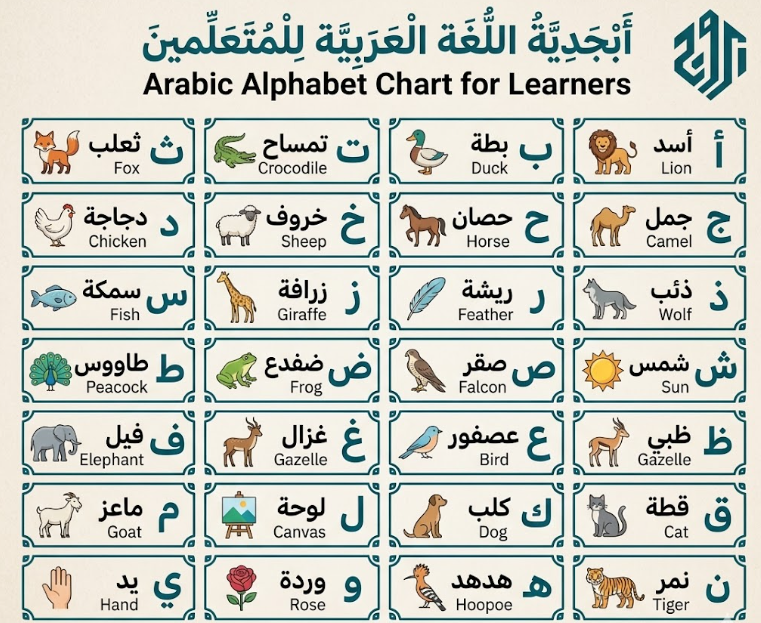
Learning the Arabic alphabet does not need to be a painful memorization exercise. When students use visual mnemonics, rhythmic chants, and letter-shape stories, they typically master all 28 letters in one to two weeks — a milestone that instantly feels like an achievement.
In our experience at Buruj Academy, students who learn letter sounds through audio-first methods — hearing the letter before seeing its written form — retain them far longer than students who study shapes alone. This mirrors our Sound-before-rules approach used in Tajweed instruction.
| Learning Method | Retention Rate (Instructor Estimate) | Time to Alphabet Mastery |
| Rote copying only | Low | 4–6 weeks |
| Audio + visual mnemonics | High | 1–2 weeks |
| Rhythmic Chants and games | Very high | 7–10 days |
Our Arabic Alphabet Learning Course uses exactly this multi-sensory approach, making the first weeks genuinely enjoyable rather than mechanical.
For younger learners, resources like learning the Arabic alphabet for kids demonstrate how playful tools accelerate mastery without sacrificing accuracy.
Get a free trial now in Buruj’s Alphabet course
2. Use the Arabic Root System to Make Vocabulary Building Feel Like Solving Puzzles
One of Arabic’s most underappreciated features — and one of its greatest sources of fun — is its trilateral root system (al-judhūr al-thulāthiyyah).
Most Arabic words derive from a three-letter root that carries a core meaning. Once you know a root, you can decode entire clusters of vocabulary.
For example, the root ك-ت-ب (k-t-b) relates to writing:
| Derived Word | Meaning |
| كَتَبَ (kataba) | He wrote |
| كِتَاب (kitāb) | Book |
| كَاتِب (kātib) | Writer |
| مَكْتَبَة (maktabah) | Library / Desk |
| مَكْتُوب (maktūb) | Written / Letter |
This puzzle-solving quality is something our native Arabic instructors emphasize from the earliest lessons.
Students who understand roots stop feeling overwhelmed by vocabulary and start feeling like detectives uncovering patterns. Practical strategies for mastering Arabic vocabulary build directly on this root-based logic.
Buruj Academy’s Arabic for Beginners course introduces high-frequency roots in the first month, giving students immediate decoding power that makes independent reading feel surprisingly accessible.
Begin learning Arabic at Buruj with a FREE trial lesson

3. Connect Arabic Learning Directly to Quran Reading to Give Every Lesson Spiritual Meaning
Arabic becomes profoundly motivating when learners connect it to their daily worship. Every Muslim already recites Arabic in Salah — meaning Arabic is not an abstract foreign language but a living part of their spiritual life. Understanding even a handful of words transforms prayer from recitation to comprehension.
Consider the opening of Surah Al-Fatiha:
ٱلْحَمْدُ لِلَّهِ رَبِّ ٱلْعَـٰلَمِينَ
Al-ḥamdu lillāhi rabbi l-ʿālamīn
“All praise is due to Allah, Lord of all worlds.” (Al-Fatiha 1:2)
When a student learns that ḥamd means praise, rabb means Lord, and ʿālamīn means worlds, Salah changes permanently.
That moment of comprehension is deeply rewarding — and it is the kind of win that sustains motivation far better than any app badge.
Our Quranic Arabic Classes at Buruj Academy are built entirely around this principle. Students study Arabic through the Quran, not separately from it, making every lesson feel spiritually connected rather than academically distant.
Begin Understanding Quranic Arabic with a FREE Lesson
4. Incorporate Arabic Games and Stories to Make Practice Sessions Something You Look Forward To
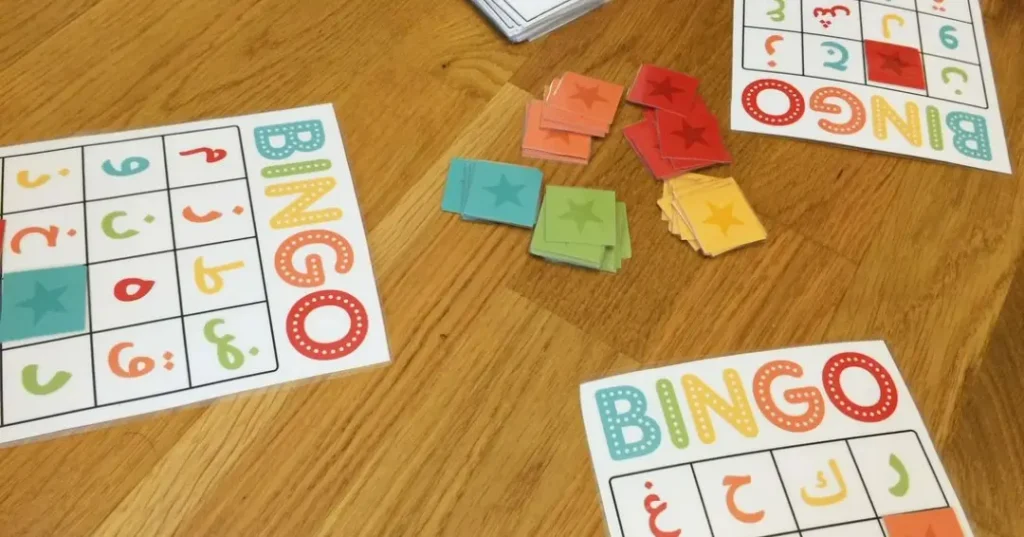
Structured play is not just for children — it is one of the most effective tools for adult language retention as well. Arabic games, stories, and interactive exercises lower the anxiety that often accompanies a new script and a new sound system, allowing learners to absorb vocabulary and grammar without feeling pressured.
For children especially,top Arabic games for kids and Arabic stories for kids are not optional enrichment — they are the primary vehicle through which young learners internalize the language naturally. In our kids’ sessions, we see vocabulary retention nearly double when it is embedded in a story rather than presented as a list.
Master the Arabic Language
Join our expert-led courses and build a strong foundation in Classical and Modern Arabic.
Get Your Free TrialAdult learners benefit equally from varied practice formats:
| Activity Type | Skill Developed | Recommended Frequency |
| Arabic word games | Vocabulary recall | 3–4 times per week |
| Short story reading | Reading fluency | Daily (5–10 minutes) |
| Listening to Quran recitation | Phonetic awareness | Daily |
| Structured conversation practice | Speaking confidence | 2–3 times per week |
Our Online Arabic Classes for Kids use age-appropriate gamification deliberately, because enjoyment and retention are inseparable in language learning pedagogy.
Book a FREE Arabic trial for your Child

Read also: How to Learn Arabic Prayers?
5. Practice Arabic Speaking From Day One to Build Confidence
One of the most common mistakes we see — especially among adults — is waiting until grammar feels solid before attempting to speak. This approach kills enjoyment quickly. Speaking Arabic from the very first lesson, even in simple phrases, creates the social feedback loop that makes language learning genuinely rewarding.
Arabic sentence structure, once understood, is elegant and logical. The subject-verb-object system in Modern Standard Arabic (MSA) follows clear rules that Arabic sentence structure guides explain clearly for English speakers.
But understanding structure in theory is very different from feeling the satisfaction of constructing a real sentence in conversation.
Buruj Academy’s Arabic Speaking Course addresses this directly — students speak from lesson one, with instructors providing real-time correction that removes the fear of making mistakes. Our guide on how to improve Arabic speaking skills outlines the specific techniques our instructors use in live sessions.
Students who speak early report enjoying Arabic far more than students who delay speaking until they feel “ready.” Readiness, in our instructors’ experience, comes from speaking — not before it.
Book your free trial to start speaking Arabic fluently

6. Use Short, Consistent Daily Sessions Rather Than Sporadic Long Study Marathons
Enjoyment collapses when Arabic feels overwhelming. One of the most reliable ways to keep learning fun is to keep individual sessions short enough to leave the learner wanting more rather than exhausted.
Fifteen to twenty minutes of focused daily Arabic practice consistently outperforms two-hour weekend sessions in both retention and motivation.
This is the Consistency-before-speed principle at the core of the Buruj Method. Language acquisition happens incrementally — the brain consolidates new vocabulary and grammar patterns during sleep and rest, not during extended cramming sessions.
When students see measurable progress week-over-week with short sessions, the intrinsic motivation to continue grows naturally.
A realistic weekly schedule for adult beginners might look like this:
| Day | Activity | Duration |
| Saturday | New vocabulary (root-based) | 15 minutes |
| Sunday | Listening practice (Quran/audio) | 15 minutes |
| Monday | Grammar point — one rule only | 20 minutes |
| Tuesday | Speaking practice with instructor | 30 minutes |
| Wednesday | Review + dictation | 15 minutes |
| Thursday | Story reading or game | 15 minutes |
| Friday | Rest or free Quran listening | — |
Our beginner’s guide to Modern Standard Arabic recommends this rhythm explicitly, and the students who follow it are the ones who describe Arabic as genuinely enjoyable six months in.
7. Learn With a Qualified Instructor Who Makes Correction Feel Encouraging Rather Than Discouraging
Arabic pronunciation, grammar, and script all carry enough complexity that self-study without feedback tends to entrench errors. Those errors, once fossilized, are far harder to correct — and the frustration of feeling stuck is the number one reason learners describe Arabic as “not fun.”
The presence of a skilled instructor changes the entire emotional experience of learning. A good Arabic teacher does three things that no app can replicate: they catch errors before they become habits, they celebrate progress specifically and meaningfully, and they adapt the pace to the individual learner rather than forcing everyone through the same template.
Our Ijazah-certified instructors and Al-Azhar University graduates at Buruj Academy are selected through a rigorous multi-stage process precisely because technical knowledge alone is not enough.
A teacher must be able to make correction feel like guidance, not criticism — especially for adult learners who carry the added vulnerability of learning something new later in life.
For learners who want to understand how grammar works without feeling lost, our how to learn Arabic grammar easily guide captures the instructor-led approach we use in live sessions.
Discover the Buruj Academy Difference
Step into our virtual classrooms and see how our expert instructors make learning Quran and Arabic intuitive and clear. We focus on overcoming the specific hurdles non-native speakers face, building your confidence and connection with the Quran.
Start Learning Arabic the Enjoyable Way with Buruj Academy’s Expert Instructors
Arabic is absolutely fun to learn — with the right method and the right teacher guiding every step.
Buruj Academy’s Online Arabic Classes give you:
- Al-Azhar University graduates and Ijazah-certified instructors with 12+ years teaching non-native speakers
- The Buruj Method: Context-before-abstraction and Consistency-before-speed
- Personalized 1-on-1 sessions with 24/7 flexible scheduling
- Real-time pronunciation and grammar correction
- Clear progression from complete beginner to confident reader and speaker
Whether you are starting from zero or returning after a gap, our Arabic for Beginners course is the structured, enjoyable starting point thousands of students have used to fall in love with this language.
Book your free trial lesson today and experience the difference a great teacher makes from lesson one.
Begin your transformation today by choosing the path that fits your goals:
- Online Arabic Classes (General & Comprehensive)
- Arabic Course for Beginners
- Arabic Alphabet Learning Course
- Online Arabic Classes for Kids
- Arabic Classes for Adults
- Arabic Grammar Course (Nahw & Sarf)
- Intermediate Arabic Course (B1/B2)
- Arabic Speaking Course (Conversational Fluency)
- Arabic Reading Course (Literary Excellence)
- Learn Arabic Writing Course (Calligraphy & Composition)
Ready to speak with confidence? Join the global community at Buruj Academy and book your free placement interview today!
Master the Arabic Language
Join our expert-led courses and build a strong foundation in Classical and Modern Arabic.
Get Your Free TrialConclusion
Arabic is not just learnable — it is genuinely enjoyable when the right tools and the right teacher are in place. The root system rewards curiosity, the connection to Quran gives every lesson spiritual weight, and consistent short sessions build momentum that self-study marathons simply cannot match.
The students who tell us Arabic became one of their favourite parts of the week share one thing in common: they stopped waiting to feel ready and started engaging with the language as it actually is — rich, logical, and deeply meaningful. Insha’Allah, that experience is available to every learner willing to begin.
Read also: What Age Is Best to Learn Arabic?
Frequently Asked Questions About Learning Arabic
Is Arabic an Interesting Language Compared to Other World Languages?
Yes, Arabic is considered one of the world’s most linguistically rich languages. Its trilateral root system, classical literary tradition, and direct connection to the Quran make it intellectually fascinating. Linguists rank it among the most structurally elegant languages globally. For Muslim learners especially, Arabic carries a layer of spiritual meaning no other language can replicate, making it uniquely interesting beyond academic study.
How Can I Make Learning Arabic Fun If I Am a Complete Beginner?
Start with high-frequency words connected to your daily worship — words from Al-Fatiha and short Surahs you already recite. Add Arabic word games, short audio listening practice, and one speaking session per week with a qualified instructor. Avoid grammar tables until you have a working vocabulary of 50–100 words. Early wins through recognition make the process genuinely enjoyable from the first week.
Is Arabic Fun to Learn in English, Even Without Any Arabic Background?
Arabic is very accessible for English speakers learning through an English-medium instructor. Al-Azhar-trained teachers who specialize in non-native speakers know exactly where English speakers struggle — the sounds, the script direction, the root system — and address these systematically. Our students at Buruj Academy with no prior Arabic background regularly describe the early learning phase as surprisingly enjoyable when taught through English with expert guidance.
How Long Does It Take Before Arabic Starts to Feel Natural and Enjoyable?
In our instructors’ experience, most adult beginners reach a noticeable comfort level — where Arabic stops feeling foreign — after six to eight weeks of consistent 15–20 minute daily practice combined with weekly instructor-led sessions. The first meaningful milestone is usually alphabet fluency, which arrives within two weeks using multi-sensory methods. After that, vocabulary growth accelerates and enjoyment tends to grow with it.