 Arabic
| Key Takeaways |
| Arabic is written and read from right to left, making it one of the few major world scripts with this directional system. |
| Arabic is among the world’s oldest continuously spoken languages. |
| Arabic contributed hundreds of everyday English words, including algebra, cotton, sugar, alcohol, and algorithm. |
| Arabic uniquely uses a dual grammatical form — a distinct structure for exactly two of anything, separate from singular and plural. |
| Arabic’s root-based morphology allows a single three-letter root to generate dozens of semantically related words. |
Arabic is one of those languages that stops linguists mid-sentence. Its architecture is unlike almost anything in the Latin or Germanic family — and the further you explore it, the more remarkable it becomes.
These Arabic language facts cover the structural, historical, and grammatical realities that make Arabic genuinely distinctive. Whether you are a curious learner or planning to study formally, understanding these facts gives you the clearest picture of what you are stepping into — and why so many people find this language deeply rewarding to master.
Table of Contents:
1. Arabic Is Written and Read from Right to Left
Arabic script runs from right to left across the page, which means reading direction, page layout, and even book binding are all mirrored compared to English. This is one of the most immediately visible features for newcomers, and it applies consistently across all Arabic writing — handwritten notes, printed books, digital text, and signage alike.
This directional system is shared by a small group of scripts including Hebrew and Persian, but Arabic’s right-to-left flow is particularly distinctive because its letters are also cursive by default.
Most Arabic letters connect to their neighbors within a word, forming flowing, joined scripts rather than isolated characters.

In our experience teaching at Buruj Academy, students often find the directional shift more intuitive than expected once they begin — but the connected letter forms do require dedicated practice.
If you are just beginning, our online Arabic writing course gives non-native speakers a structured, phonics-first approach to reading direction and letter connection from the very first lesson. You can also explore our guide on how to learn the Arabic alphabet for a practical overview of where to begin.
Book your free trial to start writing Arabic
2. Arabic Is One of the World’s Oldest Continuously Spoken Languages
Arabic belongs to the Semitic language family and has been spoken continuously for well over thousands of years in its classical form. The Arabic language has remained in active, living use — spoken, written, and taught — without interruption since that period.
What makes this especially significant is that Modern Standard Arabic (MSA), used today in media, education, and formal writing, retains a direct and traceable lineage to Classical Arabic.
Unlike Latin, which gave birth to successor languages and ceased to be a native tongue, Arabic evolved while preserving its core grammatical framework.
Our Arabic Speaking classes and our guide on the beginners’ guide to Modern Standard Arabic explain how this historical continuity shapes what learners study today.
| Era | Form of Arabic | Primary Use |
| Pre-Islamic (before 610 CE) | Old Arabic dialects | Tribal oral poetry, trade |
| Classical Arabic (7th–13th c.) | Fusha — formal written | Literature, scholarship, governance |
| Modern Standard Arabic (MSA) | Formal contemporary Arabic | Media, education, official writing |
| Arabic Dialects | Regional spoken varieties | Everyday conversation |
Book your free trial to start speaking Arabic fluently

3. Arabic Has No Capital Letters
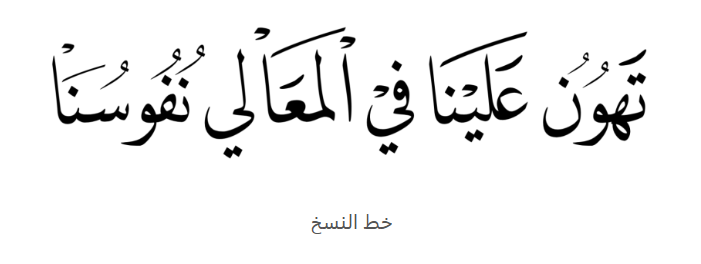
Arabic script has no distinction between uppercase and lowercase letters. Every letter appears in the same case regardless of its position in a sentence, whether it begins a proper noun, opens a paragraph, or follows a full stop.
This contrasts sharply with English and most European languages, where capitalization carries grammatical and semantic information — marking the beginning of a sentence, identifying proper nouns, and signaling titles.
In Arabic, these distinctions are communicated through context, word order, and grammatical particles rather than letter case.
For learners coming from English, this is actually a simplification — one less rule to internalize. However, it does place greater weight on understanding word function and sentence structure, since visual cues like capitalization are unavailable.
Our online Arabic reading course and our guide on Arabic sentence structure explain how Arabic conveys these relationships grammatically rather than typographically.
Read Arabic fluently with a free Buruj trial
4. Arabic Gave English Hundreds of Everyday Words
The Arabic language’s contribution to the English vocabulary is far larger than most people realize. Centuries of scientific, commercial, and cultural exchange between the Arab world and Europe — particularly during the Islamic Golden Age — left a permanent imprint on English.
Common English words borrowed from Arabic include: algebra (from al-jabr), algorithm (from the name of scholar Al-Khwarizmi), cotton (from qutn), sugar (from sukkar), alcohol (from al-kuhl), coffee (from qahwa), sofa (from suffah), and magazine (from makhazin, meaning storehouses). These borrowings span mathematics, chemistry, commerce, and daily life.
| English Word | Arabic Origin | Original Meaning |
| Algebra | al-jabr | The reunion of broken parts |
| Algorithm | Al-Khwarizmi | Scholar’s name (latinized) |
| Cotton | qutn | Raw cotton fiber |
| Sugar | sukkar | Sweet substance |
| Alcohol | al-kuhl | Fine powder, then distilled spirits |
| Coffee | qahwa | The beverage |
This linguistic inheritance is one of many compelling reasons to learn Arabic — it connects you to a history that already shaped the language you speak.
5. Arabic Has a Dual Grammatical Form Distinct from Singular and Plural
Arabic grammatically distinguishes between one, two, and three or more of anything — giving it three number categories: singular (مُفْرَد mufrad), dual (مُثَنَّى muthanna), and plural (جَمْع jam’). The dual is not an informal approximation — it is a fully grammatical form with its own suffix pattern, and it applies to nouns, adjectives, pronouns, and verbs.
For example, the word كِتَاب (kitab, book) becomes كِتَابَانِ (kitabani) in the dual — meaning exactly two books — before becoming كُتُب (kutub) in the plural for three or more. This three-way number system has no equivalent in English, which only distinguishes singular from plural.
In our Online Arabic Classes, this is one of the grammar points students consistently find most intellectually satisfying once it clicks — because the logic is perfectly consistent.
Our dedicated article on dual nouns in Arabic covers the formation rules in full detail for learners ready to master this structure.
Master the Arabic Language
Join our expert-led courses and build a strong foundation in Classical and Modern Arabic.
Get Your Free Trial6. Arabic Has 28 Letters, Each Appearing in Multiple Written Forms
The Arabic alphabet contains 28 letters, all of which are consonants. Short vowels are represented by optional diacritical marks (called harakat) placed above or below letters, rather than by separate vowel letters as in English.
Crucially, most Arabic letters take a different written shape depending on their position within a word — initial (beginning), medial (middle), final (end), or isolated. This means learners must recognize up to four forms of a single letter, not just one.
| Position | Description | Example Letter (ب — Ba) |
| Isolated | Standalone letter | بـ |
| Initial | Beginning of a word | بـ |
| Medial | Middle of a word | ـبـ |
| Final | End of a word | ـب |
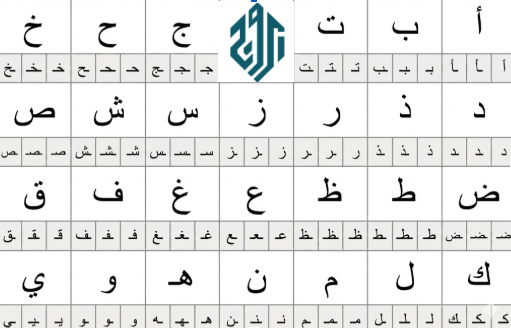
Six letters (و، ز، ر، ذ، د، ا) are non-connecting and only take two forms. Our Arabic Alphabet Learning Course addresses each positional form systematically, ensuring learners build reading fluency without confusion.
For a visual introduction to the letters, explore our Arabic alphabet with pictures for kids — a resource equally useful for adult beginners learning shapes and sounds together.
Get a free trial now in Buruj’s Alphabet course
7. Arabic Has One of the Largest Vocabularies of Any Language in the World
Classical Arabic is widely cited by linguists as possessing an extraordinarily large lexicon. Arabic lexicographers have historically documented the language’s vocabulary in the hundreds of thousands of entries — with the classical dictionary Lisan al-Arab by Ibn Manzur alone containing over 80,000 root-based entries, each generating multiple derived words.
The richness of Arabic vocabulary is especially pronounced in domains like natural phenomena, human emotion, and animal behavior.
Arabic reportedly has dozens of words for different types of rain, numerous terms for distinct stages of camel maturity, and an expansive emotional vocabulary that English can only approximate.
This lexical richness makes vocabulary building a distinct discipline for Arabic learners. Our guide on mastering Arabic vocabulary offers practical strategies for building word retention systematically rather than trying to memorize lists in isolation.
8. Arabic Is an Official Language in 26 Countries
Arabic holds official or co-official status in 26 countries across the Middle East, North Africa, and the Horn of Africa — making it one of the most geographically widespread official languages in the world. It is also one of the six official languages of the United Nations.
This geographic spread means that proficiency in Arabic opens genuine practical and professional access across a vast region.
Our guide on how to learn Arabic for beginners addresses which register to prioritize and why MSA provides the most transferable foundation across all regions.
9. Arabic Nouns Have Three Grammatical Cases
Arabic is a fully case-inflected language, meaning nouns change their ending based on their grammatical role in the sentence. There are three cases: the nominative (marfu’, for subjects), the accusative (mansub, for objects and adverbs), and the genitive (majrur, following prepositions and possessive constructions).
| State | Arabic Name | Applies To | Primary Marker | Core Function |
| Nominative | الرَّفْع (al-raf’) | Nouns, adjectives | Damma ( ُ ) | Subject, predicate |
| Accusative | النَّصْب (al-nasb) | Nouns, adjectives, verbs | Fatha ( َ ) | Object, adverbial, subjunctive verb |
| Genitive | الجَرّ (al-jarr) | Nouns, adjectives only | Kasra ( ِ ) | After prepositions, possession |
These case endings — marked by short vowel diacritics on the final letter of a noun — communicate the noun’s function without relying on fixed word order.
This is why Arabic word order is more flexible than English: the case ending tells you who is doing what, regardless of where the noun appears in the sentence.
In spoken Arabic, case endings are generally dropped in everyday conversation. In formal written Arabic, however, they are fully applied and grammatically meaningful.
This system connects directly to the concept of i’rab — Arabic grammatical analysis — which is one of the most systematic and intellectually rich areas of Arabic grammar study.
Read also:Understanding the Arabic Language
10. Arabic Verbs Typically Appear Before the Subject
Arabic is classified by linguists as primarily a VSO language — Verb-Subject-Object — meaning the verb commonly precedes the subject in formal and classical constructions. A sentence such as “The student studied the lesson” would be structured in Arabic as “Studied the student the lesson” (darasa at-talib ad-darsa).
This word order contrasts fundamentally with English’s SVO (Subject-Verb-Object) default, and it takes deliberate practice to internalize.
كَتَبَ الوَلَدُ الدَّرْسَ
Kataba l-waladu l-darsa
The boy wrote the lesson.
- فعل: كَتَبَ (wrote — masculine singular past)
- فاعل: الوَلَدُ (the boy — nominative, damma)
- مفعول به: الدَّرْسَ (the lesson — accusative, fatha)
Our detailed breakdown of Arabic tenses explains how verbal sentences are constructed — including how the verb agrees with its subject in gender and number even when placed before it.
Arabic also permits Subject-Verb-Object sentences, particularly in modern written usage and when the subject requires emphasis. Understanding when each order applies is part of developing genuine grammatical fluency, not just pattern recognition.
| Tense | Positive Example | Negation Particle | Negative Example | Meaning |
| Past (ماضي) | كَتَبَ | لَمْ + jussive | لَمْ يَكْتُبْ | He did not write |
| Present (مضارع) | يَكْتُبُ | لَا | لَا يَكْتُبُ | He does not write |
| Future (مستقبل) | سَيَكْتُبُ | لَنْ + subjunctive | لَنْ يَكْتُبَ | He will not write |
| Command (أمر) | اُكْتُبْ | لَا + jussive | لَا تَكْتُبْ | Do not write! |
11. Arabic Has No Verb “To Be” in the Present Tense
One of the most structurally surprising Arabic language facts for English speakers is this: Arabic does not use a verb equivalent to “is,” “am,” or “are” in present tense statements. Where English says “The house is large,” Arabic says literally “The house large” — البيت كبير (al-bayt kabir) — with no linking verb.
This is called a nominal sentence (jumlah ismiyya) and it is a foundational structure in Arabic grammar. The verb “to be” (kana) does exist in Arabic but is used for the past tense (“was”) and specific conditional or continuous constructions — never for simple present-tense statements of identity or description.
For learners, this means one less verb to conjugate in the present — but it also means learning to recognize sentence type from structure alone.
Read also:Why the Arabic Language Is Beautiful
12. Arabic Uses a Root-Based System That Generates Entire Word Families
Arabic’s most architecturally distinctive feature — and arguably its most intellectually elegant — is its trilateral root system. Almost every Arabic word is built from a root of three consonants (occasionally four) that carries a core semantic meaning. Different patterns of vowels, prefixes, and suffixes applied to this root generate an entire family of related words.
Take the root ك-ت-ب (K-T-B), which carries the core meaning of writing:
| Derived Word | Transliteration | Meaning |
| كَتَبَ | kataba | He wrote |
| كِتَاب | kitab | Book |
| كَاتِب | katib | Writer / author |
| مَكْتَبَة | maktaba | Library |
| مَكْتَب | maktab | Office / desk |
| كِتَابَة | kitaba | The act of writing |
| مَكْتُوب | maktub | Written / letter |
This root-pattern logic means that once a learner recognizes a root, they can infer the meaning of many related words without having memorized each one individually. It is one of the reasons our Al-Azhar-trained instructors at Buruj Academy consistently teach vocabulary through roots rather than isolated word lists — the cognitive payoff is substantially higher.
Our Arabic Grammar Course builds this root-pattern awareness from the foundational level, making vocabulary acquisition progressively faster as students advance.
You can also explore our guide on how to learn Arabic grammar easily for a beginner-friendly entry point into the structural logic of the language.
Understand the Arabic Grammar with Buruj’s free trial lesson
Discover the Buruj Academy Difference
Step into our virtual classrooms and see how our expert instructors make learning Quran and Arabic intuitive and clear. We focus on overcoming the specific hurdles non-native speakers face, building your confidence and connection with the Quran.
Start Learning Arabic with Buruj Academy’s Expert Instructors
Arabic is a language with extraordinary structure, history, and internal logic — and the best way to experience that is through skilled, patient instruction.
Buruj Academy’s Online Arabic Classes are taught by Al-Azhar University graduates with 12+ years of experience teaching non-native speakers worldwide. Our approach:
- Context-before-abstraction: Grammar is learned through meaningful usage, not abstract rules
- Personalized 1-on-1 sessions with flexible 24/7 scheduling
- Rigorous teacher selection — every instructor is vetted and continuously trained
- Clear progression from alphabet recognition to grammatical fluency
Book your free trial lesson and experience the Buruj Method firsthand.
Begin your transformation today by choosing the path that fits your goals:
- Online Arabic Classes (General & Comprehensive)
- Arabic Course for Beginners
- Arabic Alphabet Learning Course
- Online Arabic Classes for Kids
- Arabic Classes for Adults
- Arabic Grammar Course (Nahw & Sarf)
- Intermediate Arabic Course (B1/B2)
- Arabic Speaking Course (Conversational Fluency)
- Arabic Reading Course (Literary Excellence)
- Learn Arabic Writing Course (Calligraphy & Composition)
Ready to speak with confidence? Join the global community at Buruj Academy and book your free placement interview today!
Master the Arabic Language
Join our expert-led courses and build a strong foundation in Classical and Modern Arabic.
Get Your Free TrialConclusion
Arabic’s distinctiveness is not incidental — it is built into the language at every level, from its right-to-left script and root-based morphology to its dual number form and caseless present-tense sentences. These facts are not curiosities; they are the architectural features that make Arabic both challenging and deeply rewarding to learn.
Frequently Asked Questions About Arabic Language Facts
What Is Arabic Most Famous For as a Language?
Arabic is most famous for its root-based morphological system, its status as the language of the Quran, and its historical role as the medium of scientific and philosophical scholarship during the Islamic Golden Age. Linguistically, it is known for its large classical vocabulary, complex grammatical case system, and the right-to-left script shared by relatively few major world languages.
Why Is Arabic Considered One of the Richest Languages in the World?
Arabic is considered linguistically rich because of its enormous lexicon — classical dictionaries document hundreds of thousands of root-derived entries — and its capacity to generate entire families of semantically related words from a single three-letter root. The language also contains highly specific vocabulary for natural phenomena, emotional states, and abstract concepts that lack direct equivalents in English.
What Are the Most Interesting Facts About the Arabic Alphabet?
The Arabic alphabet has 28 letters, all representing consonants, with short vowels marked optionally by diacritics. Each letter appears in up to four different written forms depending on its position in a word. The script runs right to left, is cursive by default, and has no capital letters. Six letters are non-connecting, taking only two positional forms rather than four.