 Islamic
Many Muslim parents raising children outside majority-Muslim countries face a real gap: no local Islamic school, no nearby scholar, and a school week already full. Building Islamic knowledge at home starts by knowing what to actually teach — not just that religious education matters.
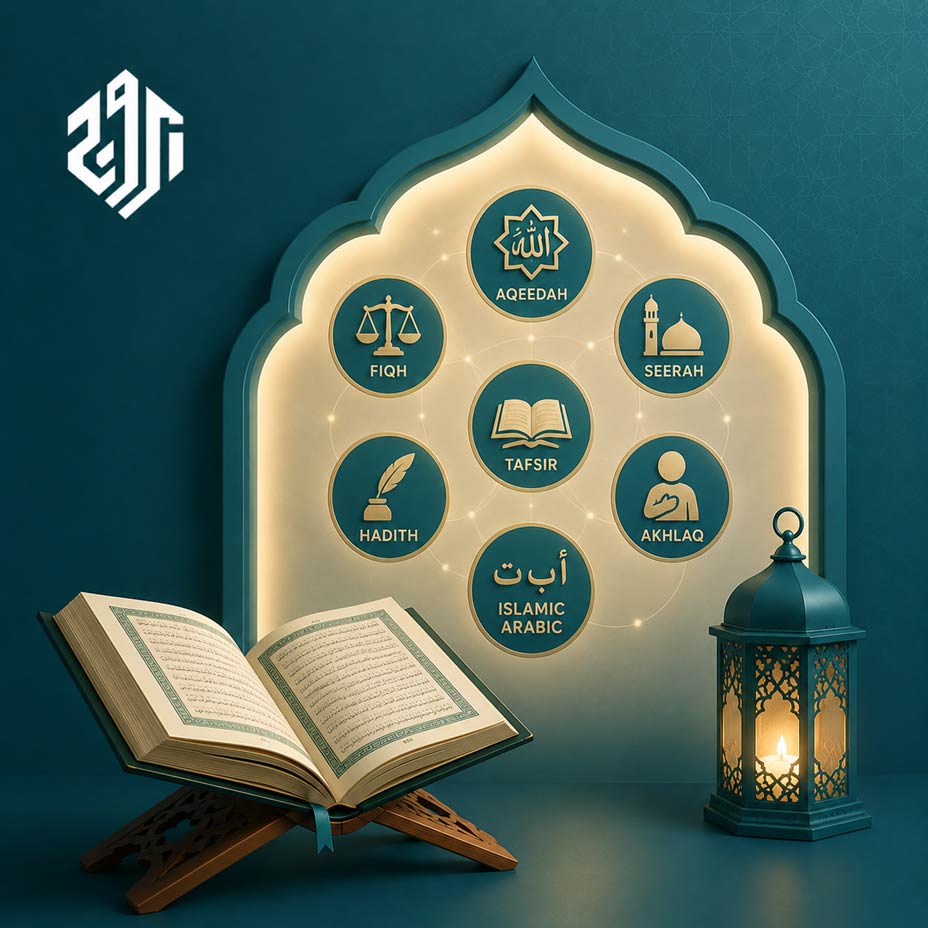
Islamic Studies for kids breaks down into core fields: Aqeedah (belief), Fiqh (practical rulings), Seerah (Prophetic biography), Tafsir (Quran meaning), Hadith (Prophetic sayings), Akhlaq (character), and foundational Islamic Arabic literacy. Each builds a different skill in a child’s religious development.
Table of Contents:
1. Aqeedah Teaches Children the Core Beliefs That Anchor Their Faith Identity
Aqeedah is the study of Islamic creed — what a Muslim believes about Allah, the angels, the prophets, the books, and the Last Day. For children, this field answers the questions they ask earliest and most persistently: who is Allah, why can’t we see Him, and what happens after we die.
In Aqeedah lessons, a child studies the six pillars of belief in simplified, age-matched language — starting with Tawheed (the Oneness of Allah) before moving to angels, previous scriptures, and prophethood.
Younger children focus on recognizing Allah’s names and attributes through everyday examples; older children begin distinguishing correct belief from common misconceptions they may encounter at school or online.
In our sessions at Buruj Academy, the most common gap we notice in children aged 7 and up is confident answers to “why” questions — not “what do Muslims believe” but “why do we believe it.” Building that reasoning early prevents doubt from taking root during the teenage years.
Our Islamic Studies Classes for Kids course structures Aqeedah as the entry point precisely because belief clarity supports every other field that follows.
The first session is free in Buruj’s Islamic Studies Classes for Kids
Parents raising children in the West often find this field especially urgent, since it directly counters the identity confusion covered in our guide on how to keep Islamic identity for kids strong amid competing cultural messages.
2. Fiqh Gives Children the Practical Rules for Worship and Daily Muslim Life
Fiqh is Islamic jurisprudence — the practical “how” of worship and daily conduct. Where Aqeedah answers what a child believes, Fiqh answers what a child does: how to pray, what breaks wudu, and which foods are halal or haram.
In Fiqh lessons, a child studies the conditions and steps of Salah first, since prayer is the most immediate daily obligation a young Muslim encounters.
This includes wudu steps, prayer times, and the physical movements of Salah, taught through repetition and demonstration rather than memorized definitions alone.
As children progress, Fiqh expands to fasting basics ahead of Ramadan, the etiquette of the masjid, and age-appropriate rulings on cleanliness (Taharah). Older students begin exploring Zakat concepts and the reasoning behind specific rulings, not just the rulings themselves.
| Age Range | Fiqh Focus | Primary Skill Built |
| 4–6 years | Wudu steps, basic Salah movements | Physical habit formation |
| 7–10 years | Full Salah conditions, fasting basics | Rule application and consistency |
| 11+ years | Zakat concepts, reasoning behind rulings | Independent religious judgment |
A student who struggles to remember wudu order almost always benefits from a physical walkthrough repeated across several sessions rather than a written checklist alone.
Our Islamic Studies Classes for Kids pair Fiqh instruction directly with practice, since worship rules stick fastest through doing, not just hearing.
3. Seerah Introduces Children to the Prophet’s Life as a Living Example
Seerah is the study of the Prophet Muhammad’s (peace be upon him) biography — his character, his choices under pressure, and the events that shaped the early Muslim community. For children, Seerah works differently than history; it functions as a model for behavior they can directly imitate.
In Seerah lessons, a child studies the Prophet’s early life in Makkah first, focusing on his honesty and trustworthiness before the events of prophethood.
This sequencing matters because young children relate more easily to relatable virtues — kindness to animals, patience with difficult neighbors — than to later political or military history.
Older students move into the Madinan period, covering the Hijrah, the building of the early Muslim community, and the Prophet’s conduct in leadership and hardship.
We consistently see stronger retention when Seerah stories connect directly to a child’s own daily choices — sharing, telling the truth, managing anger.
Our related guide on the Prophet Muhammad story for kids covers this narrative approach in more depth, alongside how other prophets in Islam for kids fit into the broader Seerah curriculum.
Discover the Buruj Academy Difference
Step into our virtual classrooms and see how our expert instructors make learning Quran and Arabic intuitive and clear. We focus on overcoming the specific hurdles non-native speakers face, building your confidence and connection with the Quran.
Expand Your Islamic Knowledge
Join our structured online courses led by qualified instructors to deepen your understanding of the Deen.
Join a Free Trial Class4. Tafsir Builds a Child’s Understanding of What the Quran Actually Means
Tafsir is Quranic exegesis — the study of what specific verses mean, why they were revealed, and how they apply today. This field differs sharply from Quran memorization, since a child can recite a surah perfectly without understanding a single word of it.
In Tafsir lessons, a child studies short, frequently recited surahs first — Al-Fatihah, the final three surahs, and other portions from Juz Amma — connecting the Arabic words to their English meaning verse by verse. This builds comprehension alongside recitation rather than treating them as separate skills.
As children advance, Tafsir introduces the context of revelation (Asbab al-Nuzul) for major verses and simple thematic connections between surahs.
Before we pair recitation with meaning at Buruj Academy, we often meet students who can recite fluently but cannot explain what a single verse is asking of them.
Our guide on the best Quran Tafseer for kids expands on age-appropriate Tafsir resources, and our Quranic Arabic Course for Kids builds the vocabulary foundation Tafsir comprehension depends on.
Try Buruj’s Quranic Arabic Course for Kids for free now
5. Hadith Teaches Children the Prophet’s Sayings and Their Practical Lessons
Hadith study covers the recorded sayings and actions of the Prophet Muhammad (peace be upon him) outside the Quran itself. For children, Hadith functions as short, memorable guidance — often a single sentence carrying a complete life lesson.
In Hadith lessons, a child studies a small, curated set of short, authentic narrations first, chosen specifically for clarity and relevance to daily behavior — honesty, kindness to parents, and good manners. Longer or legally complex hadiths are introduced only at more advanced stages.
One widely taught example for children addresses the value of seeking knowledge itself, reinforcing why religious study matters in the first place: the Prophet Muhammad (peace be upon him) taught that whoever travels a path seeking knowledge, Allah makes easy for him a path to Paradise (Sahih Muslim, 2699).
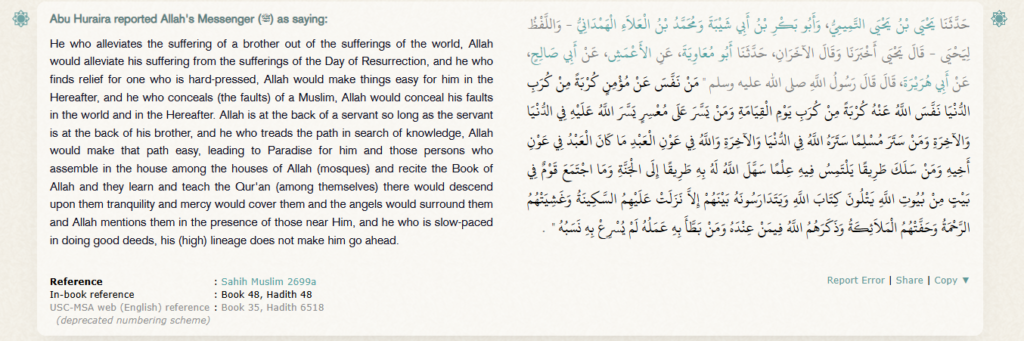
In our experience, children retain short Hadith texts most effectively when a single narration is repeated across several days alongside a real-life example, rather than covering many hadiths quickly. Depth beats volume at this stage.
Read also:Islamic Quotes for Kids: 12 Inspiring Quran and Hadith Quotes for Children
6. Akhlaq Shapes a Child’s Character Through Daily Islamic Manners and Conduct
Akhlaq is the study of Islamic character and etiquette (Adab) — manners in speech, behavior toward parents, treatment of siblings, and conduct in public. Unlike Fiqh, which governs worship, Akhlaq governs everyday interaction and is often the field most visible to non-Muslim classmates and neighbors.
In Akhlaq lessons, a child studies specific, practiced manners first: greeting others with Salaam, saying Bismillah before eating, using the right hand, and showing respect to parents and elders. These are taught as habits reinforced through repetition, not abstract virtues discussed once.
As children mature, Akhlaq expands into managing anger, honesty under social pressure, and treating people fairly regardless of background. Alhamdulillah, this field often produces the most visible, immediate results parents notice at home.
A child who interrupts constantly or struggles with turn-taking almost always improves faster through modeled correction in the moment than through a single lecture about patience.
Our Islamic Studies Classes for Kids integrate Akhlaq reminders throughout every session rather than isolating character lessons to one unit, since good manners need constant reinforcement to stick.
Parents extending these lessons beyond formal sessions may also find our guide on Islamic topics for kids and youth useful for everyday conversation starters.
7. Islamic Arabic Literacy Gives Children the Language Foundation Every Other Field Depends On
Islamic Arabic literacy covers the alphabet, basic vocabulary, and simple reading skills specifically oriented toward Quranic and Islamic terms. This field is foundational rather than optional, since Tafsir, Hadith, and even Fiqh terminology rely on Arabic words a child needs to recognize.
In Arabic literacy lessons, a child studies letter recognition and basic phonetics first, followed by common Islamic vocabulary — words like Salah, Wudu, Halal, and Iman — before progressing to simple sentence reading.
This sequencing mirrors how children naturally acquire any second language: sounds before words, words before sentences.
Children who build this vocabulary early find every other Islamic Studies field noticeably easier, since they are no longer translating unfamiliar terms while also trying to absorb new concepts.
Our guide on how non-Arabic speaking kids can learn Quran covers this literacy gap in more depth, and our Online Arabic Classes for Kids course addresses it directly for non-Arabic speaking households.
Book a FREE Arabic trial for your Child
Build a Complete Islamic Studies Foundation with Buruj Academy’s Expert Instructors
A well-rounded Islamic education for children weaves these seven fields together rather than teaching them in isolation. Buruj Academy’s Islamic Studies Classes for Kids deliver exactly this integration, guided by Al-Azhar University graduates with 9+ years of Islamic studies teaching experience in English.
Our instructors build Personalized Learning Plans matched to your child’s age and current level, covering Aqeedah, Fiqh, Seerah, Tafsir, Hadith, and Akhlaq through structured, flexible 1-on-1 online sessions.
With 24/7 scheduling and real-time correction, your child progresses at a pace that fits your family’s routine.
Book a free trial lesson today and see how a structured Islamic Studies curriculum, taught by qualified instructors, gives your child both religious knowledge and practical understanding.
Join a global community of learners and find the path that best supports your spiritual and intellectual growth:
- Online Studies Islamic Classes (General & Flexible)
- Islamic Studies Course for Beginners (Foundational Knowledge)
- Islamic Studies Classes for Kids (Engaging & Values-Based)
- Islamic Studies Classes for Adults (In-Depth Theological Discussion)
- Islamic Studies Classes for Ladies (Sisterhood & Specialized Learning)
- Islamic Studies Classes for New Muslims (Guided Support & Essentials)
- Tafseer Al Quran Course (Unlocking Divine Meanings)
- Quranic Sciences (Uloom Al Quran) Course (Advanced Linguistic & Historical Context)
Ready to enrich your life with sacred knowledge? Connect with Buruj Academy today and book your free introductory session to begin your journey!
Expand Your Islamic Knowledge
Join our structured online courses led by qualified instructors to deepen your understanding of the Deen.
Join a Free Trial ClassRead also:Islamic Cartoons for Kids: 6 Safe YouTube Channels Every Parent Should Know
Conclusion
Raising a religiously literate child abroad does not require guessing which topics matter most. Seven distinct fields — belief, worship, biography, meaning, sayings, character, and language — together form a complete Islamic education, each reinforcing the others rather than standing alone.
Sequencing matters as much as content. Belief and character come first, worship rules and vocabulary follow, and meaning-based Quran study builds once the foundation is secure. A structured plan turns scattered lessons into lasting religious identity.
Frequently Asked Questions About Islamic Studies Lessons for Kids
What Age Should Islamic Studies Lessons Start for Kids?
Most children benefit from starting simplified Aqeedah and Akhlaq lessons around age 4–5, focusing on basic beliefs and manners. Structured Fiqh and Tafsir content typically begins around age 7, once reading skills and attention span have developed further.
Is Islamic Studies the Same as Quran Memorization for Kids?
No. Quran memorization (Hifz) focuses specifically on retaining Quranic text, while Islamic Studies covers belief, jurisprudence, biography, character, and meaning. Many families pursue both simultaneously, since memorizing Quran and understanding it work best together.
Which Islamic Studies Field Should Come First for Complete Beginners?
Aqeedah and Akhlaq typically come first, since belief clarity and basic manners support every other field. Fiqh follows once a child needs practical worship guidance, with Tafsir and Hadith introduced as reading comprehension strengthens.
How Many Hours a Week Should Kids Spend on Islamic Studies?
Most families find 2–3 sessions weekly, roughly 30–45 minutes each, sustainable alongside school commitments. Consistency across shorter sessions produces better retention than infrequent, longer sessions for young learners.
Can Islamic Studies Be Taught Online Effectively for Kids?
Yes. Online Islamic Studies classes connect children with qualified, Al-Azhar-trained instructors through 1-on-1 sessions, real-time correction, and personalized pacing. This format particularly benefits families outside Muslim-majority countries with limited local access to qualified teachers.