 Tajweed
| Key Takeaways |
| Lam Alif (لا) is a combined ligature in Arabic script, not a separate letter, requiring specific writing and recitation rules. |
| In Tajweed, Lam Alif carries a natural Madd (elongation) of two counts when the Alif is an extension of a long vowel. |
| The Lam in Lam Alif is always pronounced light (Tarqiq). |
Lam Alif (لا) is a mandatory ligature in Arabic script combining the letter Lam (ل) and Alif (ا). In Quranic recitation, the Lam is always light (Tarqiq), the Alif extends the sound for two counts (Madd Tabi’i), and the shape cannot be written separately — making it one of the most rule-dense forms a beginner will encounter.
Table of Contents:
What Is the Lam Alif Meaning in Arabic?
The term “Lam Alif” (لا) carries a specific grammatical meaning in Arabic: it means “no” or “not” — functioning as a particle of negation (حرف نفي). This is the standalone لا that appears throughout the Quran as a grammatical word. However, Lam Alif also appears within longer words wherever the letters Lam and Alif are consecutive, not just as the negation particle.
Understanding this dual appearance — as a standalone word and as an embedded ligature inside words — helps students apply the correct Tajweed rules in every context.
| Appearance Type | Arabic Example | English Meaning | Rule Applies |
| Standalone negation particle | لَا رَيْبَ | “no doubt” | Yes — Madd Tabi’i on Alif |
| Inside a word (mid-word) | كَلَّا | “no indeed” | Yes — same Lam + Alif rules |
| Definite article + Alif-beginning word | الْأَرْضِ | “the earth” | Alif Wasla applies — different rule |
| Sun Letter Alif Lam | النَّاسِ | “the people” | Lam assimilates — different rule |
This table clarifies a common confusion: when the Alif Lam (ال) definite article precedes a word, the rules governing that combination differ significantly from the rules for Lam Alif (لا). The two forms look visually related but are phonetically and grammatically distinct.
What Is the Rule for Lam Alif in Tajweed?
The rule for Lam Alif in Tajweed encompasses three interconnected principles: the weight of the Lam (Tarqiq), the length of the Alif (Madd Tabi’i), and the treatment of any additional diacritics placed on the Alif. Each principle must be applied simultaneously for correct recitation.
1. The Lam in Lam Alif Is Always Light (Tarqiq)
The letter Lam (ل) in Arabic can be either heavy (Tafkhim) or light (Tarqiq), but the rule in the Hafs ‘an ‘Asim recitation — the most widely used narration globally — restricts Tafkhim of Lam to a single specific case: the lafẓ al-jalālah (لفظ الجلالة), meaning the divine name الله, when preceded by a Fatha or Damma.
In all other positions, including within Lam Alif (لا), the Lam is always Tarqiq — light, forward, and free from any heaviness in the throat or back of the mouth.
Students who habitually add weight to the Lam in لا are making a Tajweed error that changes the sonic character of the recitation.
2. The Alif in Lam Alif Carries Madd Tabi’i
The Alif following the Lam acts as a Madd letter (حرف مد): it extends the vowel sound for exactly two counts (harakatayn — two beat-lengths). This extension is called Madd Tabi’i (المد الطبيعي) — the natural, foundational Madd that forms the baseline for all other Madd rules.
You can read more about this foundational concept in our article on Madd Asli and its rules.
The condition for this Madd is that no Hamza or Sukoon follows immediately. When either a Hamza or Sukoon follows, the Madd changes category — becoming either Madd Muttasil, Madd Munfasil, or Madd ‘Arid Lissukoon, each with its own extended count.
| Madd Type | Condition | Length |
| Madd Tabi’i (natural) | Nothing special follows | 2 counts |
| Madd Munfasil (separated) | Hamza in next word | 2–5 counts (reciter’s choice) |
| Madd Muttasil (connected) | Hamza in same word | 4–5 counts (obligatory) |
| Madd ‘Arid Lissukoon | Waqf (pause) at end | 2, 4, or 6 counts |
What Happens When Lam Alif Carries a Sukoon or Shadda?
In certain Quranic positions, the Alif in a Lam Alif combination may carry additional diacritical marks. The most important case is when a Sukoon or Madd sign appears.
Students learn in our Tajweed classes that these marks do not contradict the Madd Tabi’i rule — they refine its length according to the Madd categories described above.
Book Your FREE Trial Lesson to Begin Your Tajweed Journey

How to Pronounce Lam Alif?
For the Lam: place the tip and front edge of the tongue firmly against the gum ridge just behind the upper front teeth (this is the Makhraj of Lam, as established in classical Makharij al-Huruf science). Release with a clean, light sound — no back-of-throat heaviness.
For a deeper study of articulation points, our guide on Makharij al-Huruf covers the full anatomy.
For the Alif: immediately after the Lam releases, open the throat naturally and allow the vowel to flow for two counts. The Alif’s Makhraj is the Jawf (الجوف) — the hollow space of the mouth and throat — and requires zero tongue movement. Any tongue-raising during the Alif adds unintended heaviness..
Examples of Lam Alif in the Quran
No understanding of Tajweed rules fully settles until students encounter them inside real Quranic text. Below are verified examples organized by rule application.
Examples of Lam Alif as a Negation Particle (Standalone لا)
لَا رَيْبَ فِيهِ
Lā rayba fīh
“There is no doubt in it” (Al-Baqarah 2:2)
Lam is Tarqiq; Alif extends two counts as Madd Tabi’i; Raa after the Alif begins a new syllable
لَا إِكْرَاهَ فِى الدِّينِ
Lā ikrāha fid-dīn
“There shall be no compulsion in [acceptance of] the religion.” (Al-Baqarah 2:256)
Here the Alif of لا is followed by Hamza — triggering Madd Munfasil; length increases to 2–5 counts depending on recitation level
لَا الشَّمْسُ يَنۢبَغِى لَهَآ أَن تُدْرِكَ الْقَمَرَ
Lā sh-shamsu yanbaghī lahā an tudrikal-qamar
“It is not allowable for the sun to reach the moon” (Ya-Sin 36:40)
Two instances of لا in one verse — both follow identical Tarqiq + Madd Tabi’i rule
Examples of Lam Alif Embedded Within Words
كَلَّا
Kallā
“No indeed!”
The Lam carries Shadda — gemination — followed by Alif extending for two counts
إِلَّا
Illā
“except”
Lam with Shadda + Alif with Madd Tabi’i; Lam remains Tarqiq throughout
| Quranic Word | Arabic | Lam Alif Rule Active |
| Lā (negation) | لَا | Tarqiq + Madd Tabi’i |
| Illā (except) | إِلَّا | Shadda on Lam + Madd |
| Kallā (certainly not) | كَلَّا | Shadda on Lam + Madd |
Read also: Sifaat Al Huroof in Tajweed
Discover the Buruj Academy Difference
Step into our virtual classrooms and see how our expert instructors make learning Quran and Arabic intuitive and clear. We focus on overcoming the specific hurdles non-native speakers face, building your confidence and connection with the Quran.
Excel in Your Quranic Studies
Join Buruj Academy and master the Quran with our structured, professional curriculum.
Book Your Free TrialWhat Is the Difference Between Lam Alif and Alif Lam?
Lam Alif (لا) and Alif Lam (ال) are visually similar but functionally opposite constructions. Alif Lam (ال) is the definite article in Arabic — equivalent to “the” in English. It always precedes a noun and changes its pronunciation depending on the first letter of that noun (Sun Letters vs. Moon Letters). Lam Alif (لا), by contrast, is either a negation particle or an embedded sequence within a word — it never functions as a definite article.
| Feature | Lam Alif (لا) | Alif Lam (ال) |
| Order | Lam comes first | Alif comes first |
| Grammatical function | Negation / embedded | Definite article “the” |
| Pronunciation of Alif | Extended (Madd Tabi’i) | Alif Wasla — not pronounced |
| Lam pronunciation | Always Tarqiq | Moon: pronounced / Sun: assimilated |
| Example | لَا إِلَٰهَ إلا الله | الْمُسْلِمُونَ |
The Rule for Alif Lam Ra Surah
Students studying Surah openings frequently ask about the mysterious letter combinations at the beginning of certain surahs — the Muqatta’at (المقطعات) or disconnected letters. Several surahs begin with combinations involving Alif, Lam, and Ra: الر (Alif Lam Ra) appears at the opening of Surah Yunus (10), Surah Hud (11), Surah Yusuf (12), Surah Ibrahim (14), and Surah Al-Hijr (15).
In these openings, each letter is recited by its name individually — not joined as a word. So الر is read as Alif — Lam — Ra, with each letter name recited fully.
The Lam here carries a Madd on its name-vowel (Lam = لَامْ), extending for two counts. The Ra is recited with its own Makhraj rules applied independently.
These are not subject to Lam Alif ligature rules because the letters are not phonetically joined — they are spelled out as individual named letters.
Read also: The Difference Between Idgham with Ghunnah and Without Ghunnah
What Is Lam Alif in Arabic Script?
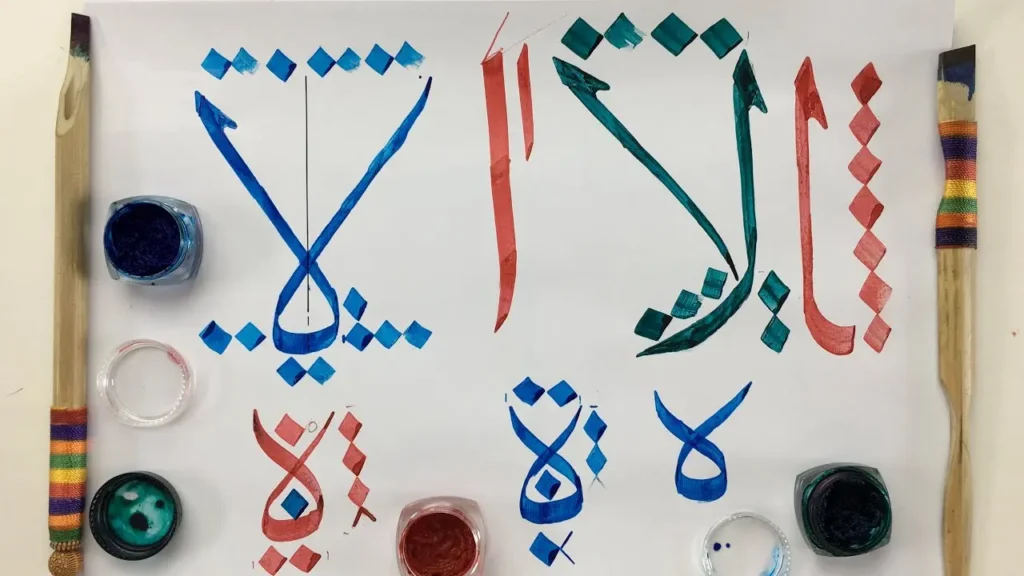
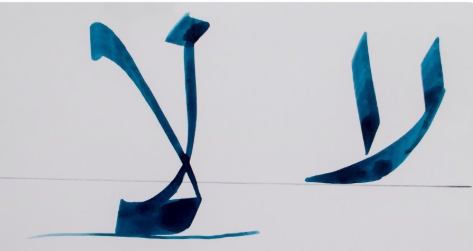
Lam Alif (لا) is a required ligature in Arabic calligraphy and typography, meaning the letters Lam and Alif must always join in this specific combined form whenever they appear consecutively.
How to Write Lam Alif in Arabic?
Whenever the letter Lam (ل) in its connecting form is followed by Alif (ا), they must be written as the single ligature shape لا. But it also can be written as لـا.
In our classes at Buruj Academy, students learning through our online Arabic writing course frequently ask whether Lam Alif is its own letter of the Arabic alphabet.
The answer is no — the Arabic alphabet contains 28 or 29 letters depending on the counting method, and Lam Alif is not among them. It is a ligature: a writing convention, not a phonological unit of its own.
Book your free trial to start writing Arabic
How to Learn Lam Alif?
Learning Lam Alif correctly requires three stages that our instructors at Buruj Academy sequence deliberately for non-Arabic speaking students.
Stage One — Isolate and Repeat the Sound
Before working inside full Quranic verses, students should practice the Lam + Alif sequence in isolation: “Laaaaa” — Lam release, then two-count Alif extension. This trains the tongue-to-throat transition without the cognitive load of reading connected text.
Our instructors typically allocate 5–7 minutes per session on this isolated drilling during the early weeks of a Tajweed Beginners course.
Read also: What Is the Rule of Alif Lam?
Stage Two — Practice in High-Frequency Quranic Words
Move to the most frequent Lam Alif words in the Quran: لَا (no), إِلَّا (except), كَلَّا (certainly not), لَكِن (but). Because these words appear hundreds of times across the Mushaf, drilling them builds a muscle-memory response that transfers automatically to unfamiliar verses.
Stage Three — Apply in Connected Recitation
The final stage is reciting full verses under instructor supervision — specifically choosing verses with multiple instances of Lam Alif to maximize practice density. Surah Al-Baqarah (particularly the opening pages) and Surah Ya-Sin provide ideal practice material.
Students who follow our Tajweed for Beginners course typically reach consistent Lam Alif accuracy within four to six weeks of structured daily practice — in our instructors’ experience, the Lam weight error (adding Tafkhim where Tarqiq is required) resolves earliest, while the Madd count precision takes slightly longer to internalize.
Book Your FREE Trial Lesson to Begin Your Tajweed Journey

Master Tajweed Rules with Buruj Academy’s Expert Instructors
Understanding Lam Alif rules is one step in a layered Tajweed system — every rule connects to the next.
At Buruj Academy, our Online Tajweed Classes are taught by Ijazah-certified instructors and Al-Azhar University graduates with 12+ years of experience teaching non-Arabic speakers globally.
We use the Buruj Method — sound-before-rules — ensuring students hear and produce correct sounds before memorizing technical names.
Every session is 1-on-1, fully personalized, with flexible scheduling across all time zones.
Book your free trial lesson today and experience structured, authentic Tajweed instruction from qualified specialists.
Join a supportive learning environment tailored to your pace and lifestyle. Start your journey toward excellence by enrolling in one of our specialized tracks:
- Online Tajweed Classes
- Tajweed Classes for Beginners
- Tajweed Classes for Adults
- Tajweed Classes for Sisters
- Tajweed Classes for Kids
- Advanced Tajweed Course
- Amli Tajweed Course (Practical Application)
Ready to transform your recitation? book your free assessment and start your path to Tajweed mastery today!
Excel in Your Quranic Studies
Join Buruj Academy and master the Quran with our structured, professional curriculum.
Book Your Free TrialConclusion
Lam Alif may appear deceptively simple on the page, but as we have explored, it activates multiple Tajweed principles simultaneously: a consistently light Lam (Tarqiq), a naturally extended Alif (Madd Tabi’i), and a mandatory script form that cannot be separated. Understanding how it differs from Alif Lam (ال), how it behaves inside words like إِلَّا and كَلَّا, and how Madd length shifts when a Hamza follows — these are the details that separate approximate recitation from accurate recitation.
Frequently Asked Questions About the Rule for Lam Alif
Is Lam Alif a Letter of the Arabic Alphabet?
Lam Alif (لا) is not a letter of the Arabic alphabet — it is a ligature formed when Lam and Alif appear consecutively. The Arabic alphabet contains 28 letters; Lam Alif is a calligraphic joining convention. It follows the independent Tajweed rules of its two component letters, not rules of its own.
What Is the Difference Between Lam Alif and Alif Lam in the Quran?
Lam Alif (لا) is a negation particle meaning “no” or an embedded sequence within a word; Alif Lam (ال) is the definite article meaning “the.” In Lam Alif, the Alif extends for two counts (Madd Tabi’i); in Alif Lam, the Alif is an Alif Wasla and is not pronounced at all when connected to the preceding word.
How Many Counts Should the Alif in Lam Alif Be Extended?
The default extension for the Alif in Lam Alif is two counts (Madd Tabi’i). If a Hamza immediately follows in the same word, the Madd becomes Madd Muttasil (4–5 counts). If the Hamza is in the next word, it becomes Madd Munfasil (2–5 counts). If pausing at a Waqf, Madd ‘Arid Lissukoon applies (2, 4, or 6 counts).