 Quran
Quran
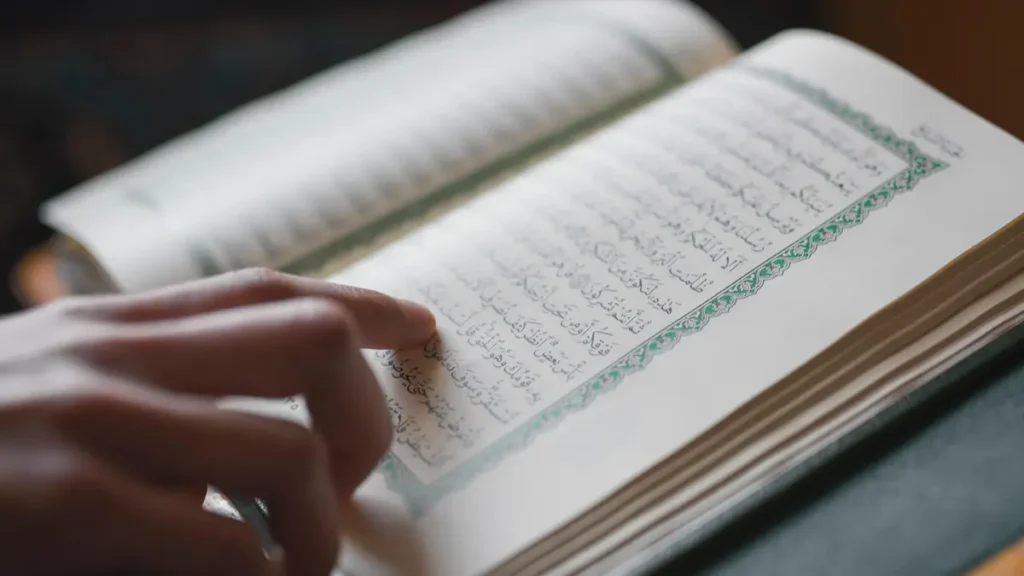
| Key Takeaways |
| Passing wind (flatulence) breaks wudu (minor ritual purity) but does not constitute a major ritual impurity (hadath akbar). |
| If reciting Quran from memory, you may continue recitation after passing wind — minor impurity does not prohibit recitation from memory. |
| If reading from a physical Mushaf, you must stop and renew wudu before touching or continuing — touching the Mushaf requires purity from minor hadath. |
Passing wind during Quran recitation is a question many Muslims feel embarrassed to ask — yet it is a genuine, common situation that deserves a clear, grounded Islamic answer.
Understanding the ruling requires knowing the difference between two distinct situations: reciting from memory and reciting from the physical Mushaf.
Table of Contents:
What Happens If You Fart While Reading the Quran?
If you pass wind while reciting from memory, your recitation is not invalidated — you may continue after the moment has passed, though pausing during it is recommended out of reverence for Allah’s words. If you are reading from the Mushaf, you must stop and renew your wudu before touching or continuing, because holding the Mushaf requires ritual purity from minor hadath.
What Did Imam al-Nawawi Say About What Happens If You Fart While Reading the Quran?
Imam al-Nawawi addressed this situation directly in his foundational work Al-Tibyan fi Adab Hamalat al-Quran. He stated that a person should not allow flatulence to occur while actively reciting Quran — and if they need to pass wind, they should pause their recitation first, then resume afterward.
The words of Allah deserve our highest reverence, and allowing such an act to occur simultaneously with recitation contradicts the spirit of that reverence. Pausing briefly and resuming after is entirely acceptable — your recitation remains valid.
Does Passing Wind Invalidate Quran Recitation?
Passing wind breaks wudu and constitutes a minor ritual impurity (hadath asghar), but it does not place a person in a state of major impurity (hadath akbar). The prohibition on reciting Quran applies only to those in a state of major impurity — namely, the junub (one who requires ghusl) and, according to the majority of scholars, the menstruating woman.
This distinction is fundamental.
Minor impurity interrupts the conditions for touching the Mushaf, but it does not sever your connection to Allah’s words when reciting from memory.
Scholars across the four major madhabs are consistent on this point: recitation from memory after minor hadath is permissible.
What Is the Ruling If You Fart While Reading from the Mushaf?
If you are reading from a physical Mushaf and you pass wind, the ruling changes significantly. Touching the Mushaf — holding it, turning its pages, or maintaining physical contact — requires ritual purity from both minor and major hadath. When your wudu breaks due to flatulence, you must stop holding or touching the Mushaf immediately. You then have two options:
| Situation | What to Do |
| You want to continue reading from the Mushaf | Renew your wudu, then return to your recitation |
| You want to continue reciting but cannot renew wudu immediately | Recite only from memory, without touching the Mushaf |
| You are in a situation where maintaining wudu is impossible | See the concession for continuous involuntary impurity below |
This ruling is derived from the well-known principle that only those who are purified should touch the Quran, supported by the verse: لَّا يَمَسُّهُ إِلَّا ٱلْمُطَهَّرُونَ — “None touch it except the purified.” (Al-Waqi’ah 56:79) — though scholars differ on whether this verse refers to the heavenly preserved tablet or the physical Mushaf.
The majority position among classical scholars holds that wudu is required to touch the Mushaf.
At Buruj Academy, our Al-Azhar-trained instructors in our Online Quran Recitation Course regularly help students understand not just how to recite, but the proper etiquette and conditions for reading Quran — including these practical fiqh considerations that affect everyday recitation.
Book your first FREE recitation lesson

Can I Read Quran If I Fart and Cannot Immediately Renew Wudu?
If you are reciting from memory and flatulence occurs, you may resume after pausing briefly — there is no need to renew wudu solely for the purpose of continuing recitation from memory. Wudu is recommended (mustahabb) for recitation from memory, not obligatory.
If you are reading from the Mushaf and cannot immediately access water to renew wudu, you have two practical paths:
Option 1: Use a barrier — many scholars permit touching the Mushaf through a clean cloth or cover if not in a state of ritual purity, though opinions on this differ.
Option 2: Recite from memory until you are able to renew wudu and return to the Mushaf.
The key principle, as stated in Islamic legal scholarship, is: لَا يُكَلِّفُ اللَّهُ نَفْسًا إِلَّا وُسْعَهَا — “Allah does not burden a soul beyond that it can bear.” (Al-Baqarah 2:286) Hardship creates concession in Islamic law, and this applies to your recitation practice as well.
Read also: Can the Quran Touch the Floor?
Discover the Buruj Academy Difference
Step into our virtual classrooms and see how our expert instructors make learning Quran and Arabic intuitive and clear. We focus on overcoming the specific hurdles non-native speakers face, building your confidence and connection with the Quran.
Excel in Your Quranic Studies
Join Buruj Academy and master the Quran with our structured, professional curriculum.
Book Your Free TrialWhat About Someone with Continuous Involuntary Flatulence?
A person who suffers from continuous involuntary flatulence (or any continuous impurity) is treated similarly to someone with chronic urinary incontinence — they are categorized under the ruling of ma’dhur (excused person). According to the majority of scholars, such a person:
| Ruling | Application for Ma’dhur |
| Wudu | Makes wudu at the start of each prayer time; it remains valid for that time even if impurity continues |
| Touching the Mushaf | May touch and read the Mushaf while their wudu made for the prayer time is in effect |
| Recitation from memory | No restriction — may recite freely |
| Obligation | No obligation to repeat wudu for each instance of continuous involuntary impurity |
This concession ensures that illness or chronic conditions do not become a barrier to a Muslim’s relationship with the Quran.
If this applies to you, we recommend consulting a qualified scholar for a ruling specific to your circumstances, as the details matter.
Read also:What Happens When the Quran Is Dropped by Mistake?
A Clear Summary of What Happens If You Fart While Reading the Quran
| Scenario | Wudu Status After Passing Wind | Ruling on Recitation |
| Reciting from memory | Wudu broken (hadath asghar) | May continue reciting — pause during the act itself out of adab |
| Reading from Mushaf | Wudu broken (hadath asghar) | Must stop — renew wudu before touching Mushaf again |
| Continuous involuntary flatulence (ma’dhur) | Treated as excused | May read Mushaf within wudu made for each prayer time |
| State of major impurity (junub or menstruation) | Hadath akbar present | May NOT recite Quran at all (majority position) |
This table is the core of the ruling. Return to it whenever uncertainty arises in your practice.
Start Your Quran Journey with Buruj Academy’s Expert Instructors
Knowing the rulings around recitation is the foundation of a confident Quran practice — and that confidence deepens further when you recite correctly and beautifully.
Buruj Academy’s Quran Reading Course and Online Quran Classes for Beginners provide structured, personalized instruction from Al-Azhar University graduates and Ijazah-certified instructors with 12+ years of experience teaching non-Arabic speakers globally.
Whether you are reading the Quran for the first time or rebuilding a consistent practice, our 1-on-1 online sessions, flexible scheduling, and the Buruj Method — Consistency-before-speed — mean you progress at the right pace for your life.
Book your free trial lesson and begin with clarity, confidence, and proper guidance.
Take the next step in your learning journey today by enrolling in one of our specialized programs:
- Online Quran Classes
- Online Quran Classes for Beginners
- Online Quran Classes for Adults
- Online Quran Classes for Ladies
- Online Quran Classes for Kids
- Quran Reading Course
- Quran Recitation Course
- Online Ijazah Course
- Online Qirat Course
Don’t wait to transform your relationship with the Holy Quran. Join our global community of students and book your free evaluation session now!
Excel in Your Quranic Studies
Join Buruj Academy and master the Quran with our structured, professional curriculum.
Book Your Free TrialConclusion
The ruling on passing wind during Quran recitation is clear and manageable once you understand the two-part distinction: memory recitation and Mushaf recitation follow different conditions, and minor impurity is far less restrictive than major impurity. Imam al-Nawawi’s guidance to pause during the act itself reflects the deeper spirit behind these rulings — not restriction, but reverence.
Whether you are developing a daily recitation habit, working through your how to start reading Quran daily plan, or strengthening your memorization practice, knowing these etiquette rulings frees you to engage with Allah’s words with clarity rather than confusion. The Quran was revealed as mercy and ease — and the scholarly tradition around it reflects that same mercy.
Read also: Can You Read from the Mushaf While Praying?
Frequently Asked Questions About Reading Quran and Ritual Purity
Does Passing Wind Break Your Quran Recitation?
Passing wind breaks your wudu but does not invalidate recitation from memory. You should pause during the act itself as a matter of etiquette, then resume freely. If you were reading from the Mushaf, you must stop and renew wudu before touching it again. The recitation itself — from memory — is not broken or spiritually affected.
Can I Read Quran Without Wudu?
You may recite Quran from memory without wudu — wudu is recommended (mustahabb) but not obligatory for recitation from memory. However, wudu is required to touch the physical Mushaf. If you are in a state of major impurity (requiring ghusl), recitation is not permitted until you have purified yourself, according to the majority of scholars.
What Is the Difference Between Minor and Major Impurity in Quran Recitation?
Minor impurity (hadath asghar), removed by wudu, prevents touching the Mushaf but does not prevent recitation from memory. Major impurity (hadath akbar), removed by ghusl, prevents both touching the Mushaf and reciting Quran from memory according to the majority scholarly position. This distinction governs how you manage recitation when purity is disrupted.
Can Someone with a Medical Condition Causing Continuous Flatulence Read the Quran?
Yes. A person with a medical condition causing continuous involuntary flatulence is classified as a ma’dhur (excused person). They make wudu at the start of each prayer time, and that wudu remains valid for the entire prayer period even if impurity continues. This allows them to read, touch the Mushaf, and pray without being obligated to renew wudu each time.
Should I Stop Reciting Quran the Moment I Feel I Might Pass Wind?
According to Imam al-Nawawi’s guidance in Al-Tibyan fi Adab Hamalat al-Quran, you should pause your recitation at the moment of passing wind, then resume afterward. If you are reading from the Mushaf, you must put it down and renew wudu. If reciting from memory, you may resume immediately after. There is no ruling that requires you to stop in anticipation — the ruling applies at the moment it occurs.