 Arabic
| Key Takeaways |
| Arabic has four core season words — الرَّبِيع (spring), الصَّيْف (summer), الخَرِيف (autumn), and الشِّتَاء (winter) — each grammatically masculine. |
| Weather in Arabic is expressed with الطَّقْس (the weather) plus descriptive adjectives, not a single fixed phrase like English “it’s hot.” |
| Rain-related vocabulary spans intensity levels, from مَطَر (rain) to رَذَاذ (drizzle) to عَاصِفَة (storm). |
Picture a new Arabic learner staring blankly at a weather forecast, unable to tell if tomorrow brings rain or sunshine. That gap between knowing letters and understanding daily conversation is exactly where seasons and weather vocabulary becomes essential.
الطَّقْس (al-taqs) means “the weather,” and Arabic names four seasons — الرَّبِيع, الصَّيْف, الخَرِيف, الشِّتَاء — each paired with distinct temperature, rain, and sky-related vocabulary used daily across the Arabic-speaking world.
Table of Contents:
What Are the Four Seasons in Arabic?
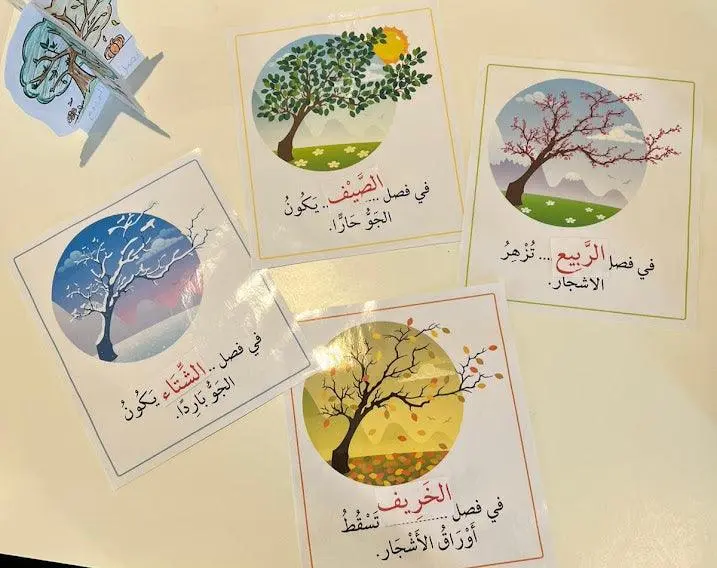
Arabic recognizes four seasons, all grammatically masculine nouns: الرَّبِيع (spring), الصَّيْف (summer), الخَرِيف (autumn), and الشِّتَاء (winter). Each season carries its own set of associated weather terms that native speakers pair with it automatically in daily conversation.
Learning these four words first gives structure to everything else in this guide. Every weather term below connects back to one or more of these seasons, so mastering the base vocabulary early makes the rest far easier to retain.
1. Spring Season in Arabic
الرَّبِيع (al-rabee’) is the Arabic word for spring, associated with mild temperatures, blooming flowers, and moderate rainfall across most Arabic-speaking regions.
The root ر-ب-ع also relates to the number four, though the seasonal meaning stands independently in modern usage.
Spring in Arabic-speaking countries typically brings جَوّ مُعْتَدِل (moderate weather) and أَزْهَار (flowers).
| Arabic | Transliteration | English |
| الرَّبِيع | Ar-Rabee’ | Spring |
| مُعْتَدِل | Mu’tadil | Moderate/Mild |
| أَزْهَار | Azhaar | Flowers |
2. Summer Season in Arabic
الصَّيْف (al-sayf) is the Arabic word for summer, the season most associated with حَرّ شَدِيد (intense heat) and long daylight hours throughout the region.
This word should not be confused with سَيْف (sword), which shares similar consonants but different vowel patterns and meaning entirely.
Summer vocabulary clusters around heat descriptors students will use constantly. حَار (hot) and حَرَارَة (heat/temperature) both derive from the same root ح-ر-ر, which also gives us حرارة الجو (the weather’s temperature).
3. Autumn Season in Arabic
الخَرِيف (al-khareef) is the Arabic word for autumn or fall, describing the transitional season marked by falling leaves, cooling temperatures, and shorter days. The word derives from a root associated with fruit-picking season in classical Arabic agricultural vocabulary.
Autumn brings أَوْرَاق مُتَسَاقِطَة (falling leaves) and جَوّ بَارِد نِسْبِيًّا (relatively cool weather). This season often gets the least vocabulary attention in beginner courses, yet it appears frequently in weather reports and descriptive writing.
4. Winter Season in Arabic
الشِّتَاء (al-shitaa’) is the Arabic word for winter, the coldest season characterized by بَرْد (cold) and, in many regions, أَمْطَار (rains) rather than snow. Winter and rain vocabulary overlap heavily in Arabic, since many Arabic-speaking regions experience their heaviest rainfall during winter months rather than a separate “rainy season.”
This overlap matters for learners: unlike English, where “rainy season” sometimes means a distinct fifth season in tropical contexts, standard Arabic usage folds most rain vocabulary directly into winter’s semantic field.
In our sessions at Buruj Academy, adult students consistently mix up شِتَاء and صَيْف in early speaking practice — the initial sounds feel similar under time pressure, so we drill them as a contrasting pair rather than teaching them separately.
Systematic vocabulary building like this is exactly what our online Arabic classes focus on, pairing new words with their opposites so contrast reinforces memory from the first lesson.
Book your FREE Arabic trial online Arabic class at Buruj

How Do You Say Different Types of Weather in Arabic?
أَنْوَاع الطَّقْس (types of weather) in Arabic cover sunny, cloudy, windy, and rainy conditions, each expressed through الطَّقْس plus a descriptive adjective.
The core sentence structure is simple: الطَّقْس + adjective. This single formula covers most everyday weather descriptions students will need.
1. Sunny Weather in Arabic
مُشْمِس (mushmis) means “sunny,” used in the phrase الطَّقْس مُشْمِس (the weather is sunny). The word derives from شَمْس (sun), following a common Arabic pattern where adding مُـ before a root noun creates a descriptive adjective.
2. Cloudy Weather in Arabic
غَائِم (gha’im) means “cloudy,” as in الطَّقْس غَائِم اليَوْم (the weather is cloudy today). This comes from the root غ-ي-م, related to غَيْم (cloud), and follows the فَاعِل active-participle pattern common across Arabic adjectives.
3. Windy Weather in Arabic
عَاصِف (aasif) or the more common الجَوّ فِيهِ رِيَاح (there are winds in the weather) describes windy conditions. رِيَاح is the plural of رِيح (wind), and Arabic speakers often specify wind strength with words like رِيَاح قَوِيَّة (strong winds) or نَسِيم (light breeze).
4. Rainy Weather in Arabic
مُمْطِر (mumtir) means “rainy,” used in الطَّقْس مُمْطِر (the weather is rainy) or تُمْطِر (it is raining) as a verb form. Rain vocabulary in Arabic spans several intensity levels beyond the basic word, which matters for anyone reading weather reports or discussing precipitation in detail.
| Arabic Term | Transliteration | Intensity Level |
| رَذَاذ | Rathath | Light drizzle |
| مَطَر | Matar | Standard rain |
| مَطَر غَزِير | Matar Ghazeer | Heavy rain |
| عَاصِفَة | ‘Aasifah | Storm |
We find that students who memorize only مَطَر get stuck when reading actual Arabic news weather segments, since broadcasters routinely specify intensity using these graded terms rather than a single generic word.
Read also: Clothes in Arabic
What Are the Essential Hot and Cold Vocabulary Words in Arabic?
حَار (haar) means “hot” and بَارِد (baarid) means “cold” — the two foundational temperature adjectives in Arabic, both following the common فَاعِل or فَعِيل-style adjective patterns.
These two words alone allow beginners to describe temperature in nearly any daily context, from weather to food to drinks.
Temperature vocabulary in Arabic extends beyond these two basics into more nuanced degrees, which native speakers use constantly to add precision.
1. Hot in Arabic
حَار (haar) is the standard adjective for “hot,” while حَرّ (harr) functions as the noun “heat.” The sentence الجَوّ حَار جِدًّا اليَوْم (the weather is very hot today) is one of the most commonly heard phrases across Arabic-speaking summers.
سَاخِن (saakhin) is a related but distinct word — it describes hot objects or liquids (hot tea, hot food) rather than ambient air temperature.
Confusing حَار and سَاخِن is one of the most frequent errors we correct with adult beginners, since English “hot” covers both meanings with a single word.
2. Cold in Arabic
بَارِد (baarid) describes cold weather, objects, and drinks alike, making it more flexible than its “hot” counterpart. الجَوّ بَارِد جِدًّا (the weather is very cold) and المَاء بَارِد (the water is cold) both use the identical adjective without needing a second word.
بَرْد (bard) is the related noun meaning “cold” or “coldness,” commonly used in the health-related expression عِنْدِي بَرْد (I have a cold/I’m sick with a cold).
Discover the Buruj Academy Difference
Step into our virtual classrooms and see how our expert instructors make learning Quran and Arabic intuitive and clear. We focus on overcoming the specific hurdles non-native speakers face, building your confidence and connection with the Quran.
Master the Arabic Language
Join our expert-led courses and build a strong foundation in Classical and Modern Arabic.
Get Your Free TrialHow Do Arabic Speakers Combine Seasons and Weather in Everyday Sentences?
Arabic speakers combine season and weather vocabulary using simple subject + adjective or season + weather description sentence patterns, without complex grammatical transformations. Mastering four or five sentence templates covers the vast majority of everyday weather conversation.
The most useful template pairs a season name directly with its typical weather using فِي (in/during):
فِي الشِّتَاء، الجَوّ بَارِد وَمُمْطِر.
Fis-shitaa’, al-jaw baaridun wa mumtir.
“In winter, the weather is cold and rainy.”
This structure — season, then الجَوّ or الطَّقْس, then one or two adjectives joined by وَ (and) — is the backbone of nearly all weather description in Arabic.
Understanding how adjectives connect to nouns here also builds directly on broader Arabic sentence structure principles, since weather sentences are essentially simple nominal sentences with descriptive adjectives.
Practice Exercise: Build Your Own Weather Sentences
Try completing these using vocabulary from this guide before checking the suggested answers:
- فِي الصَّيْف، الجَوّ ___ (hot) وَ ___ (sunny).
- فِي الرَّبِيع، الطَّقْس ___ (moderate) وَ ___ (there are flowers).
- اليَوْم الجَوّ ___ (cloudy) لَكِن لَيْسَ ___ (cold).
Suggested answers:
- حَار، مُشْمِس
- معتدل، فيه أزهار
- غائم، بارد
What Are the Arabic Letters Used in Weather and Season Vocabulary?
Weather and season vocabulary in Arabic draws on the full alphabet without any letters exclusive to this topic, though certain letters appear with notably high frequency.
The letters ر, ب, and ط recur across core terms — رَبِيع, بَارِد, مَطَر, طَقْس — making them useful anchor letters for younger learners.
Recognizing these recurring letters helps students connect new vocabulary to alphabet lessons they’ve already completed, rather than treating weather words as an entirely separate memorization task.
| Letter | Appears In | Meaning |
| ر (Raa) | رَبِيع، مَطَر، حَرارَة، خَرِيف | Spring, rain, heat, autumn |
| ب (Baa) | بَارِد، رَبِيع | Cold, spring |
| ط (Taa) | طَقْس | Weather |
For learners still building foundational letter recognition, reviewing the Arabic alphabet with pictures for kids before tackling weather vocabulary creates a stronger base, since sounding out unfamiliar words becomes far easier once letter shapes feel automatic.
Read also: Arabic Days of the Week
What Weather and Season Vocabulary Should Kids Learn First?
Children learning Arabic should start with the four season names and four to five basic weather adjectives — حَار, بَارِد, مُشْمِس, مُمْطِر — before moving to intensity words or compound sentences. Young learners retain vocabulary far better through short, repeated exposure than through comprehensive lists introduced all at once.
We’ve found that pairing each weather word with a physical action — pretending to shiver for بَارِد, fanning oneself for حَار — dramatically speeds up recall for children aged five to nine, turning abstract vocabulary into embodied memory.
Simple Weather Sentences in Arabic for Kids
Short, complete sentences work better than isolated word lists for young learners:
- الجَوّ حَار. (The weather is hot.)
- الشَّمْس مُشْرِقَة. (The sun is shining.)
These follow the same patterns found in Arabic sentences for kids, reinforcing that weather vocabulary isn’t a separate skill from general sentence-building — it’s an application of skills children are already developing.
Building this kind of foundation systematically is exactly what our Online Arabic Classes for Kids are designed around, using repetition and visual pairing rather than rote memorization.
Book a FREE Arabic trial for your child

Master Seasons and Weather Vocabulary with Buruj Academy’s Structured Arabic Classes
Seasons and weather vocabulary forms a practical foundation every Arabic learner needs for daily conversation, reading, and comprehension.
At Buruj Academy, our online Arabic classes teach vocabulary like this through the context-before-abstraction method, embedding new words in real sentences from the very first lesson.
Our Al-Azhar-trained instructors bring 12+ years of experience teaching non-Arabic speakers, adapting pacing for beginners, working adults, and children alike.
Every student receives a personalized learning plan with flexible 1-on-1 scheduling and real-time pronunciation correction.
Ready to move beyond word lists into confident, natural Arabic conversation? Book your free trial lesson today and start building vocabulary that actually sticks.
Begin your transformation today by choosing the path that fits your goals:
- Online Arabic Classes (General & Comprehensive)
- Arabic Course for Beginners
- Arabic Alphabet Learning Course
- Online Arabic Classes for Kids
- Arabic Classes for Adults
- Arabic Grammar Course (Nahw & Sarf)
- Intermediate Arabic Course (B1/B2)
- Arabic Speaking Course (Conversational Fluency)
- Arabic Reading Course (Literary Excellence)
- Learn Arabic Writing Course (Calligraphy & Composition)
Ready to speak with confidence? Join the global community at Buruj Academy and book your free placement interview today!
Master the Arabic Language
Join our expert-led courses and build a strong foundation in Classical and Modern Arabic.
Get Your Free TrialConclusion
Seasons and weather vocabulary might seem like a small corner of Arabic learning, but it’s one of the most frequently used in daily speech, news, and casual conversation. From the four season names to graded rain intensity words, this vocabulary rewards learners who practice it through real sentences rather than isolated memorization.
Mastering الطَّقْس and its descriptive adjectives opens the door to reading Arabic weather reports, discussing plans with native speakers, and building the kind of practical fluency that textbooks alone rarely deliver.
Read also: How to Learn Arabic in 10 Days?
Frequently Asked Questions About Seasons and Weather in Arabic
What Is the Arabic Word for Weather?
الطَّقْس (al-taqs) is the standard Arabic word for “weather,” though الجَوّ (al-jaw) is used interchangeably in many dialects and formal contexts. Both appear constantly in weather sentences, so learners benefit from recognizing them as synonyms rather than fixed alternatives.
How Many Seasons Does Arabic Recognize?
Arabic recognizes four seasons: الرَّبِيع (spring), الصَّيْف (summer), الخَرِيف (autumn), and الشِّتَاء (winter). All four are grammatically masculine nouns, and each pairs with predictable, season-specific weather vocabulary used throughout the Arabic-speaking world.
Is There a Separate Word for “Rainy Season” in Arabic?
Standard Arabic does not treat “rainy season” as a fifth distinct season; rain vocabulary is folded primarily into الشِّتَاء (winter), since most Arabic-speaking regions receive their heaviest rainfall during winter months. Learners should associate rain terms with winter rather than searching for a separate season name.
What’s the Difference Between حَار and سَاخِن?
حَار describes hot ambient weather or air temperature, while سَاخِن describes hot objects, food, or liquids. English speakers often use “hot” for both meanings, making this distinction one of the most common errors among adult Arabic learners.
Related Articles
Arabic