 Quran
Quran

| Key Takeaways |
| Surah Naba contains 40 verses divided into four thematic movements: the question, the proofs of creation, the Day itself, and the final reward. |
| Memorizing in three-to-five verse clusters that follow the surah’s natural argument structure produces faster, more stable retention than line-by-line repetition. |
| The rhyming end-sounds across most of Surah Naba’s verses function as built-in memory anchors when a student memorizes by listening first. |
| Daily revision of previously memorized sections must continue throughout new memorization, or earlier verses fade before the surah is complete. |
| Students typically need two to four weeks of consistent daily practice to memorize all 40 verses with correct Tajweed applied. |
Many students open Surah Naba expecting a short, simple surah and find themselves lost by verse fifteen, unable to recall where one description of creation ends and the next begins. This confusion is not a memory failure — it is a structural one, solved by memorizing the surah’s four natural movements rather than its individual lines.
To memorize Surah Naba, divide the 40 verses into their four built-in thematic sections — the question (1–5), the signs of creation (6–16), the Day of Judgment (17–30), and the final reward and warning (31–40) — and memorize each section as a connected unit before advancing.
This phase-by-phase approach mirrors how the surah itself was revealed to argue its point, making retention far more durable than isolated verse repetition.
Table of Contents:
Step 1: Begin by Listening to the Entire Surah Naba
Before opening a mushaf or repeating a single ayah, spend three to five days simply listening to a qualified reciter’s rendition of Surah Naba on repeat. This step is not optional preparation — it is the foundation the rest of the memorization stands on.
In our Hifz for adults classes at Buruj Academy, the students who skip this listening phase are consistently the ones who mispronounce word endings later, because they memorized the shape of the Arabic before they memorized its sound.
Sound-before-rules is the first pillar of the Buruj Method, and it applies directly here. Listen during commutes, before sleep, or during quiet housework — the goal is passive familiarity, not active recall yet.
By the time you sit down to actually memorize, your ear will already recognize the surah’s rhythm, its recurring rhyme pattern ending in sounds like “-aada” and “-aaba,” and the natural pause points between ideas. This dramatically shortens the active memorization phase that follows.
Students who complete this listening period typically memorize the first section in half the time of those who begin cold.
Book Your Free Trial Lesson with Burruj’s Hifz Course for Adults

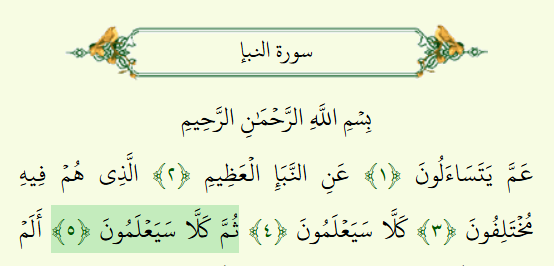
Step 2: Memorize the Opening 5 Verses as the Surah’s Central Question
Verses 1 through 5 form a self-contained unit: a question about what the disbelievers are arguing over, followed by Allah’s warning that they will soon know the truth. Memorize these five verses together, not one at a time.
This opening section is short by design, and its brevity makes it the easiest entry point into the entire surah. Read it aloud from the mushaf five times while looking at the text, then close the mushaf and attempt it from memory, glancing back only when you stumble.
We have found that adult beginners typically secure this first section within a single session of 15–20 minutes, largely because the questioning tone and short verse length create natural rhythm.
Do not move to the next section until you can recite verses 1–5 correctly three times in a row without opening the mushaf. This threshold matters more than speed.
A section rushed at this stage becomes the weak link that unravels the entire surah during later revision, so patience here pays dividends throughout the rest of the memorization journey.
Read also:The 7 Best Quran Reciters to Memorize the Quran for Faster Hifz
Step 3: Break the Signs of Creation Section in Surah Naba Into Three Smaller Clusters of Verses
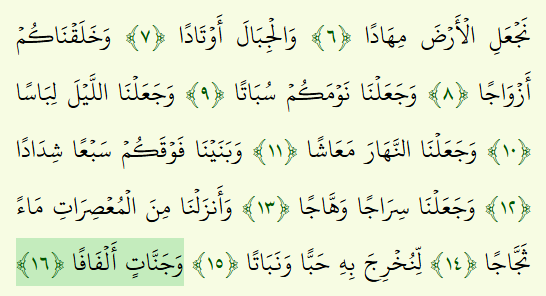
Verses 6 through 16 are the longest continuous section in Surah Naba and list Allah’s signs in creation — the earth as a resting place, mountains as pegs, the pairing of male and female, sleep, night, day, the seven heavens, the sun, and the rain that produces vegetation. Because this section spans eleven verses, memorize it in three smaller clusters of three to four verses rather than attempting it as one block.
Cluster one (verses 6–9) covers the earth, mountains, human pairs, and sleep.
Cluster two (verses 10–13) covers night, day, the seven heavens, and the sun.
Cluster three (verses 14–16) covers the rain clouds and the resulting grain, plants, and gardens.
| Cluster | Verses | Core Content |
| Cluster 1 | 6–9 | Earth, mountains, pairs, sleep |
| Cluster 2 | 10–13 | Night, day, heavens, sun |
| Cluster 3 | 14–16 | Rain, grain, plants, gardens |
Students consistently confuse the order of these signs when they attempt this section as a single unbroken list, since several verses share a similar grammatical pattern of “We made” or “We created.”
In our experience, pairing each cluster with a mental image — the specific pair of items it describes — resolves this confusion within two to three practice sessions.
Master each cluster separately before joining all three, then recite verses 6–16 as one continuous passage to confirm the transitions feel natural.
Should Children Memorize Surah Naba Differently Than Adults?
Children generally benefit from shorter, more frequent sessions of 10–15 minutes with heavier repetition and less reliance on translation-based understanding. Our Hifz for Kids course structures Surah Naba specifically around these shorter attention-span sessions.
Start your child’s Hifz classes with free session

Step 4: Anchor the Day of Judgment Section in Surah Naba Using Its Three Distinct Scenes
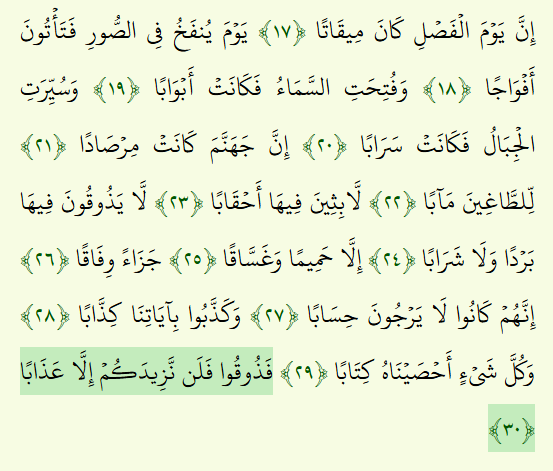
Verses 17 through 30 describe the Day of Judgment itself and split naturally into three scenes: the blowing of the trumpet and the opening of the heavens (17–20), the description of Hell awaiting the transgressors (21–26), and the reason for their punishment tied to their disbelief and denial (27–30).
Memorizing scene by scene prevents the emotional weight of this section from causing students to lose their place.
This is typically the section where students report the memorization “feeling different” from the earlier signs-of-creation verses, and that shift is intentional on the part of the surah’s structure. The tone moves from contemplative to consequential.
We encourage students to read a brief translation of each scene before memorizing its Arabic, since understanding what is being described — Hell as an ambush, a place of prolonged punishment for those who rejected accountability — makes the Arabic wording easier to retain than memorizing unfamiliar sounds without meaning attached.
Related resources on the best time to memorize Quran explain why this section, given its heavier content, often benefits from morning memorization sessions when mental focus is highest.
Complete all three scenes before testing the full 17–30 passage as one unit.
Read also:Benefits of Reading Surah An-Nur
Discover the Buruj Academy Difference
Step into our virtual classrooms and see how our expert instructors make learning Quran and Arabic intuitive and clear. We focus on overcoming the specific hurdles non-native speakers face, building your confidence and connection with the Quran.
Excel in Your Quranic Studies
Join Buruj Academy and master the Quran with our structured, professional curriculum.
Book Your Free TrialStep 5: Learn Verses 31 Through 37 as the Description of Paradise
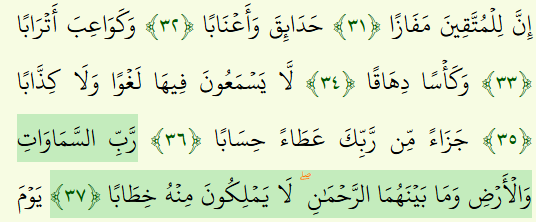
Verses 31 to 37 shift entirely in tone, describing the reward awaiting the righteous — gardens, vineyards, companions, and overflowing cups, all given as a generous gift from Allah. This section is shorter than the previous one and its positive imagery tends to make it one of the more enjoyable sections for students to memorize.
Because the tone contrast with the preceding Hell description is so sharp, we have observed that students rarely confuse where the punishment section ends and the reward section begins. This natural tonal break becomes a memory landmark.
Focus especially on the closing phrase of verse 36, which describes the reward as a sufficient gift and reckoning from the Lord — a phrase that also closes the section thematically. Recite verses 31–37 as a connected passage at least four times before adding the final closing verses, since this section sets up the surah’s concluding tone directly.
Read also:Dua for Memorizing Quran
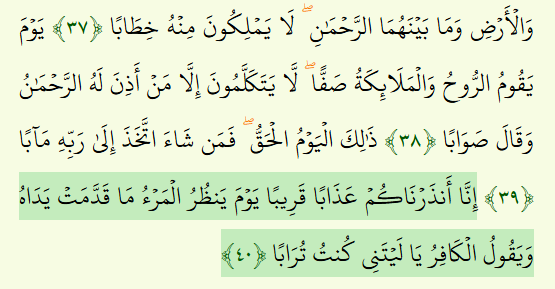
Step 6: Complete Surah Naba by Memorizing the Final Three Verses as the Closing Warning
Verses 38 through 40 bring the surah to its conclusion, describing the Day when the angels and the Spirit stand in ranks unable to speak except by Allah’s permission, followed by the closing warning that the punishment is near and the disbeliever will wish to have been mere dust.
This closing section carries the surah’s final rhetorical weight, and students who rush it after successfully memorizing the longer middle sections often shortchange these last three verses simply from momentum toward finishing.
We tell our students that a surah’s ending is remembered longest precisely because it is recited last in every subsequent repetition — so it deserves the same careful attention given to verse one. Slow down here rather than speeding up.
Once verses 38–40 are secure, recite the entire final section (31–40) together as one unit, then move directly to the full-surah connection phase described in the next step.
Read also:How to Memorize Surah Mulk?
Step 7: Connect All Four Sections of Surah Naba Into One Uninterrupted Recitation
After each individual section is memorized to the point of confident, error-free recitation, the next phase is joining them into a single, uninterrupted 40-verse recitation. This step is where genuine surah-level memorization is either confirmed or exposed as still fragile.
Attempt the full surah once daily for three consecutive days, reciting from verse one straight through to verse forty without opening the mushaf. If you stumble at a specific transition point — commonly between verse 16 and 17, where the tone shifts from creation to judgment — isolate that transition and repeat just the surrounding four to five verses ten times before reattempting the full recitation.
Our guide on how to memorize Quran faster covers additional techniques for smoothing exactly these kinds of section-boundary stumbles, which are the most common weak point even among otherwise strong memorizers.
Do not consider the surah memorized until three consecutive full recitations pass without a single prompt from the mushaf or a teacher.
Step 8: Apply Correct Tajweed to Every Section Before Considering Memorization Complete
Memorization without correct Tajweed application is incomplete memorization, since the goal is accurate Quranic recitation, not simply recalling word sequences. Review each section specifically for Madd letters, Qalqalah on the five qalqalah letters, and Noon Sakinah rules, which appear throughout Surah Naba’s varied vocabulary.
Students commonly rush through Madd durations once verses are memorized from a pure recall standpoint, shortening elongations that should be held for two, four, or six counts depending on the Madd type present. This single habit is the most frequent correction we make during this phase.
Our article on heavy and light letters in Tajweed is directly relevant here, since Surah Naba contains multiple instances of Tafkhim requiring deliberate articulation.
Recite the full surah slowly to a teacher or recording at this stage, correcting any rushed or flattened letters before moving to the final revision phase.
Enrolling in Buruj Academy’s Online Tajweed Classes at this stage gives students direct, real-time correction from Ijazah-certified instructors, ensuring memorized verses are recited with the accuracy the Quran deserves rather than merely recalled from memory.
Book Your FREE Trial Lesson to Begin Your Tajweed Journey

Step 9: Establish a Weekly Revision Schedule to Prevent the Surah From Fading
Once Surah Naba is fully memorized with correct Tajweed, revision must begin immediately and continue indefinitely, since newly memorized material fades faster than material memorized months earlier.
Recite the full surah from memory at least four times during the first week after completion.
| Week | Recitation Frequency | Focus |
| Week 1 | Daily | Full surah, catch remaining errors |
| Weeks 2–4 | 4x per week | Full surah, build fluency |
| Month 2 onward | 2x per week | Maintenance within rotation |
This tapering schedule reflects what our Hifz specialists observe consistently: verses memorized in the final week before completion are statistically the most fragile and require the most repetition to stabilize into long-term memory.
Our online Hifz program builds exactly this kind of structured revision into every student’s personalized schedule, since memorization without a maintenance system is memorization that will eventually be lost.
Combine Surah Naba into your existing rotation of memorized surahs from Juz 30 rather than reciting it in isolation.
Start Hifz today with a FREE trial session

Accelerate Your Hifz Journey with Buruj Academy’s Expert Guidance
Memorizing Surah Naba section by section builds a foundation for the rest of Juz 30. Sustained progress, however, depends on structured guidance rather than self-study alone.
Buruj Academy’s online Hifz program pairs students with Al-Azhar-trained Hifz specialists who personalize revision schedules to each learner’s pace and retention style. Our instructors are Ijazah-certified, ensuring every memorized verse is corrected against authentic recitation standards.
Through the Buruj Method’s consistency-before-speed philosophy, students build memorization habits that last rather than verses that fade within weeks. Sessions are flexible, one-on-one, and available across time zones for busy adults and children alike.
Book a free trial lesson today and let our specialists guide your Surah Naba memorization from the first verse to the last with confidence.
Take the first step toward this lifelong blessing by enrolling in a program tailored to your pace:
- Online Hifz Program (Comprehensive Quran Memorization)
- Juz 30 Memorization Course (Perfect for focused starts)
- Hifz Classes for Kids (Engaging and interactive)
- Hifz Classes for Adults (Flexible scheduling for busy lives)
- Hifz Classes for Sisters (Private, supportive learning)
- Short Surah Memorization Course (Ideal for daily prayers)
- Hifz Ijazah Course (For advanced students seeking certification)
Don’t let another day pass without moving closer to your goal. Join Buruj Academy today and schedule your free trial session to begin your Hifz journey!
Excel in Your Quranic Studies
Join Buruj Academy and master the Quran with our structured, professional curriculum.
Book Your Free TrialDiscover the Buruj Academy Difference
Step into our virtual classrooms and see how our expert instructors make learning Quran and Arabic intuitive and clear. We focus on overcoming the specific hurdles non-native speakers face, building your confidence and connection with the Quran.
Conclusion
Surah Naba rewards a structured approach precisely because its own argument unfolds in four deliberate movements — question, evidence, consequence, and reward. Students who memorize along these natural seams retain the surah far longer than those who treat all 40 verses as a single undifferentiated block.
The section-by-section method outlined here, paired with disciplined daily revision and correct Tajweed application, transforms what feels like an overwhelming 40-verse surah into four manageable, connected passages. What remains is consistency, applied one section at a time until the entire surah becomes a permanent part of your recitation.
Frequently Asked Questions About Memorizing Surah Naba
How Long Does It Typically Take to Memorize Surah Naba?
Most students memorize Surah Naba’s 40 verses within two to four weeks with daily 20–30 minute sessions. Pace varies by prior memorization experience, Arabic familiarity, and consistency of practice, with adult beginners generally on the longer end of this range.
Is Surah Naba a Good Starting Point for Beginning Hifz?
Surah Naba is an excellent entry surah since it opens Juz 30 and introduces recurring vocabulary found throughout the shorter Meccan surahs. Its clear four-part thematic structure also teaches beginners how to approach longer surahs using section-based memorization later.
What Is the Difference Between Memorizing and Understanding Surah Naba?
Memorization means accurate word-for-word recall with correct pronunciation, while understanding means grasping the meaning behind each verse. Both matter, but reviewing translation before memorizing each section — as outlined above — significantly strengthens long-term retention of the Arabic itself.