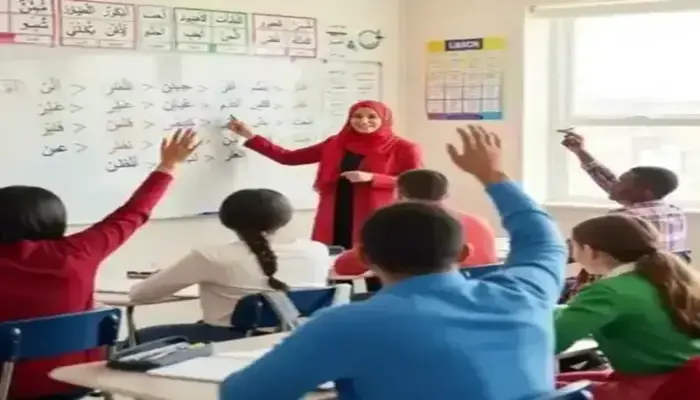
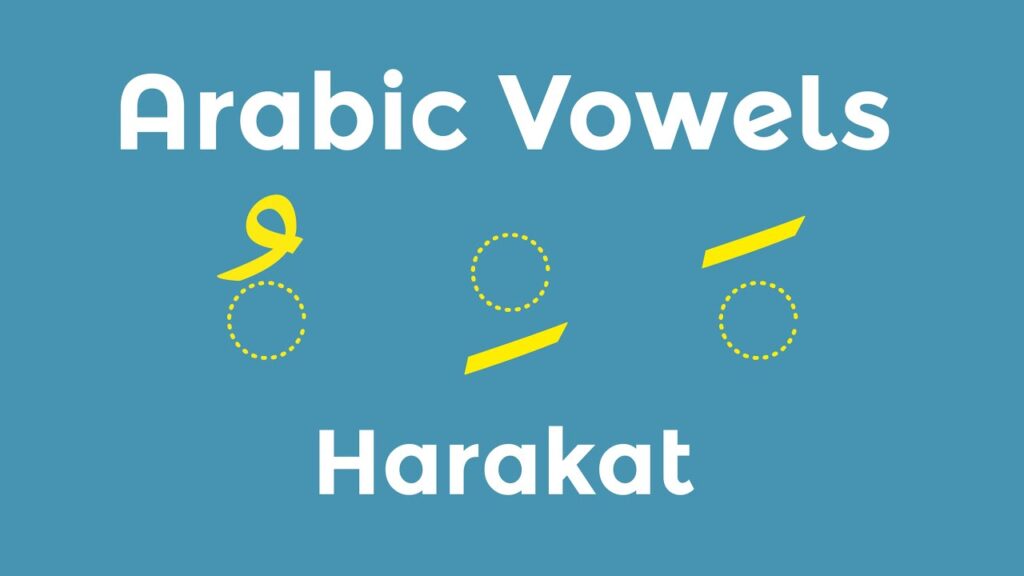
 Arabic
| Key Takeaways |
| Egyptian Arabic is the most widely understood Arabic dialect globally, making it a practical first dialect for children to learn. |
| Children aged 4–12 absorb spoken dialects fastest through listening, play, and repetition rather than formal grammar instruction. |
| A structured routine of 15–20 minutes daily produces stronger retention than occasional long study sessions for young learners. |
| Native-speaker instructors and interactive media accelerate a child’s Egyptian Arabic pronunciation and comprehension dramatically. |
Egyptian Arabic is the most recognized Arabic dialect in the world, heard across Arab television, music, and cinema from Morocco to the Gulf.
For children growing up outside the Arab world, it offers a natural, culturally rich entry point into spoken Arabic that feels alive — not academic.
The good news for parents is that children’s brains are wired for language acquisition. With the right mix of structured input, play-based practice, and consistent exposure, kids can build real conversational Egyptian Arabic skills faster than most adults expect. Here is exactly how to make that happen.
Table of Contents:
1. Start with the Egyptian Arabic Alphabet and Sounds
The single most important first step when helping a child learn Egyptian Arabic is building accurate sound recognition.
Egyptian Arabic uses the same Arabic script as Modern Standard Arabic and the Quran, but spoken Egyptian has distinct sounds — particularly the pronunciation of the letter ج as a hard “g” (like in “game”) rather than the classical “j.” Getting sounds right from the beginning prevents stubborn habits that are difficult to correct later.
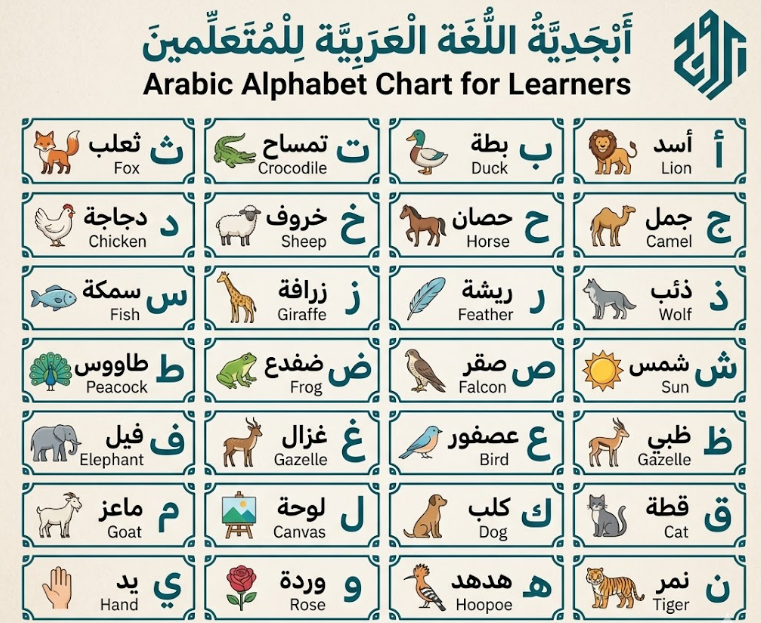
We consistently see at Buruj Academy that children who receive proper phonetic grounding in the first four to six weeks progress two to three times faster than those who jump straight into vocabulary lists. The ear must be trained before the tongue.
Start with letter recognition using our Arabic Alphabet Learning Course for kids, which builds the foundational reading and sound skills that Egyptian Arabic conversations depend on.
Get your kid a free trial now in Buruj’s Alphabet course
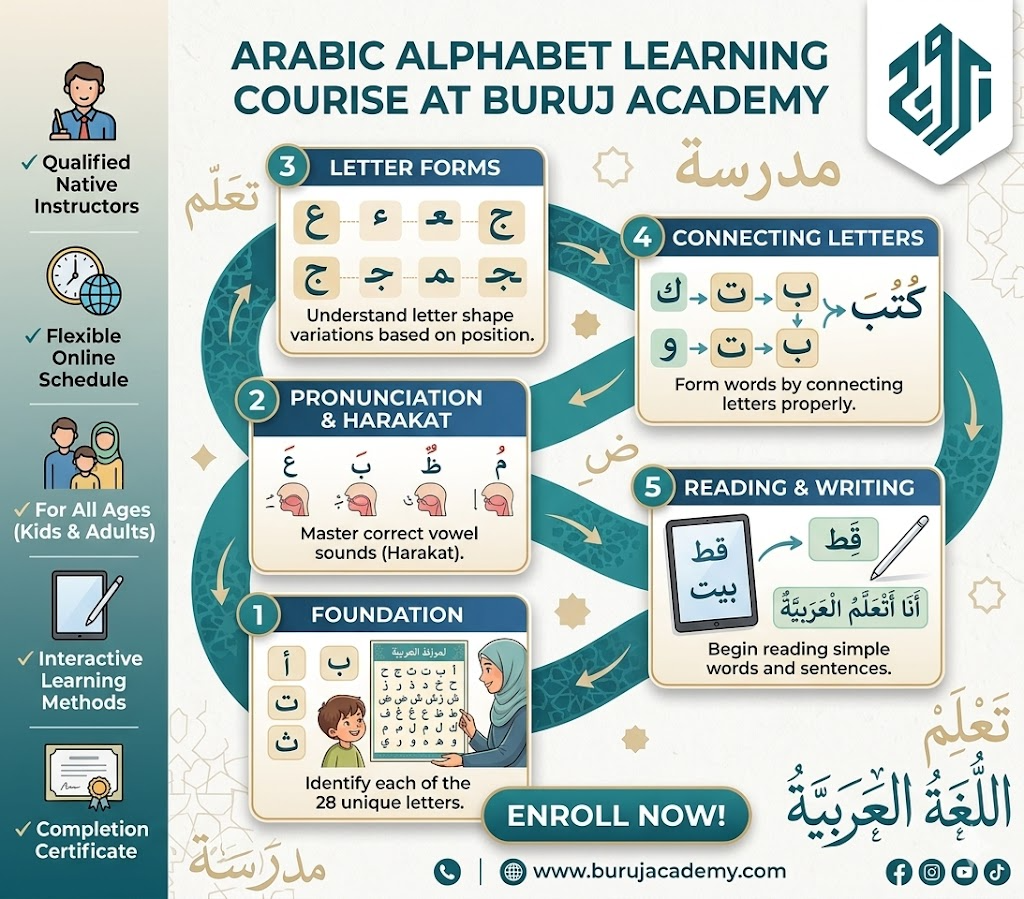
Should Kids Learn the Arabic Script Alongside Spoken Egyptian Arabic?
Yes — and earlier is better. Children who learn to read Arabic script alongside spoken Egyptian Arabic develop stronger long-term retention.
The script gives them a visual anchor for sounds, and it opens the door to Quranic Arabic, Modern Standard Arabic, and other dialects down the line.
Use the guide on learning the Arabic alphabet for kids to structure the first reading lessons alongside spoken Egyptian practice.
2. Build Core Egyptian Arabic Vocabulary Through Daily Themed Word Lists
Once basic sounds are established, the next step is vocabulary — specifically high-frequency Egyptian Arabic words that children encounter in real daily life. Themes should match a child’s actual world: family, food, school, home, colours, numbers, animals, and greetings.
Egyptian Arabic vocabulary for children should be introduced in themed clusters of 8–10 words per week. Repetition across multiple contexts — hearing a word, seeing it written, using it in a sentence, and playing a game with it — builds the kind of deep retention that sticks.
Our resource on learning Arabic words for kids provides structured vocabulary lists well-suited for this approach.
What Are the Most Important First Words for Kids Learning Egyptian Arabic?
| Category | Egyptian Arabic Examples | Pronunciation Note |
| Greetings | أهلا (Ahlan), ازيك (Izzayak/Izzayik) | “Izzayak” for boys, “Izzayik” for girls |
| Family | ماما (Mama), بابا (Baba), أخ (Akh), أخت (Okht) | Nearly identical to MSA |
| Numbers | واحد، اتنين، تلاتة | Note: “thalatha” becomes “talata” in Egyptian |
| Food | عيش (Aysh = bread), فول (Ful), كشري (Koshari) | Culturally specific and memorable |
| Colours | أحمر (Ahmar), أزرق (Azraq), أصفر (Asfar) | Shared with MSA — reinforces dual learning |
Pair vocabulary practice with the Arabic numbers for kids resource to make counting in Egyptian Arabic an early win that builds confidence.
3. Use Egyptian Arabic Cartoons and Stories as Daily Listening Input
Language acquisition research is clear: children learn spoken language through massive amounts of comprehensible input — meaning audio and video they mostly understand, with new words introduced in context.
Egyptian Arabic has an enormous library of children’s content, from beloved cartoons to folk songs, that makes this step genuinely enjoyable.
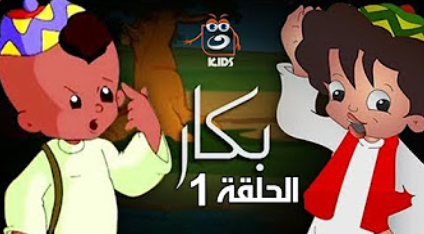
Buruj Academy’s Arabic Language Experts recommend a minimum of 15–20 minutes of Egyptian Arabic audio-visual content daily for children aged 4–10. Popular Egyptian children’s shows such as Bakkar and classic Egyptian animated films provide natural, age-appropriate spoken input that no textbook can replicate.
4. Introduce Simple Egyptian Arabic Sentences Through Play and Conversation
Children do not learn to speak by studying grammar rules — they learn by speaking. The fourth step is structured speaking practice built around simple, useful Egyptian Arabic sentences introduced through games, role-play, and conversation activities.
Begin with sentence patterns that are immediately usable:
- أنا عايز / عايزة (Ana ‘ayiz/’ayza) — “I want…” (male/female)
- فين الـ…؟ (Feen el…?) — “Where is the…?”
- إيه ده؟ (Eh da?) — “What is this?”
- بحبك (Bahibbak/Bahibbik) — “I love you” (male/female addressed)
For speaking activities and how to structure them, the guide on how to speak Arabic for kids gives practical drills parents can run at home.
Master the Arabic Language
Join our expert-led courses and build a strong foundation in Classical and Modern Arabic.
Get Your Free TrialBuruj Academy’s Online Arabic Classes for Kids course pairs children with native Egyptian Arabic-speaking instructors who use conversation-first, game-based methods tailored to ages 4–15. Sessions are 1-on-1, which means no child gets left behind while another dominates class time.
Book a FREE Arabic trial for your Child

5. Add Basic Egyptian Arabic Grammar Gradually Through Context, Not Rules
Egyptian Arabic grammar is considerably simpler than Modern Standard Arabic grammar. There are no case endings (إعراب), dual forms are simplified, and verb conjugations follow more predictable patterns in everyday speech. This makes Egyptian Arabic genuinely more accessible for young learners.
That said, we strongly recommend against introducing grammar rules to children under 8 as abstract explanations. Instead, grammar should emerge from patterns the child already knows.
When a child has heard “أنا بحب” (I love) and “هو بيحب” (he loves) dozens of times through cartoons and stories, explaining the ب prefix becomes instant recognition — not memorization.
Read also: Arabic Alphabet Activities for Kids
How Does Egyptian Arabic Grammar Differ from MSA for Young Learners?
| Feature | MSA | Egyptian Arabic |
| Present tense marker | يفعل (yaf’al) | بيعمل (biy’amal) with ب prefix |
| “The” article | الـ (al-) | الـ (el-) — same script, softer pronunciation |
| Dual form | Fully used | Rare in everyday speech |
| Feminine verb conjugation | Complex in writing | Simplified in spoken form |
| Negation | لا / لم / لن | مش (mish) — single versatile negator |
Once children are comfortable with spoken patterns, connect their knowledge to broader Arabic grammar through our guide on how to learn Arabic grammar for kids. This bridges Egyptian Arabic fluency toward academic Arabic literacy.
Understand the Egyptian Arabic Grammar with Buruj’s free trial lesson

6. Play Egyptian Arabic Games to Reinforce What Children Learn Every Week
Retention without reinforcement disappears within days. The sixth step — and one that parents most often underestimate — is structured play that revisits vocabulary and sentences children have already learned. Games create emotional engagement, and emotional engagement creates memory.
Effective game formats for Egyptian Arabic with children include:
- Flashcard matching games using Egyptian Arabic word cards with pictures
- “Simon Says” in Egyptian Arabic — “قول / اعمل” commands using learned verbs
- Arabic Bingo with number and vocabulary grids
- Role-play market scenes — buying and selling using Egyptian Arabic phrases
- Call-and-response songs with Egyptian Arabic vocabulary
Our collection of top Arabic games for kids includes formats specifically designed for home use by non-Arabic-speaking parents. Games work because children practice without noticing they are practising.
7. Establish a Daily Egyptian Arabic Routine with Realistic Weekly Milestones
Consistency outperforms intensity at every age, but this is especially true for children. A child who practises Egyptian Arabic for 15–20 minutes every day will outperform a child who does two-hour sessions twice a week. The brain consolidates language during sleep — daily input means daily consolidation.
A realistic weekly routine for children aged 6–12 might look like this:
| Day | Activity | Duration |
| Monday | New vocabulary (8–10 words, themed) | 15 min |
| Tuesday | Listening: Egyptian Arabic cartoon or song | 20 min |
| Wednesday | Speaking practice: sentences with instructor or parent | 15 min |
| Thursday | Review game: flashcards or matching | 15 min |
| Friday | Story time: graded Arabic reader | 20 min |
| Saturday | Free conversation or role-play | 15 min |
| Sunday | Rest or light revision | Optional |
For parents asking how long the overall process takes, our honest guide on how long it takes to learn Arabic sets realistic expectations. Children typically reach basic conversational Egyptian Arabic within six to nine months of consistent daily practice at this rhythm.
Discover the Buruj Academy Difference
Step into our virtual classrooms and see how our expert instructors make learning Quran and Arabic intuitive and clear. We focus on overcoming the specific hurdles non-native speakers face, building your confidence and connection with the Quran.
Read also: Quran Memorization Test: Assess Your Hifz Level at Every Stage
Start Your Child’s Egyptian Arabic Learning with Buruj Academy’s Expert Kids’ Courses
Egyptian Arabic is one of the most practical and engaging starting points for a child’s Arabic education — and the steps above provide everything a family needs to begin confidently. What makes the difference between slow progress and real fluency is the quality of instruction behind that structure.
Buruj Academy’s Online Arabic Classes for Kids course provides:
- Native Egyptian Arabic-speaking instructors with 12+ years teaching non-Arabic-speaking children
- Al-Azhar University-trained teachers ensuring accuracy from the first lesson
- Personalized 1-on-1 sessions tailored to each child’s age, pace, and learning style
- Flexible scheduling across all time zones — 24/7 availability
- The Buruj Method: context-before-abstraction, patience-before-performance
Book a free trial lesson today and let your child experience what structured, expert-guided Egyptian Arabic learning actually feels like.
Enroll your child in one of our specialized, kid-friendly tracks today:
- Online Quran Classes for Kids
- Tajweed Classes for Kids
- Hifz Classes for Kids
- Online Arabic Classes for Kids
- Quranic Arabic Course for Kids
- Noorani Qaida Course for Kids
- Islamic Studies Classes for Kids
Ready to watch your child grow in knowledge and character? Join the Buruj Academy family and book a free trial session for your child today!
Master the Arabic Language
Join our expert-led courses and build a strong foundation in Classical and Modern Arabic.
Get Your Free TrialConclusion
Learning Egyptian Arabic as a child is not just about picking up a dialect — it is about opening a door to one of the world’s richest linguistic and cultural traditions. When the process follows the right sequence — sounds first, then vocabulary, then sentences, then grammar through context — children build genuine fluency rather than surface-level memorization.
The eight steps above work because they follow how children’s brains actually acquire language: through repetition, play, stories, and consistent daily exposure. Insha’Allah, with patience and the right support, your child’s Egyptian Arabic will become a lifelong gift.
Frequently Asked Questions About Learning Egyptian Arabic for Kids
What Is the Best Age for a Child to Start Learning Egyptian Arabic?
Children between ages 4 and 10 are in the peak window for dialect acquisition, absorbing pronunciation and rhythm naturally without formal instruction. That said, children up to age 14 still learn Egyptian Arabic efficiently with structured input. Starting earlier produces more native-like pronunciation, but no age within childhood is too late to begin.
How Is Egyptian Arabic Different from the Arabic Taught in Quranic Classes?
Egyptian Arabic is a spoken dialect used in daily conversation, television, and informal communication. Quranic Arabic — also called Classical Arabic — is the formal written language of the Quran and Islamic scholarship. They share the same script and many root words, but differ in grammar, vocabulary, and pronunciation.
Can a Child Learn Egyptian Arabic Without Speaking Any Arabic at Home?
Absolutely. Most children who learn Egyptian Arabic through Buruj Academy come from homes where Arabic is not spoken at all. Structured instruction, consistent media exposure, and weekly practice sessions with a qualified instructor provide sufficient input for real progress. Parents do not need to speak Arabic — they need to create consistency and support the routine.
How Many Words Does a Child Need to Start Having Simple Egyptian Arabic Conversations?
Research in second language acquisition consistently shows that 300–500 high-frequency words enable basic conversational exchanges in any language. For Egyptian Arabic, a child with 300 core vocabulary words — covering greetings, family, food, daily actions, and common questions — can hold simple, meaningful conversations. Most children reach this milestone within four to six months of consistent daily practice.