 Arabic

| Key Takeaways |
| Studying Arabic in the Middle East offers immersion benefits, but results depend heavily on which country, city, and program you choose. |
| Egypt — particularly Cairo — remains the most recommended destination for learning Modern Standard Arabic due to dialect accessibility and institution quality. |
| Jordan, the UAE, and Morocco each offer distinct Arabic learning environments suited to different goals, budgets, and lifestyle preferences. |
| Online Arabic instruction with native teachers now replicates many immersion benefits without relocation costs, visa challenges, or geographic limitations. |
Choosing where to learn Arabic is one of the most consequential decisions a serious Arabic student can make. The Middle East promises immersion, but immersion alone does not guarantee fluency — the institution, dialect environment, and your specific learning goals determine everything.
For non-Arabic speakers committed to learning the language properly, the right destination combines structured Modern Standard Arabic (MSA) instruction with a supportive dialect environment.
In our experience at Buruj Academy, students who return from immersion programs without structured grammar training often plateau faster than those who build foundational skills first — wherever they study.
Table of Contents:
Which Is the Best Arab Country to Learn Arabic?
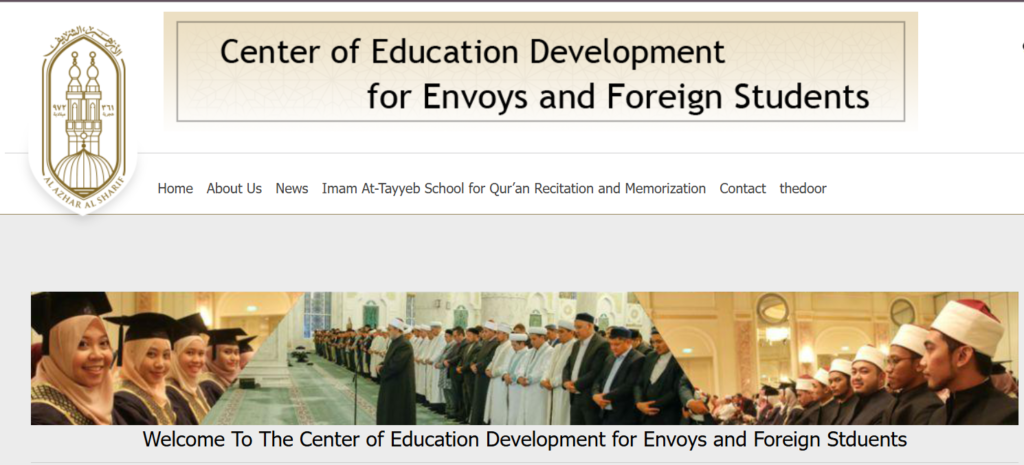
Egypt is the best Arab country to learn Arabic for non-native speakers. Cairo hosts Al-Azhar University — the world’s oldest Islamic university — alongside CASA (Center for Arabic Study Abroad) and dozens of accredited language institutes.
Egyptian Arabic is the most widely understood dialect across the Arab world due to Egypt’s cultural influence through media and cinema, making your spoken practice immediately transferable.
That said, “best” depends entirely on your goal. Jordan suits learners wanting a dialect closer to Levantine Arabic, with strong English infrastructure. The UAE serves professionals needing business Arabic. Morocco fits budget travelers, though Darija (Moroccan dialect) is linguistically distant from MSA. The table below maps each country to its learning strengths.
| Country | Best For | Dialect Exposure | MSA Program Quality | English Support |
| Egypt | MSA, Quranic Arabic, Islamic studies | Egyptian (widely understood) | Excellent | Strong |
| Jordan | Levantine dialect, balanced learning | Levantine | Good | Strong |
| UAE | Business Arabic, professional context | Gulf Arabic | Moderate | Very Strong |
| Morocco | Budget immersion, French-Arabic bilinguals | Darija (very distinct) | Moderate | Moderate |
| Saudi Arabia | Quranic Arabic, Islamic scholarship | Gulf/Najdi | Excellent (limited access) | Moderate |
Understanding why Arabic is worth learning before choosing your destination helps you align the country’s strengths with your personal motivation — whether that is Quranic comprehension, travel, or professional advancement.
Where to Study Arabic in the Middle East?
The Middle East offers several strong destinations for Arabic study, each with a distinct academic culture, cost of living, and linguistic environment. Your decision should weigh program accreditation, dialect environment, daily immersion quality, and long-term visa accessibility.
1. Cairo, Egypt: The Classic Choice for Serious Arabic Learners
Cairo remains the most accessible and academically rich destination for Arabic study. The American University in Cairo (AUC) offers internationally recognized Arabic programs, while Al-Azhar University attracts students of Islamic sciences from across the globe. The Kalimat Arabic Language Institute and Arabic Language Institute (ALI) at AUC are specifically designed for non-native speakers.
Egyptian Arabic — colloquially called ‘Ammiyya Masriyya — is understood across the Arab world, which means your daily market conversations, taxi negotiations, and neighborhood interactions reinforce MSA classroom learning rather than confusing it.
In our instructors’ experience, students who study MSA in Egypt adapt their spoken Arabic for regional audiences far more easily than those who learn in heavily dialectal environments first.
Cost of living in Cairo is significantly lower than Jordan or the UAE, making extended study feasible for most budgets. Visa accessibility for English-speaking Westerners is also straightforward.
2. Amman, Jordan: A Balanced Environment for Levantine Arabic
Amman offers a calm, safe, and English-friendly environment with genuine Arabic immersion. The Qasid Arabic Institute is one of the most respected MSA programs specifically designed for non-native speakers, with a curriculum that balances formal grammar and practical spoken Arabic simultaneously.
Jordan’s proximity to historical and Quranic sites — including access to Palestine and the Levant region — adds a meaningful spiritual dimension for Muslim learners.
Levantine Arabic, spoken in Jordan, is also more closely related to Classical Arabic than Gulf dialects, which benefits students of Quranic Arabic specifically.
If your goal involves mastering Arabic grammar alongside conversational fluency, Amman’s programs offer a disciplined structure that suits intermediate and advanced learners particularly well.
Understand the Arabic Grammar with Buruj’s free trial lesson

3. Dubai and Abu Dhabi, UAE: Arabic in a Multilingual Professional Context
The UAE presents a paradox: it is geographically in the Arab world, yet daily life in Dubai and Abu Dhabi is predominantly conducted in English. Gulf Arabic is spoken by Emiratis, but the dominant working language across businesses, services, and social interactions is English — or other migrant languages.
For learners specifically pursuing business Arabic, legal terminology, or professional communication in Gulf contexts, UAE-based programs at institutions like the Abu Dhabi University language center or private institutes serve that narrow goal effectively.
For general MSA development or dialect immersion, however, the UAE environment works against you: the lack of daily Arabic necessity reduces organic immersion significantly.
What Are the Best Arabic Language Programs in the Middle East?
The best Arabic language programs in the Middle East combine accredited MSA instruction with structured dialect exposure, qualified native instructors, and clear progression from beginner to advanced levels. Programs designed exclusively for non-native speakers consistently outperform general university Arabic departments for this audience.
| Program / Institution | Location | Specialty | Suitable For |
| Arabic Language Institute (ALI) — AUC | Cairo, Egypt | MSA + Egyptian dialect | Beginners to advanced |
| Qasid Arabic Institute | Amman, Jordan | MSA + Quranic Arabic | All levels, serious learners |
| CASA Fellowship (AUC) | Cairo, Egypt | Advanced MSA, academic | Post-intermediate only |
| Middlebury Arabic Summer School | Jordan (summer) | Intensive MSA | All levels |
| Al-Azhar University | Cairo, Egypt | Islamic Arabic, Quranic | Islamic studies focus |
For students who are still building foundational skills before committing to an immersion program, our Arabic for Beginners course at Buruj Academy provides structured, teacher-led instruction that prepares you to maximize any in-country program you eventually join.
Starting immersion without a grammatical foundation wastes the most valuable weeks of your time abroad.
Begin learning Arabic at Buruj with a FREE trial lesson
Read also: Learn Arabic in Egypt
Is Studying Arabic Online Better Than Traveling to the Middle East?
Online Arabic study with qualified native instructors replicates the core learning benefits of Middle East immersion without the financial, logistical, and lifestyle costs of relocation.
The primary advantage of in-country study — daily native-speaker interaction — can be supplemented through structured conversation practice, media consumption, and online exchange partnerships.
The real limitation of in-country study that rarely gets discussed: most Arabic learners in Cairo or Amman spend the majority of their day speaking English with other international students, not Arabic with locals.
Structured classroom instruction — whether in Cairo or online — delivers more measurable progress per hour than unstructured immersion for adult beginners.
Master the Arabic Language
Join our expert-led courses and build a strong foundation in Classical and Modern Arabic.
Get Your Free TrialAt Buruj Academy, our Online Arabic Classes connect students with Al-Azhar-trained instructors in live, 1-on-1 sessions that deliver real-time pronunciation correction and personalized grammar progression — the elements that in-country programs charge thousands of dollars to provide.
For working adults and parents who cannot relocate, this is not a compromise; it is genuinely the most efficient learning pathway.
Book your FREE Arabic trial online Arabic class at Buruj

| Factor | In-Country Study | Online with Qualified Teacher |
| Cost | High (tuition + living) | Accessible |
| Daily immersion | Yes (variable quality) | Supplemented through media |
| Structured instruction | Program-dependent | Personalized, consistent |
| Dialect exposure | Natural | Instructor-guided |
| Flexibility | Low | High |
| Grammar progression | Varies by program | Systematic |
If you are still deciding how to learn Arabic as a complete beginner, read our full guide before committing to any program — in-country or online.
How to Prepare Before You Learn Arabic in the Middle East?
Arriving in Egypt or Jordan with zero Arabic preparation is the most common mistake Western students make. Immersion rewards preparation — the more you bring in, the more you absorb. Students who arrive having already mastered the alphabet, basic vocabulary, and present-tense sentence structures consistently outperform those who begin from zero in-country.
We recommend a minimum 3-month preparation phase before any immersion program:
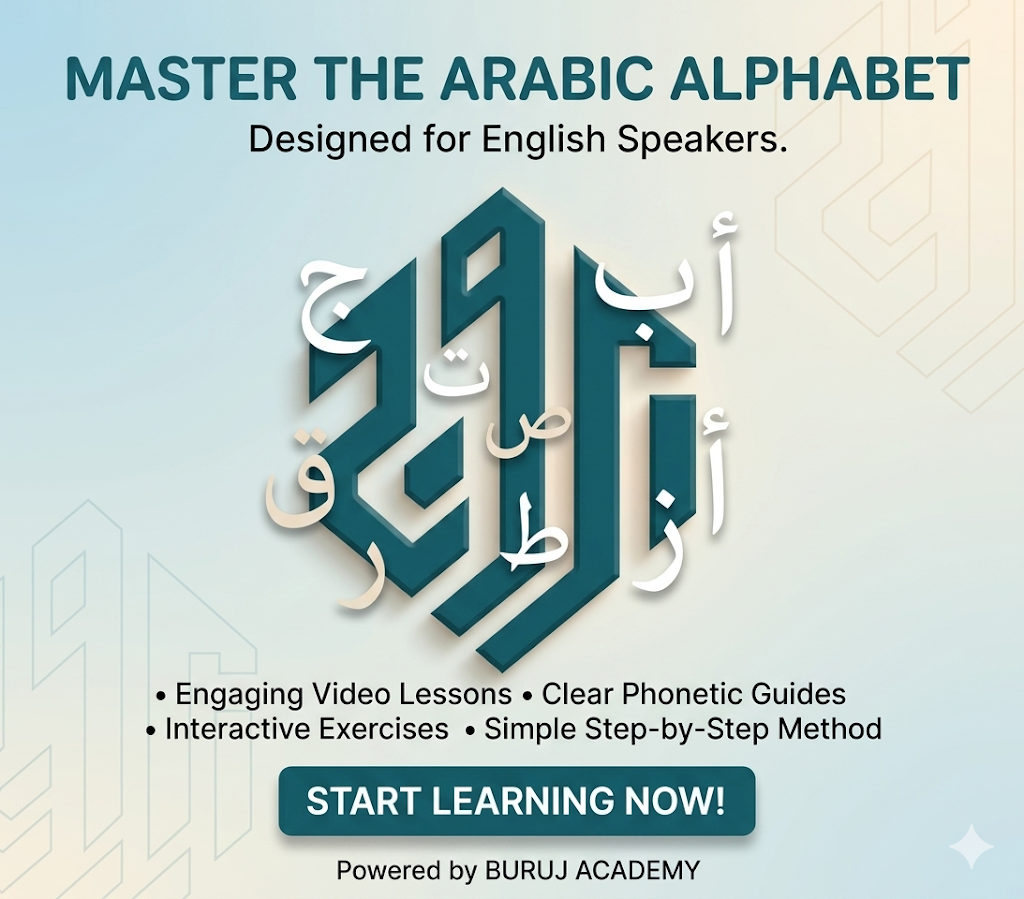
Month 1: Master the Arabic alphabet — letter recognition, connected forms, and basic vowel sounds. Our Arabic Alphabet Learning Course covers this systematically for complete beginners.
Get a free trial now in Buruj’s Alphabet course
Month 2: Build core vocabulary and pronunciation accuracy. Consistent Arabic pronunciation practice with a native speaker prevents fossilized errors that immersion environments rarely correct.
Month 3: Begin Modern Standard Arabic fundamentals — basic sentence construction, verb conjugation in the present tense, and essential grammar patterns. This gives your immersion experience a grammatical scaffold to attach new input to.
In our instructors’ experience, students who complete this three-month preparation phase make six to eight months of equivalent progress during a three-month in-country program compared to those who arrive unprepared.
Read also: What Is Modern Standard Arabic?
Discover the Buruj Academy Difference
Step into our virtual classrooms and see how our expert instructors make learning Quran and Arabic intuitive and clear. We focus on overcoming the specific hurdles non-native speakers face, building your confidence and connection with the Quran.
Start Your Arabic Education with Buruj Academy’s Expert Instructors
Whether you plan to study Arabic in the Middle East or build genuine fluency from home, strong structured instruction is the non-negotiable foundation. The country you study in matters far less than the quality of your teacher and the consistency of your practice.
Buruj Academy offers everything you need to succeed:
- Al-Azhar University graduates with 12+ years teaching non-Arabic speakers globally
- The Buruj Method: Context-before-abstraction for natural grammar acquisition
- Personalized 1-on-1 sessions with flexible 24/7 scheduling
- Real-time pronunciation correction from qualified native instructors
- Clear progression from complete beginner through advanced fluency
Book your free trial lesson today and experience the difference expert-led Arabic instruction makes — wherever in the world you are learning from.
Begin your transformation today by choosing the path that fits your goals:
- Online Arabic Classes (General & Comprehensive)
- Arabic Course for Beginners
- Arabic Alphabet Learning Course
- Online Arabic Classes for Kids
- Arabic Classes for Adults
- Arabic Grammar Course (Nahw & Sarf)
- Intermediate Arabic Course (B1/B2)
- Arabic Speaking Course (Conversational Fluency)
- Arabic Reading Course (Literary Excellence)
- Learn Arabic Writing Course (Calligraphy & Composition)
Ready to speak with confidence? Join the global community at Buruj Academy and book your free placement interview today!
Master the Arabic Language
Join our expert-led courses and build a strong foundation in Classical and Modern Arabic.
Get Your Free TrialConclusion
Learning Arabic in the Middle East offers real value — but only when you choose the right country, the right program, and arrive properly prepared. Egypt remains the strongest destination for MSA and Islamic Arabic study, while Jordan suits Levantine learners and the UAE serves specific professional goals.
What every successful Arabic learner shares — regardless of where they study — is structured instruction from qualified native teachers and consistent practice. Whether your path leads to Cairo or to an online classroom, Buruj Academy’s Al-Azhar-trained instructors are ready to guide that progress from day one.
Frequently Asked Questions About Learning Arabic in the Middle East
Which Is the Best Arab Country to Learn Arabic for English Speakers?
Egypt is the best Arab country for English-speaking Arabic learners. Cairo hosts internationally accredited MSA programs including the AUC Arabic Language Institute and Al-Azhar University. Egyptian Arabic is the most widely understood dialect across the Arab world, strong English infrastructure eases daily life, and the cost of living makes extended study financially sustainable for most students.
How Long Does It Take to Learn Arabic in the Middle East Through Immersion?
Most students in intensive in-country programs reach conversational MSA proficiency in 6–12 months of full-time study. The U.S. Foreign Service Institute categorizes Arabic as a Category IV language requiring approximately 2,200 classroom hours for professional working proficiency. Immersion accelerates this timeline only when paired with structured daily instruction — unstructured immersion alone rarely produces equivalent results.
Where to Study Arabic in the Middle East on a Limited Budget?
Egypt offers the most affordable immersion option among strong Arabic learning destinations. Cairo’s private language institutes charge significantly less than Jordanian programs, and Egypt’s cost of living — accommodation, food, and transport — is among the lowest in the Arab world. Morocco is cheaper still, but Darija’s distance from MSA makes it a poor choice for learners focused on formal or Quranic Arabic.
Can I Learn Arabic Online Instead of Traveling to the Middle East?
Yes — online Arabic instruction with qualified native teachers delivers comparable structured learning outcomes without relocation costs. The core advantage of in-country study is daily native-speaker exposure, which can be replicated through online conversation practice, Arabic media immersion, and 1-on-1 sessions with instructors from the Arab world. For most adult learners with professional and family commitments, online study is the more practical and consistent pathway.