 Arabic
| Key Takeaways |
| Arabic language proficiency is measured across six levels — A1, A2, B1, B2, C1, and C2 — based on the CEFR framework. |
| A1 and A2 represent beginner Arabic; learners recognize letters, basic vocabulary, and simple sentence patterns at these stages. |
| B1 and B2 mark intermediate proficiency, where learners handle everyday conversations and understand complex texts in Modern Standard Arabic. |
| C1 and C2 represent advanced and mastery levels, enabling fluid academic, professional, and literary use of Arabic with near-native precision. |
Knowing where you stand in Arabic learning — and where you need to go — changes everything about how you study. Without a clear proficiency framework, learners waste months repeating beginner material or jumping ahead before foundational skills are solid.
Arabic language proficiency levels follow the Common European Framework of Reference (CEFR), dividing competence into six stages: A1, A2, B1, B2, C1, and C2. Each level defines specific, measurable skills in reading, writing, listening, and speaking Modern Standard Arabic, giving learners a reliable map from first letters to full fluency.
Table of Contents:
What Are the Arabic Language Proficiency Levels
Arabic language proficiency levels are six distinct stages — A1 through C2 — drawn from the CEFR framework and adapted for Arabic language assessment. These levels measure real communicative ability across four skills: reading, writing, listening, and speaking.
Each stage builds directly on the previous, making level identification the essential first step in any structured Arabic learning plan.
The CEFR framework was originally designed for European languages but has been widely adopted by Arabic language institutions, including those affiliated with the Arabic Language International Council and ALECSO (Arab League Educational, Cultural and Scientific Organization).
Arabic-specific proficiency exams — such as the ALKS (Arabic Language Knowledge Standards) and the ACTFL Arabic Proficiency Guidelines — align broadly with this six-level structure, though they use slightly different descriptors.
If you are starting from scratch, our guide on how to learn Arabic for beginners explains how to map your first 90 days effectively across these early levels.
How Many Levels of Arabic Are There?
There are six recognized Arabic language proficiency levels: A1, A2, B1, B2, C1, and C2. These are further grouped into three bands — A (beginner), B (independent/intermediate), and C (proficient/advanced) — each containing two progressive sub-levels with specific, measurable competency descriptors.
What Is A1 Level of Arabic?
A1 Arabic is the absolute beginner level, where a learner can recognize and produce a limited set of familiar words and basic phrases in Modern Standard Arabic. At A1, a student can introduce themselves, name common objects, and understand very slow, clearly spoken Arabic — but cannot yet construct sentences independently.
What Skills Does A1 Arabic Cover?
| Skill | A1 Arabic Ability |
| Reading | Recognizes Arabic letters and reads individual words with short vowels (harakat) |
| Writing | Writes the alphabet and copies simple labeled words |
| Listening | Understands isolated words and short, slow phrases |
| Speaking | Produces greetings, numbers, and names with guided support |
At Buruj Academy, we observe that most adult beginners who complete our Arabic for Beginners course reach solid A1 competence within 8–12 weeks of twice-weekly 1-on-1 sessions.
The most consistent challenge at this level is letter recognition under speed — students often know the isolated letter forms but struggle to read connected script fluently.
Our instructors address this through daily short-text reading drills before advancing vocabulary.
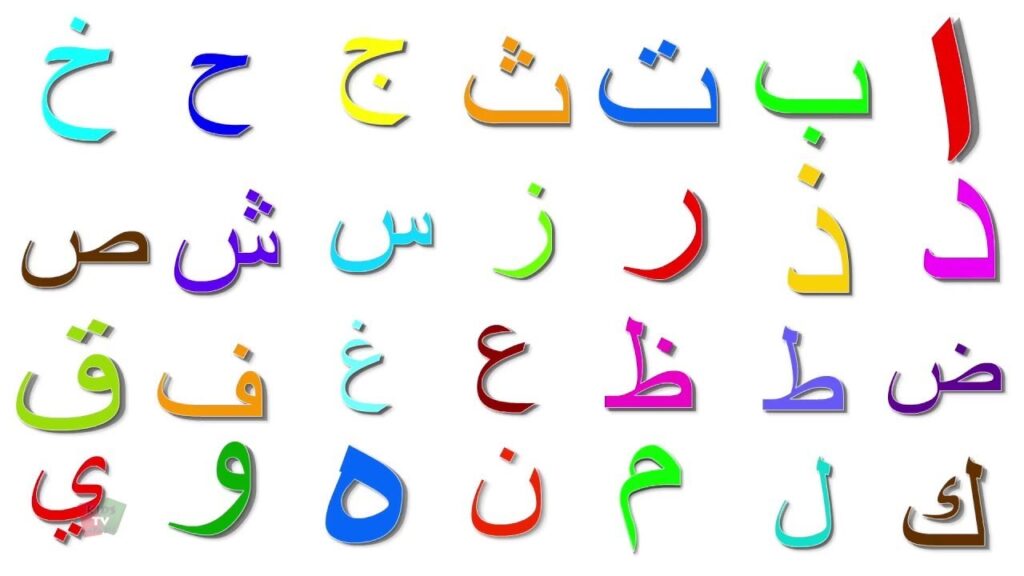
Strengthening your alphabet foundation is the non-negotiable first step. Our article on how to learn the Arabic alphabet gives a structured approach to A1 script mastery.
Begin learning Arabic at Buruj with a FREE trial lesson

What Is A2 Level of Arabic?
A2 Arabic is the elementary level, where a learner can communicate in simple, routine situations using familiar phrases and basic sentence structures. At A2, students begin producing short original sentences — not just repeating memorized phrases — and can read simple Modern Standard Arabic texts with harakat (vowel markings) present.
What Grammar and Vocabulary Define A2 Arabic?
At A2, learners consolidate core structural patterns that will carry them through the intermediate levels. These include:
- Nominal sentences (الجملة الاسمية) using definite and indefinite nouns with adjective agreement
- Present-tense verbal sentences using common verb patterns (فَعَلَ / يَفْعَلُ)
- Question formation using من، ما، أين، متى، كيف
- Numbers, days, months, and time expressions
- Vocabulary bank of approximately 500–800 high-frequency words
Mastering Arabic verb tenses is central to A2 progression. Our in-depth guide on Arabic tenses explains how the present, past, and future systems work for learners at this exact stage.
Buruj Academy’s Online Arabic Classes use the context-before-abstraction method at A2, teaching grammar through real sentences before naming grammatical rules — a key principle of the Buruj Method that dramatically reduces the frustration learners feel when grammar explanations outpace reading ability.
Book your FREE Arabic trial online Arabic class at Buruj

What Is B1 Arabic Level?
B1 Arabic is the lower-intermediate level, where a learner can understand the main points of clear, standard Arabic on familiar topics and produce connected text on subjects of personal relevance. B1 speakers handle most situations that arise during travel or interaction with native Arabic speakers on predictable topics.
Read also:What Is the Arabic Language?
What Does B1 Arabic Proficiency Look Like in Practice?
| Skill | B1 Arabic Ability |
| Reading | Reads unvoweled Modern Standard Arabic texts on familiar topics with acceptable speed |
| Writing | Writes short paragraphs, emails, and simple arguments coherently |
| Listening | Follows the main points of news broadcasts and formal speeches at moderate speed |
| Speaking | Participates in conversations on familiar subjects with noticeable but manageable errors |
B1 is a genuine milestone — it is where reading unvoweled Arabic (without harakat) becomes possible.
This transition is one of the most cognitively demanding shifts in Arabic learning, because the absence of short vowels requires the reader to draw on grammatical knowledge and context simultaneously.
Learners who have built strong Arabic grammar foundations at A2 make this leap far more smoothly.
A critical B1 grammar milestone is mastering Arabic sentence structure — including verb-subject-object ordering and I’rab (grammatical case) endings — which governs how unvoweled text is interpreted correctly.
Master the Arabic Language
Join our expert-led courses and build a strong foundation in Classical and Modern Arabic.
Get Your Free TrialWhat Is B2 Arabic Level?
B2 Arabic is the upper-intermediate level, where a learner understands the main ideas of complex Modern Standard Arabic texts on both concrete and abstract topics, including technical discussions in their area of specialization. B2 speakers interact with a degree of fluency and spontaneity that makes regular interaction with native speakers quite possible.
Read also: What Are the Basics of Arabic?
Why Is B2 Arabic Considered the Professional Threshold?
B2 is widely considered the level at which Arabic becomes practically functional for professional and academic use. At B2, a learner can:
- Read Arabic newspapers, academic articles, and literary texts with general comprehension
- Write formal reports, arguments, and structured essays in Modern Standard Arabic
- Understand the bulk of televised news and formal speeches without support
- Engage in sustained discussion on abstract topics — economics, politics, religion, philosophy
The grammatical demands at B2 are significant. Learners must have internalized irregular verb patterns, broken plural forms, dual noun constructions, and the full I’rab case system — all actively, not just theoretically.
In our instructors’ experience at Buruj Academy, the journey from B1 to B2 typically takes 12–18 months for adult learners studying 4–5 hours per week.
The key variable is not study hours but quality of feedback — learners who receive regular error correction from qualified instructors progress significantly faster than self-study learners at this stage.
What Is C1 Arabic Level?
C1 Arabic is the advanced level, where a learner uses Arabic flexibly and effectively for social, academic, and professional purposes. C1 speakers produce well-structured, detailed text on complex subjects and use Arabic spontaneously without obvious searching for expressions.
What Distinguishes C1 from B2 Arabic?
The distinction between B2 and C1 is not primarily vocabulary size — it is fluency and precision. A B2 speaker understands Arabic; a C1 speaker uses Arabic as a tool without the language itself becoming an obstacle.
At C1, learners demonstrate:
- Lexical precision — choosing the right word among near-synonyms (e.g., distinguishing بَصَرَ، نَظَرَ، رَأَى in context)
- Stylistic register control — shifting appropriately between formal MSA and semi-formal written Arabic
- Productive grammar mastery — using complex structures (circumstantial clauses, masdar constructions, passive voice) naturally in speech and writing
- Sustained discourse — maintaining coherent argument across extended spoken or written productions
Reaching C1 typically requires deep engagement with Arabic vocabulary mastery strategies that go beyond word lists — contextual learning, reading widely, and active use in conversation are essential.
Through Buruj Academy’s Arabic Grammar Course, students at the C1 threshold systematically address the complex structural gaps — compound verb forms, nuanced particle usage, advanced noun derivation — that prevent B2 learners from making the final push to advanced fluency.
Understand the Arabic Grammar with Buruj’s free trial lesson
What Is C2 Arabic Level?
C2 Arabic is mastery level — the level at which a learner can understand virtually everything heard or read in Modern Standard Arabic, and can express themselves spontaneously, very fluently, and precisely, distinguishing finer shades of meaning even in the most complex situations.
Is C2 Arabic the Same as Native-Level Fluency?
C2 is not identical to native-speaker Arabic — it is educated native-equivalent proficiency in Modern Standard Arabic specifically.
A C2 Arabic speaker reads classical prose and contemporary journalism with equal ease, writes publishable formal Arabic, and can discuss nuanced or highly technical subjects without strain.
It is important to clarify: C2 refers to Modern Standard Arabic (MSA), not to any spoken dialect. A C2 MSA speaker may still find colloquial Egyptian, Levantine, or Gulf Arabic dialects challenging — dialects are a separate acquisition track entirely.
The realistic timeline to C2 for a non-native speaker is typically 8–12 years of serious study, or 5–7 years with intensive immersion and professional-level instruction.
Most advanced Arabic learners plateau at C1 and reach C2 only through sustained academic or professional engagement with the language — translation work, journalism, Islamic scholarship, or academic study in Arabic-medium institutions.
Read also:The Beauty of the Arabic Language
How Do You Progress Through Arabic Language Proficiency Levels Efficiently?
Progressing through Arabic proficiency levels efficiently requires a structured curriculum at each stage, regular qualified feedback, and learning materials calibrated to your current level plus a slight challenge margin. The biggest mistake learners make is spending too long at one level without deliberate advancement.
A Practical Timeline for Arabic Language Levels
| Level | Approximate Duration | Weekly Study Requirement |
| A1 → A2 | 3–6 months | 3–4 hours/week |
| A2 → B1 | 6–12 months | 4–5 hours/week |
| B1 → B2 | 12–18 months | 5–6 hours/week |
| B2 → C1 | 18–24 months | 6–8 hours/week |
| C1 → C2 | 3–5 years | Immersive engagement |
These estimates reflect adult learners with structured instruction. Self-study timelines are typically 40–60% longer due to the absence of real-time correction.
Two skills that consistently determine progression speed are Arabic speaking practice and Arabic pronunciation accuracy — learners who neglect speaking in favour of passive reading often find their comprehension outpaces their productive ability, creating a frustrating imbalance at the B1–B2 transition.
Buruj Academy’s Arabic Speaking Course addresses the confidence gap directly, providing structured conversation practice under real-time feedback from Al-Azhar-trained instructors — a key accelerator for learners pushing from B1 into B2 territory.
Book your free trial to start speaking Arabic fluently

Discover the Buruj Academy Difference
Step into our virtual classrooms and see how our expert instructors make learning Quran and Arabic intuitive and clear. We focus on overcoming the specific hurdles non-native speakers face, building your confidence and connection with the Quran.
Read also: Learn Arabic at the Intermediate Level
Build Your Arabic Proficiency with Buruj Academy’s Expert-Led Online Arabic Classes
Arabic language levels give you the map — Buruj Academy gives you the guide. Whether you are beginning at A1 or pushing through an intermediate plateau toward B2, structured 1-on-1 instruction from Al-Azhar University graduates with 12+ years of experience teaching non-native speakers makes a measurable difference in how fast you progress.
Buruj Academy’s Online Arabic Classes offer:
- Personalized Learning Plans calibrated to your current CEFR level
- The Buruj Method — context-before-abstraction Arabic pedagogy
- Flexible 1-on-1 sessions with 24/7 scheduling
- Real-time pronunciation and grammar correction
- Proven progression from A1 through advanced levels
Book your free trial lesson and find out exactly where you stand — and how fast you can move forward.
Begin your transformation today by choosing the path that fits your goals:
- Online Arabic Classes (General & Comprehensive)
- Arabic Course for Beginners
- Arabic Alphabet Learning Course
- Online Arabic Classes for Kids
- Arabic Classes for Adults
- Arabic Grammar Course (Nahw & Sarf)
- Intermediate Arabic Course (B1/B2)
- Arabic Speaking Course (Conversational Fluency)
- Arabic Reading Course (Literary Excellence)
- Learn Arabic Writing Course (Calligraphy & Composition)
Ready to speak with confidence? Join the global community at Buruj Academy and book your free placement interview today!
Master the Arabic Language
Join our expert-led courses and build a strong foundation in Classical and Modern Arabic.
Get Your Free TrialConclusion
Arabic language proficiency is not a vague destination — it is a six-stage, measurable progression from first letters to near-native command. Knowing which level you are at, what skills define the next stage, and how long realistic advancement takes removes the guesswork that causes so many learners to lose momentum.
The CEFR framework gives Arabic learners something genuinely valuable: a shared language for measuring progress. Pair that framework with qualified instruction, and every level becomes achievable — not eventually, but on a realistic, plannable timeline.
Frequently Asked Questions About Arabic Language Levels
What Are the Arabic Language Levels in Order?
The six Arabic language proficiency levels in order are A1, A2, B1, B2, C1, and C2, based on the CEFR framework. A1 is absolute beginner, A2 is elementary, B1 is lower-intermediate, B2 is upper-intermediate, C1 is advanced, and C2 represents mastery-level Modern Standard Arabic fluency.
How Long Does It Take to Reach B2 Arabic?
Reaching B2 Arabic from A1 typically takes 14–26 months for adult learners studying 4–6 hours per week with structured instruction. Self-study learners often take significantly longer. Consistent 1-on-1 instruction with qualified feedback is the single most reliable accelerator for reaching B2 within a predictable timeframe.
What Is the Hardest Transition Between Arabic Proficiency Levels?
The transition from B1 to B2 is widely considered the most demanding shift in Arabic language learning. It requires reading unvoweled Arabic fluently, mastering broken plurals, irregular verbs, and the full I’rab system — and producing grammatically accurate Arabic spontaneously rather than in controlled, structured exercises.
Does Arabic Proficiency Level Apply to Dialects or Only MSA?
Arabic language proficiency levels — A1 through C2 — apply specifically to Modern Standard Arabic (MSA), not to spoken dialects. Egyptian, Levantine, Gulf, and other colloquial dialects are separate acquisition tracks. A learner can hold B2 MSA proficiency and still find native-dialect conversation challenging, since dialects differ significantly in vocabulary and grammar.