 Arabic
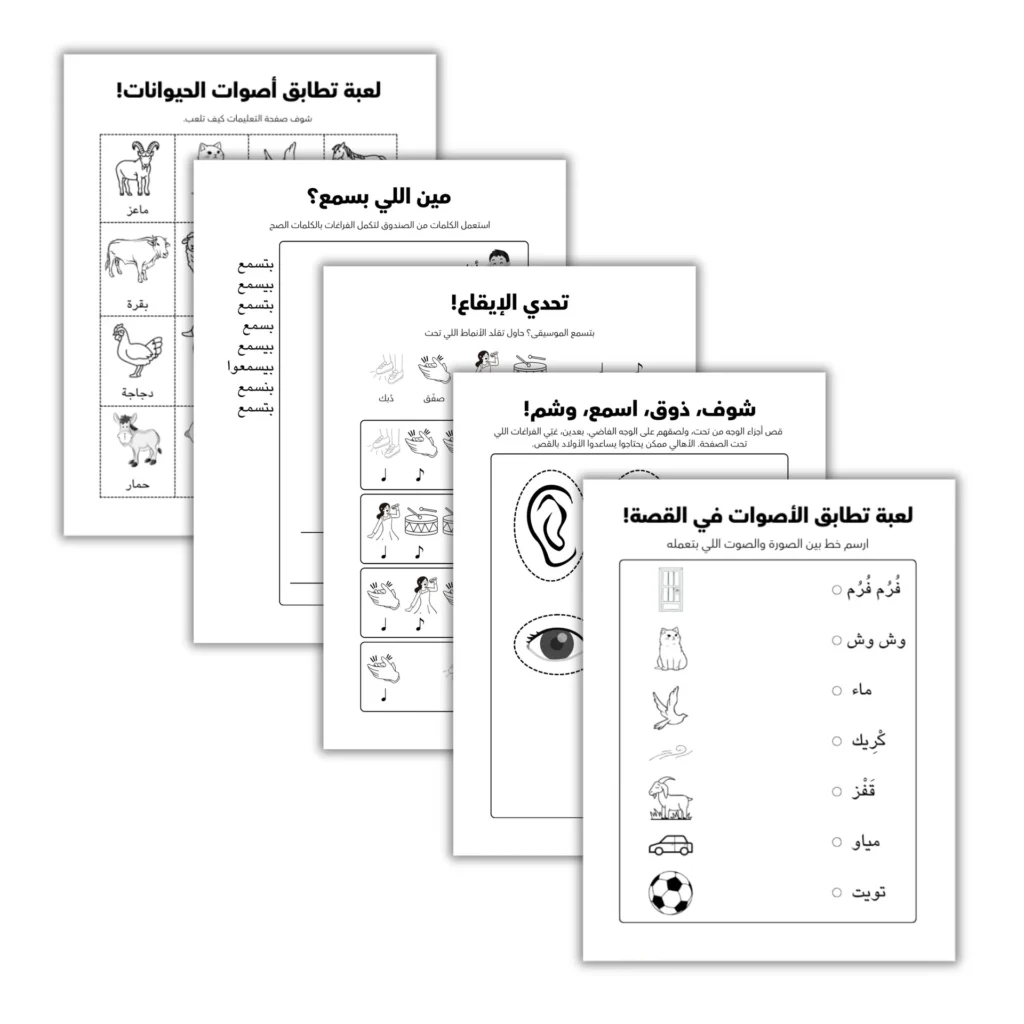
Finding quality Arabic worksheets for kids that actually work — and that you can download without searching endlessly — is one of the most common challenges parents and teachers bring to us. The right worksheet at the right stage makes an enormous difference in whether a child builds confidence or frustration.
Below, we’ve gathered 15 real, downloadable Arabic worksheets for kids across every skill area: alphabet tracing, letter recognition, vocabulary, numbers, reading, coloring, Islamic themes, and grammar foundations. Every resource listed here is verified and links directly to its source.
Table of Contents:
1. The Free Arabic Alphabet Tracing Worksheets
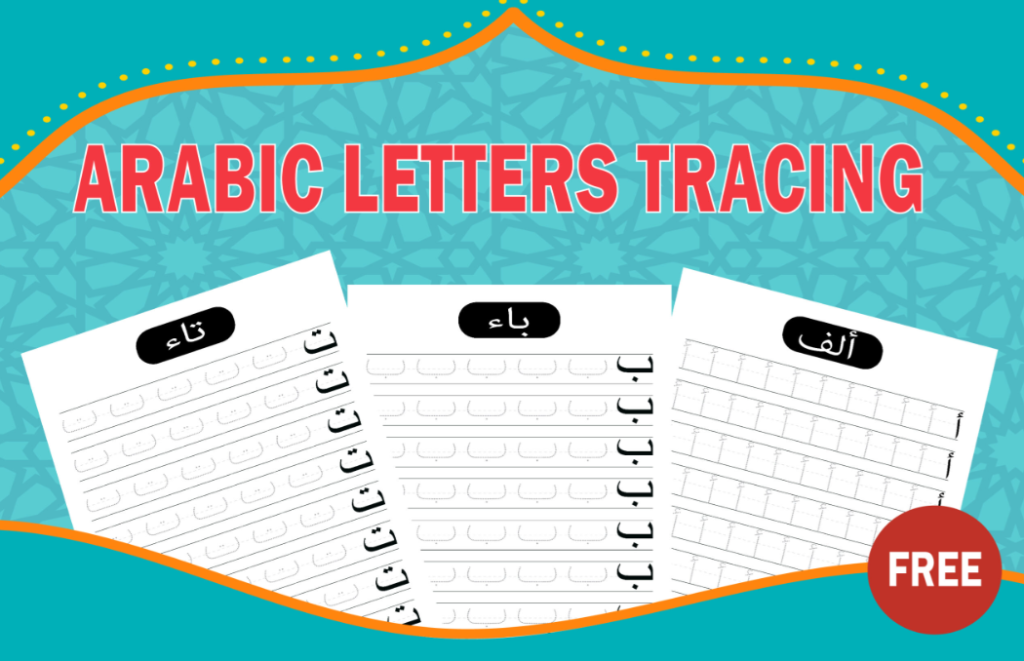
Tracing Arabic Letters Worksheets from 123arabic.com is a free, 28-file PDF set covering every Arabic letter from Alif to Yaa. Each file focuses on a single letter with large, clear tracing guides designed for young hands building right-to-left writing skills for the first time. The high-resolution format prints cleanly on standard paper at home.
For children aged 4–7 who are seeing Arabic letters for the first time, tracing is the essential first step.
In our sessions at Buruj Academy, we always tell parents: the hand teaches what the eye cannot hold alone. When a child traces Alif twenty times, they are building the muscle memory that makes reading stick later.
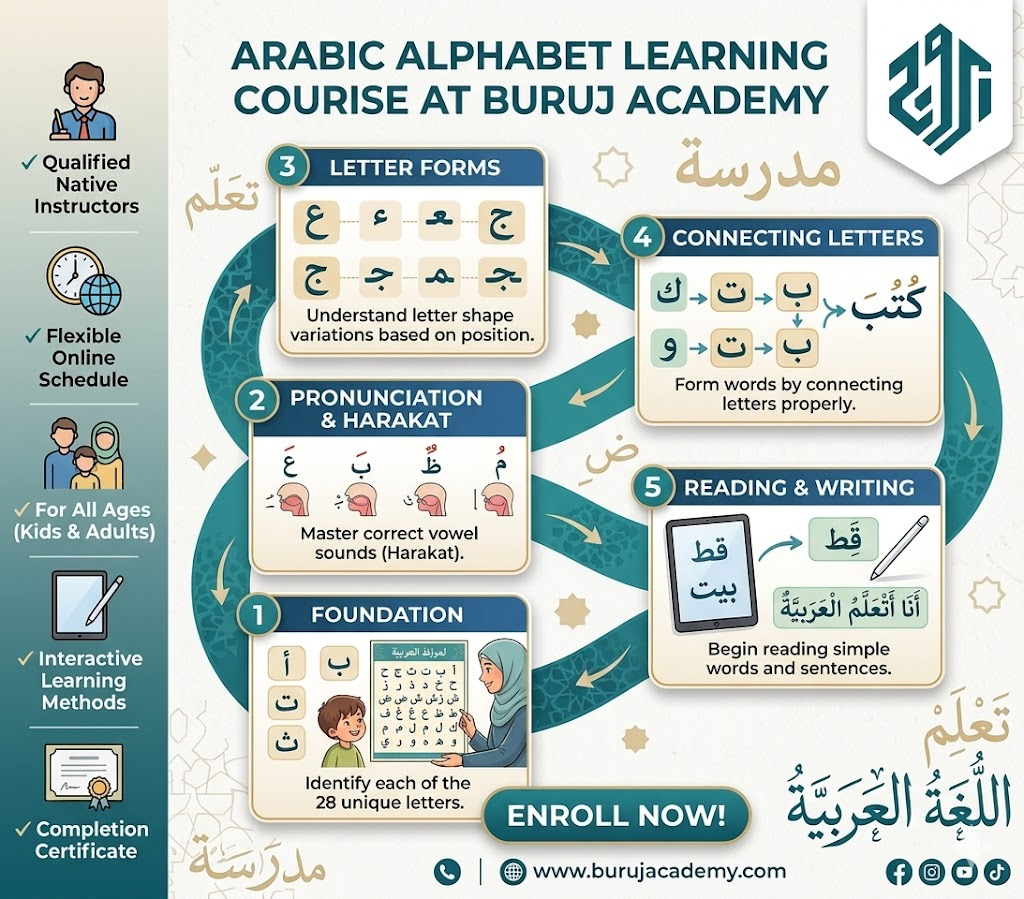
These worksheets are ideal for preschool through kindergarten, and they integrate naturally with our Arabic Alphabet Learning Course for families who want guided instruction alongside home practice. Get a free trial now in Buruj’s Alphabet course
2. The Free Islamic Arabic Alphabet Colouring Worksheets
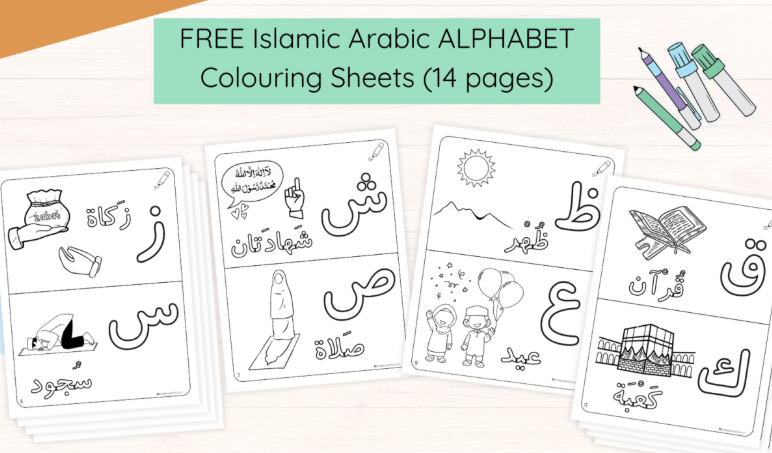
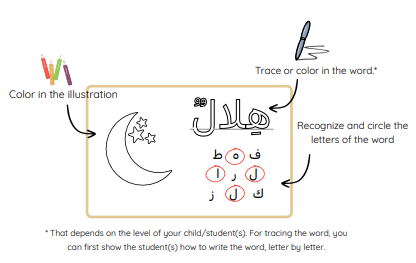
Free Islamic Arabic Alphabet Colouring and Tracing Worksheets from Arabic Seeds pair each of the 28 letters with an Islamic word and a corresponding illustration. They are available in both Arabic-only and Arabic-English bilingual formats, and come with audio MP3 files so children can hear correct pronunciation as they colour and trace.
What makes this resource stand out is the meaningful context it creates. Rather than learning that ب is simply “Baa,” a child connects it to an Islamic concept from their own life and faith.
This context-before-abstraction approach mirrors precisely what we use in the Buruj Method when teaching Arabic to Muslim children in the West.
Download the bilingual version if your child is not yet reading Arabic independently. The audio files are a genuine bonus that most free worksheet packs omit entirely. This resource suits children from age 4 through primary school.
3. The Education.com Arabic Letter Writing Worksheets
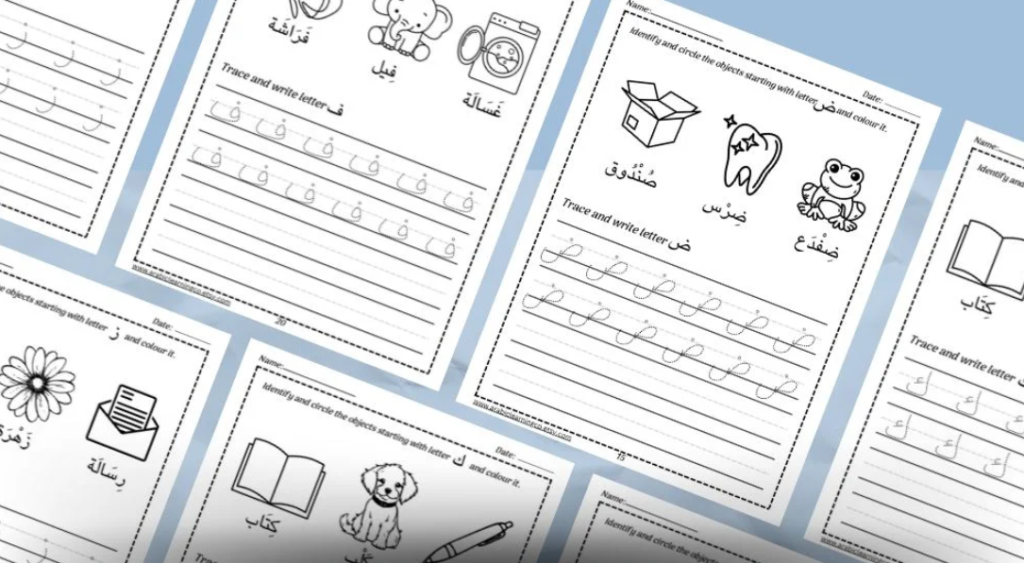
Arabic Worksheets on Education.com provides a large collection of individual letter worksheets, each teaching a letter in its isolated, initial, medial, and final forms. The worksheets combine handwriting practice with illustrated vocabulary examples — so a child practicing Jeem also sees and reads a relevant word.
Teaching all four forms of each letter from the beginning is something we emphasize strongly in our Online Arabic Classes for Kids. Many parents don’t realize that Arabic letters change shape depending on where they appear in a word — and worksheets that ignore this leave children unprepared for actual reading. Education.com’s approach handles this correctly.
These are particularly suitable for early primary school age (6–9 years) and can supplement classroom instruction or Islamic school homework.
Book a FREE Arabic trial for your Child

4. The Free Arabic Alphabet Tracing and Coloring Pack
Free Arabic Alphabet Worksheets for Kids from learnarabicworksheets.com bundles tracing, writing practice, and coloring into a single A4 PDF pack. The activities progress logically: recognition first, then tracing, then independent writing. Coloring activities are embedded throughout to maintain engagement across a full session.
One practical advantage we’ve noticed: worksheets that separate coloring from writing require children to switch materials and mindset repeatedly. Packs that blend both — like this one — hold attention longer, especially for children under age 7. The coloring element also reinforces letter shape recognition through a different cognitive pathway than tracing alone.
This pack is well-suited for homeschooling families and Islamic weekend school settings where a teacher may be managing multiple age groups simultaneously.
5. The Free Arabic Number Tracing Worksheets
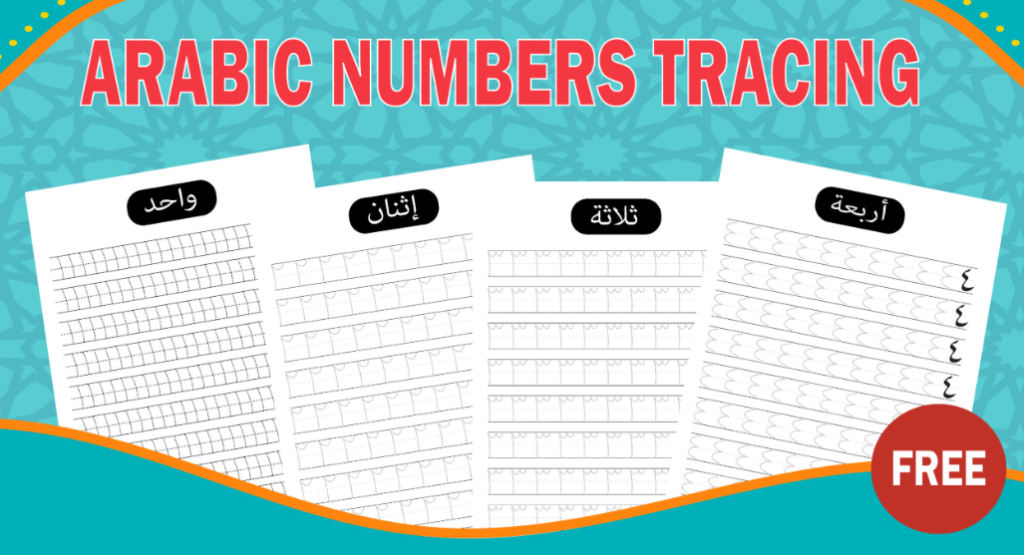
Tracing Arabic Numbers Worksheets from 123arabic.com is a free 9-file PDF set covering Arabic numerals 1 through 9. Each sheet features a single large numeral with tracing guides, designed for children who are just beginning to form numbers in the Arabic script.
Arabic numerals — the Eastern Arabic numerals used in most Arabic-speaking countries (١، ٢، ٣) — look different from the Western numerals children use in English. Many families learning Arabic together are surprised to discover this. Establishing numeral recognition early prevents confusion later when children encounter these numerals in Quranic texts or Arabic reading materials.
Master the Arabic Language
Join our expert-led courses and build a strong foundation in Classical and Modern Arabic.
Get Your Free TrialOur learning Arabic words for kids guide explains how number vocabulary connects to broader early Arabic literacy, and these tracing sheets are the natural hands-on companion to that foundation.
Read also: Best Arabic Children’s Books with English Translation
6. The Free Arabic Vocabulary Worksheets
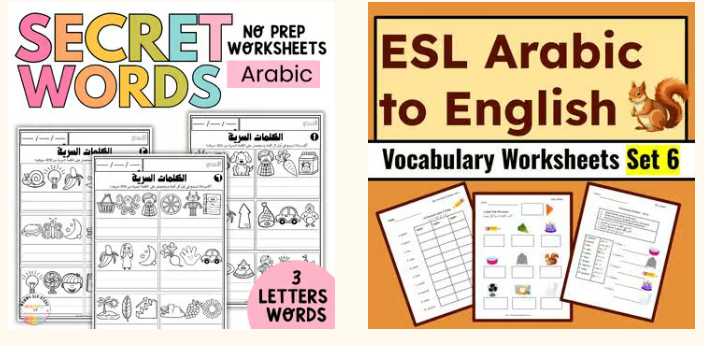
Free Arabic Vocabulary Worksheets on TPT is a searchable library of teacher-created Arabic worksheets, many at no cost. For vocabulary specifically, you’ll find worksheets organized by theme — household objects, school vocabulary, animals, Ramadan words, and more — with matching activities, fill-in-the-blank exercises, and illustrated word cards.
Vocabulary development through thematic worksheets aligns well with the approach we take in our Online Arabic Classes for Kids. Children retain vocabulary better when words are grouped by real-world context rather than introduced randomly.
A worksheet on household Arabic words, for instance, lets a child connect ما تعلمه (what they learned) to their actual home environment.
Search the TPT free Arabic section by grade level — filtering by PreK–2 yields the most child-appropriate content.
7. The Free Arabic Reading Comprehension Worksheets
Free Arabic Reading Comprehension Worksheets on TPT include several A1-level beginner reading passages with comprehension questions, true/false activities, fill-in-the-blank exercises, and vocabulary lists. Topics like “At the Zoo” and short stories about everyday children make the content engaging for young readers.
In our experience guiding children through early Arabic reading, the jump from letter recognition to connected text is where most students plateau.
Reading comprehension worksheets bridge this gap when they’re properly leveled — fully voweled (with harakat), short sentences, and familiar vocabulary. The TPT free Arabic section contains several well-designed options that meet these criteria, and they include answer keys for parents supervising at home.
Pair these with our Arabic sentences for kids resource for additional sentence-level reading practice.
8. The Free Arabic Numbers Flashcard Printables
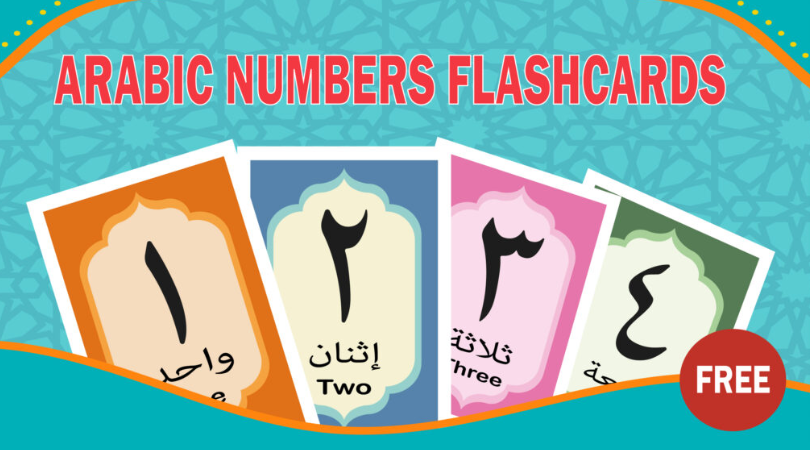
Arabic Numbers Flashcards 1–10 from 123arabic.com is a free set of 10 high-resolution JPG files, each featuring a beautifully designed Arabic numeral with colorful, kid-friendly visuals. Print on card stock, cut, and use for matching games, sequencing activities, or simple number recognition drills.
Flashcards are often underestimated. In our classes, we use physical card-based activities to shift children from passive worksheet completion to active recall — which is cognitively more demanding and therefore more effective for retention. Parents can run simple “find the number” games at the kitchen table using these cards without any preparation time. For children aged 3–6, this format often outperforms worksheet practice for numeracy alone.
Check our Arabic numbers for kids guide for context on how Arabic numerals fit into early literacy progression.
9. The Free Ramadan Vocabulary Arabic Worksheets
Free Arabic Ramadan Worksheets from Arabic Seeds is a complete thematic unit built around a counting story in Arabic. It includes printable word worksheets, sentence strips, and flashcards covering Ramadan-related vocabulary. Both Arabic-only and Arabic-English versions are available, along with read-aloud video support.
Seasonal and thematic learning is one of the most effective tools we recommend to parents building an Arabic-rich home environment.
When a child associates Arabic words with the excitement of Ramadan, those words carry emotional weight — and emotionally anchored vocabulary is retained far longer than words encountered on a generic sheet. This free resource provides a genuinely complete mini-unit rather than just isolated worksheets.
Discover the Buruj Academy Difference
Step into our virtual classrooms and see how our expert instructors make learning Quran and Arabic intuitive and clear. We focus on overcoming the specific hurdles non-native speakers face, building your confidence and connection with the Quran.
Read also: Arabic Alphabet with Pictures for Kids
Start Your Child’s Arabic Journey with Buruj Academy’s Expert Arabic Instructors
Worksheets are valuable — but they are tools, not teachers. The clearest sign in our experience is this: children who combine structured worksheets with live instruction from a qualified teacher progress two to three times faster than those using worksheets alone, because a teacher corrects pronunciation errors in real time before they become habits.
Enroll your child in one of our specialized, kid-friendly tracks today:
- Online Quran Classes for Kids
- Tajweed Classes for Kids
- Hifz Classes for Kids
- Online Arabic Classes for Kids
- Quranic Arabic Course for Kids
- Noorani Qaida Course for Kids
- Islamic Studies Classes for Kids
Ready to watch your child grow in knowledge and character? Join the Buruj Academy family and book a free trial session for your child today!
Buruj Academy’s Online Arabic Classes for Kids are taught by Al-Azhar University graduates with 12+ years of experience teaching non-Arabic speaking children globally. Classes are 1-on-1, fully flexible, and use the Buruj Method — context-before-abstraction, patience-before-performance — to make Arabic genuinely enjoyable for children aged 4–15. Book your child’s free trial lesson today and see the difference expert guidance makes from lesson one.
Master the Arabic Language
Join our expert-led courses and build a strong foundation in Classical and Modern Arabic.
Get Your Free TrialConclusion
Arabic worksheets for kids are one of the most accessible ways to build consistent daily practice at home, and the resources above give you a verified, ready-to-use collection covering every skill from the very first letter to early Quranic reading comprehension. The key is matching the right worksheet type to your child’s current stage — tracing for beginners, vocabulary and matching for early readers, grammar for more advanced students.
Insha’Allah, these resources help you create a home environment where Arabic feels natural, not foreign. And when your child is ready for structured progression beyond printables, our Online Arabic Classes for Kids are here to take them further with expert, caring guidance.
Frequently Asked Questions About Arabic Worksheets for Kids
What Age Should a Child Start Using Arabic Worksheets?
Children can begin letter awareness activities like coloring and simple picture-matching from age 3. Formal tracing worksheets are most effective from age 4–5 when fine motor skills are sufficiently developed. Reading and vocabulary worksheets suit children aged 6 and up. Match the worksheet type to your child’s current developmental stage, not just their age.
Are Free Arabic Worksheets for Kids Enough to Teach Arabic Properly?
Free worksheets are excellent supplementary tools for home practice, but they cannot replace live instruction from a qualified teacher. Worksheets cannot correct mispronunciation, provide real-time feedback, or adapt to a child’s specific confusion. We recommend using worksheets daily for reinforcement alongside structured classes for accurate skill development.
What Is the Best Order to Use Arabic Worksheets with Kids?
Start with letter recognition and coloring activities, then move to tracing worksheets for all 28 letters, then letter-to-word connection activities, then vocabulary-themed matching sheets, then simple reading passages. Introduce number worksheets in parallel with alphabet work. Grammar and Quranic comprehension worksheets belong after solid reading fluency is established.