 Arabic
| Key Takeaways |
| Egyptian Arabic (Masri) is the most widely understood Arabic dialect globally, spoken by 100+ million people and spread through Egyptian media. |
| Learning Egyptian Arabic requires mastering a distinct phonetic system, including sounds like the hard “g” (ج) replacing the classical “j.” |
| Consistent daily practice of 20–30 minutes outperforms irregular long sessions when building Egyptian Arabic speaking confidence. |
| Egyptian Arabic grammar is simpler than Modern Standard Arabic — no grammatical case endings (i’rab) are used in natural spoken Masri. |
| Combining structured course instruction with authentic Egyptian media exposure accelerates dialect acquisition significantly faster than self-study alone. |
Egyptian Arabic — known as Masri (مصري) — holds a unique position among all Arabic dialects. Spoken by over 100 million Egyptians and understood across the Arab world through decades of Egyptian cinema, music, and television, it is the most strategically valuable dialect a non-Arabic speaker can learn.
To learn Egyptian Arabic effectively, you need a clear, sequenced approach: build phonetic foundations first, then move into core vocabulary and grammar patterns, and finally develop real conversational fluency through structured practice and authentic immersion. Each step compounds on the last.
Table of Contents:
1. Understand What Makes Egyptian Arabic Different From Other Arabic Dialects
Egyptian Arabic is the most widely understood spoken dialect in the Arab world, yet it differs substantially from both Modern Standard Arabic (MSA) and other regional dialects. Understanding these differences upfront prevents confusion and shapes a smarter learning strategy from day one.
The most notable phonetic feature of Masri is the pronunciation of the letter ج (jeem) as a hard “g” — so jameel (beautiful) becomes gameel, and janb (side) becomes ganb.
Additionally, the classical ق (qaf) is typically pronounced as a glottal stop (‘) in urban Cairo speech — qalb (heart) becomes ‘alb. These shifts are consistent and learnable once you know to expect them.
Grammatically, Egyptian Arabic drops the case endings (i’rab) of classical Arabic entirely. This simplifies sentence construction considerably for English speakers. If you have already begun exploring Arabic grammar fundamentals, you will find Masri grammar a more approachable entry point than MSA formal structure.
How Does Egyptian Arabic Compare to Modern Standard Arabic?
| Feature | Modern Standard Arabic (MSA) | Egyptian Arabic (Masri) |
| Case endings (i’rab) | Present and required | Absent in speech |
| “J” sound (ج) | Classical “j” | Hard “g” |
| “Q” sound (ق) | Classical “q” | Glottal stop (ʔ) |
| Dual verb forms | Active | Rarely used |
| Formal written use | Yes | No |
| Media presence | News, literature | Film, music, TV |
Understanding this table helps you calibrate your expectations — Egyptian Arabic is a spoken dialect, not a written literary language, which means your learning focus will be primarily oral and aural.
For a broader orientation to the Arabic language family before specializing, our beginner’s guide to Modern Standard Arabic provides helpful context.
Can I Learn Egyptian Arabic Without Learning the Arabic Alphabet First?
You can begin speaking Egyptian Arabic using transliteration without the Arabic alphabet. However, learning the Egyptian Arabic alphabet — even at a basic level — substantially accelerates vocabulary acquisition and listening comprehension.
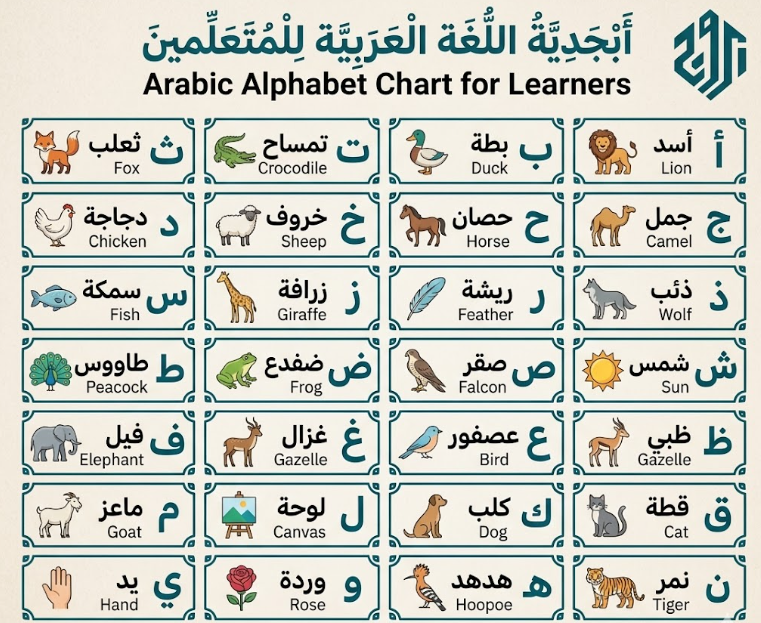
We recommend at least foundational script familiarity within the first two months. Buruj Academy’s Arabic Alphabet Learning Course provides a structured, phonetics-based introduction to Arabic script for complete beginners.
Get a free trial now in Buruj’s Alphabet course
2. Master the Egyptian Arabic Sound System Before Touching Vocabulary
To learn Egyptian Arabic well, begin with phonetics — not word lists. The Egyptian Arabic sound system contains several sounds absent from English, and mispronouncing them from the beginning builds habits that are difficult to correct later.
The three most challenging sounds for English speakers learning Masri are the ‘ayn (ع), the ghayn (غ), and the kha (خ).
The ‘ayn is a voiced pharyngeal fricative produced deep in the throat — no English equivalent exists.
The ghayn resembles a French “r” but is produced further back.
The kha is the voiceless velar fricative heard in Scottish “loch.”
In our experience at Buruj Academy, students who skip phonetic training and jump straight to vocabulary plateaus within 4–6 weeks.
They can recognize words in writing but struggle to produce them accurately in speech — and Egyptian native speakers notice immediately.
Spending two to three weeks on sound production before memorizing vocabulary is always time well invested.
What Are the Core Sounds Unique to Egyptian Arabic?
| Sound | Arabic Letter | English Approximation | Egyptian Example |
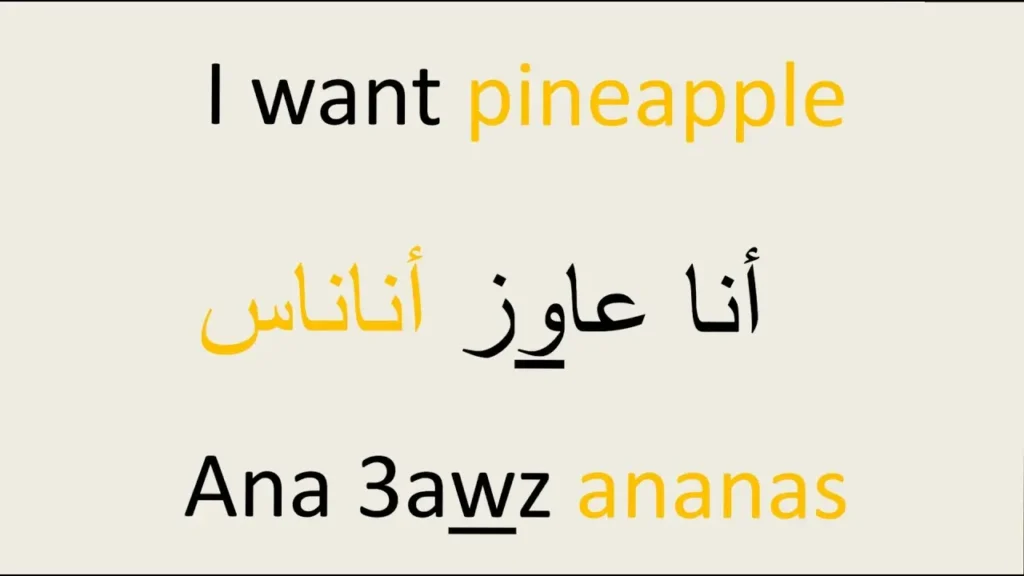
| ‘Ayn | ع | No equivalent — deep throat constriction | عايز (‘aayiz) — “I want” |
| Ghayn | غ | French “r” — voiced | غالي (ghaali) — “expensive” |
| Kha | خ | Scottish “loch” | خِير (kheir) — “good/fine” |
| Hard G | ج | English “g” in “go” | جميل → gameel — “beautiful” |
| Glottal stop | ء / ق | Cockney “bu’er” for “butter” | قلب → ‘alb — “heart” |
Practice these sounds daily using audio recordings from authentic Egyptian sources. Resources like Arabic pronunciation practice can support your ear training during this foundational stage.
Read also: How to Learn Arabic Fusha?
3. Build Your Egyptian Arabic Core Vocabulary Using High-Frequency Words First
Egyptian Arabic vocabulary acquisition is most efficient when organized around frequency — the words Egyptians actually use in daily life, not textbook lists. The top 500 high-frequency Masri words cover the vast majority of everyday conversation.
Start with essential functional categories: greetings, numbers, directions, food, family terms, and daily activity verbs. In Masri, some of the most frequently used expressions have no direct MSA equivalent — phrases like ma’lesh (never mind/sorry), yalla (let’s go), khalas (finished/done), and tamam (okay/fine) appear in virtually every Egyptian conversation.
Buruj Academy’s Online Arabic Classes organize vocabulary acquisition using the context-before-abstraction method — you learn words inside meaningful, real-life sentences from day one, not isolated lists. This dramatically improves retention because words are encoded with situational meaning rather than abstract memorization.
Book your FREE Arabic trial online Arabic class at Buruj

Essential Egyptian Arabic Phrases Every Beginner Needs
| Situation | Egyptian Arabic | Transliteration | Meaning |
| Greeting | أهلاً وسهلاً | Ahlan wa sahlan | Welcome |
| How are you? | عامل إيه؟ | ʕaamil eeh? | How are you? (to male) |
| No problem | معلش | Ma’lesh | Never mind / Sorry |
| Let’s go | يلا | Yalla | Let’s go / Come on |
| Finished | خلاص | Khalas | Done / Finished |
| Okay | تمام | Tamam | Okay / Fine |
| I want | أنا عايز | Ana ‘aayiz (m) / ‘aayza (f) | I want |
| How much? | بكام؟ | Bikaam? | How much does it cost? |
Mastering these phrases creates an immediate foundation for real interaction. Building strong Arabic vocabulary habits using spaced repetition systems like Anki pairs well with this stage.
4. Learn Egyptian Arabic Grammar Patterns Through Sentence Construction, Not Rules
Egyptian Arabic grammar is significantly more accessible than MSA for English speakers, primarily because it eliminates the complex case system. The most efficient way to internalize Masri grammar is through sentence pattern drilling — not memorizing grammatical rules in isolation.
The core sentence structure in Egyptian Arabic follows a Subject-Verb-Object order similar to English, unlike formal Arabic which often places the verb first.
Negation in Masri is expressed through the circumfix ma…sh wrapped around the verb — so bafham (I understand) becomes mabafhamsh (I don’t understand). This pattern is consistent and learnable within days.
Verb conjugation in Egyptian Arabic uses a prefix-suffix system for present tense. The prefix b- signals habitual or ongoing action — baakul (I eat/I am eating). For future, the prefix ha- is used — haaakul (I will eat).
These two markers alone unlock a large portion of practical Egyptian conversation. For a structured look at Arabic sentence building, our Arabic sentence structure guide provides the logical framework that underpins both MSA and dialect grammar.
What Does Egyptian Arabic Grammar Look Like in Practice?
| Grammar Feature | Pattern | Example | Translation |
| Present habitual | b + verb stem | بـاكل (baakul) | I eat / I’m eating |
| Future | ha + verb stem | هـاكل (haaakul) | I will eat |
| Negation | ma + verb + sh | مـابـاكلش (mabakulsh) | I don’t eat |
| Possession | noun + bitaʕ | الكتاب بتاعي | My book |
| Plural (sound) | Various patterns | كتاب / كتب | Book / Books |
Understand the Egyptian Arabic Grammar with Buruj’s free trial lesson

5. Immerse Yourself in Authentic Egyptian Media to Train Your Ear
Immersion in authentic Egyptian media is not optional — it is a core learning mechanism. Egyptian Arabic is best acquired through consistent exposure to how real Egyptians speak: in films, television series, YouTube channels, and music.
Egyptian cinema has a 100-year history, making it the richest Arabic-dialect media library available.
Classics like the films of Adel Imam or the iconic television series Ra’fat Al-Haggan expose learners to natural Masri rhythm, intonation, and cultural context simultaneously. Begin with content that includes subtitles, then gradually wean off them as comprehension grows.
At Buruj Academy, we consistently observe that students who spend even 20 minutes daily watching Egyptian content progress 40–50% faster in spoken comprehension than those who rely solely on structured lessons.
The ear needs raw, unscripted input alongside structured instruction — both are essential, and neither replaces the other.
Pair media immersion with focused listening practice: choose a 2–3 minute clip, listen once for general meaning, then listen again while noting specific vocabulary and expressions. This active listening technique trains your brain to process Masri at natural speed.
Master the Arabic Language
Join our expert-led courses and build a strong foundation in Classical and Modern Arabic.
Get Your Free Trial6. Practice Speaking Egyptian Arabic From Week One, Not After You Feel “Ready”
Speaking practice must begin from the very first week of learning — not after you feel sufficiently prepared. Waiting until you are “ready” to speak is the single most common mistake non-Arabic speakers make, and it creates a comprehension-production gap that takes months to close.
Start with the high-frequency phrases from Step 3, and use them in real or simulated conversation immediately. Language exchange platforms like Tandem or HelloTalk connect you with Egyptian native speakers willing to practice — even 10-minute conversations three times weekly produce measurable fluency gains within a month.
Buruj Academy’s Arabic Speaking Course addresses the confidence gap directly, providing structured conversation practice with instructors who understand the precise hesitations non-Arabic speakers experience.
Real-time feedback from a qualified teacher corrects pronunciation errors before they fossilize into habits.
For a deeper look at building spoken fluency systematically, our guide on improving Arabic speaking skills provides practical techniques you can begin today.
Book your free trial to start speaking Arabic fluently

7. Use Structured Courses and Qualified Teachers to Accelerate Your Progress
Self-study alone rarely produces fluent Egyptian Arabic speakers. Structured instruction from a qualified teacher provides the systematic error correction, curated progression, and accountability that accelerate acquisition dramatically compared to unguided learning.
A qualified teacher does three things a self-study learner cannot do alone: provides immediate pronunciation correction at the moment of error, structures content in a pedagogically sound sequence, and answers questions specific to your first-language interference patterns.
English speakers, for example, consistently struggle with the ‘ayn, with Masri intonation patterns, and with the gender agreement system — challenges a teacher anticipates and addresses directly.
Buruj Academy’s Online Arabic Classes for Beginners connect students with Al-Azhar-trained Egyptian instructors who have 12+ years of experience teaching non-native speakers. Our 1-on-1 format means every session is calibrated to your specific level, pace, and learning style — not a generic curriculum designed for an average student who may not resemble you at all.
Begin learning Arabic at Buruj with a FREE trial lesson

Where to Learn Egyptian Arabic?
When choosing where to learn Egyptian Arabic, you have four main options: online tutors, structured academies, language exchange partners, and self-study apps. Each has a distinct role in a well-rounded learning strategy.
| Learning Method | Best For | Limitations |
| Structured online academy | Systematic progression, error correction | Requires scheduling commitment |
| Native speaker tutor (informal) | Conversational exposure | May lack pedagogical structure |
| Language exchange apps | Free speaking practice | No error correction guarantee |
| Self-study apps | Vocabulary reinforcement | Cannot replace human interaction |
| Egyptian media immersion | Ear training, natural rhythm | Passive without active component |
The most effective approach combines a structured course as your primary learning vehicle with media immersion and language exchange as supplementary tools. None of these methods works optimally in isolation.
What Are the Best Apps To Learn Egyptian Arabic?
Several apps support Egyptian Arabic learning, though none of them should serve as your primary learning method. Apps work best as vocabulary reinforcement and listening tools between structured sessions.
Anki remains the gold standard for vocabulary retention through spaced repetition — you can download pre-made Egyptian Arabic decks or build your own from vocabulary encountered in lessons and media.
Pimsleur Arabic includes Egyptian dialect content and is particularly effective for audio-based pronunciation training during commutes or exercise.
YouTube functions as the most powerful free app available — Egyptian Arabic content is abundant, authentic, and free, from full films to dedicated dialect-learning channels.
How Long Does It Take To Learn Egyptian Arabic?
For a native English speaker, reaching conversational fluency in Egyptian Arabic typically takes 12–18 months of consistent daily practice — roughly 20–30 minutes per day alongside weekly structured instruction.
The US Foreign Service Institute classifies Arabic overall as a Category IV language (approximately 2,200 class hours to professional proficiency), but Egyptian dialect for casual conversational use is achievable significantly faster.
At Buruj Academy, our instructors estimate that most adult beginners reach basic conversational competence — able to navigate daily situations, understand slow-paced native speech, and hold simple conversations — within 4–6 months of consistent 1-on-1 instruction.
Advanced fluency with fast native speakers typically requires 12–18 months. The most significant variable is consistency: a student practicing 20 minutes daily outperforms one practicing 2 hours weekly.
For a broader discussion of Arabic learning timelines, our article on how long it takes to learn Arabic provides a detailed breakdown by proficiency level.
How to Learn Egyptian Arabic for Kids?
Children learn Egyptian Arabic through fundamentally different mechanisms than adults — acquisition through play, song, repetition, and structured story exposure outperforms formal grammar instruction for learners under 12.
For children, Egyptian Arabic learning should begin with listening immersion through Egyptian children’s cartoons and songs, followed by simple conversational phrases modeled by a teacher or parent.
Written Arabic script can be introduced gradually after spoken confidence develops, typically after 3–6 months of oral focus.
Buruj Academy’s Online Arabic Classes for Kids use age-appropriate methods — visual learning, games, positive reinforcement — with instructors trained specifically in child language acquisition.
Book a FREE Arabic trial for your Child

For additional resources supporting young Arabic learners, our guide to learning Arabic for kids provides parent-friendly strategies.
Discover the Buruj Academy Difference
Step into our virtual classrooms and see how our expert instructors make learning Quran and Arabic intuitive and clear. We focus on overcoming the specific hurdles non-native speakers face, building your confidence and connection with the Quran.
Start Learning Egyptian Arabic with Buruj Academy’s Expert Instructors
Egyptian Arabic fluency is an attainable goal — with the right structured approach and qualified guidance from the beginning.
Buruj Academy’s Online Arabic Classes provide:
- Al-Azhar University graduates with 12+ years teaching non-Arabic speakers
- Personalized 1-on-1 sessions tailored to your level, goals, and schedule
- The Buruj Method: context-before-abstraction, consistency-before-speed
- Flexible 24/7 scheduling for global students
- Real-time pronunciation correction from the very first lesson
Book your free trial lesson today and take your first structured step toward confident Egyptian Arabic conversation — Insha’Allah.
Begin your transformation today by choosing the path that fits your goals:
- Online Arabic Classes (General & Comprehensive)
- Arabic Course for Beginners
- Arabic Alphabet Learning Course
- Online Arabic Classes for Kids
- Arabic Classes for Adults
- Arabic Grammar Course (Nahw & Sarf)
- Intermediate Arabic Course (B1/B2)
- Arabic Speaking Course (Conversational Fluency)
- Arabic Reading Course (Literary Excellence)
- Learn Arabic Writing Course (Calligraphy & Composition)
Ready to speak with confidence? Join the global community at Buruj Academy and book your free placement interview today!
Master the Arabic Language
Join our expert-led courses and build a strong foundation in Classical and Modern Arabic.
Get Your Free TrialConclusion
Egyptian Arabic is one of the most rewarding dialect choices a non-Arabic speaker can make — understood across the Arab world, rich with cultural depth, and far more accessible grammatically than formal Arabic.
The path from beginner to confident speaker follows a clear sequence: sound before vocabulary, structure before free expression, and consistent daily practice over sporadic effort.
Whether your goal is to connect with Egyptian family, travel more meaningfully, or simply understand your favorite Egyptian films without subtitles, the steps above give you a practical, expert-guided roadmap. Pair structured instruction with authentic immersion, and fluency will follow — Insha’Allah.
Frequently Asked Questions About Learning Egyptian Arabic
Is Egyptian Arabic the Same as the Arabic Language Taught in Schools?
Egyptian Arabic (Masri) differs significantly from Modern Standard Arabic (MSA) taught in most schools. MSA is a formal written and broadcast standard; Egyptian Arabic is a living spoken dialect. They share vocabulary roots but differ in pronunciation, grammar patterns, and everyday usage. Most school curricula teach MSA, making Egyptian dialect instruction a separate, complementary study.
Do I Need to Learn Modern Standard Arabic Before Egyptian Arabic?
No — you do not need MSA as a prerequisite for Egyptian Arabic. Many successful dialect learners begin directly with Egyptian Arabic and later add MSA for reading and formal comprehension. The two systems can be learned simultaneously or sequentially depending on your goals.
How Is Egyptian Arabic Grammar Different From Standard Arabic Grammar?
Egyptian Arabic grammar eliminates the case endings (i’rab) of classical Arabic, uses a simplified dual form, and expresses tense through verb prefixes (b- for present, ha- for future) rather than complex conjugation tables. Negation follows the consistent ma…sh circumfix pattern. These simplifications make Masri grammar significantly more approachable for English speakers than MSA formal grammar.
Related Articles
Arabic