 Arabic
| Key Takeaways |
| Fusha (Modern Standard Arabic) is the formal written standard used across all 22 Arab countries for education, media, and official communication. |
| Fusha and Quranic Arabic share the same grammatical foundation, making Fusha study directly beneficial for Quran comprehension and understanding. |
| Non-native speakers typically reach functional Fusha reading and comprehension in 12–18 months with consistent daily structured practice. |
| Mastering Arabic script, core grammar patterns, and high-frequency vocabulary are the three non-negotiable pillars of Fusha acquisition. |
| Fusha is nobody’s native spoken dialect — every Arab learns it formally, which levels the playing field significantly for non-native learners. |
Most English-speaking Muslims encounter Fusha — الفصحى — without realizing it: in the Quran, in Arabic news broadcasts, in Islamic texts, and in subtitles across Arab media. Yet they often feel it is out of reach, assuming native-speaker fluency is a prerequisite.
Learning how to learn Arabic Fusha effectively requires a structured sequence: mastering the script first, building grammar systematically, and building reading exposure before speaking practice.
With the right method, non-native speakers reach functional Fusha literacy faster than they expect — and the Quran becomes clearer with every step.
Table of Contents:
1. Understand What Fusha Arabic Is Before You Begin Studying It
Fusha Arabic — Modern Standard Arabic (MSA) — is the standardized, formal register of Arabic used in writing, education, broadcasting, and official communication across all Arab-speaking countries. It is directly derived from Classical Arabic, the language of the Quran, and follows the same core grammatical system.
Understanding this distinction matters practically. Fusha is not anyone’s first spoken language. Every Arab child learns their regional dialect at home and acquires Fusha through formal schooling — just as you will.
This is genuinely encouraging news for non-native learners, because it means the playing field is more even than it appears.
| Feature | Fusha (MSA) | Regional Dialects |
| Used in | Writing, media, education, official settings | Daily spoken conversation |
| Grammar | Fully standardized with case endings (I’rab) | Simplified; case endings dropped |
| Shared across countries | Yes — all 22 Arab states | No — varies significantly by region |
| Closeness to Quranic Arabic | Very close | Varies; Egyptian (Masri) is moderately close |
| Written form | Standard | Rarely written formally |
Fusha and Quranic Arabic share the same grammatical backbone. Students in our Quranic Arabic Classes frequently tell us that studying Fusha grammar unlocks Quranic meaning in a way they never expected — because the two systems are inseparable.
Begin Understanding Quranic Arabic with a FREE Lesson
2. Master the Arabic Alphabet and Script
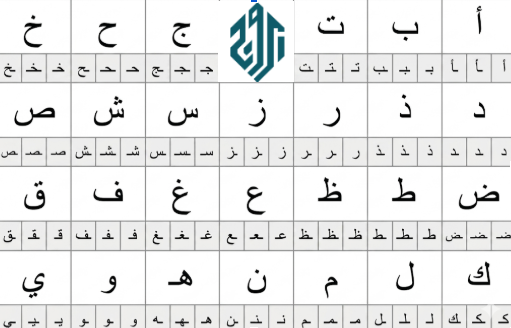
Arabic script mastery is the absolute first step in learning Fusha. Without confident letter recognition — in all four positional forms (isolated, initial, medial, final) — reading, vocabulary retention, and grammar practice are all blocked.
Many adult beginners underestimate this stage, expecting to be reading words within days. In our experience at Buruj Academy, learners who invest two to three focused weeks on script before moving to vocabulary progress significantly faster than those who rush ahead. The script is not an obstacle; it is the foundation.
What Script Mastery Specifically Requires
Correct script mastery involves four competencies working together:
- Recognizing all 28 letters in all four positional forms
- Distinguishing visually similar letters: ب / ت / ث, ح / خ / ج, and ع / غ
- Reading with short vowels (harakat: Fatha, Kasra, Damma, Sukoon, Shadda, Tanwin)
- Writing letters with correct proportions and connection rules
Our Arabic Alphabet Learning Course covers all four competencies systematically, beginning with sound-letter correspondence before progressing to connected script. If you are building this foundation, our guide on how to learn the Arabic alphabet is an excellent starting reference.
Get a free trial now in Buruj’s Alphabet course
3. Build Core Fusha Grammar Systematically Using a Structured Curriculum
Fusha Arabic grammar — النحو (An-Nahw) — is what distinguishes Fusha from dialects and makes it the formal standard of the Arabic-speaking world. It is also the area where self-study most frequently fails non-native learners.
The grammar of Fusha operates on a root-pattern system. Most Arabic words derive from a three-letter root (الجذر), and understanding this system means you can decode the meaning of thousands of words once you recognize their root. This is one of the most powerful features of Arabic for serious learners.
The Three Grammar Stages Non-Native Learners Must Progress Through
| Stage | Core Concepts | Approximate Duration |
| Foundational | Noun gender (M/F), definiteness (Al-), basic sentence types (Jumlah Ismiyyah / Fi’liyyah) | 4–8 weeks |
| Intermediate | Case endings (I’rab): Raf’, Nasb, Jarr; verb conjugation in past and present tense | 8–16 weeks |
| Advanced | Dual and plural forms, broken plurals, verb patterns (Awzan), connected pronouns | 16+ weeks |
Case endings (الإعراب — I’rab) are one of the most distinctive features of Fusha. They indicate grammatical function through short vowels at the end of words — Damma for nominative (Raf’), Fatha for accusative (Nasb), Kasra for genitive (Jarr). Dialects drop these entirely; Fusha preserves them. This is the single largest structural difference between Fusha and Masri Arabic grammar.
Our detailed resource on Arabic grammar for beginners walks through these foundational patterns in English-friendly terms. For a structured course path, Buruj Academy’s Arabic Grammar Course provides I’rab instruction tailored specifically for non-native speakers with Al-Azhar-trained instructors guiding every stage.
Understand the Arabic Grammar with Buruj’s free trial lesson

4. Prioritize High-Frequency Fusha Vocabulary Through Root-Based Learning
Vocabulary acquisition in Fusha is most efficient when organized around roots rather than isolated word lists. Arabic’s trilateral root system means that knowing the root ك-ت-ب (k-t-b) allows you to recognize كَتَبَ (he wrote), كِتَاب (book), مَكْتَبَة (library), كَاتِب (writer), and مَكْتُوب (written) as a connected family.
In our sessions at Buruj Academy, the most consistent pattern we observe in adult Fusha learners is this: those who memorize vocabulary in root families retain words at nearly double the rate of those using standard flashcard lists.
The root system is not just a linguistic feature — it is the most practical memory tool Arabic offers.
Vocabulary Priorities for Fusha Learners
Target these categories in sequence:
- Quranic high-frequency words — the top 300 words cover approximately 70% of Quranic text
- MSA news and formal writing vocabulary — for reading comprehension of formal texts
- Grammar-function words — connectors, prepositions, particles that appear constantly in formal Arabic
Our resource on mastering Arabic vocabulary provides practical retention strategies that apply directly to Fusha study.
5. Build Fusha Reading Comprehension Before Attempting Speaking
Reading in Fusha should come before active speaking practice. This is counterintuitive for learners who have studied European languages, where speaking is often prioritized from day one.
Fusha operates differently: it is primarily a written and formal register, and the reading-first approach builds the grammatical intuition that speaking later depends on.
Begin with short, vowelled texts — any graded Arabic reader or Quranic text with full harakat will serve this purpose well. The vowel markings (tashkeel) are your guide to correct I’rab at this stage.
Once you can read vowelled Fusha text with confidence, begin exposing yourself to unvowelled formal texts, which is how Arabic actually appears in newspapers, books, and most formal writing.
Consistent reading practice with Arabic subtitles — which are always written in Fusha, not dialect — is one of the most effective passive exposure tools available. This answers a question many learners have: Arabic subtitles appear in Fusha because it is the only written standard shared across all Arab countries.
A Syrian viewer and an Egyptian viewer both read the same Fusha subtitle, even if they speak different dialects.
Buruj Academy’s Arabic Reading Course and Learn Arabic Writing Course address both skills with structured progression designed for adult learners.
Read Arabic fluently with a free Buruj trial

6. Understand Arabic Sentence Structure to Read and Produce Fusha Naturally
Fusha sentence structure follows two primary patterns that govern how meaning is organized. Understanding these patterns allows you to read Fusha texts with comprehension and produce grammatically correct formal sentences.
The Nominal Sentence (الجملة الاسمية — Jumlah Ismiyyah) begins with a noun or pronoun and makes a statement about it: Al-kitabu jamiilun (الكتابُ جميلٌ) — “The book is beautiful.” The Verbal Sentence (الجملة الفعلية — Jumlah Fi’liyyah) begins with a verb: Kataba at-taalib (كَتَبَ الطالبُ) — “The student wrote.” In Fusha, the verb agrees with its subject in gender but not always in number when placed before the subject.
Our detailed guide on Arabic sentence structure covers both patterns with clear, English-speaker-friendly explanations.
Master the Arabic Language
Join our expert-led courses and build a strong foundation in Classical and Modern Arabic.
Get Your Free Trial7. Develop Fusha Listening Through Authentic Formal Arabic Media
Fusha listening is a distinct skill from Fusha reading, and it requires targeted practice. The register that news anchors, formal speeches, and educational broadcasts use is Fusha — not any spoken dialect. This makes formal Arabic media the ideal listening resource.
Al-Jazeera Arabic news broadcasts, TED talks delivered in formal Arabic, and Al-Azhar’s educational content are among the highest-quality sources for authentic Fusha listening input at an accessible speed. Begin with transcripts when available, read first, then listen while following the text.
| Resource Type | Fusha Level | Recommended Use |
| Al-Jazeera Arabic news | Advanced Fusha | Intermediate–Advanced listening |
| Quran recitation with translation | Classical/Fusha | All levels — vocabulary and grammar exposure |
| Arabic educational YouTube channels | Standard Fusha | Beginner–Intermediate listening |
| Arabic subtitled documentaries | Written Fusha | Reading comprehension + listening together |
This is also where the question of whether the Quran is Fusha becomes practically relevant. Quranic Arabic is Classical Arabic — the highest register — and Fusha is directly derived from it.
The grammar is the same; Classical Arabic vocabulary is richer and some expressions differ from Modern Standard usage. Students studying Fusha will find Quranic comprehension developing naturally as grammar strengthens.
For dedicated Quran comprehension study, our Quranic Arabic for Beginners course provides the bridge between MSA grammar and Quranic text.
8. Practice Fusha Speaking Through Structured Conversation With a Qualified Instructor
Speaking Fusha is the most advanced productive skill, and it requires a deliberate approach. Because Fusha is not any Arab’s native spoken dialect, finding authentic Fusha conversation partners outside of formal or academic contexts is genuinely difficult. This is where structured instruction becomes most valuable.
In our experience, non-native learners who attempt Fusha speaking without instructor correction develop pronunciation habits — particularly in producing the correct makhraj (articulation point) of letters like ع, غ, ح, خ, and ق — that are very difficult to correct later.
The pharyngeal and uvular sounds of Arabic do not exist in English, and without real-time feedback, learners default to approximations.
Buruj Academy’s Arabic Speaking Course addresses exactly this challenge, providing structured formal Arabic conversation practice with Ijazah-certified instructors who provide immediate, specific phonetic correction.
Book your free trial to start speaking Arabic fluently

Our guide on how to improve Arabic speaking skills also provides practical self-study techniques to use between sessions.
9. Use Arabic Dictation Practice to Consolidate All Four Fusha Skills Simultaneously
Dictation (الإملاء — Al-Imla’) is one of the most effective and underused techniques for consolidating Fusha. It simultaneously exercises listening comprehension, spelling accuracy, grammatical awareness, and script fluency — all four skills in a single practice session.
The method is straightforward: listen to a short formal Arabic passage at natural speed, write what you hear, then compare your written output against the original text.
Every error — a missing Shadda, an incorrect Tanwin ending, a confused ح vs. خ — reveals a specific weakness to target. Fusha dictation exposes gaps in both grammar and phonology that reading alone will never surface.
This technique is thoroughly explained in our guide on improving Arabic writing with dictation, which includes practical exercises designed specifically for non-native learners.
10. Maintain Consistency Through a Realistic Daily Practice Structure
How long does it take to learn Fusha Arabic? The honest answer depends on consistency more than intensity. Based on our instructors’ experience at Buruj Academy, non-native English speakers with no prior Arabic exposure typically reach functional Fusha reading and basic comprehension within 12–18 months of structured daily practice averaging 30–45 minutes per session.
The Foreign Service Institute (FSI) classifies Arabic as a Category IV language — its most difficult classification for English speakers — estimating approximately 2,200 classroom hours for professional proficiency.
Functional literacy and religious comprehension are achievable significantly sooner than professional fluency.
A Realistic Weekly Fusha Practice Schedule
| Day | Focus | Duration |
| Saturday | Grammar lesson + exercise | 40 minutes |
| Sunday | Vocabulary (root-family study) | 30 minutes |
| Monday | Reading comprehension (vowelled text) | 35 minutes |
| Tuesday | Listening (news or Quran with translation) | 30 minutes |
| Wednesday | Grammar review + new vocabulary | 40 minutes |
| Thursday | Dictation practice | 30 minutes |
| Friday | Free reading or instructor session | 45 minutes |
Consistency at this level — roughly 4 hours per week — produces measurable Fusha progress within 8–12 weeks of beginning. The beginners guide to Modern Standard Arabic on our blog provides an excellent structural overview to complement this schedule.
Which Countries Speak Fusha Arabic?
Fusha Arabic is the official language of all 22 member states of the Arab League, spanning North Africa, the Arabian Peninsula, and the Levant. These countries include Egypt, Saudi Arabia, Morocco, Iraq, Syria, Jordan, Algeria, Tunisia, Libya, the UAE, Kuwait, Qatar, Bahrain, Oman, Yemen, Lebanon, Palestine, Sudan, Mauritania, Somalia, Djibouti, and Comoros.
However, understanding where Fusha is spoken requires an important distinction: it is not used as a daily conversational language anywhere. Every Arab country has its own regional dialect for everyday speech, while Fusha serves as the shared formal standard across all of them.
Where Is Fusha Arabic Actually Used in Practice?
Fusha appears consistently across these formal domains throughout the Arab world:
| Domain | Examples |
| Education | School curricula, university textbooks, academic instruction from primary level upward |
| Official government | Laws, constitutions, parliamentary proceedings, diplomatic correspondence |
| Mass media | Broadcast news, formal journalism, print newspapers and magazines |
| Religious contexts | Friday sermons (Khutbah), Quranic recitation, Islamic scholarly writing |
| Literature and publishing | Novels, poetry, academic journals, formal nonfiction |
| Pan-Arab communication | Any written communication intended for readers across multiple Arab countries |
This is precisely why Arabic subtitles are always written in Fusha rather than any regional dialect — a subtitled broadcast must be readable by viewers in Morocco and Qatar simultaneously.
A Moroccan dialect speaker and a Saudi dialect speaker may not understand each other in conversation, but both read and understand Fusha through formal education.
Discover the Buruj Academy Difference
Step into our virtual classrooms and see how our expert instructors make learning Quran and Arabic intuitive and clear. We focus on overcoming the specific hurdles non-native speakers face, building your confidence and connection with the Quran.
Master Fusha Arabic with Buruj Academy’s Expert Arabic Instructors
Fusha Arabic is a learnable, rewarding skill — and the right guidance makes the difference between frustrating stagnation and genuine progress.
Buruj Academy’s Online Arabic Classes are led by Al-Azhar University graduates with 12+ years of experience teaching non-native speakers worldwide. Our instructors use the Buruj Method — Context-before-abstraction, Sound-before-rules, Consistency-before-speed — in personalized 1-on-1 sessions scheduled at your convenience, 24/7.
Whether you are a complete beginner or building toward Quranic comprehension, our Arabic for Beginners and Arabic Grammar Course provide the structured, expert-guided path Fusha demands.
Book your free trial lesson today and begin learning with instructors who have guided thousands of non-native speakers to genuine Arabic literacy.
Begin your transformation today by choosing the path that fits your goals:
- Online Arabic Classes (General & Comprehensive)
- Arabic Course for Beginners
- Arabic Alphabet Learning Course
- Online Arabic Classes for Kids
- Arabic Classes for Adults
- Arabic Grammar Course (Nahw & Sarf)
- Intermediate Arabic Course (B1/B2)
- Arabic Speaking Course (Conversational Fluency)
- Arabic Reading Course (Literary Excellence)
- Learn Arabic Writing Course (Calligraphy & Composition)
Ready to speak with confidence? Join the global community at Buruj Academy and book your free placement interview today!
Master the Arabic Language
Join our expert-led courses and build a strong foundation in Classical and Modern Arabic.
Get Your Free TrialConclusion
Fusha Arabic is not reserved for scholars or native speakers — it is a structured, learnable standard that every Arab themselves acquires through formal study. The path is clear: script mastery first, grammar systematically next, vocabulary through roots, reading before speaking, and consistent daily exposure to formal Arabic input.
What separates those who succeed from those who stall is structure and feedback. The steps above give you the sequence; a qualified instructor gives you the correction. Begin with what you can commit to daily, and the language will open to you — Insha’Allah — more completely than you expect.
Frequently Asked Questions About How to Learn Arabic Fusha
What Is Fusha Arabic and How Is It Different from Dialects?
Fusha — Modern Standard Arabic — is the formal, standardized register used in writing, education, and official communication across all Arab countries. It preserves the full grammatical system of Classical Arabic, including case endings (I’rab). Regional dialects are informal spoken varieties that drop these grammatical structures and vary significantly from country to country.
Is Modern Standard Arabic the Same as Fusha?
Modern Standard Arabic (MSA) and Fusha refer to the same language register. “Fusha” (الفصحى) is the Arabic term meaning “the most eloquent,” while MSA is its English academic name. Both terms describe the formal written and broadcast Arabic standard that is mutually intelligible across all 22 Arab-speaking countries, distinct from any regional spoken dialect.
Is the Quran Written in Fusha Arabic?
The Quran is written in Classical Arabic — the highest linguistic register from which Fusha is directly derived. The grammar is essentially the same; Classical Arabic vocabulary is richer and some expressions differ from modern usage. Studying Fusha grammar directly strengthens Quranic comprehension because the two systems share the same foundational grammatical structure.
Which Arabic Dialect Is Closest to Fusha?
No spoken dialect is identical to Fusha, but Gulf Arabic (Khaleeji) and Levantine Arabic retain more Classical features than other dialects. Egyptian Arabic (Masri) is widely understood across the Arab world due to media influence, though grammatically it differs significantly from Fusha — particularly in dropping I’rab case endings and altering some phonemes.
How Long Does It Take to Learn Fusha Arabic for a Non-Native Speaker?
In our instructors’ experience, non-native English speakers with consistent daily practice of 30–45 minutes typically reach functional Fusha reading comprehension within 7–13 months. Professional-level fluency requires significantly longer. The critical factor is daily consistency and access to structured grammar instruction with real-time feedback — self-study alone rarely achieves stable grammatical accuracy.