What Does لا Mean in Quran? Understanding the Waqf Mamnu’ Symbol
Key Takeaways
The symbol لا in the Quran marks Waqf Mamnu’, a prohibited stopping point that a reciter must never pause at.
Stopping at a لا position and restarting from the next word produces a grammatically or semantically broken meaning.
The لا symbol appears throughout the Quran wherever pausing would distort the intended message of the verse.
Mastering Waqf symbols, including لا, is a core Tajweed competency required for accurate and meaningful Quran recitation.
Every student of Quran recitation eventually notices small symbols printed above or beside certain words in the Mushaf. These markers are not decorative — they are precise instructions that guide where a reciter may pause, must pause, or must never pause.
The symbol لا — which literally means “No” — marks what classical Tajweed scholars call Waqf Mamnu’: a prohibited stop. Stopping here either severs a grammatical connection or produces a meaning directly opposite to what Allah intended in that verse.
What Does the لا Symbol Mean in Quran Recitation?
The لا symbol in the Quran signals a Waqf Mamnu’ — a categorically prohibited stopping point. A reciter must not pause at this position, and if they have stopped elsewhere and wish to resume, they must not begin from the word immediately following the لا marker. Stopping or restarting at this point produces either grammatical disconnection or a distorted meaning that contradicts the verse’s intended message.
This is not a stylistic preference. According to classical Tajweed scholarship, pausing at a Waqf Mamnu’ position can change the meaning of a verse so significantly that it becomes a recitation error — and in some cases, a theologically problematic misrepresentation.
Our Ijazah-certified instructors at Buruj Academy always address Waqf symbols early in structured Tajweed study, because students who learn rules without Waqf training frequently pause in prohibited positions without realizing the impact.
Why Is Stopping at لا Considered Prohibited in Tajweed?
The prohibition exists because of grammatical and semantic dependency. When لا appears, the word or phrase that follows it is grammatically or contextually bound to what came before it — removing that connection by pausing destroys the meaning the verse was constructed to convey.
What Happens When a Reciter Stops at a لا Position?
Two separate problems arise when a reciter pauses at Waqf Mamnu’:
First: The phrase before the لا symbol is left incomplete. It may read as a standalone statement that was never intended to stand alone, creating a false impression about the subject matter.
Second: If the reciter then begins from the word after لا, that word or phrase becomes orphaned from its grammatical parent. The listener hears a fragment that carries no coherent meaning — or worse, a meaning that contradicts the original message of the verse.
Problem
Cause
Effect on Meaning
Incomplete preceding phrase
Stopping before natural grammatical closure
False standalone statement
Orphaned following phrase
Restarting after the لا symbol
Grammatically broken fragment
Distorted verse meaning
Both combined
Contradiction of intended message
This dual prohibition — on stopping AND on restarting — is what distinguishes Waqf Mamnu’ from other Waqf categories.
Excel in Your Quranic Studies
Join Buruj Academy and master the Quran with our structured, professional curriculum.
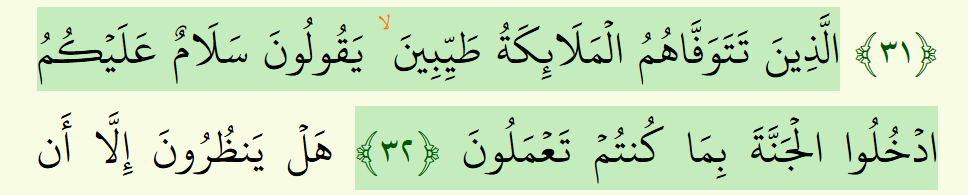
The ones whom the angels take in death, [being] good and pure; [the angels] will say, “Peace be upon you. Enter Paradise for what you used to do.” (An-Nahl 16:32)
The لا symbol here prevents a pause that would sever the descriptive clause “tayyibīna” from the subject “alladhīna,” leaving the sentence without its essential qualification.
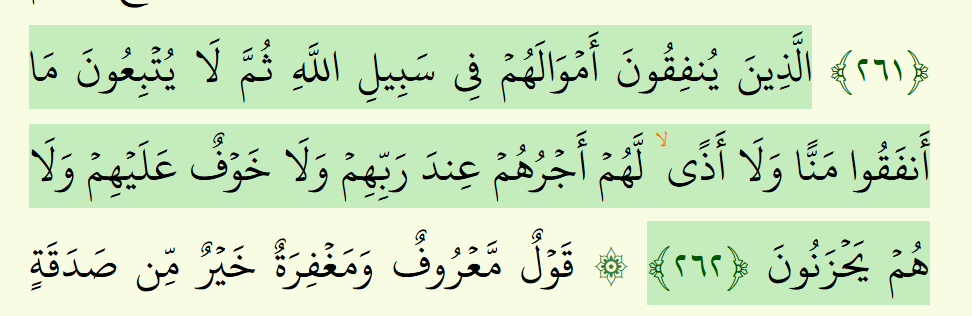
Another well-known instance of لا appears in Surah Al-Baqarah (2:262):
“Those who spend their wealth in the way of Allah and then do not follow up what they have spent with reminders [of it] or [other] injury will have their reward with their Lord, and there will be no fear concerning them, nor will they grieve.” (Surah Al-Baqarah 2:262)
The (لا) here prevents the reciter from stopping before “لَهُمْ أَجْرُهُمْ” — because starting from that phrase alone would grammatically sever it from its intended connection.
Discover the Buruj Academy Difference
Step into our virtual classrooms and see how our expert instructors make learning Quran and Arabic intuitive and clear. We focus on overcoming the specific hurdles non-native speakers face, building your confidence and connection with the Quran.
How Does لا Differ from Other Waqf Symbols in the Quran?
Waqf symbols in the Quran form a complete system, and understanding لا requires knowing where it sits within that system. The Quran uses several markers, each with a distinct ruling.
Symbol
Name
Ruling
م
Waqf Lazim (Mandatory Stop)
Must stop here
ج
Waqf Jaiz (Permissible Stop)
Stopping is allowed
ز
Waqf Mujawwaz (Permitted with preference to continue)
Continuing is slightly preferred
لا
Waqf Mamnu’ (Prohibited Stop)
Must NOT stop here
∴ ∴
Waqf Mu’anaqah (Embrace Stop)
Stop at one of the two marked positions only
The Waqf Mamnu’ symbol لا is unique because it carries a dual prohibition — neither pausing at the marked word nor restarting from what follows it after a break is permitted. All other symbols either allow or recommend stopping; only لا categorically forbids it.
For students beginning their Tajweed study, this distinction is one of the first Waqf concepts we address in Buruj Academy’s Tajweed for Beginners course, where Al-Azhar-trained instructors walk students through each symbol with live recitation examples.
What Should a Reciter Do When They Encounter لا During Recitation?
When a reciter encounters a Waqf Mamnu’ symbol during recitation, the ruling is straightforward: continue reading without pausing. The لا is an instruction, not a pause point — it signals that the grammatical or semantic flow must be maintained without interruption.
What If a Reciter Has Already Stopped Before Reaching the لا?
If a reciter stops somewhere earlier in the verse — due to a genuine need such as catching a breath — and they stopped at a permissible position before the لا, they may resume from that earlier permissible stop. They must not resume from the word immediately following the لا marker.
What If a Reciter Accidentally Pauses at a لا Position?
According to Tajweed scholarship, an accidental pause at a Waqf Mamnu’ position requires the reciter to return to the last permissible stopping point and continue from there. The recitation continues — it does not invalidate Salah in most cases — but accuracy demands correction.
In our sessions at Buruj Academy, we notice that students who have learned Quran without Waqf instruction often develop a habit of pausing wherever their breath runs short, regardless of the symbol present. Correcting this habit is one of the most consistent — and most rewarding — improvements we see in students who transition from informal recitation to structured Online Tajweed Classes.
How Does Understanding لا Improve Quran Recitation and Comprehension?
Recognizing and respecting the Waqf Mamnu’ symbol elevates recitation from technically correct letter pronunciation to meaning-preserving communication. Tajweed is not only about how letters sound — it is about how meaning is constructed and protected across a complete recitation.
When a reciter honors the لا symbol, three things happen simultaneously:
Grammatical integrity is preserved. Connected clauses remain connected, and dependent phrases stay attached to their parents in the sentence structure.
Theological accuracy is maintained. Verses about divine attributes, rulings, or promises are not accidentally misrepresented by a poorly placed pause.
The listener’s comprehension is protected. A congregation listening to a reciter in Salah understands the verse as Allah revealed it — not as a fragmented collection of phrases.
This is why scholars across centuries of Tajweed literature treated Waqf as inseparable from correct recitation. Understanding Tajweed rules at this level is what separates a reader from a genuine reciter.
Excel in Your Quranic Studies
Join Buruj Academy and master the Quran with our structured, professional curriculum.
Master Quran Tajweed with Buruj Academy’s Expert Instructors
Waqf symbols like لا are the difference between reciting words and reciting meaning. Buruj Academy’s Online Tajweed Classes are taught by Ijazah-certified instructors and Al-Azhar University graduates with 12+ years of experience teaching non-Arabic speakers globally.
Our 1-on-1 personalized sessions use the Buruj Method — training your ear before teaching the rule, so Waqf positions become instinctive, not theoretical. Flexible 24/7 scheduling fits any lifestyle.
Join a supportive learning environment tailored to your pace and lifestyle. Start your journey toward excellence by enrolling in one of our specialized tracks:
Book your free trial lesson today and recite Quran with the accuracy and meaning Allah’s words deserve.
Frequently Asked Questions About لا in Quran
What Does لا Mean When Written Above a Word in the Quran?
The symbol لا printed in a Mushaf above or near a word marks a Waqf Mamnu’ — a prohibited stopping point. It instructs the reciter not to pause at that position and not to restart from the word that follows it if a break was taken elsewhere. Both stopping and restarting at a لا position are forbidden in Tajweed.
Does Stopping at a لا Position Invalidate Salah?
Accidentally pausing at a Waqf Mamnu’ position does not invalidate Salah in the view of most scholars, provided the meaning is not completely distorted to the point of theological error. However, the correct response is to return to the last permissible stopping point and continue from there. Intentional, repeated violation of Waqf rules in Salah is a recitation deficiency that should be corrected through structured Tajweed study.
How Many Waqf Symbols Are There in the Quran?
Classical Tajweed scholarship identifies between five and eight primary Waqf symbols, depending on the scholarly classification system used. The main categories are: Waqf Lazim (م), Waqf Mutlaq (ط), Waqf Jaiz (ج), Waqf Mamnu’ (لا), and Waqf Mu’anaqah (∴ ∴). Each carries a distinct ruling governing where a reciter should, may, or must not stop.
Where Can Beginners Start Learning Waqf Rules Properly?
Waqf rules are typically introduced after a student has established foundational letter pronunciation and basic Tajweed rules. Beginners should start with a structured Tajweed course where a qualified instructor introduces Waqf symbols in context — not in isolation. Buruj Academy’s Tajweed for Beginners course covers Waqf rules as part of a complete, sequenced Tajweed curriculum taught by Al-Azhar-trained instructors.
Unlock Your Potential at Buruj Academy: Enroll Today and Elevate Your Knowledge!
Join Buruj Academy and embark on a transformative learning journey designed to expand your skills and understanding. Experience expert guidance, interactive courses, and a supportive community that empowers you to achieve academic excellence and personal growth. Start your path to success today!
 Tajweed