 Quran
Quran

Depression can make a person feel cut off from everything, including their own faith and sense of hope. Many struggling Muslims turn to the Quran during these moments, searching for words that speak directly to their pain.
The Quran addresses sorrow, grief, and hardship directly across dozens of verses. Below, we walk through seven ayat that speak to depression, anxiety, and emotional heaviness, each paired with context to help you sit with its meaning.
Table of Contents:
1. Ayah that States that Hearts Find Rest Only Through the Remembrance of Allah
Surah Ar-Ra’d 13:28 states plainly that tranquility of the heart comes through dhikr (remembrance of Allah), and nothing else fills that particular void. This verse doesn’t suggest remembrance as one option among many for inner peace; it names it as the source.
For someone experiencing depression, this reframes coping itself as a spiritual act rather than only a psychological one.
ٱلَّذِينَ ءَامَنُوا۟ وَتَطْمَئِنُّ قُلُوبُهُم بِذِكْرِ ٱللَّهِ ۗ أَلَا بِذِكْرِ ٱللَّهِ تَطْمَئِنُّ ٱلْقُلُوبُ
Alladhina amanu wa tatma’innu quloobuhum bi-dhikrillah, ala bi-dhikrillahi tatma’innul-quloob
“Those who have believed and whose hearts are assured by the remembrance of Allah. Unquestionably, by the remembrance of Allah hearts are assured.” (Ar-Ra’d 13:28)
The word “tatma’inn” describes a settling after unrest, not merely an absence of sadness, but an active steadying of the heart.
In our sessions at Buruj Academy, we’ve noticed that students going through emotionally heavy seasons often ask which dhikr phrases to start with.
We usually suggest beginning with something short and repeatable, since consistency matters more than volume when a person is already emotionally depleted.
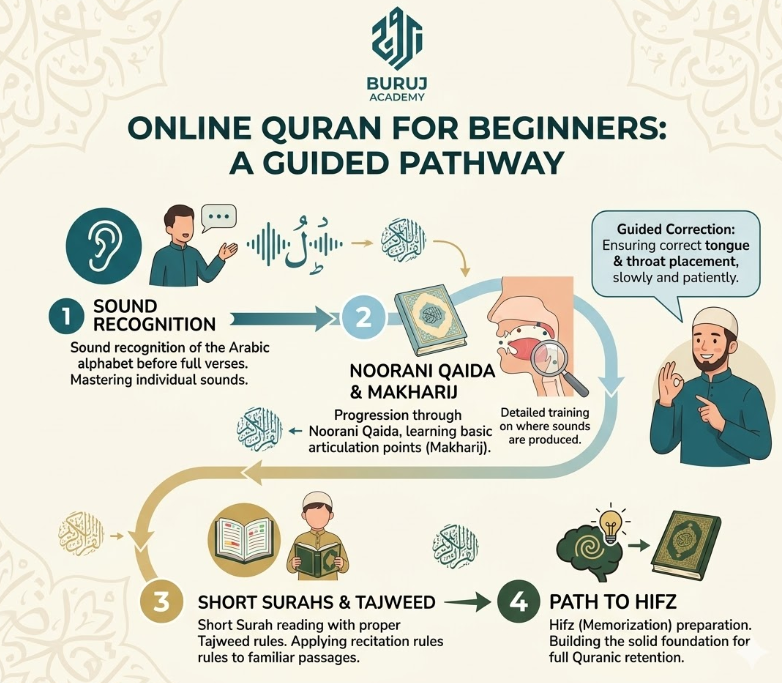
This is one reason we built our Online Quran Classes for Beginners around steady, manageable pacing rather than pressure to do more than a student can sustain.
Building a relationship with dhikr becomes easier once someone can actually read the Arabic text with confidence. Many students find that reading the Quran for the first time feels intimidating, especially while emotionally low, which is exactly when patient, structured guidance matters most.
Begin Learning Quran With a FREE Trial Lesson
2. Quran Ayat Tells That Ease Comes Directly Alongside Every Hardship
Surah Ash-Sharh 94:5-6 states that ease accompanies hardship, not merely follows it afterward, and repeats this promise twice for emphasis. Classical commentators note the repetition carries grammatical weight: one hardship is followed by two distinct measures of ease.
This structure offers something specific to depression, where the mind often assumes suffering is permanent and singular in its weight.
فَإِنَّ مَعَ ٱلْعُسْرِ يُسْرًا﴿٥﴾ إِنَّ مَعَ ٱلْعُسْرِ يُسْرًا﴿٦﴾
Fa-inna ma’al-‘usri yusra. Inna ma’al-‘usri yusra
“For indeed, with hardship [will be] ease. Indeed, with hardship [will be] ease.” (Ash-Sharh 94:5-6)
The definite article on “al-‘usr” in both verses refers to the same hardship, while “yusr” appears without it twice, indicating two separate instances of ease.
This surah was revealed to comfort the Prophet Muhammad (ﷺ) during a genuinely difficult period of rejection and hardship early in his mission.
Its placement in the Quran, directly after verses describing the expansion of his chest, links emotional relief to divine reassurance rather than to changed circumstances alone.
Students working through Tajweed course for beginners often tell us that reciting short, emphatic surahs like Ash-Sharh slowly and correctly gives the words more weight than reading them quickly.
Correct articulation, in our experience, tends to slow a reciter down enough to actually absorb the meaning rather than skim past it.
Why This Verse Is Repeated Twice
| Element | First Mention (94:5) | Second Mention (94:6) |
| Arabic term for hardship | العُسر (al-‘usr, definite) | العُسر (al-‘usr, definite — same referent) |
| Arabic term for ease | يُسرًا (yusra, indefinite) | يُسرًا (yusra, indefinite — new referent) |
| Grammatical implication | One hardship named | A second, distinct ease implied |
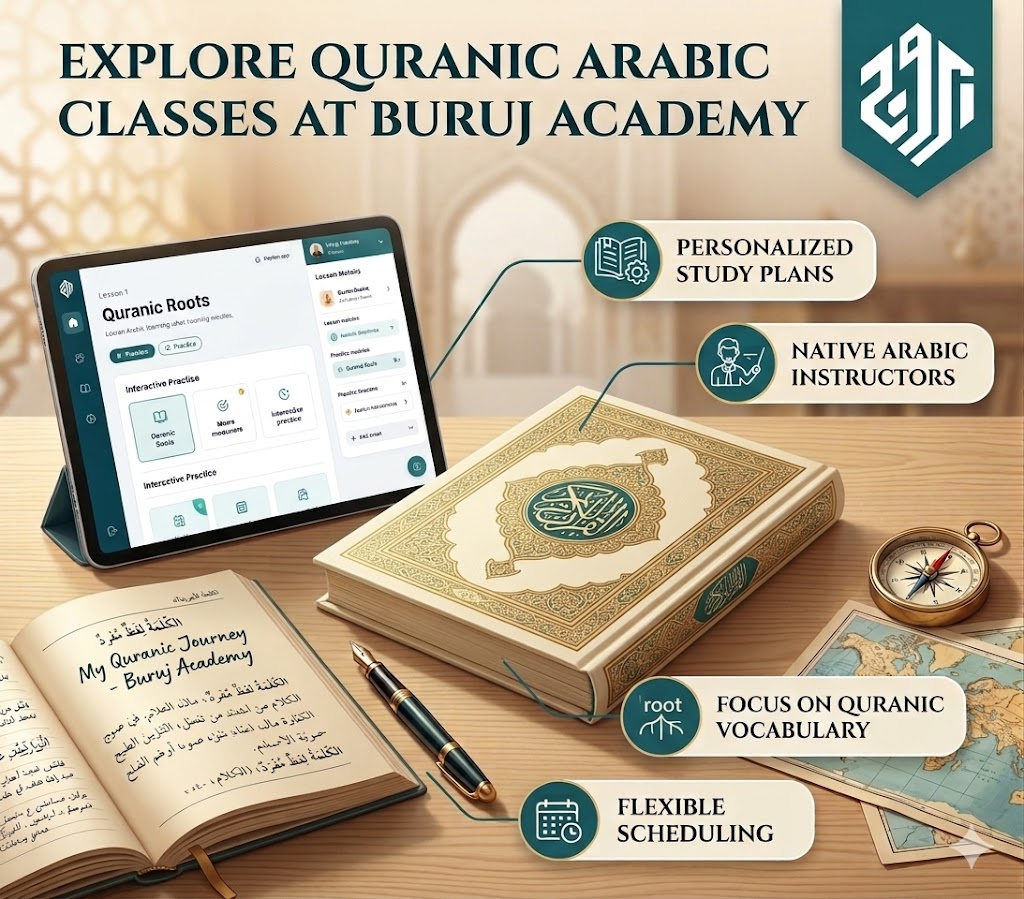
This distinction is drawn from mainstream Tajweed and tafsir scholarship on definite versus indefinite Arabic nouns, a principle worth understanding for anyone studying in our Quranic Arabic classes more deeply.
Begin Understanding Quranic Arabic with a FREE Lesson
3. A Quranic Verse Affirms that Allah Never Burdens a Soul Beyond Its Capacity
Surah Al-Baqarah 2:286 assures believers that Allah does not place a burden on any soul beyond what it can bear. This means whatever a person is experiencing right now, including depression, is something their soul has the actual capacity to survive, even when it doesn’t feel that way. It is a direct counter to the catastrophizing thought pattern common in depressive episodes.
لَا يُكَلِّفُ ٱللَّهُ نَفْسًا إِلَّا وُسْعَهَا
La yukallifullahu nafsan illa wus’aha
“Allah does not charge a soul except [with that within] its capacity.” (Al-Baqarah 2:286)
We’ve taught many adult students who carry guilt for feeling depressed at all, believing a “strong” believer shouldn’t struggle this way. This verse directly addresses that misconception. Feeling overwhelmed is not evidence of insufficient faith; it’s simply an honest report of what a person is carrying.
Parents guiding children through their own emotional struggles while learning might find our guide on tajweed rules for kids useful, since age-appropriate pacing matters even more when a child is emotionally overwhelmed.
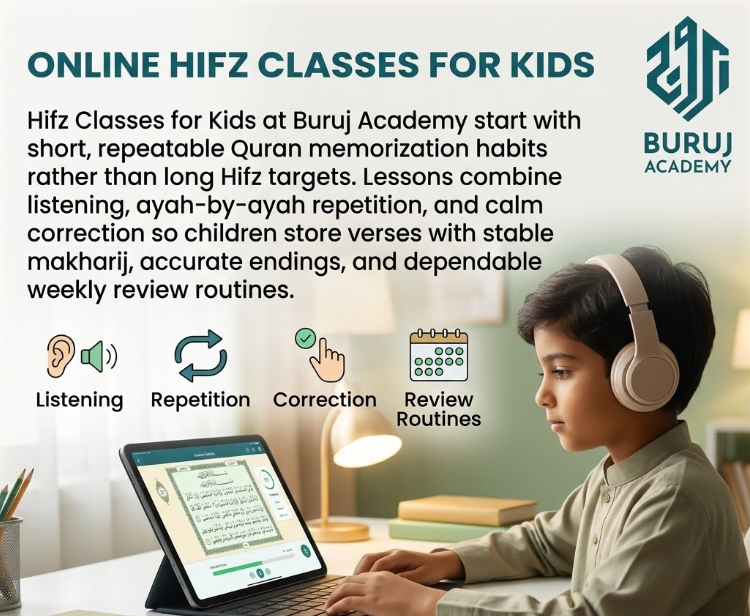
At Buruj Academy, our Online Quran classes for kids are built with this same principle: capacity-matched learning, never capacity-exceeding pressure.
Start your child’s Hifz classes with free session
Discover the Buruj Academy Difference
Step into our virtual classrooms and see how our expert instructors make learning Quran and Arabic intuitive and clear. We focus on overcoming the specific hurdles non-native speakers face, building your confidence and connection with the Quran.
Excel in Your Quranic Studies
Join Buruj Academy and master the Quran with our structured, professional curriculum.
Book Your Free Trial4. Prophet Ya’qub’s Grief in the Quran Shows Sorrow Does Not Contradict Faith
Surah Yusuf 12:87 records Prophet Ya’qub (AS) instructing his sons never to despair of Allah’s mercy, spoken while he himself was grieving the loss of his son Yusuf for years.
His own sustained sorrow, described elsewhere in the surah as severe enough to affect his eyesight, did not disqualify him from being one of Allah’s chosen prophets.
This matters directly for anyone who fears that persistent sadness reflects a deficiency in their relationship with Allah.
يَا بَنِيَّ اذْهَبُوا فَتَحَسَّسُوا مِن يُوسُفَ وَأَخِيهِ وَلَا تَيْأَسُوا مِن رَّوْحِ اللَّهِ ۖ إِنَّهُ لَا يَيْأَسُ مِن رَّوْحِ اللَّهِ إِلَّا الْقَوْمُ الْكَافِرُونَ
Ya baniyyadh-habu fatahassasu min Yusufa wa akhihi wa la tay’asu min rawhillah, innahu la yay’asu min rawhillahi illal-qawmul-kafirun
“O my sons, go and find out about Joseph and his brother and despair not of relief from Allah. Indeed, no one despairs of relief from Allah except the disbelieving people.” (Yusuf 12:87)
Ya’qub’s grief spans years within this surah, yet the verse frames only disbelief, not sadness itself, as the real spiritual danger.
We often point students toward Surah Yusuf as a full narrative arc: separation, waiting, injustice, and eventual reunion.
Reading it in complete context, rather than as an isolated verse, gives a fuller picture of how prolonged emotional pain is portrayed within Quranic storytelling.
Students pursuing memorization of longer surahs like Yusuf benefit from a realistic timeline.
Our guide on the best way to memorize Quran covers pacing strategies that account for surahs with heavier emotional content, which can genuinely take longer to internalize.
5. Seeking Help Through Patience and Prayer Is a Direct Command in a Verse
Surah Al-Baqarah 2:153 instructs believers to seek help specifically through patience (sabr) and prayer (salah), framing both as active tools rather than passive states. This verse doesn’t ask a struggling person to simply wait out their pain; it directs them toward two concrete practices.
Prayer here functions as a structured, repeated point of connection throughout a difficult day.
يَـٰٓأَيُّهَا ٱلَّذِينَ ءَامَنُوا۟ ٱسْتَعِينُوا۟ بِٱلصَّبْرِ وَٱلصَّلَوٰةِ ۚ إِنَّ ٱللَّهَ مَعَ ٱلصَّـٰبِرِينَ
Ya ayyuhal-ladhina amanus-ta’inu bis-sabri was-salah, innallaha ma’as-sabirin
“O you who have believed, seek help through patience and prayer. Indeed, Allah is with the patient.” (Al-Baqarah 2:153)
Sabr in classical usage covers more than waiting; it includes controlled emotional response, sustained effort, and resisting despair.
In our experience teaching adults balancing work, family, and faith, the five daily prayers often become the only consistent structure in an otherwise chaotic emotional day. We’ve seen students describe salah as an anchor point precisely because it happens regardless of how they feel in the moment.
Read also: What Does the Quran Say About Death?
6. Allah’s Mercy Remains Open No Matter How Overwhelmed a Person Feels
Surah Az-Zumar 39:53 addresses people who feel they’ve gone too far, whether through sin, spiritual neglect, or simply feeling unworthy of Allah’s attention, and instructs them directly not to despair of His mercy.
This verse uses some of the strongest language in the Quran regarding forgiveness, stating explicitly that Allah forgives all sins without qualification in this particular address.
قُلْ يَـٰعِبَادِىَ ٱلَّذِينَ أَسْرَفُوا۟ عَلَىٰٓ أَنفُسِهِمْ لَا تَقْنَطُوا۟ مِن رَّحْمَةِ ٱللَّهِ ۚ إِنَّ ٱللَّهَ يَغْفِرُ ٱلذُّنُوبَ جَمِيعًا ۚ إِنَّهُۥ هُوَ ٱلْغَفُورُ ٱلرَّحِيمُ
Qul ya ‘ibadiyal-ladhina asrafu ‘ala anfusihim la taqnatu mir-rahmatillah, innallaha yaghfirudh-dhunuba jami’a, innahu huwal-Ghafurur-Rahim
“Say, ‘O My servants who have transgressed against themselves [by sinning], do not despair of the mercy of Allah. Indeed, Allah forgives all sins. Indeed, it is He who is the Forgiving, the Merciful.'” (Az-Zumar 39:53)
The verse is addressed by Allah in the first person, “My servants,” a form of direct, personal address that appears rarely in the Quran.
Depression frequently carries a layer of shame underneath it, whether related to religious practice, past decisions, or a sense of falling short. This verse speaks directly into that shame, naming despair itself (qunut) as the thing to guard against, rather than the underlying sin or struggle.
For readers wanting to understand this verse’s placement and the surrounding context in Surah Az-Zumar, our article on the benefits of reading Quran covers how context shapes meaning across longer surahs.
Learning to Recite These Ayat With Presence Deepens Their Comfort
Reciting these verses with proper Tajweed and unhurried presence, rather than rushing through them, allows their meaning to actually settle rather than pass by unnoticed.
Correct articulation of letters, appropriate pausing at waqf points, and understanding word meanings all work together to slow the reading down.
A verse read carefully tends to land differently than one skimmed during a hard moment.
We’ve noticed a consistent pattern among Buruj Academy students: those working through structured Tajweed instruction report that verses about hardship feel more personally resonant once they can recite them accurately and understand each word rather than relying on translation alone.
Something happens when a person can pronounce “ma’al-‘usri yusra” correctly and feel the rhythm of the repetition themselves.
If reciting slowly and accurately currently feels out of reach, that’s a completely normal starting point, not a setback.
Our Online Hifz Classes for Adults are built around the reality that most adult learners are starting from zero while also managing full lives, including emotional ones.
Understanding foundational rules like ghunnah or the distinction between heavy and light letters gives these verses their full acoustic weight, the way they were meant to be heard and felt.
Book Your Free Trial Lesson with Burruj’s Hifz Course for Adults

Find Comfort and Confidence in Quran Recitation With Buruj Academy
These verses offer real comfort, but reciting them with accuracy and understanding is what allows their full meaning to reach the heart.
Buruj Academy’s Online Quran Classes connect students with Ijazah-certified instructors and Al-Azhar University graduates who have spent 12+ years teaching non-Arabic speakers exactly this kind of meaningful, unhurried recitation.
Through the Buruj Method’s sound-before-rules approach, personalized 1-on-1 sessions, and flexible 24/7 scheduling, students build a recitation practice that actually holds up during difficult seasons, not just easy ones.
Book a free trial lesson and experience patient, structured guidance built around your real capacity, not an idealized one.
Take the next step in your learning journey today by enrolling in one of our specialized programs:
- Online Quran Classes
- Online Quran Classes for Beginners
- Online Quran Classes for Adults
- Online Quran Classes for Ladies
- Online Quran Classes for Kids
- Quran Reading Course
- Quran Recitation Course
- Online Ijazah Course
- Online Qirat Course
Don’t wait to transform your relationship with the Holy Quran. Join our global community of students and book your free evaluation session now!
Excel in Your Quranic Studies
Join Buruj Academy and master the Quran with our structured, professional curriculum.
Book Your Free TrialDiscover the Buruj Academy Difference
Step into our virtual classrooms and see how our expert instructors make learning Quran and Arabic intuitive and clear. We focus on overcoming the specific hurdles non-native speakers face, building your confidence and connection with the Quran.
Conclusion
The Quran does not treat sorrow as a flaw in someone’s faith; it treats it as a shared human experience woven throughout its stories and direct instructions. From Ya’qub’s grief to the Prophet’s own hardships, these ayat consistently pair honest acknowledgment of pain with concrete paths back toward steadiness.
Returning to these verses regularly, ideally with accurate recitation and real understanding of the Arabic, transforms them from words read once into a practice a person can lean on repeatedly. Whatever season of heaviness someone is in, the Quran offers language for it, and a way through it.
Frequently Asked Questions About Quran Ayat for Depression
What Does the Quran Say About Depression?
The Quran doesn’t use the clinical term “depression,” but it addresses grief, despair, and heaviness of heart directly through verses like Surah Ash-Sharh’s promise of ease alongside hardship and Surah Az-Zumar’s assurance against despairing of Allah’s mercy, alongside prophetic examples of sustained sorrow.
Which Surah Is Best to Read for Anxiety and Sadness?
Many scholars and students point to Surah Ar-Ra’d 13:28 for its direct statement that hearts find rest through remembrance of Allah, alongside Surah Ash-Sharh for its repeated promise of ease. Both are short enough to memorize and recite during genuinely difficult moments.
Is Feeling Depressed a Sign of Weak Faith?
No, feeling depressed is not evidence of weak faith. Prophet Ya’qub (AS) experienced prolonged, visible grief in Surah Yusuf while remaining one of Allah’s chosen prophets, and a hadith in Sahih al-Bukhari describes sorrow itself as a source of sin expiation for believers.
Can Reciting Quran Verses Replace Professional Mental Health Support?
Quran recitation offers genuine spiritual comfort, but persistent or severe depression often benefits from professional support alongside faith practices. Speaking with a qualified counselor or doctor, together with spiritual practices like dhikr and prayer, addresses both the emotional and physiological dimensions of depression.