 Tajweed

| Key Takeaways |
| Ghunnah is a nasal sound produced from the Khayshum (nasal passage) and belongs exclusively to Noon (ن) and Meem (م). |
| Ghunnah has five levels of strength: Mushaddad, Mudgham, Mukhfa, Sakin Muzhar, and Mutaharrik Mukhaffaf. |
| The first three levels of Ghunnah are held for two counts (harakatayn), equal in duration to a natural Madd. |
| Noon is considered stronger in Ghunnah than Meem; Tanwin shares the same Ghunnah ruling as Noon Sakinah. |
| Blocking the nose during recitation confirms Ghunnah’s source — the sound stops completely, proving its nasal origin. |
Ghunnah appears in nearly every few words of the Quran, yet many students recite for years without knowing what it is, where it comes from, or how to produce it correctly.
Ghunnah is a nasal resonance that originates from the Khayshum — the nasal passage — and it is an inseparable attribute of both Noon (ن) and Meem (م) in all their states.
Table of Contents:
What Is Ghunnah?
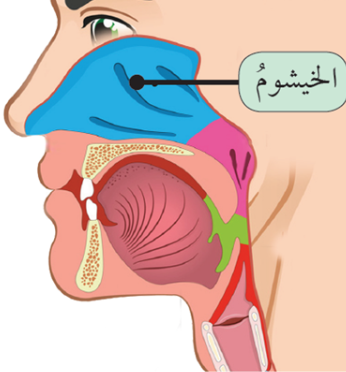
Ghunnah is a nasal sound that exits from the Khayshum (the nasal passage leading inward toward the back of the mouth), with no involvement of the tongue whatsoever. Ghunnah is a permanent, inseparable attribute (Sifah Lazimah) of both Noon (ن) and Meem (م), regardless of whether these letters carry a vowel, are silent, are assimilated, or are concealed.
The Arabic term Ghunnah (غُنَّة) literally describes a sound produced nasally — a quality recognized immediately when you gently close your nose while pronouncing a Noon or Meem and feel the sound arrest completely.
That test alone confirms its origin: no nasal passage, no Ghunnah.
What Is the Makhraj of Ghunnah?
The Makhraj of Ghunnah is the Khayshum (الخيشوم): the inner nasal cavity that draws inward toward the throat. This distinguishes Ghunnah entirely from regular letter sounds, which are produced in the mouth or throat.
The tongue has zero role in producing Ghunnah — a point that matters enormously for correct pronunciation.
Why Does Ghunnah Belong Only to Noon and Meem?
Noon (ن) and Meem (م) are the only Arabic letters with a built-in nasal resonance chamber in their articulation. Noon is considered the stronger of the two in Ghunnah. Tanwin (the doubled vowel sound ـً ـٍ ـٌ) shares the same ruling as Noon Sakinah in all Ghunnah-related rules, because it is phonetically equivalent to a Noon with Sukoon.
If you are building your foundations in Quran recitation from the ground up, our Tajweed for Beginners course at Buruj Academy introduces Ghunnah early and trains your ear to recognize it before asking you to memorize a single rule — consistent with our Sound-before-rules approach.
Book Your FREE Trial Lesson to Begin Your Tajweed Journey

What Are the Five Levels of Ghunnah?
Ghunnah is not a single uniform sound — it has five distinct levels (Maratib) ranked by strength, from most resonant to lightest. Knowing these levels is what separates a student who understands Ghunnah from one who merely knows the word.
| Level | Name | Description | Example Type |
| 1st | Al-Mushaddad | Noon or Meem with Shaddah | إِنَّ / عَمَّ |
| 2nd | Al-Mudgham | Idgham with Ghunnah (incomplete assimilation) | إِن يَشَأ / مِّن مَّاء |
| 3rd | Al-Mukhfa | Ikhfa Haqiqi, Iqlab, Ikhfa Shafawi | عَنبَرٌ / مِنۢ بَعۡدِ |
| 4th | Al-Sakin al-Muzhar | Noon/Meem Sakinah with Izhar | مِنْ عِلْمٍ / اَمْ عِنۡدَهُمْ |
| 5th | Al-Mutaharrik al-Mukhaffaf | Noon or Meem with any vowel (light movement) | نَعَم / مَلَك |
The first three levels are held for two full counts (harakatayn). The fourth and fifth levels carry only the inherent, minimal Ghunnah — no elongation.
1. The First Level is Ghunnah in Al-Mushaddad (Noon and Meem with Shaddah)
The strongest and most prominent Ghunnah occurs on a Mushaddad (doubled/shadda’d) Noon or Meem. This applies whether the shadda appears within a single word or results from the merging of two words through Idgham Tam.
The duration is a full two counts, and it must be maintained without slipping into a lengthened vowel sound afterward — a common mistake we hear frequently in our Buruj Academy sessions, particularly on verses like:
إِنَّآ أَعۡطَيۡنَٰكَ ٱلۡكَوۡثَرَ
Innā aʿṭaynākal-kawthar
“Indeed, We have granted you al-Kawthar.” (Al-Kawthar 108:1)
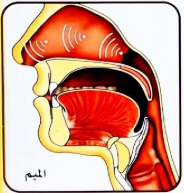
The Noon carries a Shaddah — hold the Ghunnah for two counts without elongating the following Alif Madd.
هَمَّتۡ بِهِۦۖ
Hammat bih
“she certainly determined [to seduce] him.” (Yusuf 12:24)
The Meem carries a Shaddah — the nasal resonance must be fully audible for two counts.
Idgham Tam cases in two words also fall here:
إِن نَّشَأۡ
In nashā
“If We will.” (Saba 34:9)
Noon Sakinah merges completely into the following Noon — resulting in a Mushaddad Noon with full Ghunnah.
2. The Second Level is Ghunnah in Al-Mudgham (Incomplete Assimilation)
The second level covers Idgham Naqis (incomplete assimilation) with Ghunnah — specifically the assimilation of Noon Sakinah or Tanwin into Waw (و) or Yaa (ي). In this case, the Noon disappears into the following letter, but the Ghunnah remains audible for two counts. This is called Idgham Naqis because the assimilation is incomplete — the Ghunnah sound persists as a trace of the Noon.
مِن وَرَائِهِمۡ
Min warāʾihim
“From behind them.” (Al-Baqarah 2:255)
Noon Sakinah assimilates into Waw — Ghunnah held for two counts.
This level is distinct from the Mushaddad level because the Ghunnah here arises from a transitional merger, not a fixed doubled letter.
For a thorough explanation of how assimilation rules interact with Ghunnah, our article on Idgham rules in Tajweed covers every category with Quranic examples.
Excel in Your Quranic Studies
Join Buruj Academy and master the Quran with our structured, professional curriculum.
Book Your Free Trial3. The Third Level is Ghunnah in Al-Mukhfa (Concealed Letters)
The third level encompasses all cases of concealment (Ikhfa), which itself has three distinct sub-types. Each carries Ghunnah for two counts, but the nasal sound blends with the articulation point of the following letter rather than fully assimilating.
A. Gjunnah in Ikhfa Haqiqi
When Noon Sakinah or Tanwin precedes any of the 15 Ikhfa letters, the Noon is neither fully pronounced nor fully assimilated — it is concealed with Ghunnah.
For the full list and examples of all 15 letters, see our detailed guide on the Ikhfa letters in Tajweed.
مَن كَانَ
Man kāna
“Whoever was.” (Al-Baqarah 2:96)
Noon Sakinah before Kaf — Ikhfa Haqiqi with Ghunnah for two counts.
B. Ghunnah in Ikhfa Shafawi
When Meem Sakinah precedes Baa, the Meem is concealed with lips slightly apart and Ghunnah held.
فَٱحۡكُم بَيۡنَهُمۡ
Fahkum baynahum
“So judge between them.” (Al-Ma’idah 5:42)
(Meem Sakinah before Baa — Ikhfa Shafawi with Ghunnah for two counts.)
C. Ghunnah in Iqlab: Noon Sakinah or Tanwin Before Baa (ب)
When Noon Sakinah or Tanwin precedes Baa (ب), the Noon converts to a Meem sound (Iqlab = flipping) and is concealed with Ghunnah.
يُنۢبِتُ
Yumbit
“It produces.” (An-Nahl 16:11)
The Noon converts to Meem and is concealed before Baa — Ghunnah maintained for two counts.
| Ikhfa Type | Trigger | Example |
| Ikhfa Haqiqi | Noon Sakinah / Tanwin + 15 letters | مَن كَانَ |
| Iqlab | Noon Sakinah / Tanwin + ب | يُنۢبِتُ |
| Ikhfa Shafawi | Meem Sakinah + ب | فَٱحۡكُم بَيۡنَهُمۡ |
4. The Fourth Level is Ghunnah in Al-Sakin al-Muzhar (Clearly Pronounced Silent Letters)
The fourth level applies to Noon Sakinah displayed clearly before the six throat letters (Izhar Halqi) and Meem Sakinah when not followed by Baa or Meem. In these cases, the Ghunnah is present but minimal — it is the inherent, natural Ghunnah of the letter, not elongated.
مِنۡ عِلۡمٍ
Min ʿilm
“From knowledge.” (Al-Baqarah 2:255)
Noon Sakinah before Ayn — Izhar Halqi — minimal Ghunnah only.
Students sometimes over-extend the Ghunnah here. In our sessions at Buruj Academy, we consistently remind students that Izhar means clarity — the Noon must be pronounced cleanly, and the Ghunnah should not be artificially stretched.
To understand how Izhar works across all its letters, our Izhar letters guide is a helpful companion read.
5. The Fifth Level is Ghunnah in Al-Mutaharrik al-Mukhaffaf (Voweled Noon and Meem)
The lightest level of Ghunnah belongs to Noon and Meem when they carry a vowel (Fathah, Kasrah, or Dammah) and are not doubled. The Ghunnah here is the bare minimum — the natural nasal quality that makes these letters what they are, with no deliberate elongation required.
نَعَم (naʿam — “yes”) and مَلَكٌ (malakun — “angel”) both carry this minimal Ghunnah on every occurrence.
In our instructors’ experience, students at this stage often either ignore the Ghunnah entirely or over-apply it.
The correct approach: the nasal resonance is present naturally — do not suppress it, and do not inflate it.
How Long Should Ghunnah Be Held During Recitation?
Ghunnah duration follows a clear, consistent rule with one dividing line. Levels one, two, and three (Mushaddad, Mudgham, Mukhfa) are all held for exactly two counts (harakatayn) — the same duration as a natural Madd Asli.
For a practical understanding of Madd duration and how it relates to counting in Tajweed, our Madd Asli guide explains the two-count standard in full.
Levels four and five (Sakin Muzhar, Mutaharrik Mukhaffaf) carry only the inherent, original Ghunnah — no measured elongation is required or correct.
| Levels | Duration | Application |
| 1st, 2nd, 3rd | Two counts (harakatayn) | Mushaddad, Mudgham, Mukhfa |
| 4th, 5th | Inherent Ghunnah only | Muzhar, Mutaharrik Mukhaffaf |
Common Mistakes Students Make with Ghunnah Rules
Most errors with Ghunnah fall into three consistent patterns we observe across all levels of students:
Mistake 1 — Dropping the Ghunnah entirely on voweled Noon and Meem
Students who learn Ghunnah through rule-lists often apply it only in “rule situations” (Ikhfa, Idgham) and forget that the fifth level exists in every single Noon and Meem with a vowel.
Mistake 2 — Lengthening the Ghunnah into a Madd on Mushaddad letters
When the Shaddah sits on a Noon before a vowel that begins a Madd letter, students stretch the Ghunnah into the Madd. The rule is precise: two counts for Ghunnah, then stop — the Madd begins independently if its conditions exist.
Mistake 3 — Producing Ghunnah with the tongue
Because Noon and Meem both have tongue or lip involvement in their full articulation, students sometimes press the tongue to produce a nasal quality. Ghunnah requires the nasal passage to be open and active — the tongue should be relaxed.
Our Online Tajweed Classes at Buruj Academy use audio-first correction methods guided by Ijazah-certified instructors to catch and correct all three of these patterns in real time — something no written guide can fully replace.
Book Your FREE Trial Lesson to Begin Your Tajweed Journey

How Does Ghunnah Interact with Other Tajweed Rules?
Ghunnah does not exist in isolation — it is woven into several other major Tajweed rules. Understanding these interactions is what allows a student to move from knowing definitions to reciting accurately.
| Rule | Connection to Ghunnah |
| Idgham Bil Ghunnah | Ghunnah is the defining feature of this Idgham category |
| Ikhfa Haqiqi | Ghunnah maintained while Noon is concealed |
| Iqlab | Ghunnah present after Noon converts to Meem |
| Ikhfa Shafawi | Ghunnah present on Meem Sakinah before Baa |
| Idgham Meem Sakinah | Ghunnah present when Meem Sakinah merges with Meem |
| Idgham Mutajanisayn | Ghunnah present in Baa merging into Meem |
For a structured overview of how these rules connect within the broader Tajweed system, our guide on Tajweed rules for beginners maps the full relationship between these categories.
Discover the Buruj Academy Difference
Step into our virtual classrooms and see how our expert instructors make learning Quran and Arabic intuitive and clear. We focus on overcoming the specific hurdles non-native speakers face, building your confidence and connection with the Quran.
Master Ghunnah with Buruj Academy’s Expert Instructors
Ghunnah is present in nearly every line of the Quran — mastering it transforms your recitation from technically adequate to genuinely beautiful.
Understanding five levels, correct duration, and live application requires more than reading — it requires trained ears and real-time correction.
At Buruj Academy, our Online Tajweed Classes are taught by Al-Azhar University graduates and Ijazah-certified instructors with 12+ years of experience teaching non-Arabic speakers globally.
We use the Buruj Method — Sound-before-rules — to build your ear before building your rule knowledge.
- Personalized 1-on-1 sessions with real-time pronunciation correction
- Flexible 24/7 scheduling for students worldwide
- Clear progression from Ghunnah basics to full Tajweed mastery
Book your free trial lesson today and hear the difference correct Ghunnah makes.
Join a supportive learning environment tailored to your pace and lifestyle. Start your journey toward excellence by enrolling in one of our specialized tracks:
- Online Tajweed Classes
- Tajweed Classes for Beginners
- Tajweed Classes for Adults
- Tajweed Classes for Sisters
- Tajweed Classes for Kids
- Advanced Tajweed Course
- Amli Tajweed Course (Practical Application)
Ready to transform your recitation? book your free assessment and start your path to Tajweed mastery today!
Excel in Your Quranic Studies
Join Buruj Academy and master the Quran with our structured, professional curriculum.
Book Your Free TrialConclusion
Ghunnah is not a minor detail — it is one of the Quran’s most recurring sounds, and producing it correctly is an act of precision and reverence. From the strong, held resonance of a Mushaddad Noon to the quiet, natural nasal quality of a voweled Meem, every level has its place and its purpose.
The clearest path to internalizing Ghunnah is consistent, guided practice with a qualified instructor who can hear what your ear cannot yet catch. With the right foundation, Ghunnah stops being a rule to remember and becomes a natural feature of how you recite — Alhamdulillah.
Frequently Asked Questions About Ghunnah in Tajweed
What Is the Difference Between Ghunnah and Ikhfa?
Ghunnah is a nasal sound that belongs permanently to Noon and Meem in all their states. Ikhfa is a specific Tajweed rule that applies when Noon Sakinah or Tanwin precedes one of 15 letters. During Ikhfa, Ghunnah is present and held for two counts — so Ikhfa is one situation where Ghunnah is applied, but Ghunnah is broader than Ikhfa alone.
How Many Counts Should Ghunnah Be Held For?
The first three levels of Ghunnah (Mushaddad, Mudgham, and Mukhfa) are held for two counts (harakatayn), matching the duration of a natural Madd Asli. The fourth and fifth levels — Sakin Muzhar and Mutaharrik Mukhaffaf — carry only the inherent nasal quality of the letter with no deliberate elongation required or permitted.
Does Ghunnah Apply to All Noon and Meem Letters in the Quran?
Yes. Ghunnah is a Sifah Lazimah — an inseparable attribute — of both Noon and Meem in every state: voweled, silent, assimilated, or concealed. The strength and duration of Ghunnah varies by level, but the nasal quality is never absent from these two letters anywhere in Quran recitation.
Is the Ghunnah of Noon Stronger Than That of Meem?
Yes, according to classical Tajweed scholarship, Noon carries a stronger Ghunnah than Meem. This is because Noon’s articulation point (the tip of the tongue against the upper gum ridge) creates a more defined separation between the oral sound and the nasal resonance, making the Ghunnah more prominent. Meem’s labial closure slightly absorbs the nasal quality.
How Can I Tell If I Am Producing Ghunnah Correctly?
The simplest test: gently pinch your nose while saying a Mushaddad Noon or Meem. If the sound stops or changes noticeably, your Ghunnah is correctly originating from the nasal passage. If nothing changes, the sound is coming from your mouth rather than your Khayshum — and your instructor needs to hear and correct it directly.
Related Articles
Tajweed





Leave a Reply