 Arabic

| Key Takeaways |
| Business Arabic is built on Modern Standard Arabic (MSA), which serves as the formal language across all 22 Arab League countries. |
| Prioritizing industry-specific vocabulary from day one accelerates professional readiness faster than general Arabic study alone. |
| Structured instruction from qualified teachers cuts learning time significantly compared to self-study apps or unguided practice. |
| Most professionals reach functional business Arabic proficiency within 10 –18 months of consistent, structured weekly study. |
Arabic opens doors that few other languages can. With over 400 million speakers across the Middle East and North Africa, and with Arabic-speaking markets generating trillions in trade annually, professionals who invest in business Arabic gain a measurable competitive advantage — in negotiation rooms, on trade floors, and in every boardroom conversation their competitors can’t follow.
Learning Arabic for business means learning it with purpose. Rather than generic fluency, you need targeted vocabulary, formal register, and the cultural intelligence to communicate with authority and respect. This guide walks you through exactly how to build that foundation, step by step.
Table of Contents:
1. Start with MSA, Not a Dialect, to Build a Transferable Business Foundation
Modern Standard Arabic (MSA) is the only variety of Arabic that functions universally across all Arab countries in formal professional settings. Business emails, legal contracts, official presentations, and news media all use MSA — not Egyptian, Levantine, or Gulf dialect.
Starting with a dialect first is a common mistake we see professionals make, and it costs them months of rework later.
If you want to understand why MSA is the correct entry point, our beginner’s guide to Modern Standard Arabic explains the structural differences in plain terms. For a broader overview of how Arabic learning works as a whole, see our guide on how to learn Arabic for a fuller picture of the language’s structure and scope.
At Buruj Academy, our Online Arabic Classes course introduces non-native learners to MSA using real-world professional contexts from the first lesson — not textbook dialogues that bear no resemblance to actual business communication.
Book your FREE Arabic trial online Arabic class at Buruj

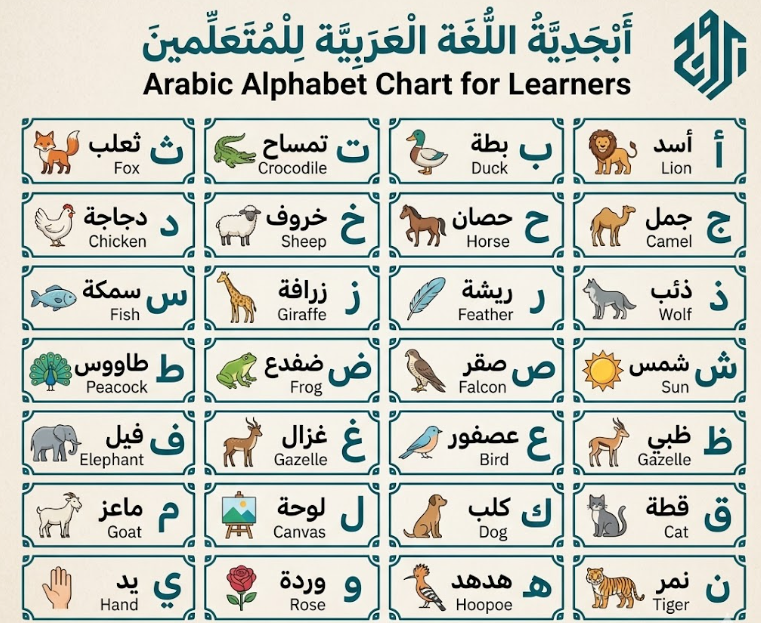
2. Master the Arabic Script Before Attempting Any Business Vocabulary
Attempting to learn business Arabic using only transliteration is one of the most common — and most damaging — shortcuts professionals take. Arabic script carries meaning that transliteration cannot replicate.
Vowel markers, word roots, and formal register all depend on the written system. Without script fluency, you cannot read a contract, a business card, or a formal letter.
| Script Milestone | Approximate Timeline | Business Relevance |
| Letter recognition (isolated) | 1–2 weeks | Reading logos, signage, names |
| Connecting letters in words | 2–4 weeks | Reading headings, simple labels |
| Reading short sentences | 4–8 weeks | Business cards, short emails |
| Reading formal MSA text | 3–6 months | Contracts, reports, proposals |
In our experience teaching professionals at Buruj Academy, those who commit two focused weeks to script mastery before vocabulary study progress roughly twice as fast as those who skip ahead. Our Arabic Alphabet Learning Course provides exactly this structured foundation.
Get a free trial now in Buruj’s Alphabet course
3. Build Your Core Grammar Framework Early to Avoid Costly Communication Errors
Arabic grammar is systematic, and its root-pattern system (الجذر الثلاثي — al-jadhr al-thulathi) means that understanding even 200 roots gives you access to thousands of related words. For business purposes, you do not need to master every grammatical exception — but you do need firm command of sentence construction, verb conjugation in formal register, and the dual and plural systems that appear constantly in formal Arabic.
Our article on Arabic grammar breaks down these foundational rules accessibly. For sentence building specifically, our guide on Arabic sentence structure addresses the verbal sentence (jumlah fi’liyyah) and nominal sentence (jumlah ismiyyah) patterns you will encounter in every business document.
Buruj Academy’s Arabic Grammar Course is designed specifically for non-native speakers who need grammatical accuracy without spending years on academic linguistics.
Understand the Arabic Grammar with Buruj’s free trial lesson

4. Study Industry-Specific Arabic Business Phrases and Vocabulary Systematically
Generic vocabulary lists will not prepare you for a negotiation or a board presentation. Business Arabic requires domain-specific terminology — finance, trade, logistics, law, or technology — depending on your sector. The most common words and phrases in Arabic for business include terms for agreement (اتفاقية — ittifaqiyyah), contract (عقد — ‘aqd), partnership (شراكة — sharakah), offer (عرض — ‘ard), and invoice (فاتورة — fatuorah).
| Core Business Term | Arabic | Transliteration |
| Meeting | اجتماع | Ijtima’ |
| Agreement/Contract | اتفاقية / عقد | Ittifaqiyyah / ‘Aqd |
| Budget | ميزانية | Mizaniyyah |
| Profit | ربح | Ribh |
| Investment | استثمار | Istithmar |
| Negotiation | تفاوض | Tafawud |
| Report | تقرير | Taqrir |
| Deadline | موعد نهائي | Maw’id Niha’i |
Vocabulary retention improves dramatically when words are learned in context, not as isolated lists. Our guide on mastering Arabic vocabulary shares the exact techniques our instructors use to make new words stick for adult learners with limited study time.
Master the Arabic Language
Join our expert-led courses and build a strong foundation in Classical and Modern Arabic.
Get Your Free TrialRead also: How to Memorize the Arabic Alphabet?
5. Develop Your Arabic Business Speaking Skills Through Structured Conversation Practice
Reading and writing business Arabic is one skill set; speaking with confidence in meetings, phone calls, and presentations is another. Many professionals plateau at passive comprehension because they never get structured speaking practice with real-time correction.
Arabic pronunciation carries specific challenges for English speakers — emphatic consonants (ص، ض، ط، ظ), guttural sounds (ع، غ), and the uvular stop (ق) require consistent, coached practice.
We regularly observe at Buruj Academy that professionals who read Arabic competently often struggle in live conversation simply because they have never been corrected on register.
Business Arabic requires a formal register (fusha) in written correspondence but may shift toward a lighter dialect in verbal meetings — knowing when and how to navigate that shift is a skill only practice builds.
Our Arabic Speaking Course and our broader article on how to improve Arabic speaking skills both address this directly. For pronunciation mechanics specifically, our resource on Arabic pronunciation covers the specific sounds that most frequently cause miscommunication.
Book your free trial to start speaking Arabic fluently

6. Enroll in a Structured Business Arabic Course with a Qualified Teacher
Self-study apps and YouTube videos can supplement your learning, but they cannot replace real-time feedback from a qualified instructor who understands the specific challenges non-native speakers face.
Business Arabic involves formal register, technical vocabulary, and cultural nuance that an algorithm cannot correct in real time.
Where to learn Arabic for business?
Where to learn Arabic for business is a question we take seriously. The answer is not a language app — it is a structured program with an expert teacher who can diagnose your specific errors, adjust pacing to your industry, and hold you accountable to consistent progress.
Buruj Academy’s Arabic Classes for Adults connect working professionals with Al-Azhar-trained instructors who have 12+ years of experience teaching non-Arabic speakers.
Sessions are one-on-one, flexible around professional schedules, and built on the Buruj Method’s context-before-abstraction approach — meaning you work with real business scenarios from day one, not isolated grammar exercises.
7. Practice Arabic Reading and Writing Through Business-Relevant Materials
Active reading practice using authentic Arabic business texts — news articles from Al-Jazeera, press releases, corporate reports, and economic analysis — builds the receptive fluency that classroom study alone cannot provide. Writing practice through formal correspondence, report summaries, and meeting minutes reinforces the active grammar and vocabulary you are building.
Dictation is one of the most effective — and most underused — tools for locking in spelling, script precision, and listening comprehension simultaneously. Our article on improving Arabic writing with dictation explains exactly how to use this technique as a professional learner with limited time.
| Practice Type | Recommended Weekly Minimum | Business Benefit |
| Reading Arabic news/reports | 20–30 minutes | Formal vocabulary exposure |
| Writing emails/summaries in Arabic | 15–20 minutes | Active grammar and script reinforcement |
| Listening to Arabic business podcasts | 20 minutes | Ear training for spoken MSA |
| Speaking practice with instructor | 2–3 sessions/week | Pronunciation and register correction |
Buruj Academy’s Arabic Reading Course and Learn Arabic Writing Course address both skills with structured progression designed for adult learners.
Read Arabic fluently with a free Buruj trial

8. Develop Cultural Intelligence Alongside Your Language Skills
Language proficiency without cultural awareness leads to costly miscommunications in business settings. Arab business culture places significant emphasis on relationship-building (wasta), hospitality (karam), and formal greetings before any business discussion begins.
Addressing a senior professional without the correct honorific, or moving too quickly to the transactional portion of a meeting, signals cultural unfamiliarity regardless of your language level.
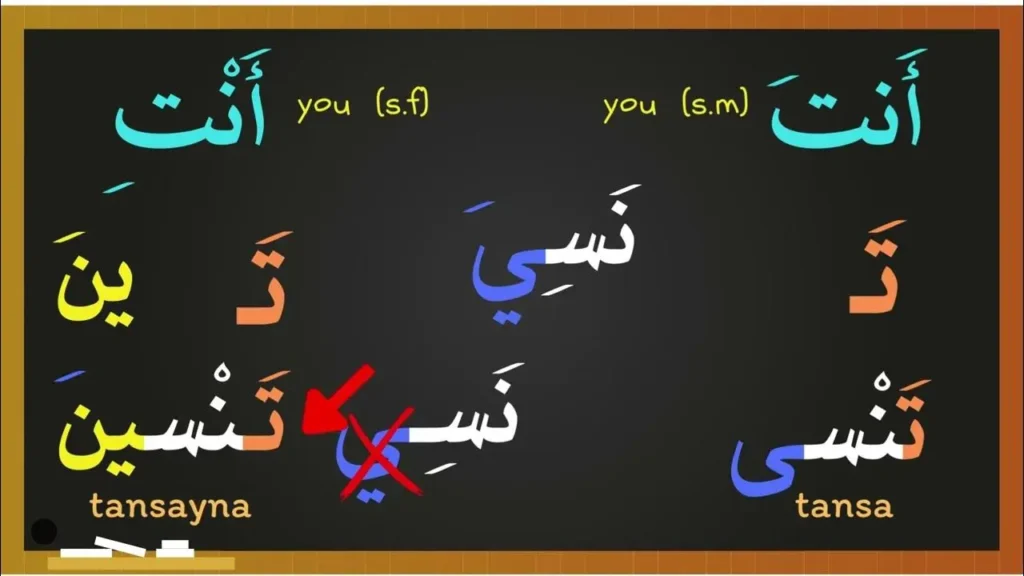
Understanding when to use حضرتك (hadretak) — a formal “you” for a respected professional — versus the standard أنت (anta) is the kind of nuance that separates competent speakers from trusted business partners.
These details are not taught in phrasebooks; they emerge through structured instruction with culturally informed teachers.
Formal greetings carry particular weight. Opening a business meeting with السلام عليكم (As-salamu alaykum — “Peace be upon you”) and its proper response وعليكم السلام (Wa alaykum as-salam) is both linguistically and culturally appropriate across all Arabic-speaking professional environments.
Read also: How to Learn Arabic Through and From the Quran?
Discover the Buruj Academy Difference
Step into our virtual classrooms and see how our expert instructors make learning Quran and Arabic intuitive and clear. We focus on overcoming the specific hurdles non-native speakers face, building your confidence and connection with the Quran.
Build Your Business Arabic Foundation with Buruj Academy’s Expert-Led Arabic Courses
Learning Arabic for business requires more than vocabulary memorization — it demands structured guidance, real-time correction, and professional context from your very first lesson. Buruj Academy’s Online Arabic Classes course delivers exactly that.
Our Al-Azhar University graduates and Ijazah-certified instructors bring 12+ years of experience teaching non-Arabic speakers worldwide.
Every program uses the Buruj Method — context-before-abstraction, consistency-before-speed — with fully personalized 1-on-1 sessions built around your industry, schedule, and goals.
Whether you are starting from zero or refining existing skills, Buruj Academy has a program tailored to your level.
Book your free trial lesson today and take the first real step toward professional Arabic fluency.
Begin your transformation today by choosing the path that fits your goals:
- Online Arabic Classes (General & Comprehensive)
- Arabic Course for Beginners
- Arabic Alphabet Learning Course
- Online Arabic Classes for Kids
- Arabic Classes for Adults
- Arabic Grammar Course (Nahw & Sarf)
- Intermediate Arabic Course (B1/B2)
- Arabic Speaking Course (Conversational Fluency)
- Arabic Reading Course (Literary Excellence)
- Learn Arabic Writing Course (Calligraphy & Composition)
Ready to speak with confidence? Join the global community at Buruj Academy and book your free placement interview today!
Master the Arabic Language
Join our expert-led courses and build a strong foundation in Classical and Modern Arabic.
Get Your Free TrialConclusion
Business Arabic is a skill built through deliberate, structured effort — not passive exposure or app-based shortcuts. Starting with MSA, mastering the script, building grammar foundations, and layering in industry vocabulary and speaking practice creates the kind of Arabic competence that actually functions in professional environments.
What separates professionals who succeed is consistent, expert-guided practice alongside genuine cultural intelligence.
With the right instruction and a clear learning path, functional business Arabic is an achievable goal — and one that opens relationships, markets, and opportunities that remain invisible to those without it. Insha’Allah, this guide gives you the roadmap to start with confidence.
Frequently Asked Questions About Learning Arabic for Business
How Long Does It Take to Learn Arabic for Business Purposes?
Most professionals reach functional business Arabic proficiency — reading correspondence, participating in meetings, and writing formal emails — within 12 to 18 months of consistent structured study at two to three sessions per week. The timeline shortens significantly with daily practice and expert instruction, and lengthens considerably with inconsistent study or no qualified teacher.
What Is the Best Business Arabic Course for Non-Native Speakers?
The best business Arabic course combines MSA grammar instruction, industry-specific vocabulary, speaking practice with real-time correction, and cultural training — all delivered by a qualified native-Arabic instructor. Buruj Academy’s Arabic Classes for Adults course meets all four criteria with flexible one-on-one sessions taught by Al-Azhar University graduates.
Do I Need to Learn Arabic Dialect or Modern Standard Arabic for Business?
For formal business purposes — contracts, presentations, written correspondence, and cross-country communication — Modern Standard Arabic (MSA) is the correct choice. Dialects are regional and not universally understood. Learning MSA first gives you a transferable professional foundation that functions across all 22 Arab League countries without confusion or regional limitation.
What Are the Most Important Arabic Business Phrases to Learn First?
Priority phrases include formal greetings (As-salamu alaykum), meeting openers, agreement and contract vocabulary (ittifaqiyyah, ‘aqd), negotiation terms (tafawud, ‘ard), and formal closings. Beyond phrases, understanding how to address colleagues with correct honorifics and how to structure formal written requests in MSA matters significantly more than memorizing isolated expressions.
Is It Possible to Learn Business Arabic Without Living in an Arab Country?
Absolutely. Thousands of professionals worldwide develop strong business Arabic through structured online instruction without relocating. The key is consistent one-on-one sessions with a qualified instructor, regular reading of authentic Arabic business texts, and deliberate speaking practice. Buruj Academy’s fully online, flexible programs make this accessible regardless of where you live or what time zone you are in.