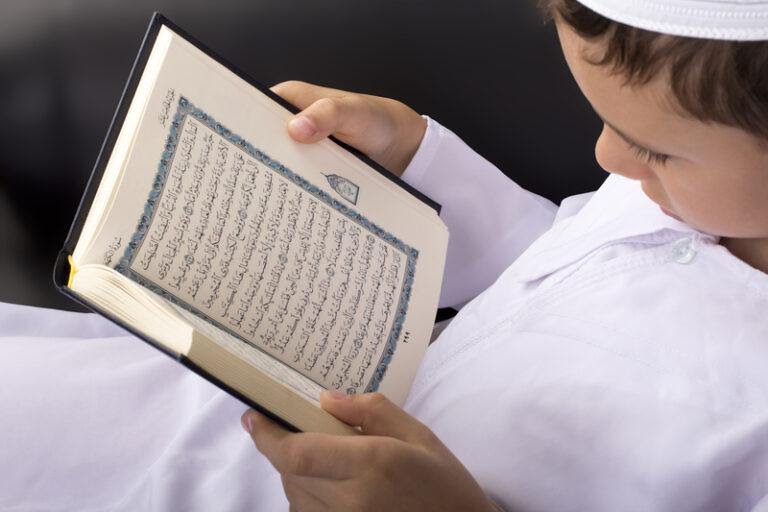
Moses (Musa, AS) is mentioned by name 136 times in the Quran, making him the most frequently named prophet in the entire Book.
No other prophet — not even Muhammad ﷺ — is mentioned by name as often as Musa AS across the Quranic text.
Musa’s story appears in 30 Surahs, covering his prophethood, his confrontation with Pharaoh, and his receiving of the Torah.
The Quran emphasizes Musa’s story repeatedly because it carries universal lessons on faith, patience, leadership, and divine support.
Few figures in the Quran command presence the way Prophet Musa AS does. From the earliest Makkan revelations to the final Madinan chapters, his story weaves through the entire fabric of the Quran with a consistency unlike any other prophet’s account.
Moses is mentioned by name 136 times in the Quran — more than any other prophet, and more than any other human being. His story spans over 30 Surahs, addressing his mission to Pharaoh, his intimate conversations with Allah, and his guidance to Bani Isra’il with unmatched narrative depth.
Table of Contents:
How Many Times Is Moses Mentioned in the Quran?
Moses — known in the Quran as Musa (مُوسَىٰ) — is mentioned by name 136 times across the Quran, distributed across more than 30 different Surahs. No other prophet is named as frequently, and no other narrative receives as much recurring attention throughout both Makkan and Madinan revelations.
This frequency is not coincidental. The Quran itself is not a sequential biography — it revisits stories from multiple angles, each time extracting a different lesson.
Musa’s story, more than any other, provided the early Muslim community with models of perseverance against tyranny, trust in divine timing, and the weight of prophetic responsibility.
In our Tafsir sessions at Buruj Academy, students are often genuinely surprised when they encounter Musa AS in Surah after Surah — in Al-Baqarah, then Yunus, then Taha, then Al-Qasas.
The repetition is intentional, and once students understand why, their engagement with Quranic recitation changes permanently.
If you want to deepen your understanding of these passages, our Tafseer Al-Quran course provides structured, scholar-led study of the Quran’s most significant narratives.
The Quran’s repeated focus on Musa AS serves deliberate theological and pedagogical purposes that classical scholars have articulated across centuries of Tafsir literature.
1. The Parallels Between Musa’s Community and the Early Muslim Community
The Prophet Muhammad ﷺ and his companions faced persecution, exile, and the challenge of building a community of faith against powerful opposition.
Musa’s story — confronting Pharaoh, leading a reluctant people, receiving divine law — mirrored those struggles directly.
Allah repeated Musa’s narrative to strengthen the believers’ resolve with a living proof that divine support always follows patient perseverance.
2. The Depth and Complexity of Musa’s Mission
Musa AS carried one of the most complex prophetic missions in history. He was sent to a tyrannical ruler, tasked with liberating an enslaved people, received an entire divine scripture (the Torah), and led his community through decades of trial in the wilderness.
This richness of experience means that different aspects of his story carry different lessons — which is precisely why different Surahs highlight different moments.
3. The Quran’s Method of Repeated Narrative for Varied Lessons
Classical scholars of Uloom Al-Quran explain that the Quran’s method of tikrar (repetition) is not redundancy — it is pedagogical precision.
Each retelling of Musa’s story in a different Surah emphasizes a different dimension: sometimes his courage, sometimes his humility, sometimes his frustration, sometimes Allah’s direct support.
This is a Quranic teaching method that we apply at Buruj Academy in our Online Islamic Studies classes — showing students that returning to the same story from a different angle deepens understanding rather than dulling it.
List of Examples of Mentions of Moses in the Quran
The Quran references Musa AS across dozens of verses. The following are 15 of the passages where Moses’ name appears in a context that carries major narrative or theological weight.
1. Al-Baqarah 2:51 — The Forty Nights at Sinai
This verse establishes one of the defining events of Musa’s prophethood: his forty-night retreat at Mount Sinai to receive the Torah, during which his people fell into the grave sin of worshipping the golden calf. It frames the relationship between divine nearness and human failure.
“And [recall] when We made an appointment with Moses for forty nights. Then you took [for worship] the calf after him, while you were wrongdoers.” (Al-Baqarah 2:51)
2. Al-A’raf 7:103 — Musa Sent to Pharaoh
This verse opens one of the most detailed accounts of Musa’s mission in the Quran, introducing his dispatch to Pharaoh and the elite of Egypt with the signs of Allah. It sets the stage for the confrontation that defines much of the Quranic narrative about him.
“Then We sent after them Moses with Our signs to Pharaoh and his establishment, but they wrongfully rejected them. So observe how was the end of the corrupters.” (Al-A’raf 7:103)
3. Yunus 10:75 — Musa and Harun Sent Together
Allah here addresses the joint mission of Musa and his brother Harun عليهما السلام to Pharaoh — a moment that highlights divine wisdom in pairing the prophets and underscores that arrogance is the primary barrier to accepting truth.
“Then We sent after them Moses and Aaron to Pharaoh and his establishment with Our signs, but they were arrogant and were a criminal people.” (Yunus 10:75)
4. Hud 11:96 — Musa Sent as a Clear Proof
This verse situates Musa’s mission within Allah’s universal pattern of sending messengers — a pattern the Quran traces from Noah through to Muhammad ﷺ.
It emphasizes that Musa came with sultan mubeen (clear authority), not personal ambition.
“And We did certainly send Moses with Our signs and a clear authority.” (Hud 11:96)
5. Taha 20:9 — The Story of the Fire
Surah Taha contains arguably the most intimate and spiritually rich account of Musa’s prophethood.
This opening verse of the narrative marks the moment Musa first encountered the divine — drawn toward a fire that would change his life and the course of history.
وَهَلْ أَتَىٰكَ حَدِيثُ مُوسَىٰ
“And has the story of Moses reached you?” (Taha 20:9)
6. Taha 20:17-18 — The Staff of Musa
Within the same Surah, Allah asks Musa directly about what is in his hand — a question that precedes the miraculous transformation of his staff into a serpent. This exchange demonstrates the intimacy of Musa’s dialogue with Allah, which is unique among the prophets.
“And what is that in your right hand, O Moses? He said, ‘It is my staff; I lean upon it and I bring down leaves for my sheep and I have therein other uses.'” (Taha 20:17-18)
7. Al-Shu’ara 26:10 — Allah Calls Musa
Surah Al-Shu’ara opens its account of Musa with the direct divine call — “When your Lord called Moses” — establishing immediately that this was not a self-appointed mission but a divine command. The Surah then traces the entire confrontation with Pharaoh in dramatic, sequential detail.
“And [mention] when your Lord called Moses, [saying], ‘Go to the wrongdoing people.'” (Al-Shu’ara 26:10)
8. Al-Naml 27:7 — The Fire Seen by Musa
The Quran returns to the moment of the burning bush in Surah Al-Naml, this time framing it from Musa’s own perspective as he tells his family he has seen a fire. The repetition across Surahs emphasizes the transformative nature of that single divine encounter.
“[Mention] when Moses said to his family, ‘Indeed, I have perceived a fire. I will bring you from it information or will bring you a burning torch that you may warm yourselves.'” (Al-Naml 27:7)
9. Al-Qasas 28:3 — The Story Recounted to the Prophet ﷺ
Surah Al-Qasas opens with one of the most chronologically complete accounts of Musa’s life, beginning with his birth. This verse frames the entire narration as a recounting to the Prophet Muhammad ﷺ — confirming the Quran’s role as a source of prophetic knowledge.
“We recite to you from the news of Moses and Pharaoh in truth for a people who believe.” (Al-Qasas 28:3)
10. Al-Qasas 28:29 — Musa at the Sacred Valley
This verse in Al-Qasas parallels the account in Surah Taha, marking Musa’s approach to the sacred valley of Tuwa where he receives prophethood. Its placement within the chronological account of Al-Qasas makes the narrative arc particularly powerful for students studying Tafsir.
11. Al-Ahzab 33:69 — Do Not Be Like Those Who Hurt Musa
This verse shifts the narrative function of Musa’s mention entirely — here, Allah addresses the believers directly, warning them not to harm the Prophet Muhammad ﷺ by drawing a parallel with those who harmed Musa AS. It demonstrates the Quran’s use of prophetic examples as direct moral guidance.
“O you who have believed, be not like those who abused Moses; then Allah cleared him of what they said. And he was, in the sight of Allah, distinguished.” (Al-Ahzab 33:69)
12. Ghafir 40:53 — Musa Given Guidance and the Torah
In Surah Ghafir, the mention of Musa emphasizes the continuity of divine guidance across prophets.
Allah confirms that He gave Musa guidance and caused the Children of Israel to inherit the scripture — situating the Quran within the same lineage of divine revelation.
Excel in Your Quranic Studies
Join Buruj Academy and master the Quran with our structured, professional curriculum.
“And We had certainly given Moses guidance, and We caused the Children of Israel to inherit the Scripture.” (Ghafir 40:53)
13. Al-Zukhruf 43:46 — Musa with Clear Signs to Pharaoh
Surah Al-Zukhruf returns to the core of Musa’s mission — the confrontation with Pharaoh — framing it as proof of Allah’s pattern of sending messengers with clear signs to arrogant rulers. It is a pointed reminder to those who reject truth despite evidence.
“And We did certainly send Moses with Our signs to Pharaoh and his establishment, and he said, ‘Indeed, I am the messenger of the Lord of the worlds.'” (Al-Zukhruf 43:46)
14. Al-Dhariyat 51:38 — A Sign in Musa’s Story
This verse draws attention to Musa’s story as an aya — a sign — for all of humanity to reflect on. The brevity and directness of this mention, within a Surah focused on divine proofs, shows how even a single-verse reference to Musa carries full theological weight.
“And in Moses [was a sign] when We sent him to Pharaoh with clear authority.” (Al-Dhariyat 51:38)
Discover the Buruj Academy Difference
Step into our virtual classrooms and see how our expert instructors make learning Quran and Arabic intuitive and clear. We focus on overcoming the specific hurdles non-native speakers face, building your confidence and connection with the Quran.
15. An-Nazi’at 79:15 — Has the Story of Moses Reached You?
This verse opens Surah An-Nazi’at’s account of Musa with a rhetorical question directed at the Prophet ﷺ — emphasizing that the Quran is actively transmitting divine knowledge. It is one of the last chronologically positioned Makkan accounts of Musa and carries a reflective, contemplative tone.
What Can Muslims Learn from the Frequency of Musa’s Mention in the Quran?
The 136 mentions of Musa AS are not simply a biographical record. Each occurrence invites the reader to extract a specific lesson appropriate to that Surah’s theme.
Classical Tafsir scholars — including Ibn Kathir and Al-Tabari — consistently note that the Quran’s repetition of Musa’s story is a rahma (mercy) for the believers: each encounter with the same story brings new understanding as the reader’s own faith deepens.
We always advise our students to approach each account as a standalone lesson rather than searching for a linear biography — the Quran is not structured as a history book, and recognizing that shifts everything.
Lesson Category
What Musa’s Story Teaches
Trust in Allah
Musa’s mission began with fear — Allah responded with reassurance
Perseverance against injustice
He faced the most powerful ruler of his time without compromise
Human weakness
Musa’s own anger and impatience are recorded honestly — teaching humility
Divine mercy
Allah’s support came precisely when human means were exhausted
Leadership
He carried his people despite their repeated failures and ingratitude
How Does Musa’s Story Connect to Quranic Memorization and Recitation?
For students pursuing Hifz or improving their recitation, Musa’s frequently mentioned name and his associated passages offer a meaningful anchor.
Long Surahs like Al-A’raf, Taha, Al-Shu’ara, and Al-Qasas each contain extended Musa passages — and mastering these sections requires both Tajweed proficiency and contextual understanding.
In our experience at Buruj Academy, students who understand what a passage means retain it in memorization significantly better than those who treat it as sound alone.
If you are working through longer Surahs in your Hifz, connecting to the narrative of Musa AS transforms memorization from mechanical repetition into an act of engaged worship. Our Online Hifz Program integrates basic Tafsir context into memorization sessions precisely for this reason.
For recitation quality across these passages, applying correct Tajweed rules — particularly in the long, flowing ayahs of Surah Taha and Al-Qasas — makes a significant difference.
Students looking to refine their recitation of these passages will benefit from structured Tajweed work.
Deepen Your Knowledge of the Quran with Buruj Academy’s Expert Instructors
Understanding why Musa is mentioned 136 times — and what each mention contributes — is the kind of knowledge that transforms how you recite and connect with the Quran. Our Al-Azhar University graduates and Ijazah-certified instructors at Buruj Academy bring this depth of Tafsir knowledge into every session.
Buruj Academy offers:
Ijazah-certified instructors with 12+ years teaching non-Arabic speakers
The Buruj Method: Consistency-before-speed, Context-before-abstraction
Personalized 1-on-1 online sessions with flexible 24/7 scheduling
Structured pathways from beginner recitation to advanced Tafsir study
Book your free trial lesson today and begin reading the Quran with understanding, precision, and proper Tajweed.
Take the next step in your learning journey today by enrolling in one of our specialized programs:
Prophet Musa AS stands as the most mentioned prophet in the Quran — 136 times across more than 30 Surahs — not by coincidence, but by divine design. Each mention carries its own lesson, its own angle, its own gift for the reader who approaches the Quran with reflection.
His story speaks to anyone who has ever faced an impossible task and wondered whether divine help would arrive in time. The Quran’s answer, repeated 136 times in varying forms, is consistent: it does.
Engaging with Musa’s narrative deeply — through recitation, memorization, and Tafsir — is one of the most rewarding dimensions of Quranic study available to every Muslim, regardless of level or background.
Frequently Asked Questions About Moses in the Quran
How Many Times Is Moses Mentioned in the Quran by Name?
Moses — Musa AS — is mentioned by name 136 times in the Quran, making him the most frequently named prophet in the entire Book. This count refers specifically to the appearance of his name (مُوسَىٰ) in the text, according to classical Quranic concordance scholarship and is the majority scholarly position.
Which Surah Contains the Most Detailed Story of Musa?
Surah Al-Qasas (Chapter 28) is widely considered the most chronologically complete account of Musa’s life, covering his birth, early years, exile, prophethood, and confrontation with Pharaoh. Surah Taha (Chapter 20) and Surah Al-A’raf (Chapter 7) also contain extensive, detailed accounts of his mission and miracles.
Is Musa Mentioned More Than the Prophet Muhammad ﷺ in the Quran?
Yes. The Prophet Muhammad ﷺ is mentioned by name only 4 times in the Quran (in Surah Al-Imran, Al-Ahzab, Muhammad, and Al-Fath). Musa AS is mentioned 136 times. This reflects the Quran’s narrative function: it tells the stories of earlier prophets at length to provide lessons, while the Prophet ﷺ received the Quran itself as his living miracle.
Why Does the Quran Repeat Musa’s Story So Many Times?
The Quran’s repetition of Musa’s story is intentional and pedagogical. Each Surah highlights a different dimension of his life and mission — his courage, his intimate relationship with Allah, his community’s failures, his miracles. Classical Tafsir scholars explain this as tikrar al-qasas (narrative repetition for wisdom), a Quranic method that deepens understanding with each encounter rather than simply repeating information.
In Which Surah Is Musa’s Birth Story Mentioned?
Musa’s birth story is most fully described in Surah Al-Qasas (28:7-13), which recounts how his mother was inspired to place him in the river, how he was found by Pharaoh’s family, and how Allah arranged for his own mother to nurse him. A shorter reference also appears in Surah Taha (20:38-40).
Unlock Your Potential at Buruj Academy: Enroll Today and Elevate Your Knowledge!
Join Buruj Academy and embark on a transformative learning journey designed to expand your skills and understanding. Experience expert guidance, interactive courses, and a supportive community that empowers you to achieve academic excellence and personal growth. Start your path to success today!
 Quran
Quran