 Quran
Quran
| Key Takeaways |
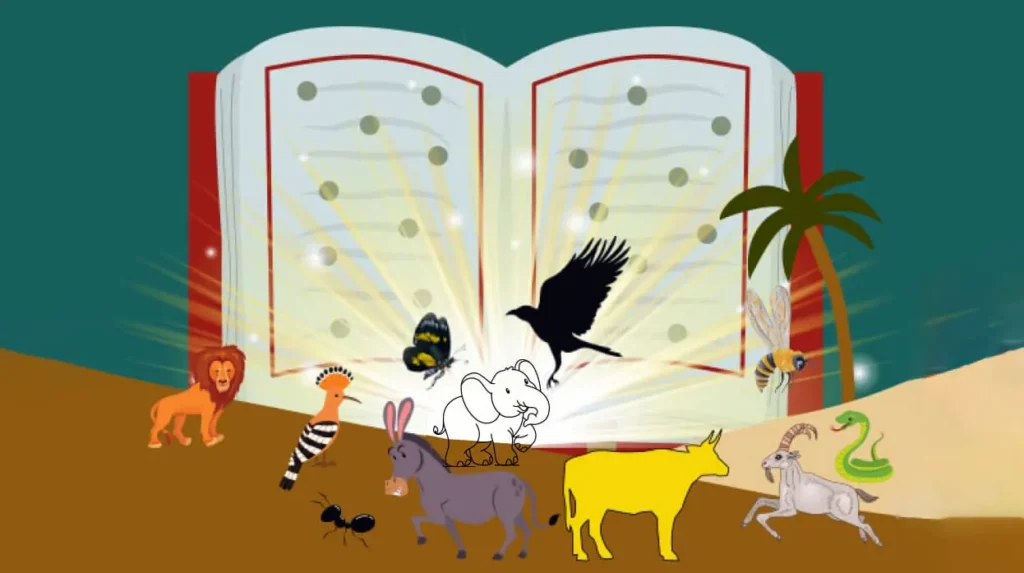
| The Quran mentions over 21 animals by name, each carrying spiritual, legal, or moral significance within its context. |
| Six Quranic surahs are named after animals: Al-Baqarah (cow), Al-An’am (cattle), An-Nahl (bee), An-Naml (ant), Al-‘Ankabut (spider), and Al-Fil (elephant). |
| The smallest animal mentioned in the Quran is the mosquito, cited in Surah Al-Baqarah 2:26 as an example of Allah’s purposeful creation. |
| Many Quranic animals appear in stories of the Prophets, making them essential reference points for Tafsir and Islamic Studies students. |
The Quran is not merely a book of rulings — it is a living conversation between Creator and creation. Among its most striking features is how frequently Allah draws human attention to the animal world as a source of signs, lessons, and legal guidance.
From the majestic elephant that Allah destroyed to protect the Ka’bah, to the tiny ant that warned her colony against Sulayman’s army, animals mentioned in the Quran carry weight far beyond the natural world.
Table of Contents:
What Are the Animals Mentioned in the Quran?
The Quran mentions more than 21 distinct animals by name. These include livestock, insects, birds, aquatic creatures, and wild animals — each referenced in a specific context: a parable, a legal ruling, a prophetic miracle, or a sign of Allah’s power.
No animal is mentioned without purpose; every reference serves the Quran’s overarching message of Tawhid, accountability, and gratitude.
The animals range from the largest land creatures to the smallest insects. Some lend their names to entire surahs.
Others appear in a single ayah to make a profound theological point. Together, they form one of the most remarkable natural tapestries of meaning in any scripture.
List of Animals Mentioned in the Quran
Below is a structured list of the animals named in the Quran, each with its relevant verse. Where an animal appears across multiple surahs, we cite its most prominent or first occurrence.
1. Al-Baqarah — The Cow (البقرة)
The cow is one of the most extensively discussed animals in the Quran, giving its name to the longest surah.
The story of Bani Isra’il being commanded to slaughter a specific cow illustrates the consequences of excessive questioning and deliberate obstruction of divine commands.
وَإِذْ قَالَ مُوسَىٰ لِقَوْمِهِ إِنَّ اللَّهَ يَأْمُرُكُمْ أَن تَذْبَحُوا بَقَرَةً
Wa-idh qāla Mūsā liqawmihi inna Allāha ya’murukum an tadhbaḥū baqaratan
“And when Moses said to his people, ‘Indeed, Allah commands you to slaughter a cow.'” (Al-Baqarah 2:67)
The cow here is the vehicle through which Allah tested whether Bani Isra’il would obey a command without conditions.
2. Al-An’am — Cattle/Livestock (الأنعام)
The word An’am refers collectively to camels, cattle, sheep, and goats — the four categories of halal livestock. Surah Al-An’am takes its name from the extensive discussion of these animals and the pagan Arab practices surrounding them.
وَمِنَ الْأَنْعَامِ حَمُولَةً وَفَرْشًا ۚ كُلُوا مِمَّا رَزَقَكُمُ اللَّهُ
Wa minal-an’āmi ḥamūlatan wa farshan, kulū mimmā razaqakumu Allāh
“And of the grazing livestock are those for transport and those [too] small. Eat of what Allah has provided for you.” (Al-An’am 6:142)
This verse follows a broader passage refuting pagan superstitions about which animals were forbidden — an important context for Fiqh of halal and haram.
3. An-Nahl — The Bee (النحل)
The bee receives one of the most detailed and scientifically remarkable descriptions in the Quran. Allah uses the wahy (divine inspiration) given to the bee as a parallel to prophetic revelation — a profound theological connection.
وَأَوْحَىٰ رَبُّكَ إِلَى النَّحْلِ أَنِ اتَّخِذِي مِنَ الْجِبَالِ بُيُوتًا وَمِنَ الشَّجَرِ وَمِمَّا يَعْرِشُونَ
Wa awḥā rabbuka ilā al-naḥli ani-ttakhidhī minal-jibāli buyūtan wa minash-shajari wa mimmā ya’rishūn
“And your Lord inspired to the bee, ‘Take for yourself among the mountains, houses, and among the trees and [in] that which they construct.'” (An-Nahl 16:68)
Note that the Arabic verb ittakhidhī uses the feminine singular form, accurately reflecting the biological reality that worker bees are female — a linguistic precision often highlighted in Tajweed and Tafsir circles.
4. An-Naml — The Ant (النمل)
The ant appears in the story of Prophet Sulayman (عليه السلام), and one particular ant speaks — warning her colony to move aside before the Prophet’s army unknowingly crushes them. This single ant’s words reflect awareness, concern, and even a form of praise for Sulayman’s justice.
قَالَتْ نَمْلَةٌ يَا أَيُّهَا النَّمْلُ ادْخُلُوا مَسَاكِنَكُمْ لَا يَحْطِمَنَّكُمْ سُلَيْمَانُ وَجُنُودُهُ
Qālat namlatun yā ayyuhan-namlu udkhulū masākinakum lā yaḥṭimannakum Sulaymānu wa junūduhu
“An ant said, ‘O ants, enter your dwellings that you not be crushed by Solomon and his soldiers.'” (An-Naml 27:18)
In our Buruj’s Tafseer Al-Quran Course sessions, students are often moved to discover that Sulayman (عليه السلام) smiled at these words — demonstrating a Prophet’s mercy toward even the smallest of creatures.
Begin Understanding Quran With a FREE Trial in
Buruj’s Tafseer Al-Quran Course
5. Al-‘Ankabut — The Spider (العنكبوت)
The spider’s web is used in the Quran as a metaphor for fragile, false protection — specifically in the context of those who take protectors other than Allah. Despite appearing structurally elaborate, the web cannot withstand even the slightest force.
مَثَلُ الَّذِينَ اتَّخَذُوا مِن دُونِ اللَّهِ أَوْلِيَاءَ كَمَثَلِ الْعَنكَبُوتِ اتَّخَذَتْ بَيْتًا
Mathalu alladhīna ittakhadhū min dūnillāhi awliyā’a kamathali al-‘ankabūti ittakhadhat baytan
“The example of those who take allies other than Allah is like that of the spider who takes a home.” (Al-‘Ankabut 29:41)
The Arabic uses the feminine form ittakhadhat, consistent with the biological fact that it is the female spider who builds the web.
6. Al-Fil — The Elephant (الفيل)
The elephant is the centerpiece of one of the shortest and most powerful surahs in the Quran, describing the destruction of Abraha’s army that marched on Makkah with war elephants.
The entire army was obliterated by small birds carrying stones — a miracle that occurred in the year of the Prophet’s birth.
أَلَمْ تَرَ كَيْفَ فَعَلَ رَبُّكَ بِأَصْحَابِ الْفِيلِ
Alam tara kayfa fa’ala rabbuka bi-aṣḥābil-fīl
“Have you not considered how your Lord dealt with the companions of the elephant?” (Al-Fil 105:1)
The elephant here represents worldly military power — completely neutralized by divine intervention through the smallest of creatures, the Ababil birds.
7. Al-Ababil — The Birds (أبابيل)
Mentioned in the same surah as the elephant, the Ababil are small birds that Allah sent to destroy Abraha’s army. They carried stones of baked clay — sijjīl — and reduced an entire military force to something resembling eaten straw.
وَأَرْسَلَ عَلَيْهِمْ طَيْرًا أَبَابِيلَ تَرْمِيهِم بِحِجَارَةٍ مِّن سِجِّيلٍ
Wa arsala ‘alayhim ṭayran abābīl, tarmīhim biḥijāratin min sijjīl
“And He sent against them birds in flocks, striking them with stones of hard clay.” (Al-Fil 105:3–4)
Students learning to read the Quran for the first time often encounter Surah Al-Fil early — its vivid imagery makes it among the most memorable of the short surahs.
8. Al-Hudhud — The Hoopoe Bird (الهدهد)
The hoopoe appears in Surah An-Naml as an intelligent messenger bird in the service of Prophet Sulayman (عليه السلام). It brought him news of the Queen of Sheba (Bilqis) and her kingdom’s worship of the sun — demonstrating remarkable awareness and loyalty.
فَقَالَ أَحَطتُ بِمَا لَمْ تُحِطْ بِهِ وَجِئْتُكَ مِن سَبَإٍ بِنَبَإٍ يَقِينٍ
Fa-qāla aḥaṭtu bimā lam tuḥiṭ bihi wa ji’tuka min Saba’in bi-naba’in yaqīn
“But the hoopoe said, ‘I have encompassed [in knowledge] that which you have not encompassed, and I have come to you from Sheba with certain news.'” (An-Naml 27:22)
This ayah is a powerful lesson in humility — even a Prophet receives correction and new knowledge from a bird.
Discover the Buruj Academy Difference
Step into our virtual classrooms and see how our expert instructors make learning Quran and Arabic intuitive and clear. We focus on overcoming the specific hurdles non-native speakers face, building your confidence and connection with the Quran.
9. Al-Ghurab — The Crow/Raven (الغراب)
The crow appears in the story of Habil and Qabil (the sons of Adam), when Allah sent a crow to scratch the earth — teaching Qabil how to bury the body of his murdered brother. It is the first recorded instance of burial in human history.
فَبَعَثَ اللَّهُ غُرَابًا يَبْحَثُ فِي الْأَرْضِ لِيُرِيَهُ كَيْفَ يُوَارِي سَوْءَةَ أَخِيهِ
Faba’atha Allāhu ghurāban yabḥathu fī al-arḍi liuriyahu kayfa yuwārī saw’ata akhīh
“So Allah sent a crow searching in the ground to show him how to hide the disgrace of his brother.” (Al-Ma’idah 5:31)
The crow here serves as a teacher sent by Allah — an unexpected vehicle of guidance in a moment of grief and confusion.
10. Al-Himar — The Donkey (الحمار)
The donkey appears in two significant Quranic contexts: as an example of the harshest of voices (its braying) in Surah Luqman, and in the story of ‘Uzayr (عليه السلام), whose donkey’s bones Allah resurrected before his eyes as a sign.
إِنَّ أَنكَرَ الْأَصْوَاتِ لَصَوْتُ الْحَمِيرِ
Inna ankara al-aṣwāti laṣawtu al-ḥamīr
“Indeed, the most disagreeable of sounds is the voice of donkeys.” (Luqman 31:19)
Luqman uses this image to discourage arrogance and loudness — contextualizing the donkey’s bray as the antithesis of dignified speech.
Read also: Foods Mentioned in the Quran
11. Al-Khinzir — The Pig (الخنزير)
The pig is one of the four categories explicitly prohibited for consumption in the Quran, appearing in four separate surahs. Its prohibition is categorical and unconditional — one of the clearest dietary rulings in Islamic law.
حُرِّمَتْ عَلَيْكُمُ الْمَيْتَةُ وَالدَّمُ وَلَحْمُ الْخِنزِيرِ
Ḥurrimat ‘alaykumu al-maytatu wa al-damu wa laḥmu al-khinzīr
“Prohibited to you are dead animals, blood, the flesh of swine…” (Al-Ma’idah 5:3)
This ruling is among the first legal boundaries students encounter in Buruj’s Islamic Studies Classes — its repetition across four surahs underscores its absolute nature.
Begin Your Islamic Knowledge Journey With a FREE Trial Lesson
12. Al-Asad — The Lion
The lion appears in Surah Al-Muddaththir as part of a vivid description of the disbeliever fleeing from the truth — like a wild donkey startled by a lion. The image captures the instinctive, irrational aversion to divine guidance.
كَأَنَّهُمْ حُمُرٌ مُّسْتَنفِرَةٌ فَرَّتْ مِن قَسْوَرَةٍ
Ka’annahum ḥumurun mustanfirah, farrat min qaswara
“As if they were alarmed donkeys fleeing from a lion.” (Al-Muddaththir 74:50–51)
The word qaswara is used here — a classical Arabic term for lion — demonstrating the Quran’s use of elevated, precise vocabulary.
13. Al-Kalb — The Dog (الكلب)
The dog is mentioned in Surah Al-Kahf in the story of the People of the Cave (Ashab al-Kahf). The companions’ faithful dog guarded the entrance of the cave during their miraculous sleep — its loyalty earning it a place in one of the Quran’s most beloved narratives.
وَكَلْبُهُم بَاسِطٌ ذِرَاعَيْهِ بِالْوَصِيدِ
Wa kalbuhum bāsiṭun dhirā’ayhi bil-waṣīd
“And their dog stretching his forelegs at the entrance.” (Al-Kahf 18:18)
The dog’s posture here — alert, protective, loyal — has been noted by classical scholars as one of the most tender animal descriptions in the entire Quran.
Excel in Your Quranic Studies
Join Buruj Academy and master the Quran with our structured, professional curriculum.
Book Your Free Trial14. Al-Khayl — The Horse
Horses are mentioned in the Quran with reverence, both as signs of Allah’s provision and as instruments of warfare.
وَٱلْخَيْلَ وَٱلْبِغَالَ وَٱلْحَمِيرَ لِتَرْكَبُوهَا وَزِينَةً ۚ وَيَخْلُقُ مَا لَا تَعْلَمُونَ
“And [He created] the horses, mules and donkeys for you to ride and [as] adornment. And He creates that which you do not know” (An-Nahl 16:8)
Surah Al-‘Adiyat opens with a powerful oath sworn by galloping war horses — their breath, their sparks, and their dust all invoked as witnesses.
وَالْعَادِيَاتِ ضَبْحًا
Wal-‘ādiyāti ḍabḥā
“By the racers, panting.” (Al-‘Adiyat 100:1)
The sound ḍabḥ refers specifically to the snorting breath of a galloping horse — a level of auditory precision that rewards students who study Tajweed for beginnersand develop sensitivity to Quranic sound.
15. Al-Ba’uda — The Mosquito (البعوضة)
The mosquito is widely regarded as the smallest animal mentioned in the Quran, cited as an example of Allah’s purposeful creation. Its mention in Surah Al-Baqarah directly addresses those who mock divine parables for using “insignificant” creatures as examples.
إِنَّ اللَّهَ لَا يَسْتَحْيِي أَن يَضْرِبَ مَثَلًا مَّا بَعُوضَةً فَمَا فَوْقَهَا
Inna Allāha lā yastaḥyī an yaḍriba mathalan mā ba’ūḍatan famā fawqahā
“Indeed, Allah is not timid to present an example — that of a mosquito or what is smaller than it.” (Al-Baqarah 2:26)
The phrase famā fawqahā — “or what is even smaller” — suggests that Allah’s parables extend to creatures beyond human perception, a remarkable statement for a 7th-century text.
16. Al-Dabbah — The Beast of the Earth (الدابة)
The Dabbah is a creature from the eschatological signs of the Hour — a massive beast that will emerge from the earth and speak to humanity, distinguishing believers from disbelievers. Its nature remains largely unknown beyond the Quranic description.
وَإِذَا وَقَعَ الْقَوْلُ عَلَيْهِمْ أَخْرَجْنَا لَهُمْ دَابَّةً مِّنَ الْأَرْضِ تُكَلِّمُهُمْ
Wa idhā waqa’a al-qawlu ‘alayhim akhrajnā lahum dābbatan minal-arḍi tukallimuhum
“And when the word comes upon them, We will bring forth for them a creature from the earth speaking to them.” (An-Naml 27:82)
This creature is among the ten major signs of the Day of Judgment mentioned in authentic hadith literature — see Sahih Muslim 2901.
17. Al-Hut — The Whale/Fish (الحوت)
The great fish that swallowed Prophet Yunus (عليه السلام) is one of the most iconic animals in Prophetic history. The Quran refers to it as al-Hut (the fish) and gives Yunus the title Dhul-Nun (Companion of the Whale/Fish).
فَالْتَقَمَهُ الْحُوتُ وَهُوَ مُلِيمٌ
Faltaqamahu al-ḥūtu wa huwa mulīm
“And the fish swallowed him while he was blameworthy.” (As-Saffat 37:142)
Yunus’s supplication from within the whale — “Lā ilāha illā anta, subḥānaka, innī kuntu minaẓ-ẓālimīn” — remains one of the most powerful duas of Prophetic repentance.
18. Al-Dhi’b — The Wolf (الذئب)
The wolf features prominently in the story of Prophet Yusuf (عليه السلام). His brothers used a fabricated wolf attack to explain his disappearance to their father Ya’qub (عليه السلام), but Ya’qub’s response — placing his trust in Allah — became a timeless model of patient faith.
قَالُوا يَا أَبَانَا إِنَّا ذَهَبْنَا نَسْتَبِقُ وَتَرَكْنَا يُوسُفَ عِندَ مَتَاعِنَا فَأَكَلَهُ الذِّئْبُ
Qālū yā abānā innā dhahabnā nastabiqu wa taraknā Yūsufa ‘inda matā’inā fa-akalahu al-dhi’b
“They said, ‘O our father, indeed we went racing each other and left Joseph with our possessions, and a wolf ate him.'” (Yusuf 12:17)
The wolf’s mention here is a human lie — yet Allah includes it in the Quran as part of the full, truthful record of events.
Understanding these verses in their full context is one of the topics covered in depth through Buruj Academ Online Quran Classes for Beginners ,taught by Al-Azhar graduates with 9+ years of formal Islamic studies education.
Begin Learning Quran With a FREE Trial Lesson
Is Animal Sacrifice Mentioned in the Quran?
Animal sacrifice is explicitly mentioned in the Quran in two primary locations. The first is Surah Al-Hajj, which connects the sacrificial animals (budn — large livestock) directly to Taqwa (God-consciousness).
The second is Surah Al-Kawthar, where Allah commands the Prophet to offer sacrifice as an act of gratitude.
فَصَلِّ لِرَبِّكَ وَانْحَرْ
Faṣalli li-rabbika wa-inḥar
“So pray to your Lord and sacrifice [to Him alone].” (Al-Kawthar 108:2)
The Quran makes clear that the flesh and blood of sacrificed animals do not reach Allah — only the Taqwa behind the act reaches Him:
لَن يَنَالَ اللَّهَ لُحُومُهَا وَلَا دِمَاؤُهَا وَلَٰكِن يَنَالُهُ التَّقْوَىٰ مِنكُمْ
Lan yanāla Allāha luḥūmuhā wa lā dimā’uhā wa lākin yanāluhu at-taqwā minkum
“Their meat will not reach Allah, nor will their blood, but what reaches Him is piety from you.” (Al-Hajj 22:37)
Which Is the Biggest Animal Mentioned in the Quran?
The biggest animal mentioned in the Quran is generally considered to be the whale (al-Hut) that swallowed Prophet Yunus (عليه السلام), though the elephant (al-Fil) is also a strong candidate for the largest land animal referenced.
Among eschatological creatures, the Dabbah (Beast of the Earth) is described in terms that suggest extraordinary size, though its nature is from the unseen (ghayb).
In terms of symbolic weight and narrative space, the whale carries the greatest theological significance among large animals — it held a Prophet within it for an extended period, becoming the setting for one of the Quran’s most powerful prayers of repentance.
Read also: How Many Times Is Moses Mentioned in the Quran?
How Many Animals Are Mentioned in the Quran?
Scholars of Tafsir and Quranic linguistics estimate that over 21 distinct animals are mentioned by name in the Quran, though the precise number varies slightly depending on whether one counts generic terms (like ṭayr — birds) as a single category or includes each specific species. The following table summarizes the main categories:
| Category | Examples | No. of Animals (Approx.) |
| Livestock (An’am) | Cow, camel, sheep, goat | 4 |
| Birds | Hoopoe, crow, Ababil, salwa (quail) | 4+ |
| Insects | Bee, ant, mosquito, locust, louse | 5 |
| Aquatic | Whale/fish | 1+ |
| Wild Animals | Lion, wolf, donkey, dog, horse | 5+ |
| Reptiles | Snake, louse | 2 |
| Eschatological | Dabbah | 1 |
| Mentioned incidentally | Spider, worm, elephant | 3+ |
This count is drawn from classical Tafsir sources and reflects the broad scholarly consensus.
Students who want to study these animals in their full Tafsir context benefit greatly from structured Quranic study — the kind offered through Buruj Academy’s Quran Recitation course, where understanding the meaning of what you recite is built alongside proper pronunciation.
Book your first FREE recitation lesson
Start Learning the Quran with Buruj Academy’s Expert Teachers
The animals mentioned in the Quran are far more than zoological references — they are ayat, signs, woven into the fabric of divine guidance. Studying them properly requires a teacher, a method, and a structured path.
At Buruj Academy, our Quran Reading course and Online Islamic Studies Classes are taught by Al-Azhar University graduates and Ijazah-certified instructors with 12+ years of experience teaching non-Arabic speakers globally.
We use the Buruj Method — meaning-before-memorization, context-before-abstraction — so students understand what they are reciting, not just how.
Whether you are reading the Quran for the first time or deepening your Tafsir knowledge, personalized 1-on-1 sessions with flexible scheduling make consistent progress possible.
Book your free trial lesson today and begin studying the Quran with the depth it deserves.
Take the next step in your learning journey today by enrolling in one of our specialized programs:
- Online Quran Classes
- Online Quran Classes for Beginners
- Online Quran Classes for Adults
- Online Quran Classes for Ladies
- Online Quran Classes for Kids
- Quran Reading Course
- Quran Recitation Course
- Online Ijazah Course
- Online Qirat Course
Don’t wait to transform your relationship with the Holy Quran. Join our global community of students and book your free evaluation session now!
Excel in Your Quranic Studies
Join Buruj Academy and master the Quran with our structured, professional curriculum.
Book Your Free TrialConclusion
The animals mentioned in the Quran span insects and elephants, domesticated livestock and eschatological creatures — each placed with precision to carry a specific meaning.
From the mosquito that silences mockery to the whale that held a Prophet in its depths, Allah’s choice of these creatures as signs and parables reflects the Quran’s extraordinary range and purposefulness.
Recognizing these animals by name and context transforms recitation into a richer act of understanding. And that understanding, built consistently over time with qualified guidance, is exactly what we work toward with every student at Buruj Academy — Insha’Allah.
Frequently Asked Questions About Animals Mentioned in the Quran
How Many Animals Are Mentioned in the Quran?
More than 21 distinct animals are mentioned by name in the Quran, according to the estimates of classical Tafsir scholars. The exact count varies slightly depending on whether generic terms like ṭayr (birds) are counted as one category or broken into specific species. Every animal mentioned carries specific theological or legal significance.
What Is the Smallest Animal Mentioned in the Quran?
The smallest animal explicitly named in the Quran is the mosquito (ba’ūḍah), mentioned in Surah Al-Baqarah 2:26. Allah uses it to assert that no creature is too insignificant to serve as a parable. The verse even extends further — “or what is smaller than it” — suggesting creatures beyond normal human perception.
Which Animals Have Entire Surahs Named After Them?
Six surahs are named after animals: Al-Baqarah (The Cow, Surah 2), Al-An’am (The Cattle, Surah 6), An-Nahl (The Bee, Surah 16), An-Naml (The Ant, Surah 27), Al-‘Ankabut (The Spider, Surah 29), and Al-Fil (The Elephant, Surah 105). Each surah’s name reflects a core theme or narrative within it.
Is the Dog Considered Impure in the Quran?
The Quran does not explicitly rule the dog impure (najis). The dog in Surah Al-Kahf is mentioned respectfully as a faithful companion. The Fiqh rulings on dogs — particularly regarding their saliva — derive primarily from hadith, not the Quran directly.
What Animals Are Related to the Stories of the Prophets?
Many animals are directly tied to Prophetic narratives: the whale (Yunus), the ram (Ibrahim), the cow (Musa/Bani Isra’il), the hoopoe and ant (Sulayman), the wolf (Yusuf), the crow (Adam’s sons), and the camel of Salih (عليه السلام). Studying these animals in their narrative context is one of the most effective ways to connect with Quran memorization on a deeper, meaning-driven level.