 Arabic
| Key Takeaways |
| An Arabic quiz for kids reinforces letter recognition, vocabulary, and basic grammar through active recall rather than passive study. |
| Quizzes structured by skill level — alphabet, numbers, vocabulary, sentences — match a child’s natural learning progression in Arabic. |
| Arabic alphabet quizzes should test letter shapes, sounds, and forms (initial, medial, final) to build complete recognition. |
| Regular short quizzes of 5–10 questions outperform long infrequent tests for children’s Arabic retention and confidence. |
| Combining visual, auditory, and written quiz formats reflects how young learners best absorb and retain Arabic knowledge. |
Getting kids excited about Arabic can feel like a challenge — especially when learning feels like sitting still with a textbook. The most effective learning, in our experience, happens when children are doing something active with the language.
A well-designed Arabic quiz for kids turns review into play. When children answer questions, make guesses, and get instant feedback, they build real Arabic confidence — whether they are total beginners tackling the alphabet or intermediate students forming full sentences.
Table of Contents:
1. Arabic Letters Quiz
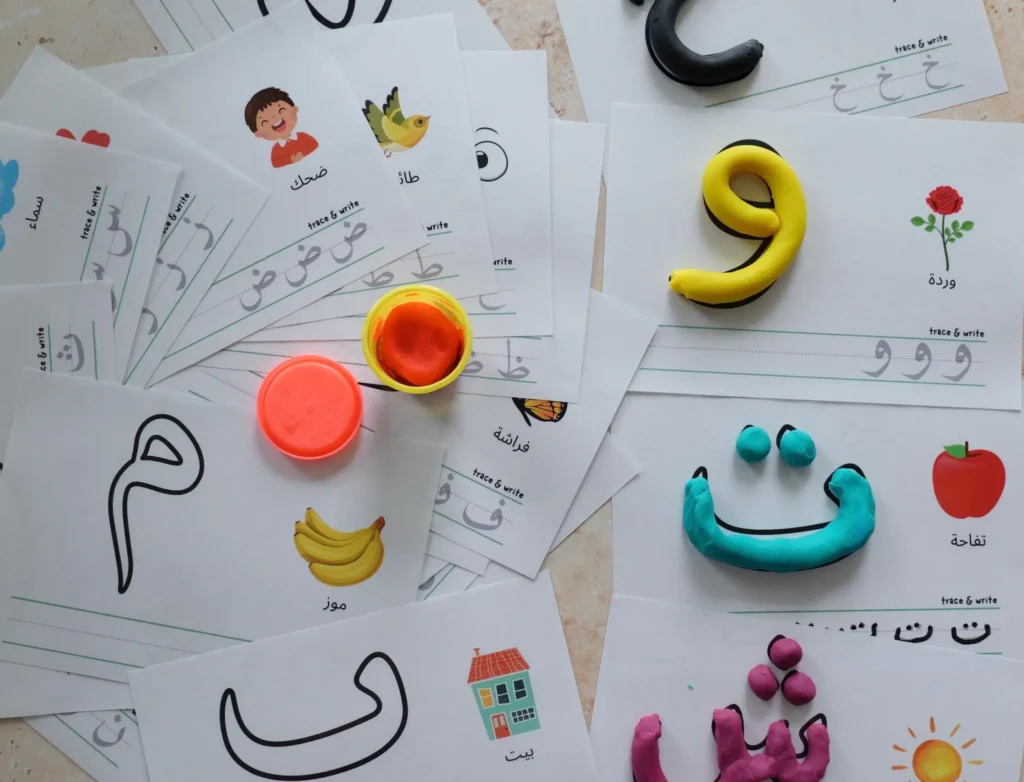
An Arabic letters quiz tests whether a child recognises each letter’s shape, name, and sound. This is the foundation of everything in Arabic — reading, writing, and Quran recitation all begin here.
Children should be able to identify all 28 Arabic letters before moving to vocabulary and sentences.
Try these questions, young learner — say your answer out loud before checking!
What Arabic Letter Is This? (Shape Recognition)
| Question | Answer |
| Which letter looks like a small tooth with one dot below it? | ب (Baa) |
| Which letter looks like a bowl with three dots above it? | ث (Thaa) |
| Which letter looks like a stretched loop with a long curved tail? | ص (Saad) |
| Which letter looks like a small hook facing left? | و (Waaw) |
What Sound Does This Letter Make?
Look at each letter below and say its sound aloud:
| Letter | Its Sound (Transliteration) |
| ا | “aa” — long A sound |
| م | “m” — like “mum” |
| ن | “n” — like “now” |
| ر | “r” — rolled, like a soft “r” |
| ل | “l” — like “lamp” |
How Many Letters Are in the Arabic Alphabet?
Can you answer without looking?
- Is it 24 letters?
- Is it 26 letters?
- Is it 28 letters?
- Is it 30 letters?
Answer: The Arabic alphabet has 28 letters. Well done if you got it right!
If your child is still building letter confidence, our guide on learning the Arabic alphabet for kids walks through each letter step by step with visual examples.
At Buruj Academy, our Online Arabic Classes for Kids begin with systematic letter mastery before introducing any vocabulary — because a child who truly knows each letter learns words three times faster than one who skips ahead.
Our Al-Azhar-trained instructors have seen this pattern consistently over 12+ years of teaching.
Book a FREE Arabic trial for your Child
2. Arabic Alphabet Quiz
The arabic alphabet quiz gets more interesting when we test letter forms. In Arabic, most letters change their shape depending on where they appear in a word — at the beginning, in the middle, or at the end. This is one of the first things we test with our beginners at Buruj Academy.
Match the Letter to Its Position
Look at the table below. Can you fill in the missing forms?
| Letter Name | Isolated Form | Initial Form | Medial Form | Final Form |
| Baa | ب | بـ | ـب | |
| Ain | ع | ـعـ | ـع | |
| Fa | ف | فـ | ـفـ |
Quiz Question: Which form of the letter do you use when it appears in the MIDDLE of a word?
Answer: The medial form — it connects to letters on both sides.
True or False: Arabic Letter Forms
Read each statement and decide — True or False?
- Every Arabic letter has four different forms. → False — some letters only have two forms because they do not connect on the left side (like ا, د, ذ, ر, ز, و).
- The letter ع has a medial form that looks like a small figure-eight on its side. → True
- Letters always look exactly the same no matter where they appear in a word. → False
Which Letters Do NOT Connect to the Letter After Them?
Challenge question: There are 6 letters in Arabic that only connect on the right side. Can you name any of them?
Answer: The six “non-connecting” letters are: ا، د، ذ، ر، ز، و
Give yourself a star if you remembered even two of them!
For more on how the alphabet works in reading, explore our detailed article on how to learn the Arabic alphabet.
3. Arabic Quiz for Numbers and Counting
Arabic numbers are fascinating because they are written left to right — opposite to Arabic text! This section of the Arabic quiz tests whether young learners can recognise and use Arabic numerals correctly.
What Number Is This?
| Arabic Numeral | What Number Is It? |
| ٣ | |
| ٧ | |
| ١٠ | |
| ٥ | |
| ٩ |
Quiz Question: How do you write the number 8 in Arabic numerals?
Answer: ٨
Count and Answer
- A child has ٤ apples and gets ٣ more. How many does he have? → ٧ (seven)
- How do you say “one” in Arabic? → واحد (Waahid)
- How do you say “ten” in Arabic? → عشرة (Ashara)
Head to our article on Arabic numbers for kids for a full guided breakdown with visuals and practice activities.
4. Arabic Vocabulary Quiz for Beginners
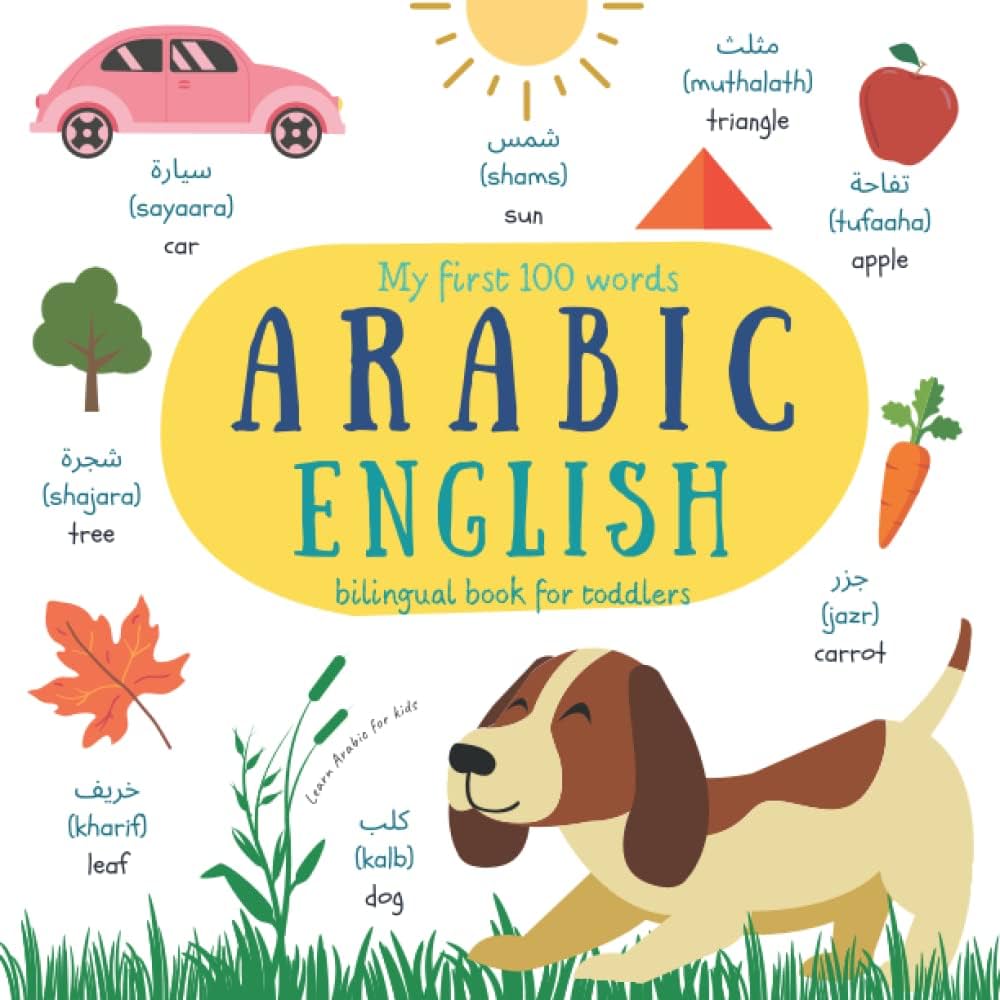
This section is the heart of the Arabic quiz for beginners — testing the most common Arabic words children learn in their early lessons. We focus on concrete, everyday vocabulary that children can see, touch, and use.
Animals in Arabic — Do You Know These?
| English Word | Arabic Word | Can You Say It? |
| Cat | قِطَّة (Qitta) | ✅ Try it! |
| Dog | كَلْب (Kalb) | ✅ Try it! |
| Bird | طَائر (Ta’ir) | ✅ Try it! |
| Fish | سَمَكَة (Samaka) | ✅ Try it! |
| Lion | أَسَد (Asad) | ✅ Try it! |
Read also: The Best Quranic Games for Kids
Colours in Arabic — What Colour Is It?
| Colour | Arabic |
| Red | أَحْمَر (Ahmar) |
| Blue | أَزْرَق (Azraq) |
| Green | أَخْضَر (Akhdar) |
| Yellow | أَصْفَر (Asfar) |
| White | أَبْيَض (Abyad) |
Quiz Question: What is the Arabic word for “green”? Say it before you look!
Answer: أَخْضَر (Akhdar)
Master the Arabic Language
Join our expert-led courses and build a strong foundation in Classical and Modern Arabic.
Get Your Free TrialFamily Members in Arabic
| English | Arabic | Transliteration |
| Mother | أُمّ | Umm |
| Father | أَب | Ab |
| Brother | أَخ | Akh |
| Sister | أُخْت | Ukht |
| Grandfather | جَدّ | Jadd |
Quiz: How do you say “my mother” in Arabic? Add the word أُمّ — what possessive ending do you attach for “my”?
Answer: أُمِّي (Ummī) — add a yaa (ي) at the end to mean “my.”
Our article on Arabic words for kids has a rich vocabulary list to extend this practice further.
Buruj Academy’s Online Arabic Classes for Kids introduce vocabulary through themed units — animals, family, home, school — ensuring children build a connected mental picture of each word rather than isolated memorisation.
Book a FREE Arabic trial for your child
5. Arabic Sentences Quiz
Once vocabulary is in place, the next step is forming real sentences. This section of the Arabic quiz questions and answers focuses on basic sentence structure — one of the most exciting milestones for young Arabic learners.
Translate These Simple Sentences into English
- هَذَا كِتَابٌ. (Haatha kitaabun.) → “This is a book.”
- الْبَيْتُ كَبِيرٌ. (Al-baytu kabeerun.) → “The house is big.”
- أَنَا طَالِبٌ. (Anaa taalibun.) → “I am a student.”
Did you get them right? Alhamdulillah if you did — you are reading Arabic sentences!
Fill in the Blank
Complete each sentence by choosing the correct word:
- أَنَا _______ صَغِيرٌ. (I am a small ___.) → وَلَدٌ (waladun — boy) or بِنْتٌ (bintun — girl)
- هَذِهِ _______ جَمِيلَةٌ. (This ___ is beautiful.) → زَهْرَةٌ (zahratun — flower)
- الْقِطَّةُ _______ الْكُرْسِيِّ. (The cat is on the ___.) → عَلَى (alaa — on top of)
Which Word Comes First in an Arabic Sentence?
Quiz Question: In a basic Arabic sentence like “The book is big,” what comes first — the subject or the adjective?
Answer: In Arabic, the subject comes first, then the describing word. الْكِتَابُ كَبِيرٌ — “The book (is) big.” Arabic does not use the word “is” in present-tense sentences — it is implied!
For young learners building sentence skills, our article on Arabic sentences for kids provides age-appropriate practice with full explanations.
6. Arabic Quiz Questions and Answers — Islamic and Quranic Vocabulary
For Muslim children learning Arabic, connecting the language to the Quran and Islamic phrases makes every lesson more meaningful. This section combines language learning with the words children already hear daily.
Do You Know These Islamic Arabic Phrases?
| Phrase | Arabic | Meaning |
| Praise be to Allah | الْحَمْدُ لِلَّهِ | Alhamdulillah |
| In the name of Allah | بِسْمِ اللَّهِ | Bismillah |
| Allah willing | إِنْ شَاءَ اللَّهُ | Insha’Allah |
| Glory be to Allah | سُبْحَانَ اللَّهِ | SubhanAllah |
Quiz: What does الْحَمْدُ لِلَّهِ mean? Say the answer out loud!
What Surah Starts with These Words?
بِسْمِ اللَّهِ الرَّحْمَٰنِ الرَّحِيمِ الْحَمْدُ لِلَّهِ رَبِّ الْعَالَمِينَ
Bismillāhir-rahmānir-rahīm. Al-hamdu lillāhi rabbil-‘ālamīn.
“In the name of Allah, the Entirely Merciful, the Especially Merciful. All praise is due to Allah, Lord of all the worlds.” (Al-Fatihah 1:1–2)
Answer: This is Surah Al-Fatihah — the opening chapter of the Quran. Masha’Allah if you already knew that!
Quiz Question: What does the word رَبّ (Rabb) mean in Arabic?
Answer: Lord or Sustainer — the One who created and takes care of everything.
For a focused path toward Quranic understanding, explore Buruj Academy’s Quranic Arabic Course for Kids.
Try Buruj’s Quranic Arabic Course for Kids for free now
7. Mixed Arabic Quiz
This final section is a mixed Arabic quiz pulling together everything from previous sections. It works as a fun challenge for children who have completed the earlier rounds — or as a quick placement test before starting formal lessons.
Quick-Fire Round: Answer in 5 Seconds!
- How many letters in the Arabic alphabet? → 28
- What is the Arabic word for “mother”? → أُمّ
- What colour is أَزْرَق? → Blue
- How do you write the number 5 in Arabic numerals? → ٥
- What letter comes after ب (Baa) in the alphabet? → ت (Taa)
- What does SubhanAllah mean? → Glory be to Allah
- Does Arabic read right to left or left to right? → Right to left
- What is the Arabic word for “book”? → كِتَاب (Kitaab)
Score Your Child
| Score | Result |
| 7–8 correct | Masha’Allah! Excellent Arabic knowledge — ready for the next level! |
| 5–6 correct | Very good — keep practising those tricky spots! |
| 3–4 correct | Good effort — a little more daily review will help a lot. |
| 0–2 correct | Just getting started — Insha’Allah, with regular lessons you will shine! |
Read also: 5 Pillars of Islam for Kids
Discover the Buruj Academy Difference
Step into our virtual classrooms and see how our expert instructors make learning Quran and Arabic intuitive and clear. We focus on overcoming the specific hurdles non-native speakers face, building your confidence and connection with the Quran.
Start Your Child’s Arabic Learning with Buruj Academy’s Expert Instructors
Quizzes like these reveal exactly where a child stands — and what they need next. Buruj Academy’s Online Arabic Classes for Kids go beyond practice questions, offering structured, progressive Arabic learning taught by Al-Azhar University graduates with 12+ years of experience teaching non-Arabic speaking children.
Our instructors use the Buruj Method — context-before-abstraction — so children understand what they are learning, not just memorise it.
Sessions are personalised 1-on-1, scheduled flexibly, and designed to build genuine confidence.
Enroll your child in one of our specialized, kid-friendly tracks today:
- Online Quran Classes for Kids
- Tajweed Classes for Kids
- Hifz Classes for Kids
- Online Arabic Classes for Kids
- Quranic Arabic Course for Kids
- Noorani Qaida Course for Kids
- Islamic Studies Classes for Kids
Ready to watch your child grow in knowledge and character? Join the Buruj Academy family and book a free trial session for your child today!
Book a free trial lesson and watch your child begin their Arabic learning with real expert support.
Master the Arabic Language
Join our expert-led courses and build a strong foundation in Classical and Modern Arabic.
Get Your Free TrialConclusion
An Arabic quiz for kids is far more than a test — it is one of the most effective tools for turning passive exposure into active language knowledge. When children engage with letters, numbers, vocabulary, and sentences through direct questions and instant answers, the language begins to feel real and achievable.
The quiz sections above cover the full progression from alphabet recognition to sentence building and Islamic vocabulary — giving every young learner a clear picture of what they know and what to strengthen next. With consistent guided practice, every child can build a solid Arabic foundation, Insha’Allah.
Frequently Asked Questions About Arabic Quiz for Kids
What Age Is Appropriate to Start an Arabic Quiz for Kids?
Children as young as 3–5 years old can engage with simple Arabic letter quizzes using shapes, sounds, and colours. For vocabulary and sentence quizzes, ages 5–7 tend to be the most receptive. The key is matching the quiz format — visual, oral, or written — to the child’s current developmental stage rather than pushing ahead on age alone.
How Often Should Kids Do an Arabic Quiz to See Progress?
Short quizzes of 5–10 questions done three to four times per week produce noticeably better results than one long weekly test. In our sessions at Buruj Academy, children who review with brief daily activities retain vocabulary 40–50% more effectively than those who review only before a formal lesson. Frequency matters far more than length.
What Is the Best Starting Point for a Complete Beginner Arabic Quiz for Kids?
The Arabic alphabet quiz is always the right starting point for beginners. A child cannot read, write, or memorise Arabic words without first knowing the 28 letters, their sounds, and their basic forms. Our guide on how to learn Arabic for kids outlines the full recommended progression from alphabet to vocabulary to sentences.
How Can I Use an Arabic Quiz to Supplement Online Arabic Classes?
Use quizzes as a review tool after each lesson — not before it. After a class covers a specific topic (such as colours, animals, or numbers), a short quiz the following day reinforces what the instructor taught. At Buruj Academy, our teachers regularly send post-session review questions as part of the personalised learning plan within our Online Arabic Classes for Kids course.