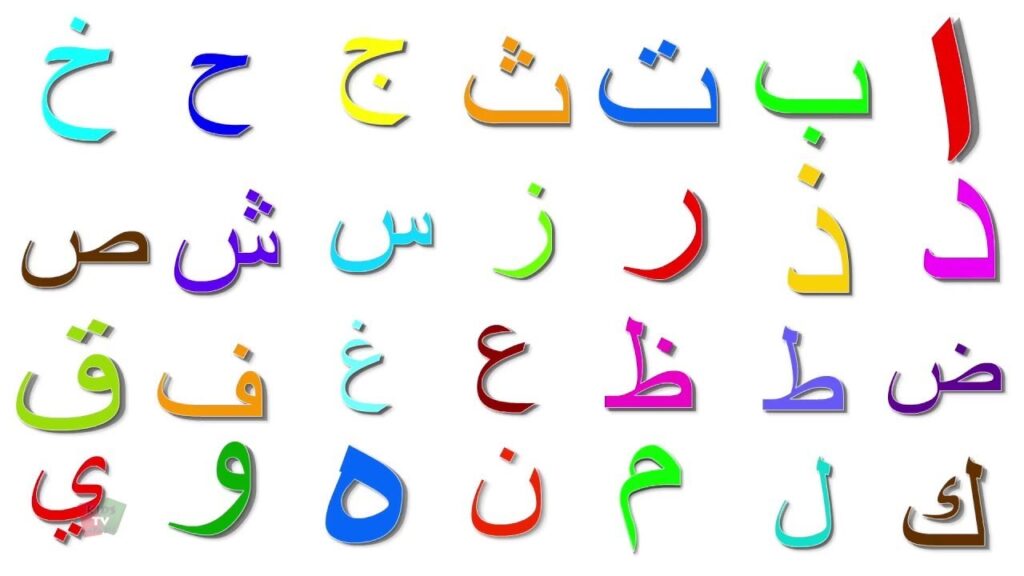
 Arabic
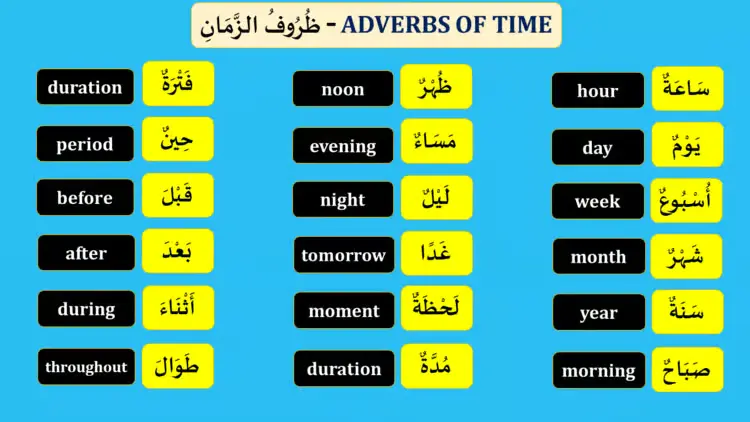
| Key Takeaways |
| Arabic adverbs are grammatically distinct from English adverbs and fall into two main categories: time (ظرف الزمان) and place (ظرف المكان). |
| Arabic adverbs of manner are typically expressed using the ḥāl construction (حال), not standalone adverb words. |
| Most Arabic adverbs are nouns placed in the accusative case (manṣūb), marked by a fatḥah (-a) ending or tanwīn fatḥ (-an). |
| Common Arabic time adverbs like أمس (ams, yesterday), الآن (al-ān, now), and غداً (ghadan, tomorrow) are used identically in both Modern Standard Arabic and everyday spoken Arabic. |
Learners of Arabic quickly discover that not everything translates neatly from English — and adverbs are a perfect example. While English slaps “-ly” onto an adjective and calls it done, Arabic has its own elegant system that ties adverbs directly to grammar and sentence structure.
Adverbs in Arabic are predominantly nouns in disguise — placed in the accusative case to function adverbially. Understanding how they work, and how to use them confidently, is one of the most practical grammar milestones for any learner of Modern Standard Arabic.
Table of Contents:
What Are Adverbs in Arabic?
Arabic adverbs (ẓurūf) are words that answer the questions “when?”, “where?”, or “how?” in a sentence. Most Arabic adverbs are grammatically nouns functioning adverbially — placed in the accusative case (manṣūb), typically marked by a fatḥah (-a) at the end or tanwīn fatḥ (-an).
This is one of the first patterns we highlight in Buruj Academy’s Arabic Grammar Course, because students who understand the case function of adverbs stop treating them as vocabulary items to memorize and start using them correctly in sentences.
The accusative marker is your signal: if you see a word carrying fatḥah that isn’t a direct object, it is likely functioning as a ẓarf.
Arabic grammar divides adverbs into two core types:
| Adverb Type | Arabic | Answers |
| Adverb of Time | ظرف الزمان (ẓarf al-zamān) | When? |
| Adverb of Place | ظرف المكان (ẓarf al-makān) | Where? |
Manner adverbs (expressing how something is done) follow a separate grammatical route — the ḥāl construction — which we cover in its own section below. Understanding this three-way split is the foundation for everything else.
Understand the Arabic Grammar with Buruj’s free trial lesson

What Are the Main Types of Arabic Adverbs with Examples?
Arabic adverbs in Arabic fall into three functional types: time, place, and manner. Each operates differently inside the sentence, and grouping your examples by type — rather than memorizing a random list — is the fastest route to fluency. Here is a structured overview with authentic Arabic examples.
1. Adverbs of Time in Arabic (ظرف الزمان)
Time adverbs answer متى؟ (When?). They are typically placed after the verb in a standard verbal sentence, though they can be fronted for emphasis.
| Arabic | Transliteration | English |
| أمس | ams | yesterday |
| اليوم | al-yawm | today |
| غداً | ghadan | tomorrow |
| الآن | al-ān | now |
| دائماً | dāʾiman | always |
| أحياناً | aḥyānan | sometimes |
| مبكراً | mubakkiran | early |
| أخيراً | akhīran | finally / recently |
| قريباً | qarīban | soon |
Arabic Adverbs of Time Examples
- ذهبتُ إلى المدرسةِ أمس. — I went to school yesterday.
- سأسافرُ غداً إن شاء الله. — I will travel tomorrow, God willing.
- هو يدرسُ الآنَ. — He is studying now.
2. Adverbs of Place in Arabic (ظرف المكان)
Place adverbs answer أين؟ (Where?). Like time adverbs, they take the accusative case.
| Arabic | Transliteration | English |
| هنا | hunā | here |
| هناك | hunāk | there |
| فوقَ | fawqa | above |
| تحتَ | taḥta | below |
| أمامَ | amāma | in front of |
| خلفَ | khalfa | behind |
| يمينَ | yamīna | to the right |
| يسارَ | yasāra | to the left |
| بعيداً | baʿīdan | far away |
| قريباً | qarīban | nearby |
Arabic Adverbs of Place Examples
- الكتابُ فوقَ الطاولةِ. — The book is on top of the table.
- الأولادُ يلعبونَ هناكَ. — The children are playing over there.
- جلستُ أمامَ المعلمِ. — I sat in front of the teacher.
Note that many place adverbs like فوقَ and تحتَ double as prepositions when followed by a noun — making the context of the sentence essential for accurate identification.
How Does the Adverb of Manner Work in Arabic?
The adverb of manner in Arabic does not function like its English equivalent. Rather than adding a suffix to an adjective, Arabic expresses manner through the ḥāl (حال) construction — a noun or phrase in the accusative case that describes the state of the subject or object while the action takes place.
This is one of the most important distinctions for non-Arabic speakers learning Modern Standard Arabic.
In our Arabic for Beginners course at Buruj Academy, students who try to translate “quickly,” “happily,” or “carefully” word-for-word often produce unnatural Arabic — because the language approaches manner through a grammatical description of state, not an adverbial tag attached to the verb.
Begin learning Arabic at Buruj with a FREE trial lesson

How Does the Ḥāl Construction Work in Arabic?
The ḥāl is a verbal noun (مصدر), an active participle (اسم الفاعل), or an adjective placed in the accusative case, always agreeing in gender with its referent.
| English | Arabic Ḥāl Sentence | Literal Arabic Meaning |
| He ran quickly. | رَكَضَ مُسرِعاً. | He ran [while being] speeding. |
| She spoke calmly. | تكلَّمَتْ هادئةً. | She spoke [in a state of] being calm. |
| They worked together. | عَمِلوا مُتَعاونينَ. | They worked [while being] cooperating. |
| I read the book carefully. | قرأتُ الكتابَ مُتأنِّياً. | I read the book [while being] careful. |
The ḥāl must always be indefinite, accusative, and agree in gender and number with its referent (the doer or recipient of the action). These three rules together eliminate almost all manner-adverb errors we observe in intermediate students.
If you are still building your grammar foundations alongside vocabulary, our article on Arabic sentence structure provides the structural context that makes the ḥāl much easier to place correctly.
Read also: Gender in Arabic
Discover the Buruj Academy Difference
Step into our virtual classrooms and see how our expert instructors make learning Quran and Arabic intuitive and clear. We focus on overcoming the specific hurdles non-native speakers face, building your confidence and connection with the Quran.
Master the Arabic Language
Join our expert-led courses and build a strong foundation in Classical and Modern Arabic.
Get Your Free TrialA Core Arabic Adverbs List for Everyday Use
Learners often search for an arabic adverbs list to start building active vocabulary. Below is a consolidated reference covering the most frequently used adverbs across both time and place categories, including the grammatical note on each.
| Arabic | Transliteration | Meaning | Type | Case Note |
| أمس | ams | yesterday | Time | Invariable (mabni) |
| غداً | ghadan | tomorrow | Time | Tanwīn fatḥ |
| الآن | al-ān | now | Time | Invariable |
| دائماً | dāʾiman | always | Time | Tanwīn fatḥ |
| أحياناً | aḥyānan | sometimes | Time | Tanwīn fatḥ |
| هنا | hunā | here | Place | Invariable (mabni) |
| هناك | hunāk | there | Place | Invariable (mabni) |
| فوقَ | fawqa | above | Place | Fatḥah |
| تحتَ | taḥta | below | Place | Fatḥah |
| أمامَ | amāma | in front of | Place | Fatḥah |
| خلفَ | khalfa | behind | Place | Fatḥah |
The case column above matters practically.
Words like هنا and هناك are mabni — their form never changes regardless of position.
Words like غداً and دائماً carry tanwīn fatḥ, meaning they end in the double -an sound.
And words like فوقَ and تحتَ carry a simple fatḥah.
Recognizing these patterns is far more productive than memorizing each word in isolation.
For learners focused specifically on vocabulary alongside grammar, our article on mastering Arabic vocabulary offers complementary strategies that work well alongside adverb study.
Practice Exercises: Using Arabic Adverbs in Sentences
Knowing adverbs and using them correctly are two different skills. The exercises below are designed to build active command — the kind of practice we structure into sessions at Buruj Academy to bridge the gap between recognition and production.
Exercise 1: Fill in the Adverb (Time)
Complete each sentence with the most appropriate time adverb from the box: أمس / الآن / غداً / دائماً / أحياناً
- ذهبتُ إلى السوقِ ____________.
- الطلابُ يدرسونَ ____________ في المكتبةِ.
- ____________ سنزورُ جدَّنا إن شاء الله.
- هو ____________ يصلِّي في وقتِهِ.
- ____________ أشعرُ بالتعبِ بعد العملِ.
Answers:
1. أمس — 2. الآن — 3. غداً — 4. دائماً — 5. أحياناً
Exercise 2: Fill in the Adverb (Place)
Read also:How Arabic Verb Conjugation Works
Complete each sentence with the correct place adverb from the box: هنا / فوقَ / أمامَ / هناك / تحتَ
- الكتابُ ____________ الطاولةِ.
- ____________ المسجدُ الكبيرُ.
- السيارةُ واقفةٌ ____________ البيتِ.
- القطُّ نائمٌ ____________ الكرسيِّ.
- اجلسوا ____________ من فضلكم.
Answers:
1. فوقَ — 2. هناك — 3. أمامَ — 4. تحتَ — 5. هنا
Exercise 3: Build the Ḥāl (Manner)
Rewrite each sentence by adding a ḥāl phrase expressing the manner indicated in brackets.
- خرجَ الطفلُ من الفصلِ. [quickly]
- تكلَّمتِ المعلمةُ مع الطلابِ. [calmly]
- عادَ الرجلُ إلى بيتِهِ. [tired]
Answers:
- خرجَ الطفلُ من الفصلِ مُسرِعاً.
- تكلَّمتِ المعلمةُ مع الطلابِ هادئةً.
- عادَ الرجلُ إلى بيتِهِ مُتعَباً.
These exercises reflect the type of structured production practice we integrate into our Online Arabic Classes — because passive recognition of adverbs does not build the grammatical confidence that active sentence construction does.
Book your FREE Arabic trial online Arabic class at Buruj

Read also: Adjectives in Arabic
Master Arabic Grammar with Buruj Academy’s Expert Instructors
Arabic adverbs reward learners who understand their grammatical role — not just their translation. At Buruj Academy, our Online Arabic Classes are taught by Al-Azhar University graduates with 12+ years of experience teaching non-native speakers.
Our Arabic Grammar Course covers adverbs, the ḥāl construction, case endings, and sentence structure through structured production practice — not rote memorization.
Every session is personalized 1-on-1, with real-time correction and a learning plan tailored to your level.
Book your free trial lesson and experience the difference expert-led Arabic instruction makes.
Begin your transformation today by choosing the path that fits your goals:
- Online Arabic Classes (General & Comprehensive)
- Arabic Course for Beginners
- Arabic Alphabet Learning Course
- Online Arabic Classes for Kids
- Arabic Classes for Adults
- Arabic Grammar Course (Nahw & Sarf)
- Intermediate Arabic Course (B1/B2)
- Arabic Speaking Course (Conversational Fluency)
- Arabic Reading Course (Literary Excellence)
- Learn Arabic Writing Course (Calligraphy & Composition)
Ready to speak with confidence? Join the global community at Buruj Academy and book your free placement interview today!
Master the Arabic Language
Join our expert-led courses and build a strong foundation in Classical and Modern Arabic.
Get Your Free TrialConclusion
Adverbs in Arabic are not vocabulary items to memorize — they are grammatical tools that reveal how the language thinks about time, place, and manner. Time and place adverbs function as accusative nouns; manner is expressed through the elegant ḥāl construction. Once these structural patterns click, Arabic sentences start feeling logically coherent rather than arbitrarily complex.
The practice exercises in this article are your starting point. Return to them, expand them, and build your own sentences using the adverb list provided. Consistent sentence-level production — not passive reading — is what transforms grammar knowledge into real fluency.
Frequently Asked Questions About Adverbs in Arabic
What is the Arabic word for adverb, and what does it literally mean?
The Arabic word for adverb is ظرف (ẓarf, plural: ظروف ẓurūf). It literally means “circumstance” or “container” — reflecting the grammatical concept that these words describe the circumstances surrounding an action, whether in time, place, or manner. The term covers both time adverbs (ẓarf al-zamān) and place adverbs (ẓarf al-makān).
How do I express “quickly” or “slowly” in Arabic?
Arabic does not have direct equivalents to English “-ly” adverbs of manner. Instead, manner is expressed through the ḥāl (حال) construction — an accusative noun or participle that describes the doer’s state during the action. “He ran quickly” becomes رَكَضَ مُسرِعاً — literally “he ran while being in a speeding state.” The participle must agree in gender and number with its referent and must be indefinite.
What is the difference between ظرف الزمان and ظرف المكان in Arabic grammar?
ظرف الزمان (ẓarf al-zamān) is a time adverb — it answers the question متى؟ (When?) and includes words like أمس (yesterday), غداً (tomorrow), and الآن (now). ظرف المكان (ẓarf al-makān) is a place adverb — it answers أين؟ (Where?) and includes هنا (here), هناك (there), and فوقَ (above). Both types are grammatically accusative and typically follow the verb in standard sentence order.