 Arabic
| Key Takeaways |
| Modern Standard Arabic (MSA) is the formal written and spoken form used across 22 Arab countries and all official media. |
| Beginning with the Arabic alphabet and short vowels before grammar rules accelerates reading fluency for non-native speakers significantly. |
| The most used MSA verbs follow predictable root patterns; mastering 300–500 core roots unlocks thousands of related words naturally. |
| Consistent daily practice of 20–30 minutes outperforms occasional long sessions for building lasting MSA reading and grammar retention. |
| Structured online MSA courses with qualified instructors reduce common fossilized errors that self-study learners rarely identify independently. |
Most non-Arabic speakers assume Arabic is a single language — then discover that what they hear in conversation differs completely from what they read in the Quran, news broadcasts, or formal writing. That gap is where Modern Standard Arabic lives.
MSA (Al-Fusha Al-Mu’asira — الفصحى المعاصرة) is the standardized, grammar-regulated form of Arabic used in education, journalism, literature, and official speech across the Arab world.
Learning it gives you access to every Arabic-speaking country, the Quran’s structural logic, and a foundation no dialect can fully replace.
Table of Contents:
1. Master the Modern Standard Arabic Alphabet
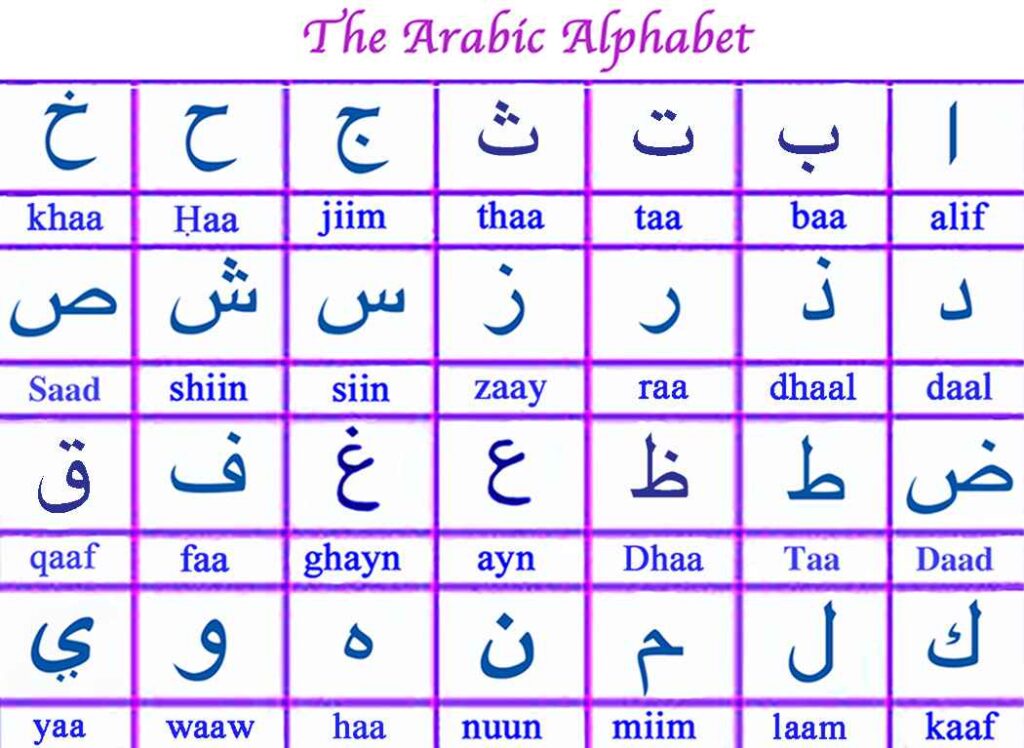
The Arabic alphabet is the non-negotiable entry point to MSA. It consists of 28 letters, all consonants, written right to left — with short vowel markers (harakat) added in learning texts and Quranic script.
Most adult beginners underestimate how quickly the alphabet clicks with the right method. In our experience at Buruj Academy, students who spend their first two weeks exclusively on letter recognition and sound accuracy before touching grammar progress significantly faster than those who try to do both simultaneously.
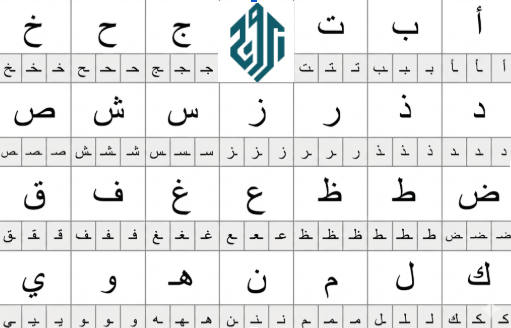
Why Letter Forms and Positions Matter From Day One
Each Arabic letter has up to four written forms depending on its position: isolated, initial, medial, and final. Skipping this step leads to reading errors that are extremely difficult to correct later.
Our Arabic Alphabet Learning Course teaches all letter forms with sound-position drills designed specifically for non-native speakers, building correct habits from the very first session.
Get a free trial now in Buruj’s Alphabet course
2. Learn Short Vowels and Harakat Before Reading Full Words
Short vowels — Fatha (َ), Kasra (ِ), and Damma (ُ) — are the pronunciation markers that tell you how to read any Arabic word correctly. MSA texts for learners include them; advanced texts remove them, requiring grammatical knowledge to fill the gap.
Skipping harakat practice is one of the most common errors we see in self-taught students who arrive at Buruj Academy after months of online apps.
They recognize letters but cannot read a fully voweled sentence aloud accurately. Spend two to three dedicated weeks on harakat before advancing to vocabulary building.
Our beginner’s guide to Modern Standard Arabic walks through this foundational layer in detail.
3. Build Your Core MSA Vocabulary Using the Root System
Modern Standard Arabic vocabulary is built on a trilateral root system (جذر ثلاثي). Most Arabic words derive from three-letter roots, and learning how roots expand into related words is the single most efficient vocabulary strategy available.
| Arabic Root | Meaning | Derived Words |
| ك-ت-ب (K-T-B) | Writing | كَتَبَ (wrote), كِتَاب (book), كَاتِب (writer), مَكْتَب (office) |
| د-ر-س (D-R-S) | Studying | دَرَسَ (studied), دَرْس (lesson), مَدْرَسَة (school), مُدَرِّس (teacher) |
| ع-ل-م (Ā-L-M) | Knowledge | عَلِمَ (knew), عِلْم (knowledge), عَالِم (scholar), مَعْلُومَة (information) |
| ف-ه-م (F-H-M) | Understanding | فَهِمَ (understood), فَهْم (understanding), مَفْهُوم (concept) |
Mastering 200–300 core roots effectively gives you access to thousands of words. This is how Arabic rewards systematic learners far more than rote memorization of isolated vocabulary lists. Our article on mastering Arabic vocabulary covers root-based learning strategies in practical depth.
The Most Used Modern Standard Arabic Words to Prioritize First
Focus your early vocabulary sessions on high-frequency MSA words that appear across all formal contexts.
| Category | Essential MSA Words |
| Pronouns | أنا (I), أنتَ (you, m.), هو (he), هي (she), نحن (we), هم (they) |
| Conjunctions | وَ (and), أو (or), لَكِن (but), لِأَنَّ (because), إِذَا (if) |
| Question Words | مَن (who), مَا (what), أَيْن (where), مَتَى (when), كَيْف (how), لِمَاذَا (why) |
| Common Nouns | يَوْم (day), وَقْت (time), بَيْت (house), عَمَل (work), إِنْسَان (person) |
| Common Adjectives | كَبِير (big), صَغِير (small), جَدِيد (new), قَدِيم (old), جَيِّد (good) |
At Buruj Academy, our Modern Standard Arabic Course use the context-before-abstraction method — teaching Arabic through meaningful phrases and real texts from day one, guided by expert instructors with 12+ years of experience teaching non-Arabic speakers globally.
Book your FREE Arabic trial online Arabic class at Buruj

4. Learn the Most Used Modern Standard Arabic Verbs Through Pattern Recognition
Verbs in MSA follow systematic conjugation patterns based on person, gender, and number. Rather than memorizing conjugations individually, learn the patterns — then apply them across hundreds of verbs.
The Most Used Modern Standard Arabic Verbs for Beginners to Prioritize:
| Arabic Verb | Root | Meaning |
| ذَهَبَ | ذ-ه-ب | went / to go |
| قَالَ | ق-و-ل | said / to say |
| أَخَذَ | أ-خ-ذ | took / to take |
| عَرَفَ | ع-ر-ف | knew / to know |
| أَرَادَ | ر-و-د | wanted / to want |
| رَأَى | ر-أ-ي | saw / to see |
| جَاءَ | ج-ي-ء | came / to come |
| فَعَلَ | ف-ع-ل | did / to do |
MSA verbs default to the past tense (الماضي) in their dictionary form. Learning present tense (المضارع) and imperative (الأمر) patterns in parallel with past tense from the beginning builds grammatical intuition far faster than sequential study.
Read also: The Best Podcast to Learn Arabic
5. Study MSA Grammar Systematically Using the Sentence Structure Logic
Arabic grammar (النحو) is precise and rule-based. Unlike English, MSA uses a case system (إعراب) where word endings change depending on grammatical function — subject, object, or possessive.
The core MSA sentence structures to master first are:
Nominal sentences (الجملة الاسمية): Subject + Predicate, no verb required. Example: الطالبُ مجتهدٌ — “The student is diligent.”
Verbal sentences (الجملة الفعلية): Verb + Subject + Object. Example: كَتَبَ الطالبُ الدرسَ — “The student wrote the lesson.”
Our Arabic grammar guide for beginners explains both sentence types with English-speaker-friendly breakdowns.
For a structured approach, our Arabic Grammar Course provides progressive grammar instruction from nominal sentences through complex verbal conjugations.
Understanding Arabic sentence structure early prevents the word-order confusion that slows most English-speaking learners in their first six months.
Understand the Arabic Grammar with Buruj’s free trial lesson
6. Practice the Most Used Modern Standard Arabic Phrases in Context
Learning MSA phrases within real communicative contexts — not isolated vocabulary lists — trains your brain to produce and recognize language naturally. Here are the most used Modern Standard Arabic phrases organized by function:
Greetings and Formal Expressions
How do you say hello in Modern Standard Arabic? The standard formal greeting is السَّلَامُ عَلَيْكُمْ (As-salamu alaykum — “Peace be upon you”), used universally across formal and Islamic contexts. The formal secular greeting is مَرْحَباً (Marhaban — “Welcome/Hello”) and أَهْلاً وَسَهْلاً (Ahlan wa Sahlan — “Welcome”).
| Situation | MSA Phrase | Transliteration | Meaning |
| Greeting | السَّلَامُ عَلَيْكُمْ | As-salamu alaykum | Peace be upon you |
| Response | وَعَلَيْكُمُ السَّلَام | Wa alaykum as-salam | And upon you peace |
| Formal hello | أَهْلاً وَسَهْلاً | Ahlan wa sahlan | Welcome |
| How are you? | كَيْفَ حَالُكَ؟ | Kayfa haluk? | How are you? (m.) |
| I’m well | أَنَا بِخَيْر | Ana bikhair | I am well |
| Thank you | شُكْراً جَزِيلاً | Shukran jazilan | Thank you very much |
| Please | مِنْ فَضْلِكَ | Min fadlik | Please (m.) |
| Excuse me | عَفْواً | Afwan | Excuse me / You’re welcome |
Practical Daily Phrases
Beyond greetings, focus on phrases that appear in MSA reading materials, news, and formal speech: بِالطَّبْع (Bit-tab’ — “Of course”), فِي الْحَقِيقَة (Fil haqiqa — “In fact/reality”), مِنَ الْمُهِمِّ (Minal muhimm — “It is important that”), and وَفْقاً لِـ (Wafqan li — “According to”).
Master the Arabic Language
Join our expert-led courses and build a strong foundation in Classical and Modern Arabic.
Get Your Free Trial7. Develop Reading Fluency Through Graded Arabic Texts
Reading fluency in MSA develops through consistent exposure to graded materials — texts matched to your current level that push you slightly beyond your comfort zone without overwhelming you.
In our sessions at Buruj Academy, we use a three-stage reading progression that works reliably for adult non-native speakers:
Stage 1 (Months 1–2): Fully voweled short paragraphs on familiar topics. Focus on accurate decoding, not speed.
Stage 2 (Months 3–4): Partially voweled texts. Begin using grammatical knowledge to infer unwritten vowels.
Stage 3 (Month 5 onward): Unvoweled texts — news excerpts, simple classical passages, formal MSA writing.
Arabic dictation practice is an underused tool that dramatically accelerates this progression. Our article on improving Arabic writing with dictation explains how to use it effectively at every stage.
8. Train Your Arabic Pronunciation with Consistent Audio Exposure
MSA pronunciation differs from most dialects in specific sounds: the emphatic consonants (ص، ض، ط، ظ), the uvular sounds (ق، غ), and the pharyngeal consonants (ع، ح). Non-native speakers consistently struggle most with ع (Ayn) and ح (Ha) — sounds that have no English equivalent.
The most effective method is audio-first exposure paired with immediate feedback from a qualified instructor. Self-study audio alone rarely corrects deep pronunciation errors because learners cannot hear their own mistakes accurately.
Our guide on Arabic pronunciation online covers the specific articulation points non-native speakers need to focus on, including common fossilization points.
Buruj Academy’s Arabic Speaking Course addresses pronunciation directly through real-time correction in live 1-on-1 sessions, eliminating the guesswork of self-directed audio practice.
Book your free trial to start speaking Arabic fluently

9. Learn Modern Standard Arabic Online with a Structured Course
Structured MSA instruction from a qualified teacher eliminates the three most common self-study failures: inconsistent progression, fossilized errors, and motivation loss at the intermediate plateau.
The best way to learn Modern Standard Arabic combines systematic curriculum with live instructor feedback. Apps and YouTube videos provide exposure but cannot correct your grammar errors in real time, adjust pacing to your specific weaknesses, or provide the accountability that sustains long-term progress.
For those starting from absolute zero, our Modern Standard Arabic for Beginners course builds letter recognition, harakat accuracy, and foundational vocabulary in a structured sequence that prevents the gaps most self-taught learners develop in their first three months.
Begin learning Arabic at Buruj with a FREE trial lesson

Read also: Arabic Video Tutorials to Learn Arabic
Discover the Buruj Academy Difference
Step into our virtual classrooms and see how our expert instructors make learning Quran and Arabic intuitive and clear. We focus on overcoming the specific hurdles non-native speakers face, building your confidence and connection with the Quran.
Start Learning Modern Standard Arabic with Buruj Academy’s Expert Instructors
MSA rewards systematic learners — and the right instructor makes that system work for your specific level, schedule, and goals.
Buruj Academy offers:
- Al-Azhar University graduate instructors with 12+ years teaching non-Arabic speakers
- The Buruj Method: Context-before-abstraction for faster, more natural MSA acquisition
- Personalized 1-on-1 sessions with real-time pronunciation correction
- Flexible scheduling for working adults — 24/7 availability globally
- Proven progression from alphabet to reading fluency to grammar mastery
Book your free trial lesson today and experience the difference structured MSA instruction makes from session one.
Begin your transformation today by choosing the path that fits your goals:
- Online Arabic Classes (General & Comprehensive)
- Arabic Course for Beginners
- Arabic Alphabet Learning Course
- Online Arabic Classes for Kids
- Arabic Classes for Adults
- Arabic Grammar Course (Nahw & Sarf)
- Intermediate Arabic Course (B1/B2)
- Arabic Speaking Course (Conversational Fluency)
- Arabic Reading Course (Literary Excellence)
- Learn Arabic Writing Course (Calligraphy & Composition)
Ready to speak with confidence? Join the global community at Buruj Academy and book your free placement interview today!
Master the Arabic Language
Join our expert-led courses and build a strong foundation in Classical and Modern Arabic.
Get Your Free TrialConclusion
Learning Modern Standard Arabic is a structured, achievable goal — not an overwhelming mountain. The path runs through the alphabet, then harakat, then vocabulary roots, verb patterns, grammar logic, and consistent reading practice. Each step builds directly on the last.
What separates successful MSA learners from those who plateau is not talent — it is systematic progression guided by qualified instruction. With the right method and the right teacher, non-Arabic speakers consistently reach confident MSA reading ability within six to twelve months of consistent effort.
Frequently Asked Questions About Learning Modern Standard Arabic
How Hard Is Modern Standard Arabic to Learn?
Modern Standard Arabic is classified by the US Foreign Service Institute as a Category IV language — among the most challenging for native English speakers, requiring approximately 2,200 class hours for professional proficiency. However, reading competency and functional comprehension are achievable within 12 months of structured study at 30 minutes daily, especially with a qualified instructor.
Is It Better to Learn Modern Standard Arabic or Egyptian Arabic?
MSA gives you access to all 22 Arab-speaking countries, formal media, Quranic Arabic structure, and academic materials — no dialect does this. Egyptian Arabic is more immediately conversational but geographically limited and offers no Quranic benefit. For Muslims, MSA provides dual value: formal communication ability and a direct foundation for Quranic comprehension.
What Is the Best Resource for Learning Modern Standard Arabic?
The best resource is a combination of a structured curriculum, a qualified instructor for live feedback, and graded reading materials. No single app or textbook replaces the real-time correction and adaptive pacing that an experienced MSA teacher provides. Online platforms like Buruj Academy combine structured curriculum with live Al-Azhar-trained instructors for the most effective results.
Where Can I Learn MSA Arabic Online?
Structured online MSA instruction is available through Buruj Academy’s Online Arabic Classes, which offer personalized 1-on-1 sessions with qualified instructors, flexible scheduling, and a curriculum designed specifically for non-Arabic speaking adult learners.
How Long Does It Take to Learn Modern Standard Arabic?
With 20–30 minutes of daily structured study, most adult learners reach basic MSA reading fluency in 6–9 months and intermediate grammar competency in 12–18 months. Full professional proficiency requires significantly longer. Consistency matters more than session length — learners who study daily for 20 minutes consistently outperform those who study three hours once a week.