 Quran
Quran

| Key Takeaways |
| Memorizing one page of Quran daily requires dividing the page into 3–4 segments and repeating each segment 20–30 times before combining. |
| Daily revision of previously memorized pages is non-negotiable; without it, one page gained today means one page lost within a week. |
| Correct Tajweed during memorization prevents years of accumulated mispronunciation that becomes extremely difficult to correct later. |
| Completing the Quran at one page per day requires approximately 604 days of consistent daily practice without a single missed session. |
Memorizing one full page of Quran every single day sounds ambitious — and for many students, it feels out of reach. But in our experience at Buruj Academy, this goal is not only achievable for motivated adults; it is actually the standard pace for students who build the right system from the start.
The difference between students who reach one page per day and those who plateau at a few lines comes down entirely to method, not talent. Apply the steps below with consistency, and Insha’Allah, this pace will become your new normal within four to six weeks.
Table of Contents:
1. Calculate Your Exact Daily Page Before You Memorize a Single Ayah
To memorize one page of Quran per day reliably, you must first define precisely what “one page” means in your Mushaf — because not all Mushafs are equal, and your entire system depends on this number.
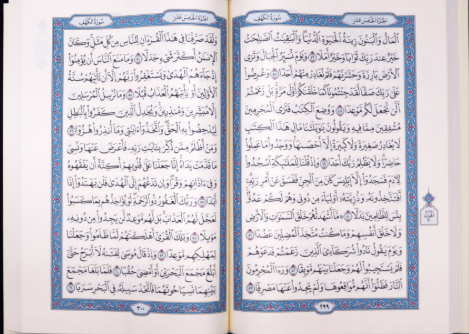
The standard Medina Mushaf (15-line Mushaf) — the most widely used globally — contains 604 pages, with most pages averaging 10–15 ayat. One page in this Mushaf is your target unit. If you use a different Mushaf, the line count per page changes, and your session length must adjust accordingly.
Why Your Mushaf Choice Directly Affects Your Memorization Speed
Switching Mushafs mid-memorization is one of the most disruptive mistakes we see students make.
The brain encodes Quran visually — the position of an ayah on the page, the line breaks, the word at the end of each line — all form part of the memory architecture.
Changing the visual layout after memorizing 10 pages forces a partial re-memorization. Choose one Mushaf and stay with it for the entire Quran.
We strongly recommend the 15-line Medina Mushaf for all students in our Online Hifz Program because its consistent layout and wide global use mean review partners, teachers, and future reference materials all align with the same visual structure.
Start Hifz today with a FREE trial session

2. Divide Every Quran Page into Three Fixed Segments and Never Memorize It Whole
The most damaging approach to one-page-per-day memorization is reading the full page repeatedly from top to bottom.
This creates an illusion of familiarity without actual memorization — students feel they “know” the page after 10 reads, then discover they cannot recall a single ayah independently.
The correct method is segmentation. Divide each page into three segments of roughly equal length — typically 4 to 5 lines each on a 15-line Mushaf. Memorize each segment to complete isolation before moving to the next.
The Segment-by-Segment Repetition Protocol
| Segment | Action | Repetitions Before Moving On |
| Segment 1 (Lines 1–5) | Read aloud, close Mushaf, recite from memory | 20–30 repetitions |
| Segment 2 (Lines 6–10) | Same process independently | 20–30 repetitions |
| Segment 3 (Lines 11–15) | Same process independently | 20–30 repetitions |
| Full Page Combination | Recite all three segments together without Mushaf | 10–15 repetitions |
The 20–30 repetition count per segment is not arbitrary. In our instructors’ experience, students who repeat fewer than 15 times per segment consistently report forgetting within 24 hours. Students who reach 25–30 repetitions retain the segment for 3 to 5 days with minimal review effort.
3. Memorize During the Fajr Window
The post-Fajr window — from the completion of Fajr prayer to approximately 40 minutes afterward — is the most scientifically and spiritually validated time for new memorization.
The mind emerges from sleep in a state of relative quiet, short-term memory is cleared, and distractions are minimal. This is when the brain is most receptive to encoding new information.
As our teachers at Buruj Academy observe across student cohorts: students who memorize post-Fajr consistently hold their new page for 48–72 hours with standard review. Students who memorize in the afternoon or evening frequently report near-total forgetting by the following morning.
For detailed guidance on why timing matters spiritually and practically, read our article on the best time to memorize Quran.
4. Master the Tajweed of Each Page Before Locking It into Memory
Memorizing with Tajweed errors is the single most costly long-term mistake a Hifz student can make.
Every mispronounced word becomes harder to correct with each subsequent repetition — the brain encodes the error as the “correct” version, and undoing that encoding after months of repetition requires enormous effort.
Before beginning any new page, spend 5 to 8 minutes listening to a trusted reciter — Sheikh Mahmoud Khalil al-Husary’s Muallim recitation or Sheikh Mishary Rashid al-Afasy — and recite after him ayah by ayah before your independent memorization begins.

Pay particular attention to:
- Ghunnah on Noon and Meem Mushaddad — two counts of nasal resonance, not a rapid transition
- Madd rules — distinguishing the two-count Madd Asli from the four or six-count extended Madd
- Qalqalah on the five letters — the echo must occur, not be swallowed
If you are not yet confident in your foundational Tajweed rules, our Tajweed for Beginners course builds the specific skills needed for accurate memorization from the ground up. Students who strengthen Tajweed before accelerating Hifz consistently memorize faster — because they are not constantly second-guessing their pronunciation.
For a deeper grounding in recitation rules, our guide on Tajweed for beginners is a strong starting point.
Book Your FREE Trial Lesson to Begin Your Tajweed Journey

Read also: How to Memorize Surah Al Kahf?
5. Build a Daily Review System That Runs Parallel to Your New Memorization
New memorization without daily review is like filling a bucket with a hole in it. For every page memorized without a structured review system, approximately one previously memorized page deteriorates beyond reliable recall within seven days.
The sustainable model for one-page-per-day Hifz is a dual-session day structure:
| Session | Time of Day | Content | Duration |
| New Memorization | Post-Fajr | One new page (3-segment method) | 30–45 minutes |
| Recent Review | Post-Dhuhr or Asr | Last 7 pages memorized | 20–30 minutes |
| Older Review | Post-Isha | Pages 8–20 back (rotational) | 15–20 minutes |
The “recent 7 pages” form your active revision bank. These pages are within the critical consolidation window — strong enough to recall but not yet locked into long-term memory. Reviewing them daily for seven days before rotating them into the older bank ensures they transfer reliably.
For a structured weekly plan, our Quran memorization schedule guide offers a practical template you can adapt directly to your current level.
Excel in Your Quranic Studies
Join Buruj Academy and master the Quran with our structured, professional curriculum.
Book Your Free Trial6. Recite Your New Page to a Qualified Teacher Within 24 Hours of Memorizing It
Memorizing alone and reciting to a teacher are two fundamentally different activities — and both are required. Solo memorization builds the initial encoding; teacher recitation stress-tests that encoding and catches errors the student cannot hear in themselves.
In our Hifz for Adults sessions at Buruj Academy, we find that students who recite to a teacher within 24 hours of memorizing a new page retain it at significantly higher rates than those who wait 3 to 5 days. The reason is neurological: errors caught immediately are corrected before they solidify; errors left for several days require active unlearning.
Buruj Academy’s Hifz for Adults course provides daily or near-daily 1-on-1 sessions with Al-Azhar-trained Hifz specialists who listen to new memorization, correct Tajweed errors in real time, and adjust your revision schedule based on your actual retention — not a generic template.
Book Your Free Trial Lesson with Burruj’s Hifz Course for Adults
7. Apply the “Forget and Recover” Test Before Marking Any Page as Memorized
A page is not memorized when you can recite it once without looking. A page is memorized when you can recite it correctly after deliberately setting it aside for 24 hours — and still recall it independently on the second attempt.
This is the Forget-and-Recover Standard, and it is the difference between short-term familiarity and actual Hifz.
Before marking any page as complete and moving forward, close the Mushaf, wait one full day, and recite the page from memory the following morning without any review.
What the Forget-and-Recover Test Reveals
| Result | What It Means | What to Do |
| Recites page correctly without prompting | Page is genuinely memorized | Move it to recent review bank |
| Stumbles on 1–2 words | Page is partially memorized | One additional 15-repetition reinforcement session |
| Cannot recall more than a few ayat | Page was familiarity, not Hifz | Return to full segment memorization protocol |
Many students feel frustrated by failing this test early in their Hifz. We reassure them that this is normal — and that discovering the gap early saves weeks of wasted effort building on an unstable foundation.
Read also: Top-Rated Websites for Quran Hifz Practice
8. Track Every Page with a Written Log and Set Weekly Milestones
One page per day for 604 days requires a level of long-term consistency that cannot be sustained by motivation alone — it must be supported by visible progress systems.
Students who track their memorization with a written log outperform those who rely on mental accounting, because the act of recording creates accountability and reveals patterns.
Your daily log should include:
- Page number memorized today
- Number of repetitions completed per segment
- Quality rating (strong / needs reinforcement / weak)
- Pages reviewed today and their quality rating
- Any Tajweed issues noted by teacher
At the one-page-per-day pace, you will complete Juz Amma (Juz 30) in approximately 20 days, the first Juz in roughly 30 days, and the full Quran in approximately 604 days — just under 20 months of uninterrupted daily practice.
For practical tips on accelerating your retention between sessions, our guide on how to memorize Quran faster covers proven techniques that complement the system above.
Book Your First Session in Buruj’s Juz 30 Memorization Course
How to Memorize 1 Page of Quran Fast?
The question of how to memorize 1 page of Quran fast often comes from students who feel their sessions are running too long. Thirty to forty-five minutes per page is the realistic target — sessions running beyond 60 minutes typically indicate one of three correctable problems.
The three most common session inefficiencies we identify in Buruj Academy students are: reading silently instead of aloud (silent reading does not engage the phonological loop required for auditory memory), taking breaks between segments that exceed 3 minutes (cold restarts reset recall momentum), and attempting the full-page combination before each segment is independently solid.
Speed Optimization Checklist for Each Session
Before beginning your session, ensure: your Mushaf is open to the correct page, a trusted audio recitation is queued for Tajweed reference, your phone is face-down, and you have water nearby.
Elimination of micro-interruptions during the 30–45 minute session can reduce total session time by 10 to 15 minutes without reducing repetition count.
Additionally, reciting slightly louder than a whisper — not full volume, but audible to yourself — engages both auditory and kinesthetic memory pathways simultaneously.
In our instructors’ experience, this single adjustment reduces the repetitions needed per segment from 30 to approximately 22–25 for most adult learners.
Read also: How to Memorize a Surah in 30 Minutes?
Discover the Buruj Academy Difference
Step into our virtual classrooms and see how our expert instructors make learning Quran and Arabic intuitive and clear. We focus on overcoming the specific hurdles non-native speakers face, building your confidence and connection with the Quran.
Start Your One-Page-Per-Day Hifz with Buruj Academy’s Expert Guidance
Memorizing one page of Quran daily is an act of worship that deserves the right foundation — accurate Tajweed, a structured system, and a qualified teacher who holds you accountable.
Buruj Academy’s Online Hifz Program provides:
- Al-Azhar-trained Hifz specialists with 12+ years teaching non-Arabic speakers
- The Buruj Method: Consistency-before-speed — building your foundation before accelerating
- Personalized 1-on-1 sessions with flexible 24/7 scheduling
- Real-time Tajweed correction during every recitation
- Customized revision plans adapted to your actual retention
Book your free trial lesson today and let our instructors design your one-page-per-day system from session one.
Take the first step toward this lifelong blessing by enrolling in a program tailored to your pace:
- Online Hifz Program (Comprehensive Quran Memorization)
- Juz 30 Memorization Course (Perfect for focused starts)
- Hifz Classes for Kids (Engaging and interactive)
- Hifz Classes for Adults (Flexible scheduling for busy lives)
- Hifz Classes for Sisters (Private, supportive learning)
- Short Surah Memorization Course (Ideal for daily prayers)
- Hifz Ijazah Course (For advanced students seeking certification)
Don’t let another day pass without moving closer to your goal. Join Buruj Academy today and schedule your free trial session to begin your Hifz journey!
Excel in Your Quranic Studies
Join Buruj Academy and master the Quran with our structured, professional curriculum.
Book Your Free TrialConclusion
Memorizing one full page of Quran every day is not a matter of exceptional talent — it is a matter of applying the right method with unwavering consistency. The steps above form a complete, tested system: segmented repetition, post-Fajr timing, Tajweed accuracy, parallel review, teacher accountability, the Forget-and-Recover standard, and progress tracking.
What separates students who achieve this pace from those who stay stuck at a few lines is not how long they sit with the Mushaf — it is how intelligently they structure every minute of their session. Apply this system, hold yourself to the Forget-and-Recover standard, and Insha’Allah, one page per day will become your natural rhythm.
Frequently Asked Questions About How to Memorize One Page of Quran a Day
How Long Does It Take to Memorize One Page of Quran Using This Method?
Most adult students using the three-segment method with 20–30 repetitions per segment complete one page in 30 to 45 minutes. Students new to Hifz may need up to 60 minutes initially. As the method becomes habitual — typically within 3 to 4 weeks — session times shorten naturally without reducing memorization quality.
Is It Realistic to Memorize One Page of Quran Every Day as a Working Adult?
Yes, with a structured post-Fajr session of 30 to 45 minutes and a dual review system of 30 to 40 additional minutes distributed across the day. The key is treating these sessions as fixed appointments, not flexible tasks. Students in Buruj Academy’s Hifz for Adults course consistently maintain this pace alongside full-time professional and family responsibilities.
What Should I Do If I Miss a Day of Memorization?
Do not attempt to memorize two pages the following day — this destabilizes both pages. Instead, use the missed day’s session the next day for reinforcement review of your most recently memorized pages, then return to new memorization the day after. Consistency across weeks matters more than any single day’s output.