 Quran
Quran

| Key Takeaways |
| The 3×3 method divides each memorization session into three verses memorized across three focused repetition cycles. |
| Each cycle uses a distinct cognitive strategy: auditory input, silent rehearsal, and recitation without visual reference. |
| Daily revision of previously memorized material is built into the 3×3 system, preventing accumulation of forgotten verses. |
| The method is adaptable for children, adults, and busy professionals by adjusting verse length and session duration. |
| Consistent daily practice of 20–30 minutes using the 3×3 system outperforms longer but irregular memorization sessions. |
Quran memorization stalls — not because students lack sincerity, but because they lack structure. Most beginners repeat verses until they feel memorized, then move on, only to find those same verses gone within days.
The 3×3 Quran memorization method solves this by organizing every session into a repeatable, cognitively sound sequence: three verses at a time, across three distinct rehearsal cycles, with built-in same-day and cumulative revision. It is one of the most practical systems we teach at Buruj Academy for students who need results without chaos.
Table of Contents:
1. Begin Every Session by Listening Before You Read
The first action in the 3×3 method is never picking up the Mushaf. Before a student reads a single word, they listen to their target three verses at least three times from a verified reciter.
This is the auditory loading phase. The ear must register the correct pronunciation, rhythm, and melody before the eye and tongue attempt to reproduce it.
In Buruj’s Azhari Quran tutors’ experience, students who skip this step memorize incorrect pronunciations that become extremely difficult to correct later. Listening first is not optional — it is the foundation on which accurate memorization is built.
Book a FREE trial session with one of Buruj’s Azhari Quran tutors

Why Auditory Input Protects Tajweed from the Start
When students listen before reading, they absorb the natural application of Tajweed rules — the ghunnah, the madd, the ikhfa — before they consciously identify them. The ear becomes a self-correcting tool.
We consistently observe that students trained this way recite with far fewer Tajweed errors than those who read silently from the outset.
Use a single reciter throughout your memorization. Switching between reciters during the same surah creates conflicting melodic patterns in memory, which increases forgetting.
| Recommended Listening Approach | Detail |
| Reciter choice | Select one reciter and stay consistent throughout the surah |
| Repetitions before reading | Minimum 3 complete repetitions of all three target verses |
| Focus during listening | Close eyes, track rhythm, notice where breath pauses fall |
| Tool | Phone app, YouTube, or an audio Quran with Hafs recitation |
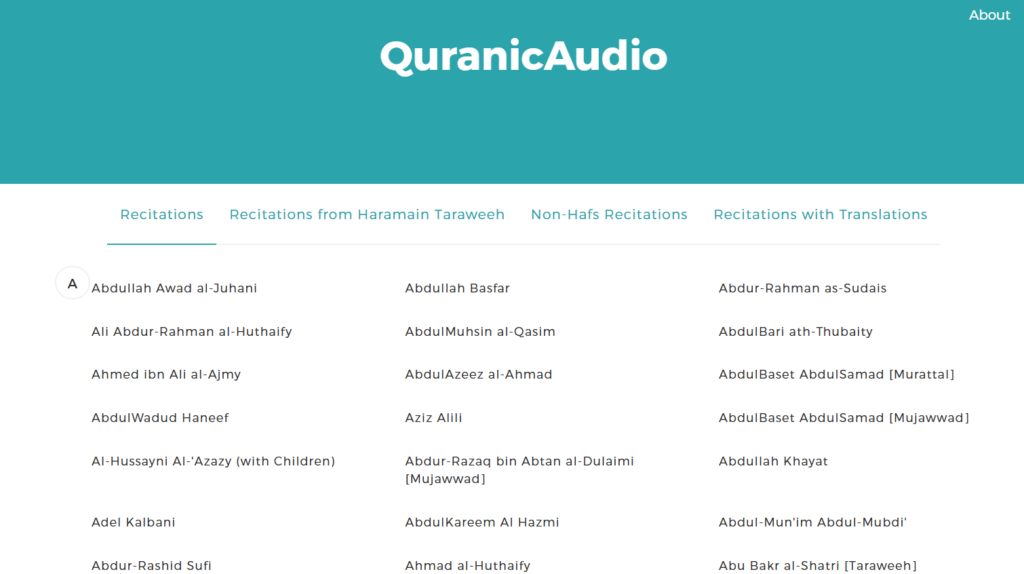
You can benefit from this free website: Quranic Audio
2. Memorize Each of the Three Verses Individually Before Combining Them
After listening, the student opens the Mushaf and works on verse one alone. Read it aloud slowly five times. Then close the Mushaf and recite it from memory twice. Return to the text and correct any errors immediately.
Repeat this exact process for verse two, then verse three. Do not move to verse two until verse one can be recited independently without the Mushaf.
This sequential isolation is what makes the 3×3 system different from bulk repetition. It ensures that no single verse is glossed over simply because the surrounding verses feel familiar.
How to Isolate a Verse Without Losing the Flow
Verse isolation does not mean disconnecting the verse from its meaning. Before memorizing, read a simple translation of each verse once.
Connecting meaning to sound dramatically improves retention — the brain stores connected information more efficiently than isolated sounds.
Our Online Hifz Program at Buruj Academy applies this exact principle: meaning is introduced before memorization begins, not after. Students who understand what they are reciting retain verses across weeks, not just hours.
Start Hifz today with a FREE trial session

3. Connect All Three Verses into a Flowing Sequence
Once each verse is memorized individually, the student recites all three together without pausing between them. This connection phase is done with the Mushaf closed, from the beginning of verse one through to the end of verse three.
Recite the three-verse sequence five times consecutively. If you falter at any junction between verses — which is where most students stumble — open the Mushaf, reread the transition point, close it again, and repeat. The goal of this step is seamless flow, not just individual recall.
What “Connected Recitation” Reveals About Weak Points
The connection phase is diagnostic. It exposes exactly which verse or which word is the fragile point in the chain. Students who skip this and move directly to revision often discover fragmentation during Salah — a deeply frustrating experience. By building connection within the session itself, the 3×3 method prevents this.
| Phase | Action | Mushaf Status |
| Individual verse work | Read aloud 5×, then recite from memory 2× | Open for reading, closed for recall |
| Error correction | Return to text, identify error, re-read and re-attempt | Open |
| Connection recitation | Recite all three verses together | Closed |
| Connection repair | Identify junction break, re-read transition, retry | Open briefly, then closed |
4. Perform Same-Day Revision of That Day’s Three Verses Before the Session Ends
Before closing the Mushaf, the student recites the three newly memorized verses five more times from memory. This is same-day consolidation — the most critical revision window in human memory. The first 24 hours after learning are when forgetting is fastest.
This step takes fewer than five minutes, yet it multiplies retention dramatically. Research in memory science consistently shows that immediate review after learning reduces forgetting far more than any amount of review done the following day. The 3×3 method embeds this into the session itself — it is not optional homework.
The Difference Between Memorizing and Consolidating
Students often mistake initial recall for memorization. If a student can recite three verses immediately after learning them, they have achieved short-term encoding.
Consolidation — the transfer to long-term memory — requires repetition spaced within and across time. Same-day revision is the first spacing interval. Tomorrow’s session opens the second.
If you want to understand the science behind timing your Quran practice for maximum retention, our article on the best time to memorize Quran explores both the spiritual and neurological dimensions of this question.
Read also: Hadith About Memorizing Quran
5. Open Every New Session by Reciting All Previously Memorized Verses
The following day’s session does not begin with new verses. It begins with a full recitation of everything memorized so far — from the first verse of the surah to the last verse of yesterday’s session. This is the cumulative revision cycle.
Recite without the Mushaf first. Mark any verse where you pause, stumble, or feel uncertain. Then open the Mushaf, review only the marked verses, and recite the full sequence again.
This process takes longer as the memorized portion grows, but it is non-negotiable within the 3×3 system. Students who skip cumulative revision always encounter the same problem: strong recent verses, forgotten older ones.
Excel in Your Quranic Studies
Join Buruj Academy and master the Quran with our structured, professional curriculum.
Book Your Free TrialBuilding a Revision Habit That Scales with Your Memorization
As your memorized portion grows, the opening revision will naturally take more time. This is expected and healthy. When the opening revision consistently exceeds 15 minutes, it is time to implement a structured Quran memorization schedule that segments older memorized material into a separate daily review block, distinct from the new memorization session.
Buruj Academy’s Hifz for Adults course builds exactly this two-track system — new memorization in one block, cumulative revision in another — so that neither suffers at the expense of the other.
Book Your Free Trial Lesson with Burruj’s Hifz Course for Adults

6. Memorize Three New Verses Only After Completing the Opening Revision
New memorization begins only when cumulative revision is complete and satisfactory. This sequencing is deliberate. The mind is warmest for Quran recall immediately after active recitation. Beginning new memorization while already in an alert recitation state improves encoding quality.
Follow Steps 1 through 4 for the new three verses exactly as before: listen, isolate each verse, connect all three, then consolidate.
The structure does not change. Consistency of method is itself a memorization tool — when the process becomes automatic, cognitive load drops and focus shifts entirely to the Quran.
When Three Verses Per Session Is Too Many or Too Few
The 3×3 system is flexible at the verse level. Beginners, children, or students during heavy work periods may reduce to one or two verses per session. Students who have been memorizing consistently for several months may increase to five or six verses.
The number of verses is adjustable. The three-phase structure — listen, isolate, connect — is not.
For children specifically, Buruj Academy’s Hifz for kids course uses shorter verse targets within the same three-phase structure, combined with positive reinforcement systems that build the daily habit before increasing the workload.
Start your child’s Hifz classes with free session

7. Implement a Weekly Revision Day with No New Memorization
One day per week — Friday is recommended, though any consistent day works — is designated as a revision-only day. No new verses are memorized. T
he entire session is spent reciting the full memorized portion from the beginning, identifying weak points, and reinforcing them through targeted repetition.
This weekly audit reveals patterns. You will notice that certain surahs or sections are consistently weaker. This is not a sign of failure — it is information. Adjust your daily revision emphasis toward those sections in the following week.
8. Track Your Progress with a Simple Written Record
Every session, the student records three data points: today’s date, the verses memorized, and the verse range of today’s revision. This takes sixty seconds and produces something invaluable — visible progress.
Motivation in Hifz is closely tied to perceived progress. When weeks feel identical and the Quran feels immense, a written log shows how far the student has actually come.
We have observed at Buruj Academy that students who track their progress consistently maintain momentum through plateaus far better than those who rely on feeling alone.
9. Recite Your Memorized Verses to a Qualified Teacher Regularly for Correction
The 3×3 method is a self-study framework, but it requires regular recitation to a qualified instructor. Self-correction has limits.
Students who memorize in isolation for extended periods inevitably develop errors — in Tajweed, in word endings, in verse boundaries — that become deeply embedded and increasingly difficult to remove.
A qualified teacher catches errors before they consolidate. Reciting to an instructor at least once per week is the quality assurance layer of the 3×3 system. Without it, students risk building a memorization that is phonetically or grammatically inaccurate.
How Often Should You Recite to a Teacher in the 3×3 System?
For beginners, weekly recitation to a teacher is the minimum. Students memorizing at a pace of three or more verses per day benefit from two sessions per week. As the student approaches completing a full juz, intensive revision sessions with the teacher become essential — errors compound across longer recitation sequences in ways that shorter sessions do not reveal.
Buruj Academy’s Online Hifz Program provides structured teacher recitation sessions built into the student’s weekly plan, ensuring that the memorization being built is accurate, Tajweed-compliant, and examination-ready.
Our Ijazah-certified instructors and Al-Azhar University graduates provide real-time correction that no app or self-study system can replicate.
If you are deciding between the many available approaches to Hifz, our article on what is the best way to memorize Quran provides a balanced comparison of methods used by scholars and specialists worldwide.
Read also: How to Memorize the Quran for Non-Arabic Speakers?
Discover the Buruj Academy Difference
Step into our virtual classrooms and see how our expert instructors make learning Quran and Arabic intuitive and clear. We focus on overcoming the specific hurdles non-native speakers face, building your confidence and connection with the Quran.
Accelerate Your Hifz with Buruj Academy’s Online Hifz Program
The 3×3 method gives you the right structure. Expert guidance ensures that structure produces accurate, lasting memorization.
Buruj Academy’s Online Hifz Program offers:
- Ijazah-certified instructors and Al-Azhar University graduates with 12+ years teaching non-Arabic speakers
- Personalized learning plans built around your pace, age, and schedule
- The Buruj Method: Consistency-before-speed ensures lasting retention over rushed memorization
- Flexible 1-on-1 sessions with 24/7 scheduling availability
- Real-time Tajweed correction during every recitation session
Whether you are beginning Juz 30 or working toward completing the full Quran, our Hifz program course is structured to take you there accurately and sustainably.
Book your free trial lesson and recite to a qualified teacher today.
Take the first step toward this lifelong blessing by enrolling in a program tailored to your pace:
- Online Hifz Program (Comprehensive Quran Memorization)
- Juz 30 Memorization Course (Perfect for focused starts)
- Hifz Classes for Kids (Engaging and interactive)
- Hifz Classes for Adults (Flexible scheduling for busy lives)
- Hifz Classes for Sisters (Private, supportive learning)
- Short Surah Memorization Course (Ideal for daily prayers)
- Hifz Ijazah Course (For advanced students seeking certification)
Don’t let another day pass without moving closer to your goal. Join Buruj Academy today and schedule your free trial session to begin your Hifz journey!
Excel in Your Quranic Studies
Join Buruj Academy and master the Quran with our structured, professional curriculum.
Book Your Free TrialConclusion
The 3×3 Quran memorization method works because it aligns with how memory actually functions — not how students hope it does. By combining auditory preparation, sequential verse isolation, same-day consolidation, cumulative revision, and regular teacher recitation, it addresses every stage of the memorization and retention process within a single repeatable framework.
Consistency in method is as important as consistency in attendance. When the nine steps above become second nature, Hifz stops feeling like an overwhelming mountain and begins functioning as a daily act of worship with a clear, measured path forward.
Insha’Allah, every verse you lock in with this system carries reward far beyond what any memorization technique can quantify.
Frequently Asked Questions About the 3×3 Quran Memorization Method
Can Children Use the 3×3 Quran Memorization Method?
Yes, the 3×3 method is highly effective for children when the verse target is reduced to one or two verses per session and sessions are kept to 15–20 minutes. The three-phase structure — listen, isolate, connect — works well for children because it provides clear, predictable steps that reduce anxiety and build confidence gradually.
What Is the Difference Between Same-Day Revision and Cumulative Revision in the 3×3 Method?
Same-day revision repeats only the verses memorized in that session, immediately after learning them, to begin the consolidation process. Cumulative revision recites the entire memorized portion from the surah’s beginning, performed at the start of each new session. Both are essential — same-day revision prevents immediate forgetting; cumulative revision prevents gradual forgetting across weeks.
Does the 3×3 Method Work for Adults with Busy Schedules?
Yes. The 3×3 method is particularly well-suited for adults because each session has a fixed, predictable structure that can be completed in 25–35 minutes. The key adaptation for busy adults is scheduling the session at the same time every day — Fajr is traditionally recommended — so the practice becomes automatic rather than a daily decision requiring motivation.