 Tajweed
| Key Takeaways |
| The Quran contains specialized waqf (stopping) symbols that tell reciters exactly where to pause, stop, or continue without stopping. |
| The symbol (م) marks a mandatory stop — called Waqf Lazim — where continuing without pausing changes the meaning of the verse entirely. |
| Diacritical marks like Fathah, Kasrah, Dhammah, and Sukoon directly govern vowel sounds and are the foundation of correct Tajweed pronunciation. |
| Tanwin symbols add a terminal “n” sound to words and activate Tajweed rules including Ikhfa, Idgham, Iqlab, and Izhar depending on the following letter. |
| Waqf al-Mu’anaqah (the paired triangle dots) requires reciters to stop at one of two marked positions — stopping at both simultaneously is incorrect. |
Opening the Quran for the first time, many students stare at a page filled not just with Arabic letters but with dots, dashes, symbols, and small notations they have never encountered before. These marks are not decorative — every single one carries a precise instruction that shapes how the Quran is recited.
Tajweed symbols in the Quran are a complete system of recitation guidance. They govern vowel sounds through diacritical marks, control where reciters pause or continue through waqf symbols, and signal pronunciation rules that have been transmitted without interruption since the time of the Prophet ﷺ. Understanding them is the first real step toward accurate, beautiful recitation.
Table of Contents:
What Are Tajweed Symbols in the Quran?
Tajweed symbols in the Quran are a structured notation system that encodes precise recitation instructions directly into the Mushaf (written Quran). They include diacritical marks that govern vowel sounds, waqf (stopping) signs that regulate pausing, and specialized markers that indicate pronunciation exceptions. Together, these symbols preserve the exact oral tradition of Quranic recitation as transmitted through authentic chains of narration.
Why Do Tajweed Symbols Matter?
Without these symbols, correct Quranic recitation would be impossible for non-native Arabic speakers — and even native speakers would face serious ambiguity. The Arabic language without vowels (as written in pre-diacritical manuscripts) allows multiple readings of the same word. The diacritical and Tajweed symbol system eliminates that ambiguity entirely.
At Buruj Academy, our Al-Azhar-certified instructors teach students that understanding these symbols is not simply a reading skill — it is an act of preservation. When a student reads (مـ) and knows to stop, they are honoring a ruling established by scholars of recitation across generations.
Book a FREE trial session with one of Buruj’s Azhari Quran tutors

Excel in Your Quranic Studies
Join Buruj Academy and master the Quran with our structured, professional curriculum.
Book Your Free TrialRead also: What Do the Small Letters in the Quran Mean?
The Core Diacritical Marks: The Foundation of All Quran Symbols
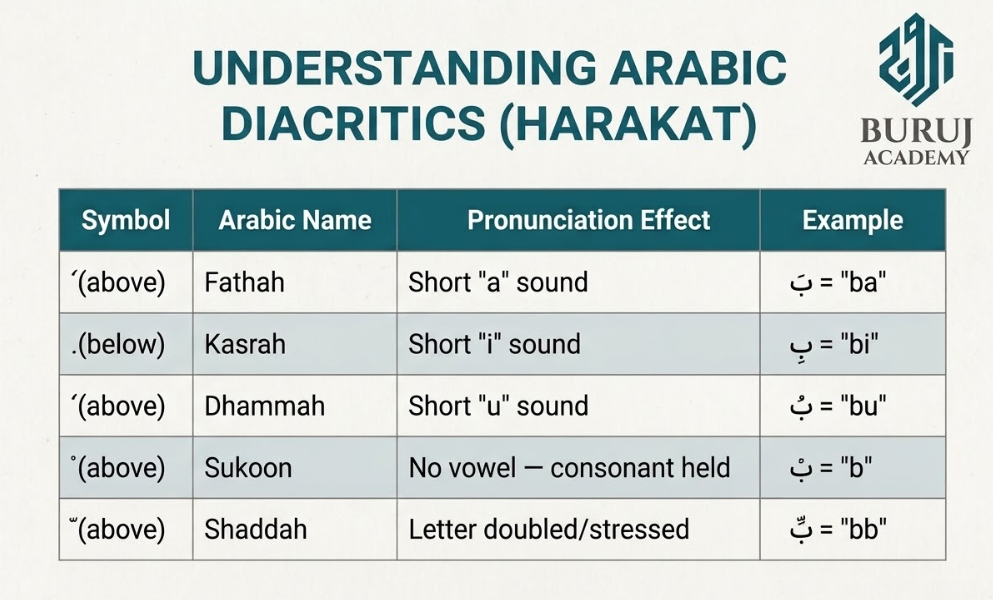
Diacritical marks — called Harakat (حَرَكَات) in Arabic — are the most fundamental symbols in the Quran. They appear above or below letters and define the vowel sound each letter carries. Without them, Quranic Arabic cannot be read correctly.
What Does Sukoon Mean as a Quran Symbol?
Sukoon (ْ) deserves special attention because it is the trigger for multiple major Tajweed rules. A letter carrying Sukoon has no vowel sound attached to it — the consonant is “resting.”
When Noon (ن) or Meem (م) carries Sukoon, specific rules activate depending entirely on which letter follows. Noon Sakinah triggers Ikhfa, Idgham, Iqlab, or Izhar. Meem Sakinah triggers Ikhfa Shafawi, Idgham Shafawi, or Izhar Shafawi.
Recognizing Sukoon instantly is therefore not optional — it is the foundational reading skill that unlocks Tajweed rule application.
How Does Shaddah Function in Tajweed?
Shaddah (ّ) indicates that a letter is doubled — the first occurrence carries Sukoon and the second carries the vowel mark shown alongside the Shaddah. This means a letter with Shaddah is actually two letters compressed into one written form.
When Noon or Meem carries Shaddah, the doubling activates Ghunnah (nasalization) — a nasal humming sound held for two counts. This is called Ghunnah Mushaddalah and is one of the most commonly missed rules in early recitation.
Discover the Buruj Academy Difference
Step into our virtual classrooms and see how our expert instructors make learning Quran and Arabic intuitive and clear. We focus on overcoming the specific hurdles non-native speakers face, building your confidence and connection with the Quran.
Tanwin Symbols in the Quran and the Tajweed Rules They Trigger
Tanwin (تَنْوِين) refers to the doubling of a diacritical mark at the end of a word, producing a terminal “n” sound. It appears in three forms and behaves identically to Noon Sakinah for Tajweed rule purposes.
| Tanwin Symbol | Arabic Name | Sound Produced |
| ً (double Fathah) | Tanwin Fath | Short “an” ending |
| ٍ (double Kasrah) | Tanwin Kasr | Short “in” ending |
| ٌ (double Dhammah) | Tanwin Damm | Short “un” ending |
When Tanwin appears before one of the 15 Ikhfa letters, the reciter nasalizes the sound — concealing the “n” partially. Before the letters ي، ن، م، و in specific conditions, Idgham applies.
Before ب, Iqlab converts the “n” to an “m” sound. Before the six Izhar throat letters, the “n” is pronounced clearly. Recognizing Tanwin symbols quickly is therefore the prerequisite for applying four major Tajweed rules correctly.
For a detailed breakdown of these interactions, our guide on Ikhfa letters in Tajweed provides the full letter list with examples.
Book Your FREE Trial Lesson to Begin Your Tajweed Journey

What Are the Waqf Symbols in the Quran?
Waqf symbols — stopping signs — are among the most important yet most overlooked symbols in the Quran.
They appear above or beside words and tell the reciter precisely whether to stop, continue, or use their judgment at that point. Stopping incorrectly can alter meaning dramatically, which is why classical scholars formalized this notation system.
1. The Waqf Lazim Symbol (م) — Mandatory Stop
The symbol (م), derived from the word Lazim (لازم — obligatory), marks a Waqf Lazim — a mandatory stopping point. The reciter must stop here. Continuing without stopping can corrupt the intended meaning of the verse.
The clearest example is in Surah Al-An’am (6:36):
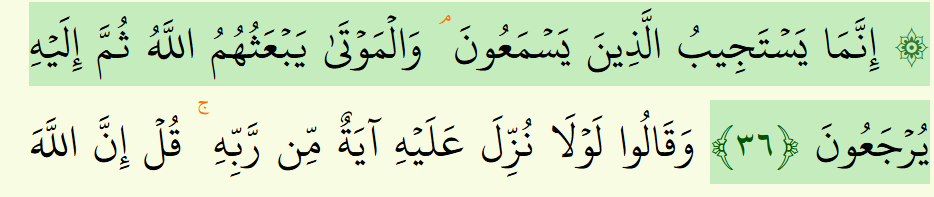
Innamā yastajību alladhīna yasmaʿūna — wal-mawtā yabʿathuhumu Allāh
“Only those who hear will respond. But the dead – Allah will resurrect them” (Al-An’am 6:36)
Without stopping at (م), the sentence could be read as though the dead also respond — which contradicts the meaning entirely.
2. The Waqf Mamnu’ Symbol (لا) — Prohibited Stop
The symbol (لا), meaning “No” or “Do not,” marks a Waqf Mamnu’ — a prohibited stopping point. The reciter must not stop here and must not restart from the word following it if they have already stopped elsewhere.
Stopping at a (لا) position and then beginning from the next word can produce a grammatically or semantically broken fragment.
In Surah Al-Baqarah (2:262):
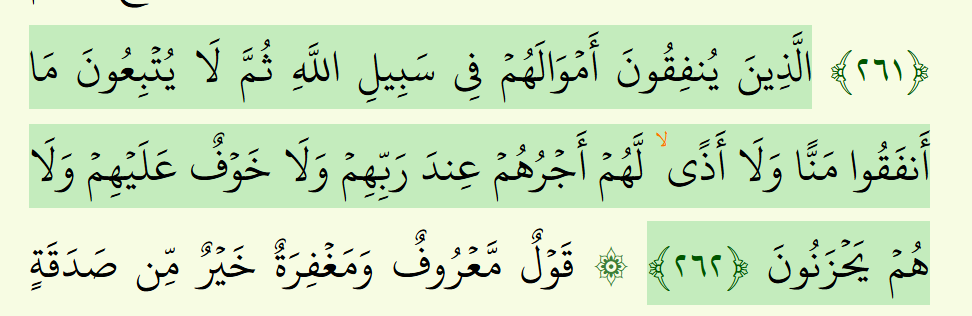
“Those who spend their wealth in the way of Allah and then do not follow up what they have spent with reminders [of it] or [other] injury will have their reward with their Lord, and there will be no fear concerning them, nor will they grieve.” (Al-Baqarah 2:262)
The (لا) here prevents the reciter from stopping before “لَهُمْ أَجْرُهُمْ” — because starting from that phrase alone would grammatically sever it from its intended connection.
3. The Waqf Ja’iz Symbol (ج) — Permissible Stop
The symbol (ج), from Ja’iz (جائز — permissible), indicates the reciter may stop or continue — both are grammatically and semantically acceptable. This is the most flexible waqf marker.
In Surah Al-Hujurat (49:7):
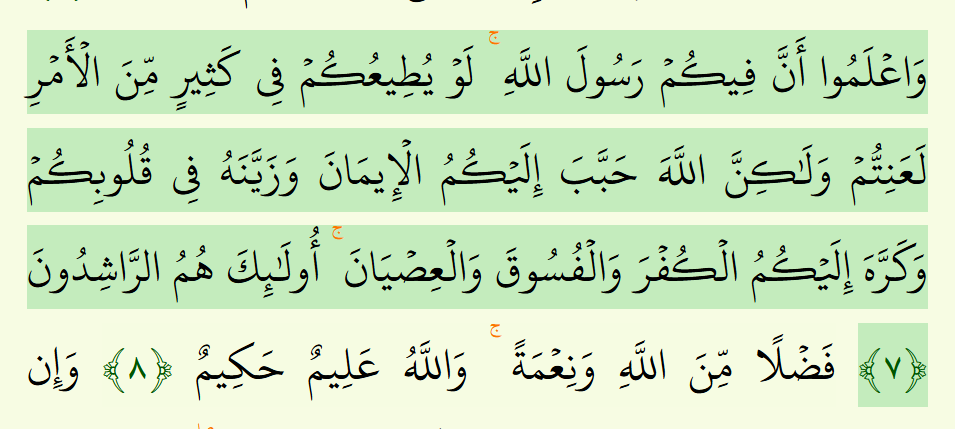
“And know that among you is the Messenger of Allah. If he were to obey you in much of the matter, you would be in difficulty, but Allah has endeared to you the faith and has made it pleasing in your hearts and has made hateful to you disbelief, defiance and disobedience. Those are the [rightly] guided.” (Surah Al-Hujurat (49:7))
Stopping after “رَسُولَ اللَّهِ” is permissible. Continuing is equally permissible. The symbol grants the reciter freedom while signaling a natural syntactic boundary.
4. The Waqf Awla (صلي) and Waqf Awla (قلي) Symbols — Preference Markers
These two symbols introduce a preference rather than an obligation:
| Symbol | Full Term | Meaning |
| صلي | Continuity Preferred (Al-Wasl Awla) | Continue reading; stopping is permitted but not preferred |
| قلي | Stopping Preferred (Al-Waqf Awla) | Stop here; continuing is permitted but not preferred |
The symbol (صلي) appears in Surah Al-Baqarah (2:38) where continuing past the marked point produces a more complete semantic flow.
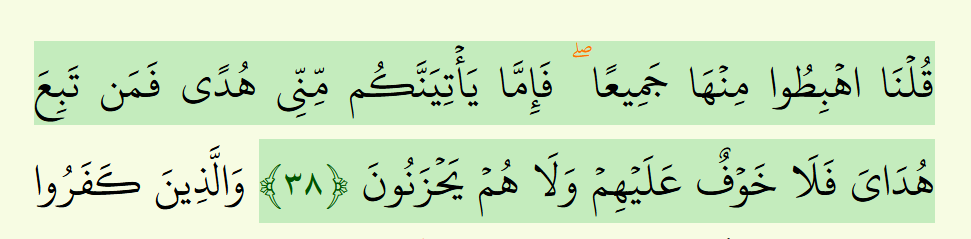
“Go down from it, all of you. And when guidance comes to you from Me, whoever follows My guidance – there will be no fear concerning them, nor will they grieve.” (Al-Baqarah 2:38)
The symbol (قلي) appears in Surah Al-Kahf (18:22) where pausing after “قَلِيلٌ” allows the shift to a new directive to register more clearly for the listener.
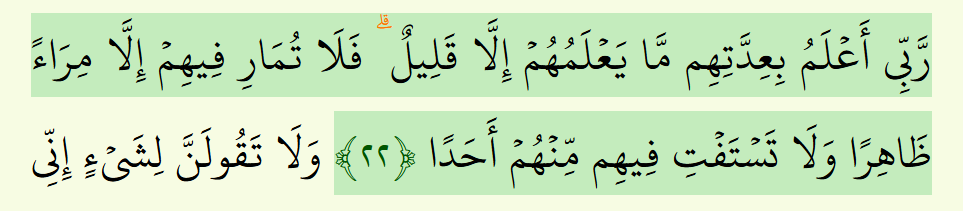
“None knows them except a few. So do not argue about them except with an obvious argument and do not inquire about them among [the speculators] from anyone.” (Al-Kahf 18:22)
In our sessions at Buruj Academy, students consistently confuse (صلي) and (قلي) in early Tajweed study — their similar appearance but opposite functions make them a frequent source of recitation errors. We address this directly in our Online Tajweed Classes using listening drills that train the ear before the eye.
Book Your FREE Trial Lesson to Begin Your Tajweed Journey

5. Waqf al-Mu’anaqah (The Paired Triangle Dots Symbol)
Waqf al-Mu’anaqah — known in English as the Embracing Stop or Interlocking Stop — is represented by three dots arranged in a triangle (∴) appearing at two points within a verse. The rule is precise: the reciter may stop at either marked position, but must not stop at both. Stopping at both points severs the meaning incorrectly.
The most cited example is Surah Al-Baqarah (2:2):
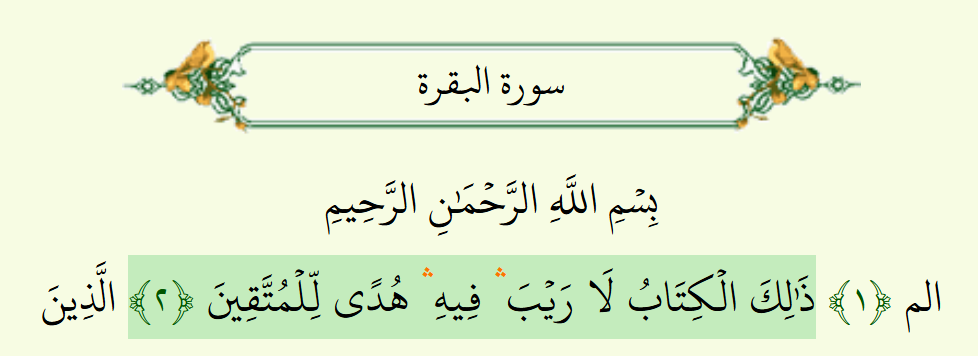
The reciter may stop after “لَا رَيْبَ” (reading: “There is no doubt in it — guidance for the God-fearing”) OR after “فِيهِ” (reading: “There is no doubt — in it is guidance for the God-fearing”). Both are legitimate readings. But stopping at both points leaves “فِيهِ” as an orphaned fragment with no meaningful connection.
This symbol reflects the nuanced Arabic of the Quran, where a single verse can sustain multiple valid semantic structures simultaneously. For students reading the Quran for the first time, understanding this mark prevents a confusing mid-verse pause from becoming a recitation error. Our reading the Quran for the first time guide helps beginners navigate exactly these structural complexities.
Excel in Your Quranic Studies
Join Buruj Academy and master the Quran with our structured, professional curriculum.
Book Your Free TrialRead also: What Does the Small Jeem (ج) Mean in the Quran?
The Sukoon Symbol Used for Silent Letters in the Quran
The Sukoon mark (ْ) carries a second function beyond its role as a vowel marker — it is also used in the Quran to mark letters that are written in the Uthmani Rasm (the original Quranic script) but are not pronounced at all in any context. These are orthographic letters preserved from the original written tradition but silent in recitation.
Examples include:
- وَثَمُودَاْ فَمَا أَبْقَى (An-Najm 53:51) — the Alif after “ثَمُودَ” is written but never sounded
- سَلَاسِلَاْ وَأَغْلَالًا وَسَعِيرًا (Al-Insan 76:4) — the Alif after “سَلَاسِلَ” is similarly silent
This usage of Sukoon is distinct from its diacritical function and represents one of the unique features of the Uthmani Rasm that all Quran reciters must understand. Confusing a silent-letter Sukoon with a regular vowel-suppressing Sukoon is one of the more advanced reading errors we observe in students transitioning from Noorani Qaida to full Quran recitation.
A Complete Reference Table of All Symbols in the Quran
| Symbol | Name | Category | Recitation Instruction |
| َ | Fathah | Diacritical | Short “a” vowel |
| ِ | Kasrah | Diacritical | Short “i” vowel |
| ُ | Dhammah | Diacritical | Short “u” vowel |
| ْ | Sukoon | Diacritical | No vowel / silent letter |
| ّ | Shaddah | Diacritical | Letter doubled; Ghunnah if ن or م |
| ً ٍ ٌ | Tanwin (3 forms) | Diacritical | Terminal “n” sound; triggers Ikhfa, Idgham, Iqlab, or Izhar |
| مـ | Waqf Lazim | Waqf | Mandatory stop |
| لا | Waqf Mamnu’ | Waqf | Prohibited stop |
| ج | Waqf Ja’iz | Waqf | Permissible stop |
| صلي | Al-Wasl Awla | Waqf | Continuation preferred |
| قلي | Al-Waqf Awla | Waqf | Stop preferred |
| ∴ ∴ | Waqf Mu’anaqah | Waqf | Stop at one of two points only |
This table provides a fast-reference summary of every symbol category a student encounters in the Quran.
Understanding the difference between diacritical marks and waqf signs — and knowing that each category serves an entirely different recitation function — is the conceptual clarity that accelerates accurate reading.
For deeper study of how these interact within Tajweed rules, our complete guide to Tajweed rules provides systematic rule-by-rule coverage.
Students working through Idgham rules will find that recognizing Tanwin and Noon Sakinah symbols quickly — on sight, without analysis — is what separates fluid recitation from halting, rule-by-rule reading. Our Idgham rules in Tajweed guide walks through every Idgham category with Quranic examples.
Master Tajweed Symbols with Buruj Academy’s Expert Instructors
Every symbol in the Quran carries a ruling — and every ruling has been preserved through authentic transmission from scholar to student across centuries. Learning these symbols correctly requires more than memorizing a table; it requires a qualified instructor who can hear your recitation and correct it in real time.
Buruj Academy’s Online Tajweed Classes are led by Ijazah-certified instructors and Al-Azhar University graduates with 12+ years of experience teaching non-Arabic speakers worldwide.
Our approach — the Buruj Method — trains the ear before introducing rules, ensuring students internalize sounds before they analyze symbols. Every session is personalized, 1-on-1, and flexibly scheduled to fit your life.
Join a supportive learning environment tailored to your pace and lifestyle. Start your journey toward excellence by enrolling in one of our specialized tracks:
- Online Tajweed Classes
- Tajweed Classes for Beginners
- Tajweed Classes for Adults
- Tajweed Classes for Sisters
- Tajweed Classes for Kids
- Advanced Tajweed Course
- Amli Tajweed Course (Practical Application)
Book your free trial lesson today and begin reading the Quran the way it was meant to be recited.
Excel in Your Quranic Studies
Join Buruj Academy and master the Quran with our structured, professional curriculum.
Book Your Free TrialFrequently Asked Questions About Tajweed Symbols in the Quran
What Is the Difference Between Waqf Symbols and Diacritical Marks in the Quran?
Diacritical marks (Harakat) are placed on individual letters to define their vowel sound — they govern pronunciation at the letter level. Waqf symbols appear beside or above words and govern recitation flow at the sentence level, instructing the reciter when to pause, stop, or continue. Both systems work together but serve entirely different functions within Tajweed.
Is It Sinful to Ignore Waqf Symbols During Quran Recitation?
Scholars of Tajweed distinguish between errors that change meaning (Lahn Jali) and those that affect style without changing meaning (Lahn Khafi). Ignoring a Waqf Lazim (مـ) and continuing past it can constitute a Lahn Jali if it corrupts the verse’s meaning. Students should treat waqf symbols as binding instructions during recitation to avoid meaning-altering errors.
How Long Does It Take to Learn All Quran Symbols Fluently?
In our instructors’ experience at Buruj Academy, most motivated adult beginners achieve confident recognition of all diacritical marks within 4–6 weeks of regular daily practice. Waqf symbols typically require an additional 4–8 weeks of recitation practice to apply reflexively during live reading. Consistent guided practice with a qualified instructor significantly accelerates this timeline compared to self-study.
Why Do Some Quran Editions Show Different Waqf Symbols?
Different Mushaf editions — particularly those printed in different regions — sometimes vary in their waqf notation. The Medina Mushaf (King Fahd Complex edition) and the Indo-Pak edition use slightly different symbol conventions. The content of the Quran is identical across all authentic editions; only the notation conventions differ. Students should familiarize themselves with the edition their instructor uses to avoid confusion.
What Is the Symbol for Ghunnah in the Quran?
Ghunnah (nasalization) is not marked by a standalone symbol — it is produced whenever a letter carrying Shaddah is Noon (نّ) or Meem (مّ), or when Noon Sakinah or Tanwin precedes specific letters. The instruction to apply Ghunnah is embedded within the broader symbol system rather than marked explicitly. Our guide on Ghunnah and its rules covers every Ghunnah context in detail.