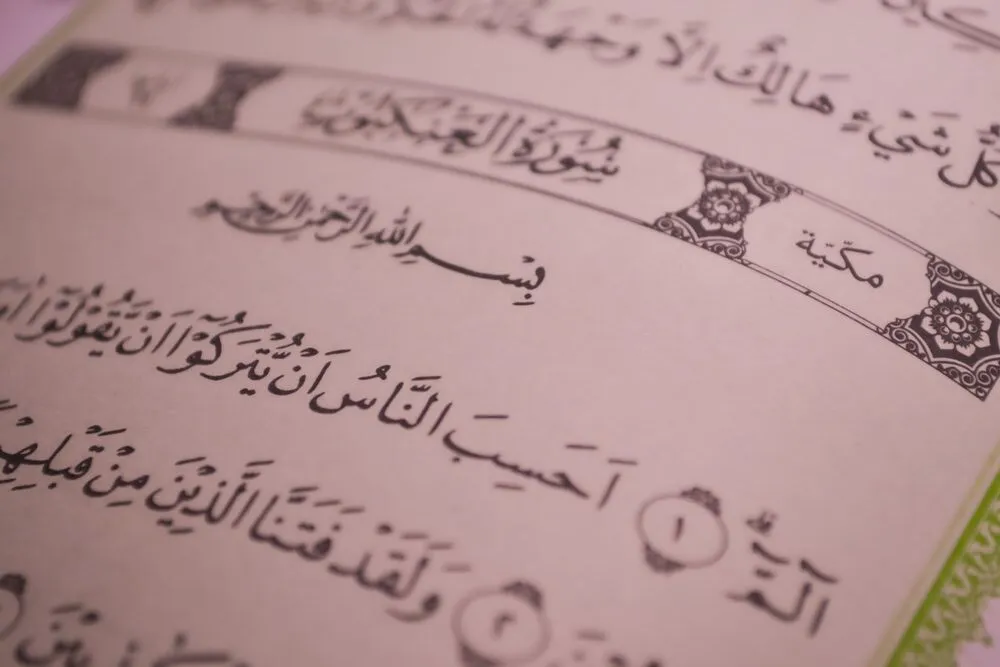
 Tajweed
| Key Takeaways |
| Waqf (stopping) in Quran recitation has four main types: compulsory (Lazim), permitted (Jaiz), preferable stop (Qali), and preferable continue (Sali). |
| The Waqf Tamm (complete stop) occurs where meaning is fully independent — both in wording and content — making it the ideal stopping point in recitation. |
| Waqf Qabih (ugly stop) is forbidden because it cuts meaning mid-sentence, and in severe cases implies attributes contradictory to Allah’s perfection. |
| Seven official Waqf signs appear in the Mushaf: Meem (م), Laa (لا), Saad-Lam-Ya (صلي), Qaaf-Lam-Ya (قلي), Jiim (ج), and the triangular dots for Mu’anaqah pauses. |
| Ibtida (starting) rules determine where recitation may resume — starting after a Waqf Qabih requires returning to an earlier point to restore complete meaning. |
Knowing when to stop and where to begin again may be the most under-taught skill in Quranic recitation. Many students spend years perfecting their pronunciation of individual letters while stopping in places that distort the very message of the Quran — sometimes unintentionally conveying meanings far from the intended Divine speech.
The rules of Waqf (stopping) and Ibtida (starting) are so vital that Ali ibn Abi Talib (may Allah be pleased with him) defined the command in Surah Al-Muzzammil — “وَرَتِّلِ الْقُرْآنَ تَرْتِيلًا” (Al-Muzzammil 73:4) — as two things specifically: “perfecting the letters, and knowing the stopping points.” If you want your recitation to convey the Quran’s meaning with clarity and beauty, these rules are not optional.
Table of Contents:
What Are the Rules of Waqf and Ibtida in Tajweed?
The rules of Waqf and Ibtida govern where a reciter stops, pauses, and resumes during Quran recitation. Waqf means cutting the voice and pausing at the end of a word with the intention of continuing — typically with a breath — while Ibtida means resuming recitation from a permissible point. Together, they determine whether the Quran’s meaning reaches the listener accurately.
At Buruj Academy, our Online Tajweed Classes treat Waqf and Ibtida as a dedicated module — not a footnote. In our instructors’ experience, students who learn these rules alongside Makharij and Sifat produce recitation that is not only technically accurate but genuinely meaningful.
If you are just beginning this path, our Tajweed for Beginners guide is an ideal starting point before deepening your study here.
It is important to distinguish Waqf from Qat’ (complete cessation). Waqf means stopping with the intention to continue — the reciter pauses to breathe and then resumes. Qat’ means ending the recitation session entirely.
Book Your FREE Trial Lesson to Begin Your Tajweed Journey

What Are the Different Types of Waqf in Quran Recitation?
Waqf divides into two primary categories: Waqf Idtirari (involuntary stopping) and Waqf Ikhtiyari (voluntary stopping). The involuntary type occurs when a reciter is forced to stop due to coughing, sneezing, or shortness of breath — this is excused.
The voluntary type — where the reciter chooses when to stop — carries rulings that must be learned and applied.
Voluntary Waqf then divides into permitted and forbidden, with the permitted category containing three levels of quality.
Two additional types exist: Waqf Intizari (the waiting stop used when reciting multiple Qira’at variations of the same word) and Waqf Ikhtibari (the stop made by a student when instructed by their teacher to test their knowledge of proper stopping).
| Type of Waqf | Arabic Term | Meaning | Ruling |
| Involuntary | Idtirari | Forced by circumstance | Excused |
| Complete | Tamm | Full stop, no grammatical/meaning link to next | Recommended |
| Sufficient | Kafi | Meaning complete, loose semantic link ahead | Permitted |
| Good | Hasan | Meaning complete, grammatical link ahead | Permitted with condition |
| Ugly/Forbidden | Qabih | Meaning incomplete | Forbidden (except by necessity) |
| Waiting | Intizari | For presenting multiple Qira’at | Permitted in study |
| Test | Ikhtibari | Teacher-directed examination stop | Permitted in teaching |
This table summarizes the full Waqf system in one view — a structure that our Tajweed for Beginners course walks through systematically, from definition to live recitation application.
Book Your FREE Trial Lesson to Begin Your Tajweed Journey

What Is Waqf Tamm in the Quran?
Waqf Tamm (the Complete Stop) is the stopping point where meaning is entirely independent — the words before the stop and the words after it have no grammatical or semantic connection. It is the highest-quality stopping point and is both permitted and recommended.
Waqf Tamm most often appears at the ends of Surahs, at the conclusion of a narrative about a group (such as the believers or disbelievers), and wherever a completely new topic begins in the text.
Examples of Waqf Tamm in the Quran
Example 1: Stopping on الْمُفْلِحُونَ (Al-Muflihoon — the successful ones):
﴿أُولَٰئِكَ عَلَىٰ هُدًى مِّن رَّبِّهِمْ ۖ وَأُولَٰئِكَ هُمُ الْمُفْلِحُونَ﴾
“Those are upon guidance from their Lord, and it is those who are successful.” (Al-Baqarah 2:5)
Here, the description of the believers ends completely. The very next verse begins an entirely new topic — the disbelievers — so the stop on الْمُفْلِحُونَ is a Waqf Tamm. Starting the next verse fresh is both grammatically sound and meaning-preserving.
Example 2: Stopping on لِلْكَافِرِينَ:
﴿فَاتَّقُوا النَّارَ الَّتِي وَقُودُهَا النَّاسُ وَالْحِجَارَةُ ۖ أُعِدَّتْ لِلْكَافِرِينَ﴾
“Then fear the Fire, whose fuel is people and stones, prepared for the disbelievers.” (Al-Baqarah 2:24)
The description of the Fire ends here, and the next verse begins with the glad tidings of Paradise. The thematic shift makes this a Waqf Tamm.
What Is Waqf Lazim?
Waqf Lazim (the Obligatory Stop) is a subcategory of Waqf Tamm. It is required — not merely preferred — because continuing without stopping would create a meaning that contradicts the intended message of the verse or implies something false about Allah.
This stop is marked in the Mushaf with a small مـ above the word where stopping is obligatory.
Examples of Waqf Lazim in the Quran
Example 1: Stopping on يَسْمَعُونَ:
﴿إِنَّمَا يَسْتَجِيبُ الَّذِينَ يَسْمَعُونَ ۘ وَالْمَوْتَىٰ يَبْعَثُهُمُ اللَّهُ﴾
“Only those who hear will respond. And the dead — Allah will resurrect them.” (Al-An’am 6:36)
If you continue without stopping on يَسْمَعُونَ, a listener could understand that both those who hear and the dead are among those who respond to the call — which is the opposite of the verse’s meaning.
Example 2: Stopping on عَنْهُمْ:
﴿فَتَوَلَّ عَنْهُمْ ۘ يَوْمَ يَدْعُ الدَّاعِ إِلَىٰ شَيْءٍ نُّكُرٍ﴾
“So turn away from them. On the Day the caller calls to something forbidding.” (Al-Qamar 54:6)
Not stopping here could imply the Prophet ﷺ is commanded to turn away from people only on the Day of Judgement — which misrepresents the command entirely.
What Is Waqf Kafi?
Waqf Kafi (the Sufficient Stop) occurs where meaning is grammatically complete but shares a semantic connection with what follows — not a grammatical one. The sentence before the stop stands independently in terms of Irab (grammatical structure), but the ideas flow together in meaning.
It is permitted to stop on Waqf Kafi, and it is also permitted to resume after it without going back to repeat anything.
Examples of Waqf Kafi in the Quran
Example: Stopping on الْبَيْتِ:
﴿فَلْيَعْبُدُوا رَبَّ هَٰذَا الْبَيْتِ ﴿٣﴾ الَّذِي أَطْعَمَهُم مِّن جُوعٍ وَآمَنَهُم مِّنْ خَوْفٍ﴾
“Let them worship the Lord of this House, Who has fed them against hunger and made them secure against fear.” (Quraysh 106:3–4)
The word الَّذِي (Who) in the next verse grammatically describes رَبَّ (the Lord) — so there is a semantic link. However, stopping on الْبَيْتِ still leaves the meaning of that verse whole on its own.
What Is Waqf Hasan?
Waqf Hasan (the Good Stop) occurs where meaning is grammatically complete enough to understand the immediate statement, but the word being stopped on has a grammatical link to what follows. Because of this connection, stopping is permitted — but resuming must include repeating the stopped word or going back slightly to restore full meaning.
The most important exception: if the Waqf Hasan falls at the end of a verse (Ra’s al-Ayah), stopping is fully permitted and resuming from the next verse is allowed. This is because the Prophet ﷺ was reported to pause at verse endings during his recitation.
Examples of Waqf Hasan in the Quran
Example 1: Stopping on الرُّومُ and then on سَيَغْلِبُونَ:
﴿غُلِبَتِ الرُّومُ ﴿٢﴾ فِي أَدْنَى الْأَرْضِ وَهُم مِّن بَعْدِ غَلَبِهِمْ سَيَغْلِبُونَ ﴿٣﴾ فِي بِضْعِ سِنِينَ﴾
“The Byzantines have been defeated in the nearest land, but after their defeat they will overcome within a few years.” (Ar-Rum 30:2–4)
Each of these verse endings has a grammatical link to what follows (الرُّومُ links to فِي أَدْنَى, and سَيَغْلِبُونَ links to فِي بِضْعِ سِنِينَ). Yet stopping is permitted because these are verse endings.
Example 2: Stopping on الْحَمْدُ لِلَّهِ:
﴿الْحَمْدُ لِلَّهِ رَبِّ الْعَالَمِينَ﴾
“All praise is due to Allah, Lord of the worlds.” (Al-Fatihah 1:2)
Stopping after الْحَمْدُ لِلَّهِ is Waqf Hasan — but resuming must include repeating that phrase before continuing to رَبِّ الْعَالَمِينَ, because رَبِّ is grammatically dependent on اللَّهِ.
Excel in Your Quranic Studies
Join Buruj Academy and master the Quran with our structured, professional curriculum.
Book Your Free TrialWhat Is Waqf Qabih?
Waqf Qabih (the Ugly or Forbidden Stop) occurs where a reciter stops before meaning is complete — cutting off a sentence mid-construction, such as stopping on a verb without its subject, a subject without its predicate, or a preposition without its object. This is forbidden in voluntary recitation and has three levels of severity.
The first level leaves the listener without any meaningful fragment — just incomplete grammar.
The second level actively implies a false meaning.
The third — and most severe — implies something that contradicts correct Islamic belief or attributes an unworthy description to Allah ﷻ.
Examples of Waqf Qabih in the Quran
Level 1 — Meaningless fragment:
Stopping on اسْمَ in:
﴿سَبِّحِ اسْمَ رَبِّكَ الْأَعْلَى﴾
“Exalt the name of your Lord, the Most High.” (Al-A’la 87:1)
Stopping on اسْمَ (name) leaves a listener hearing “Exalt… name” — neither grammatically nor meaningfully complete.
Level 2 — False implied meaning:
Stopping on الصَّلَاةَ in:
﴿يَا أَيُّهَا الَّذِينَ آمَنُوا لَا تَقْرَبُوا الصَّلَاةَ وَأَنتُمْ سُكَارَىٰ﴾
“O you who have believed, do not approach prayer while you are intoxicated.” (An-Nisa 4:43)
Stopping after الصَّلَاةَ implies “Do not approach prayer” — a meaning completely opposite to the verse’s actual command.
Level 3 — Contradicts belief:
Stopping on يَهْدِي in:
﴿إِنَّ اللَّهَ لَا يَهْدِي الْقَوْمَ الْفَاسِقِينَ﴾
“Indeed, Allah does not guide the defiantly disobedient people.” (Al-Munafiqun 63:6)
Stopping on يَهْدِي implies “Indeed, Allah does not guide” — a statement that is theologically false and utterly contrary to Islamic belief. This is the most severely forbidden Waqf Qabih.
We encounter this error regularly in group recitation sessions at Buruj Academy — not from carelessness, but from students simply not knowing these rules existed. Once they learn them, the change in their recitation is immediate and striking.
Chart of All Types of Waqf in the Quran
| Stop Type | Meaning Complete? | Grammatical Link After? | Semantic Link After? | May Resume Without Repeating? |
| Waqf Tamm | ✅ Yes | ❌ None | ❌ None | ✅ Yes |
| Waqf Kafi | ✅ Yes | ❌ None | ✅ Yes | ✅ Yes |
| Waqf Hasan | ✅ Yes | ✅ Yes | ✅ Yes | ❌ Must repeat |
| Waqf Qabih | ❌ No | ✅ Yes | ✅ Yes | ❌ Must return earlier |
What Do the Waqf Signs in the Quran Mean?
The Waqf signs printed in the standard Mushaf serve as a practical guide to stopping for reciters at all levels. Learning these quran stopping symbols is essential for anyone reading from the Mushaf independently. Here is the complete reference:
| Symbol | Arabic Name | Meaning | Ruling |
| مـ | Waqf Lazim | Obligatory stop | Must stop here |
| لا | Laa | Do not stop | Prohibited to stop here |
| صلي | Waqf Sali | Continuing is preferred | May stop, but continuing is better |
| قلي | Waqf Qali | Stopping is preferred | May continue, but stopping is better |
| ج | Waqf Jaiz | Stop permitted | Equal choice: stop or continue |
| ∴ ∴ | Mu’anaqah | Paired stop signs | Stop at one OR the other — never both |
The Mu’anaqah (embrace/intertwining) sign — the paired triangular dots — is one of the most misunderstood Quran stop signs. A classic example appears in Surah Al-Baqarah:
﴿ذَٰلِكَ الْكِتَابُ لَا رَيْبَ ۛ فِيهِ ۛ هُدًى لِّلْمُتَّقِينَ﴾
“This is the Book about which there is no doubt, guidance for those conscious of Allah.” (Al-Baqarah 2:2)
You may stop on رَيْبَ (making “There is no doubt” the complete statement) or on فِيهِ (making “There is no doubt in it” the complete statement). Stopping at both changes the meaning to imply that doubt exists somewhere — which is incorrect.
For a deeper study of recitation symbols and their role in beautiful recitation, see our Tajweed Rules Essential Guide.
What Are the Rules of Ibtida (Starting) After a Stop?
Ibtida (starting/resuming) rules govern where a reciter may begin after a Waqf. The governing principle is that resuming must preserve the clarity of meaning. After a Waqf Tamm, Waqf Kafi, or a verse-ending Waqf Hasan — resuming from that exact point is valid.
After a Waqf Hasan that is not at a verse ending, the reciter must return and repeat the stopped word or the words before it to restore the grammatical connection.
After a Waqf Qabih caused by necessity (such as shortness of breath), the reciter must return far enough to make the meaning complete — sometimes several words, sometimes an entire clause.
The strongest Ibtida always begins at a point where the listener receives full, unambiguous meaning from that starting point forward — even if they had not heard anything before it.
This principle guides our instructors when working with students on the Quran Recitation Course: we test their Ibtida choices by asking whether someone hearing them for the first time would grasp the intended meaning. If not, we adjust the starting point.
Book your first FREE recitation lesson

Understanding Ibtida also deepens Quran comprehension overall. When you learn why certain starting points are prohibited, you begin seeing the grammatical architecture of Quranic Arabic — a connection that our Quranic Arabic Classes make explicit for students pursuing deeper understanding.
Discover the Buruj Academy Difference
Step into our virtual classrooms and see how our expert instructors make learning Quran and Arabic intuitive and clear. We focus on overcoming the specific hurdles non-native speakers face, building your confidence and connection with the Quran.
Master Quranic Recitation with Buruj Academy’s Expert Tajweed Instructors
Proper Waqf and Ibtida transforms recitation from mechanical sound production into meaningful communication of Divine speech — and it requires guided instruction to master correctly.
Buruj Academy’s Online Tajweed Classes are taught by Al-Azhar University graduates and Ijazah-certified instructors with 12+ years of experience teaching non-Arabic speakers worldwide.
Our Buruj Method prioritizes sound recognition and meaning-awareness before rule memorization, ensuring students internalize Waqf and Ibtida correctly from the start — not just recite them on a list.
What you receive: personalized 1-on-1 sessions, flexible scheduling, real-time recitation correction, and a structured progression from foundational rules to confident, beautiful Quran recitation.
Book your free trial lesson today and recite with both accuracy and understanding.
Join a supportive learning environment tailored to your pace and lifestyle. Start your journey toward excellence by enrolling in one of our specialized tracks:
- Online Tajweed Classes
- Tajweed Classes for Beginners
- Tajweed Classes for Adults
- Tajweed Classes for Sisters
- Tajweed Classes for Kids
- Advanced Tajweed Course
- Amli Tajweed Course (Practical Application)
Ready to transform your recitation? book your free assessment and start your path to Tajweed mastery today!
Excel in Your Quranic Studies
Join Buruj Academy and master the Quran with our structured, professional curriculum.
Book Your Free TrialConclusion
The rules of Waqf and Ibtida are where Tajweed and Tafsir meet — where correct pronunciation becomes correct meaning. Stopping at a Waqf Tamm or Waqf Lazim is not just a technical recitation choice; it is an act of preserving the integrity of the Quran’s message for every listener. Conversely, a Waqf Qabih — even when accidental — can invert a verse’s meaning entirely.
Alhamdulillah, the classical scholars encoded these rules with precision, and the Mushaf itself provides guidance through its stopping signs.
With proper instruction and consistent practice, these rules become second nature — and your recitation becomes a genuine delivery of meaning, not just sound.
Frequently Asked Questions About the Rules of Waqf and Ibtida
What Are the Quran Stop Signs and What Does Each One Mean?
The Mushaf contains six main stopping signs: مـ (Waqf Lazim — obligatory stop), لا (stop forbidden), صلي (continuing preferred), قلي (stopping preferred), ج (stop permitted), and the triangular paired dots indicating Waqf Mu’anaqah — where the reciter must choose one of two marked positions to stop, not both. Each sign is printed at the specific word it applies to.
Is It Permissible to Stop at the End of Every Verse in the Quran?
Stopping at verse endings is generally permitted and is established by the Sunnah of the Prophet ﷺ, who was reported to pause at each verse ending. However, verse endings may carry a Waqf Hasan or Waqf Kafi ruling — meaning resumption conditions still apply. No verse ending is a Waqf Qabih, so stopping at any verse ending is always at least minimally valid.
What Should a Reciter Do After Accidentally Making a Waqf Qabih?
When a Waqf Qabih occurs out of necessity — due to shortness of breath, coughing, or similar — the reciter is required to return to a point before the stop and resume from there to restore complete meaning. The exact return point depends on the grammatical structure: returning at minimum to the beginning of the clause or sentence that was interrupted.






Leave a Reply