 Tajweed

| Key Takeaways |
| The small meem (م) in the Quran marks Waqf Lazim — a mandatory stop where continuing changes or corrupts the intended meaning. |
| Waqf Lazim appears above the final word of a complete semantic unit, signaling that a new, independent meaning begins immediately after. |
| Connecting across a Waqf Lazim sign is not merely discouraged — classical Tajweed scholarship classifies it as an error that distorts the verse. |
| The sign appears in specific verses where the grammatical or theological boundary between two statements must be preserved without exception. |
| Recognizing Waqf Lazim signs is a foundational Tajweed skill that every Quran reader — beginner or advanced — must learn to protect meaning. |
Every mark in the Quran exists for a reason. The small meem (م) is one of the most consequential — a signal placed directly above a word to tell the reader: stop here, without exception.
The small meem indicates Waqf Lazim, meaning a mandatory stop. Continuing past this sign — connecting the word before it to the word after — alters the meaning of the verse in a way that misrepresents the intended message of the Quran. Stopping is not optional; it is required.
What Does the Small Meem (م) Mean in Tajweed?
The small meem (م) stands for Waqf Lazim — derived from the Arabic root lazima, meaning “to be necessary” or “to be binding.” In classical Tajweed science, it marks the one category of stop where pausing is not a stylistic choice but an obligation every reciter must observe.
Classical Tajweed scholars, including those working within the Hafs ‘an ‘Asim transmission, define Waqf Lazim as a stop whose absence causes ikhtal al-ma’na — a corruption of meaning. This distinguishes it sharply from optional stops like Waqf Jaiz (permissible) or Waqf Hasan (good), where reciter preference plays a role.
The sign is placed above the final letter of the word at which the reader must stop. It does not appear at arbitrary points — its placement follows a precise scholarly review of where the semantic boundary between two complete, independent statements falls.
At Buruj Academy, our Online Tajweed Classes teach students to recognize all Waqf signs from the very beginning — not as memorized symbols, but as meaning-protection tools that directly serve the reciter’s understanding of Allah’s words.
Book Your FREE Trial Lesson to Begin Your Tajweed Journey

Why Is Stopping at the Small Meem Obligatory and Not Optional?
Stopping at Waqf Lazim is obligatory because connecting the two surrounding phrases produces a meaning the Quran does not intend — and in some cases produces a meaning that is theologically incorrect.
Example of the Small Meem Symbol in the Quran
The most cited example comes from Surah Al-An’am (6:36):
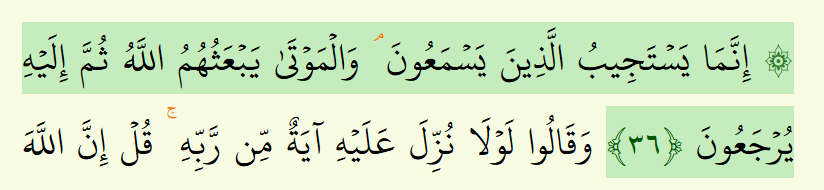
Innamā yastajību alladhīna yasma’ūn. Wal-mawtā yab’athuhumu-llāh.
“Only those who hear will respond. But the dead — Allah will resurrect them.” (Al-An’am 6:36)
Waqf Lazim falls after يَسْمَعُونَ. Without stopping, the sentence could be read as: “Only those who hear will respond — and the dead,” which incorrectly implies the dead also respond. The stop separates two distinct theological statements.
This example demonstrates the core issue: Waqf Lazim protects the aqeedah — the doctrinal accuracy — of the Quran, not merely its literary flow.
Excel in Your Quranic Studies
Join Buruj Academy and master the Quran with our structured, professional curriculum.
Book Your Free TrialRead also: What Does لا Mean in Quran? Understanding the Waqf Mamnu’ Symbol
Where Does the Small Meem Appear in the Quran?
The small meem appears at specific locations identified and agreed upon by Tajweed scholars across generations. It is not scattered randomly — each placement reflects a recognized semantic or theological boundary requiring protection.
| Location | Surah | Key Word Before م | Reason for Mandatory Stop |
| After يَسْمَعُونَ | Al-An’am 6:36 | يَسْمَعُونَ | Prevents false implication that the dead respond |
| After قَوْلُهُمْ | Ya-Sin 36:76 | قَوْلُهُمْ | Separates command to Prophet (ﷺ) from statement about Allah’s knowledge |
| After specific boundary words | Various positions | Variable | Each marks a theological or grammatical break requiring a clean stop |
Example of the Small Meem (م) Symbol in the Quran
The second example — Surah Ya-Sin (36:76) — is equally instructive:
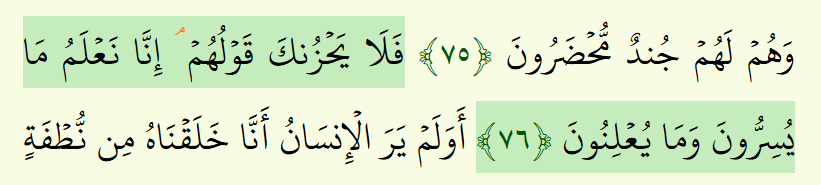
Falā yahzunka qawluhum. Innā na’lamu mā yusirrūna wa mā yu’linūn.
“So do not let their speech grieve you. Indeed, We know what they conceal and what they declare.” (Ya-Sin 36:76)
Waqf Lazim falls after قَوْلُهُمْ. Without stopping, the verse structure could suggest that what follows — “We know what they conceal” — is part of their speech, rather than a divine statement of reassurance to the Prophet ﷺ.
How Does Waqf Lazim Differ from Other Waqf Signs in the Quran?
The Quran uses multiple Waqf signs, each carrying a different instruction. Understanding how Waqf Lazim compares to the others is essential for any student progressing through Tajweed for beginners.
| Waqf Sign | Symbol | Name | Instruction |
| م | Small Meem | Waqf Lazim | Mandatory stop — connecting corrupts meaning |
| ج | Jeem | Waqf Jaiz | Permissible — stopping or continuing both acceptable |
| لا | Laa | Waqf Mamnoo’ | Do not stop here — stopping disrupts meaning |
| صلى | Sallā | Wasl Awla | Continuing is better than stopping |
The critical distinction: Waqf Lazim is the only sign where stopping is classified as wajib (obligatory) in the sense that ignoring it produces an error in meaning. The Laa sign (لا) is its functional opposite — stopping there is the error, not stopping at Waqf Lazim.
In our sessions at Buruj Academy, students who learn these signs together — side by side in a comparative table — retain them significantly faster than students who learn them in isolation. Seeing the contrast makes each sign’s function immediately memorable.
Discover the Buruj Academy Difference
Step into our virtual classrooms and see how our expert instructors make learning Quran and Arabic intuitive and clear. We focus on overcoming the specific hurdles non-native speakers face, building your confidence and connection with the Quran.
How Should a Reciter Stop Correctly at the Small Meem Sign?
Stopping at Waqf Lazim follows the standard rules of Waqf in Tajweed, which every student can study in detail through our guide on how to read Quran with Tajweed.
When reaching the word marked with the small meem, the reciter:
1. Applies the Correct Waqf Pronunciation on the Final Letter
The final voweled letter of the stop word is pronounced with sukoon (no vowel sound) — the standard Tajweed rule for any pausing position. If the word ends in a tanwin (double vowel marker), the tanwin converts to a single madd or simple vowel as per established Waqf rules.
2. Takes a Breath Before Resuming
After stopping, the reciter takes a natural breath. This is not a choice — it is the physical mechanism that enforces the semantic boundary. The pause allows the listener’s mind to process the completed statement before receiving the new one.
3. Resumes from the Marked Word or Earlier
When resuming after a Waqf Lazim stop, the reciter begins from the word immediately following the stop point. If the reciter needs to resume mid-verse for breath reasons, they may go back slightly to a natural earlier point — but must never begin from within the middle of a phrase in a way that creates incomplete meaning.
Buruj Academy’s Tajweed for Beginners course dedicates specific sessions to practicing Waqf signs in live recitation, with our Ijazah-certified instructors correcting both pronunciation and stopping accuracy in real time.
Book Your FREE Trial Lesson to Begin Your Tajweed Journey

Excel in Your Quranic Studies
Join Buruj Academy and master the Quran with our structured, professional curriculum.
Book Your Free TrialRead also: What Does ط Mean in Quran?
Perfect Your Recitation with Buruj Academy’s Expert Tajweed Instructors
Understanding Waqf signs is one layer of correct Quran recitation — applying them consistently under a qualified teacher’s guidance is another entirely.
Buruj Academy’s Online Tajweed Classes are designed for non-Arabic speakers at every level, taught by Al-Azhar University graduates and Ijazah-certified instructors with 12+ years of teaching experience. Our Buruj Method trains the ear and the eye together — recognizing signs, understanding their purpose, and applying them correctly in live recitation.
Every session is 1-on-1, flexible around your schedule, and built around your specific recitation level. Book your free trial lesson today and recite the Quran the way it was meant to be recited — with precision, confidence, and understanding.
Join a supportive learning environment tailored to your pace and lifestyle. Start your journey toward excellence by enrolling in one of our specialized tracks:
- Online Tajweed Classes
- Tajweed Classes for Beginners
- Tajweed Classes for Adults
- Tajweed Classes for Sisters
- Tajweed Classes for Kids
- Advanced Tajweed Course
- Amli Tajweed Course (Practical Application)
Frequently Asked Questions About the Small Meem in the Quran
What Does the Small م Symbol Mean Above a Word in the Quran?
The small م above a word marks Waqf Lazim — a mandatory stop. It signals that pausing at this point is obligatory because connecting the word before it to the word after would alter or corrupt the intended meaning of the verse. Every Quran reader, regardless of level, must stop at this sign without exception.
Is It a Sin to Skip the Small Meem Stop While Reciting?
Skipping a Waqf Lazim stop is classified as an error in Tajweed that distorts Quranic meaning. Classical Tajweed scholarship treats it as ikhtilal al-ma’na — a corruption of meaning — which is why it is named “Lazim” (obligatory). While scholars differ on precise sinfulness, every established Tajweed tradition agrees it must not be ignored.
How Many Waqf Lazim Signs Are There in the Quran?
The exact number varies slightly based on different scholarly recension traditions and Mushaf editions, but the sign appears at a defined, limited set of locations — all of which represent verses where theological or grammatical accuracy specifically requires the mandatory stop. Your Tajweed teacher can mark and practice each one systematically with you.
What Happens Grammatically When You Connect Across a Waqf Lazim Sign?
Connecting across a Waqf Lazim sign typically merges two independent sentences into one continuous statement — changing the subject, predicate, or theological meaning. In Surah Al-An’am (6:36), for example, connecting removes the separation between those who respond and the dead, creating a false doctrinal implication that contradicts the verse’s meaning entirely.
Can a Beginner Learn to Identify Waqf Signs on Their Own?
Identifying Waqf signs is possible independently using a standard Mushaf — the symbols are printed clearly. However, understanding why each sign appears where it does, and practicing the correct stopping technique in recitation, requires guidance from a qualified Tajweed teacher. Beginners are strongly encouraged to study Waqf rules as part of a structured Tajweed course rather than in isolation.