 Quran
Quran
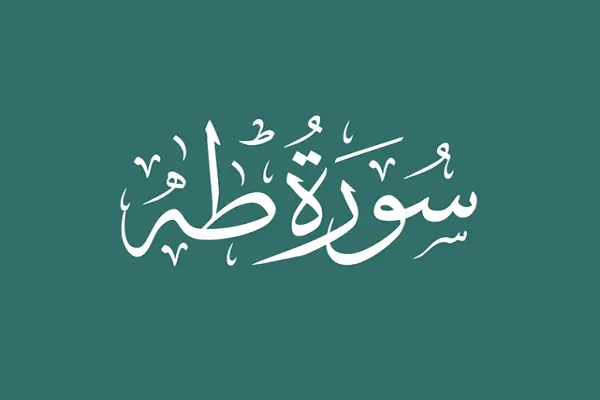
Surah Taha holds a singular place in the hearts of Muslims worldwide. Revealed during one of the most spiritually intense periods of early Islam, this Makkan surah opens with two letters — طه — and proceeds to recount the story of Prophet Musa (AS) with extraordinary beauty and emotional depth.
For non-Arabic speaking Muslims especially, understanding the benefits of Surah Taha requires separating what is authentically established from what has spread through popular tradition without verified sources.
Table of Contents:
What Are the Authentic Benefits of Surah Taha According to Hadith?
The benefits of Surah Taha hadith evidence is a topic that demands careful handling. One widely reported narration — often quoted in popular Islamic content — states that whoever recites Surah Taha will receive the reward of those who were present at the Battle of Badr. This narration is classified by hadith scholars as extremely weak (da’if) or fabricated and is not found with a reliable chain in the major authenticated collections.
What is authentically established, however, is the Prophet’s ﷺ general encouragement of Quran recitation at large, and specifically the consistent recitation of longer Makkan surahs. The Prophet ﷺ said, as recorded in Sahih Muslim :
“اقْرَءُوا الْقُرْآنَ فَإِنَّهُ يَأْتِي يَوْمَ الْقِيَامَةِ شَفِيعًا لأَصْحَابِهِ”
“Recite the Quran, for it will come on the Day of Resurrection as an intercessor for its companions.”
This authentic hadith is the proper foundation for understanding the spiritual benefit of reciting any surah — including Surah Taha.
Buruj’s Azhari Quran tutors teach our students to build their relationship with Surah Taha on what is solid: the surah’s own words, its themes, and the general authentic ahadith about Quran recitation.
Book a FREE trial session with one of Buruj’s Azhari Quran tutors

Benefits of Surah Taha for Spiritual Growth
Surah Taha does not require external narrations to establish its spiritual value — the surah’s own themes are its most powerful testimony. Every major section of this surah carries a distinct spiritual lesson, directly addressed to the human heart.
1. Divine Reassurance Is a Direct Promise Allah Makes to the Distressed Believer
The surah opens with Allah directly addressing the Prophet ﷺ — and by extension, every believer carrying a burden:
مَا أَنزَلْنَا عَلَيْكَ ٱلْقُرْءَانَ لِتَشْقَىٰٓ
Mā anzalnā ‘alayka l-qur’āna litashqā
“We have not sent down to you the Quran that you be distressed.” (Taha 20:2)
This is Allah’s opening statement in the surah — not a comfort offered midway, but a declaration placed at the very beginning. The spiritual benefit here is immediate: the Quran was sent as relief.
Reciting Surah Taha is, therefore, an act of receiving that relief directly. Students who return to this verse during personal hardship consistently describe a specific settling of anxiety that no other instruction produces in quite the same way.
2. Knowing Allah’s Names Builds a Foundation of Tawheed That Cannot Be Shaken
Early in the surah, Allah introduces Himself directly to Musa (AS) at the blessed tree — and the self-introduction He gives is among the most concentrated statements of Tawheed in the entire Quran:
إِنَّنِىٓ أَنَا ٱللَّهُ لَآ إِلَٰهَ إِلَّآ أَنَا۠ فَٱعْبُدْنِى وَأَقِمِ ٱلصَّلَوٰةَ لِذِكْرِىٓ
Innanī ana-llāhu lā ilāha illā anā fa-‘budnī wa-aqimi ṣ-ṣalāta lidhikrī
“Indeed, I am Allah. There is no deity except Me, so worship Me and establish prayer for My remembrance.” (Taha 20:14)
The spiritual benefit of meditating on this verse is the recalibration of the entire self around one reality.
Our instructors teach this verse as a foundational Tawheed anchor — when a student’s faith feels scattered or weakened by doubt, returning to this direct divine declaration restores clarity in a way that theological arguments alone cannot.
3. Tawakkul Becomes Accessible When You See How Allah Equipped Musa Before Sending Him
Before Allah sent Musa (AS) to Pharaoh, He first showed him the staff, the luminous hand, and the promise of divine companionship.
He did not send Musa empty-handed into difficulty. This pattern carries a direct spiritual lesson for every believer facing a seemingly impossible task:
قَالَ لَا تَخَافَآ ۖ إِنَّنِى مَعَكُمَآ أَسْمَعُ وَأَرَىٰ
Qāla lā takhāfā, innanī ma’akumā asma’u wa arā
“He said, ‘Fear not. Indeed, I am with you both; I hear and I see.'” (Taha 20:46)
The spiritual benefit of this theme is a lived understanding of Tawakkul — not passive resignation, but active reliance grounded in the certainty that Allah sees and hears every moment of difficulty.
We observe in our sessions that students who memorize this verse and understand its context carry it into their daily challenges in a way that abstract lessons about trust in Allah rarely achieve.
4. Sincere Dua in Moments of Weakness Is Itself an Act of Prophetic Strength
When Musa (AS) was afraid — facing Pharaoh’s magicians and the weight of his mission — he turned to Allah in direct supplication. The Quran records this dua with full transparency, showing a Prophet acknowledging his human limitation:
قَالَ رَبِّ ٱشْرَحْ لِى صَدْرِى وَيَسِّرْ لِىٓ أَمْرِى وَٱحْلُلْ عُقْدَةً مِّن لِّسَانِى يَفْقَهُوا۟ قَوْلِى
Qāla rabbi-shraḥ lī ṣadrī, wa yassir lī amrī, wa-ḥlul ‘uqdatan min lisānī, yafqahū qawlī
“He said, ‘My Lord, expand for me my breast, and ease for me my task, and untie the knot from my tongue that they may understand my speech.'” (Taha 20:25–28)
This dua is among the most beloved supplications our students learn — particularly those who feel self-conscious about their Arabic pronunciation or communication in religious settings.
Its spiritual benefit is twofold: it models that even prophets asked Allah for help with speech and ease, and it gives every believer a tested, Quranic dua to use in their own moments of inadequacy.
5. Forgetting Dhikr Is Identified as the Root Cause of a Constricted Life
One of Surah Taha’s most sobering spiritual lessons comes in its description of the one who turns away from Allah’s remembrance:
وَمَنْ أَعْرَضَ عَن ذِكْرِى فَإِنَّ لَهُۥ مَعِيشَةً ضَنكًا
Wa man a’raḍa ‘an dhikrī fa-inna lahū ma’īshatan ḍankā
“And whoever turns away from My remembrance — indeed, he will have a depressed life.” (Taha 20:124)
The spiritual benefit of this verse is the clarity it provides about the source of inner emptiness.
Many of our students come to us describing a vague sense of dissatisfaction — with careers, routines, and daily life — that they cannot explain. This verse names it directly: distance from dhikr.
Reciting Surah Taha regularly reorients the heart toward the one practice that the Quran itself identifies as the antidote to a constricted existence.
Read also: Surah Taghabun Benefits
6. Seeking Increase in Knowledge Is a Quranic Obligation Embedded in This Surah
The surah closes with one of the Quran’s most direct instructions to the Prophet ﷺ — and to every believer:
وَقُل رَّبِّ زِدْنِى عِلْمًا
Wa qul rabbi zidnī ‘ilmā
“And say, ‘My Lord, increase me in knowledge.'” (Taha 20:114)
The spiritual benefit here is not merely the supplication itself — it is the implicit teaching that a believer is never complete in knowledge and must always be actively seeking more.
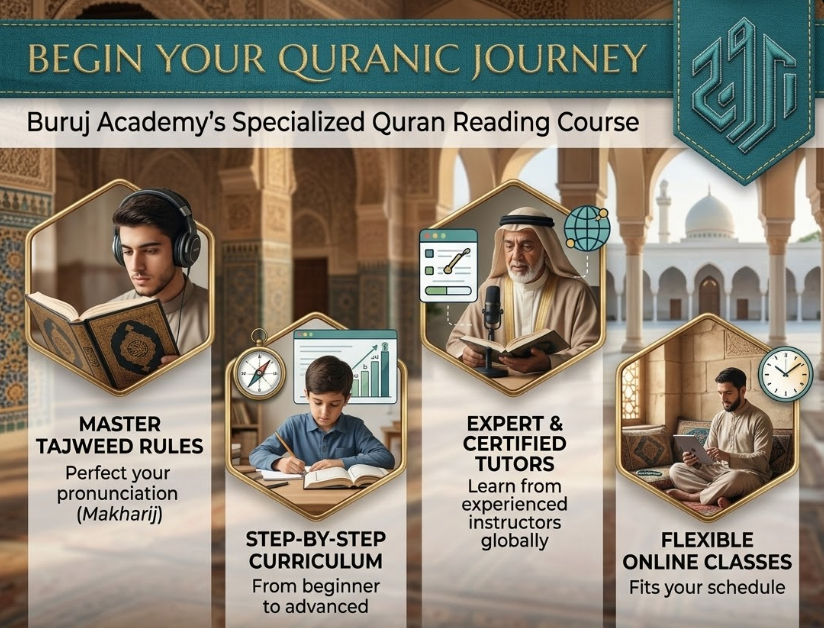
This verse is the reason our Al-Azhar-trained instructors begin every Buruj Academy session with it. Whether a student is starting their first Quran reading courseor advancing through complex Tajweed rules, this verse frames all learning as an act of worship and continuous growth.
For those ready to begin or deepen their own Quranic education, our reading the Quran for the first time guide is a natural next step alongside engaging with surahs like Taha with full comprehension.
Book your Free trial lesson and start reading the Quran
Surah Taha Benefits for Marriage
There is no authenticated hadith specifically linking the recitation of Surah Taha to facilitating marriage or removing obstacles in marital matters. Claims such as “recite Surah Taha X times after Fajr for marriage” do not trace back to the Prophet ﷺ, the Sahaba, or reliable early Islamic scholarship.
The correct Islamic approach for marriage matters is sincere dua, istikhara prayer, and seeking righteous means.
If someone finds comfort in reciting Surah Taha during difficult personal circumstances — including the wait for a spouse — that is a spiritually sound practice because it is Quran recitation.
But attaching a specific outcome to a specific numerical recitation without prophetic evidence is not something we can endorse.
For deeper guidance on building a Quran-connected life, our blog on the benefits of reading Quran provides authentic and grounded perspectives.
Excel in Your Quranic Studies
Join Buruj Academy and master the Quran with our structured, professional curriculum.
Book Your Free TrialBenefits of Surah Taha for Students
There is no authenticated hadith specifically linking the recitation of Surah Taha for students.
However, Surah Taha’s benefits for students are particularly meaningful because the surah contains one of the Quran’s most direct supplications for knowledge. Allah commands the Prophet ﷺ:
وَقُل رَّبِّ زِدْنِى عِلْمًا
Wa qul rabbi zidnī ‘ilmā
“And say, ‘My Lord, increase me in knowledge.'” (Taha 20:114)
This single verse has been the constant companion of students of Islamic knowledge for fourteen centuries. It is the verse our Al-Azhar-trained instructors teach students to recite before every learning session at Buruj Academy.
Its benefit for students is textually explicit: it is Allah’s own instruction that a seeker of knowledge ask continuously for increase.
How Surah Taha Builds a Learner’s Mindset
The surah’s narrative also teaches patience in the learning process. Prophet Musa (AS) sought knowledge from Khidr (AS) with humility and restraint — a model for every student who struggles with impatience on their learning path.
Whether memorizing Quran, mastering Tajweed, or studying Arabic, the disposition Surah Taha models is one of disciplined seeking.
Buruj Academy’s Online Hifz Program incorporates this principle directly — our Hifz specialists build students’ memorization habits around consistency and humility before the text, not speed or performance pressure.
Students memorizing Surah Taha find its verses deeply internalized through this approach.
Start Hifz today with a FREE trial session
Benefits of Surah Taha for Health, Skin, and Pregnancy
There are no authenticated hadiths specifically linking Surah Taha recitation to physical healing of skin conditions, pregnancy outcomes, or general health improvement beyond what is established for Quran recitation generally.
What is authentically established — and profoundly significant — is that the Quran as a whole is described as healing:
وَنُنَزِّلُ مِنَ ٱلْقُرْءَانِ مَا هُوَ شِفَآءٌ وَرَحْمَةٌ لِّلْمُؤْمِنِينَ
Wa nunazzilu minal-qur’āni mā huwa shifā’un wa raḥmatun lil-mu’minīn
“And We send down of the Quran that which is a healing and a mercy to the believers.” (Al-Isra 17:82)
This applies to the entire Quran — and therefore to Surah Taha as part of it. Specific surah-specific health claims require their own evidence.
| Topic | Authentic Basis |
| Surah Taha for general spiritual healing | Supported — part of the Quran’s overall healing nature (17:82) |
| Surah Taha for skin conditions specifically | No authenticated specific narration found |
| Surah Taha for pregnancy ease | No authenticated specific narration found |
For pregnant sisters seeking Quranic connection, reciting Surah Taha — and engaging with the Quran broadly — is wholeheartedly encouraged.
The spiritual peace it brings, the stories of divine mercy it contains, and the dua it includes are all deeply meaningful during pregnancy.
The distinction we make is between spiritual encouragement and claims of specific physical outcomes tied to specific recitation formulas.
Read also: Surah Naba Benefits
How Can You Memorize Surah Taha Effectively?
Surah Taha’s 135 verses make it an intermediate memorization goal — appropriate for students who have completed Juz 30 and are progressing through the Quran.
In our experience working with adult students at Buruj Academy, Surah Taha typically requires 6–10 weeks of daily focused memorization at a pace of 3–5 verses per session, followed by consistent revision.
The most effective approach follows the principles we detail in our guide on how to memorize Quran faster:
- Memorize with meaning — understanding the story of Musa (AS) dramatically aids retention
- Use the surah’s narrative structure as a memory scaffold (call of Allah → mission → confrontation → victory)
- Revise newly memorized sections in every Salah before moving forward
Buruj Academy’s Hifz for Adults course supports students memorizing longer Makkan surahs like Surah Taha with personalized revision schedules and weekly accountability sessions with Ijazah-certified instructors.
Book Your Free Trial Lesson with Burruj’s Hifz Course for Adults

Our Hifz for Kids course uses age-appropriate techniques for younger students approaching the same goal.
For recitation quality alongside memorization, proper Tajweed is essential. Our Tajweed for Beginners course ensures students recite Surah Taha’s distinctive sounds — including its emphatic letters and extended vowels — with the accuracy the Quran deserves.
You can also explore our foundational guide on tajweed for beginners to understand what rules apply most frequently in this surah.
Discover the Buruj Academy Difference
Step into our virtual classrooms and see how our expert instructors make learning Quran and Arabic intuitive and clear. We focus on overcoming the specific hurdles non-native speakers face, building your confidence and connection with the Quran.
Deepen Your Quran Connection with Buruj Academy’s Expert Instructors
Surah Taha is one of the Quran’s most spiritually rich chapters — and engaging with it properly means reciting it beautifully, understanding its meaning, and memorizing it with confidence.
Buruj Academy offers personalized, 1-on-1 online programs taught by Al-Azhar University graduates and Ijazah-certified instructors with 12+ years of experience teaching non-Arabic speaking Muslims worldwide.
Our programs include the Online Hifz Program, Online Tajweed Classes, and the Quran Recitation Course — each built on the Buruj Method: Consistency-before-speed, Sound-before-rules, Patience-before-performance.
Take the next step in your learning journey today by enrolling in one of our specialized programs:
- Online Quran Classes
- Online Quran Classes for Beginners
- Online Quran Classes for Adults
- Online Quran Classes for Ladies
- Online Quran Classes for Kids
- Quran Reading Course
- Quran Recitation Course
- Online Ijazah Course
- Online Qirat Course
Don’t wait to transform your relationship with the Holy Quran. Join our global community of students and book your free evaluation session now!
Excel in Your Quranic Studies
Join Buruj Academy and master the Quran with our structured, professional curriculum.
Book Your Free TrialWhether you are memorizing Surah Taha for the first time or perfecting your recitation, our instructors provide real-time feedback and individualized correction in every session.
Book your free trial lesson today and experience the difference of learning Quran with authentic, qualified guidance.
Conclusion
Surah Taha is a surah that speaks to every human condition — fear, longing for knowledge, the need for divine reassurance, and the hope of mercy. Its benefits are real and profound, but they are best understood through the surah’s own words and through what is authentically established in the Sunnah.
We encourage every Muslim to recite Surah Taha with understanding, memorize it with a qualified teacher, and approach specific claims about its benefits with the same care they would bring to any matter of Deen.
Building a lifelong relationship with this surah — grounded in sincerity and knowledge — is, Insha’Allah, its greatest benefit of all.
Frequently Asked Questions About Surah Taha Benefits
Is There an Authentic Hadith About the Benefits of Surah Taha?
Specific hadith narrations about Surah Taha’s individual benefits are classified as weak by hadith scholars and are not found in the major authenticated collections.
Are the Surah Taha Benefits for Marriage Supported by Islamic Evidence?
No authenticated hadith specifically links Surah Taha recitation to marriage facilitation. Reciting it with sincerity during times of personal difficulty — including waiting for a spouse — is spiritually sound because it is Quran recitation. However, prescribing specific repetitions for marriage outcomes without prophetic evidence is not established in classical Islamic scholarship and should be approached with caution.
Can Surah Taha Be Recited for Health and Healing?
Reciting Surah Taha — like any Quranic surah — carries the general Quranic quality of being a healing for believers, as stated in Surah Al-Isra (17:82). Specific claims about skin conditions or physical ailments tied uniquely to Surah Taha lack authenticated narrations. Reciting it with presence of heart, reflection on its meaning, and trust in Allah is the grounded and encouraged approach..