 Quran
Quran
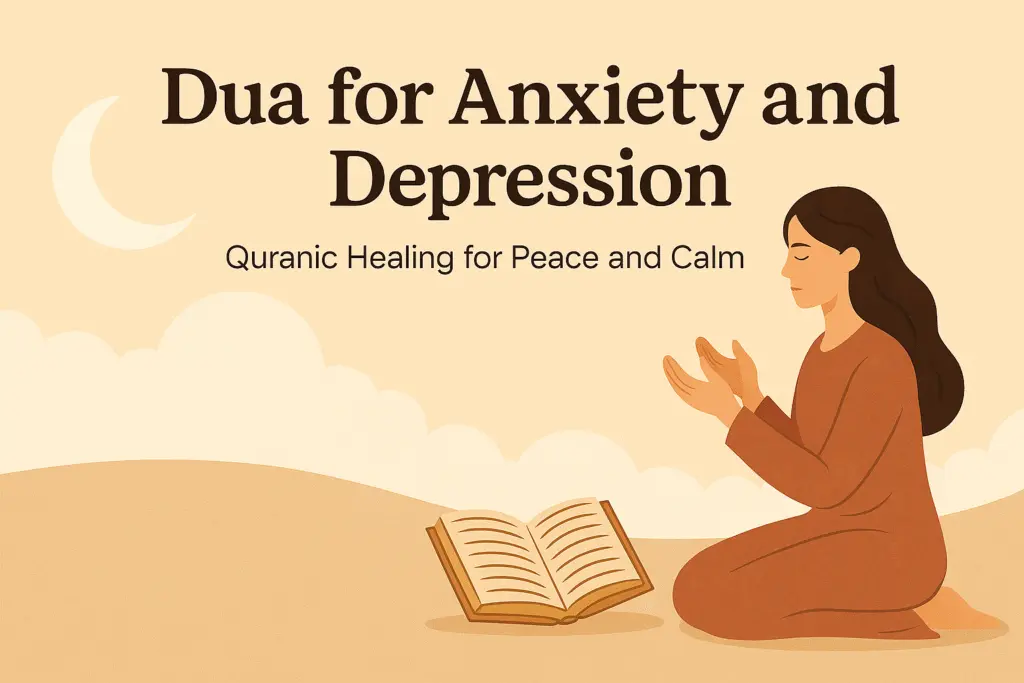
Anxiety and depression are not signs of weak faith — they are human experiences that the Quran addresses directly, with specific surahs revealed at moments of real emotional pain. The Quran’s guidance on the heart is not abstract comfort; it is precision-targeted relief.
All Quran surahs are great for anxiety and depression, and there is no described surah for anxiety and depression in authentic hadith; however, we can suggest several surahs in the Quran specifically in response to grief, despair, and spiritual heaviness — including Surah Ad-Duha and Surah Ash-Sharh.
These surahs for depression and anxiety carry both spiritual weight and psychological clarity, and regular, understood recitation of them has been a healing practice across centuries of Islamic scholarship.
Table of Contents:
Which Surah in the Quran Is Best for Anxiety and Depression?
The best Quran surahs for anxiety and depression are Surah Ad-Duha (93), Surah Ash-Sharh (94), and Surah Al-Baqarah (2) — particularly verses 155–157 and 286. Each was revealed in a context of real distress and carries specific Quranic reassurance that speaks directly to the anxious or grieving heart.
1. Surah Ad-Duha is the Quran’s Most Direct Response to Depression
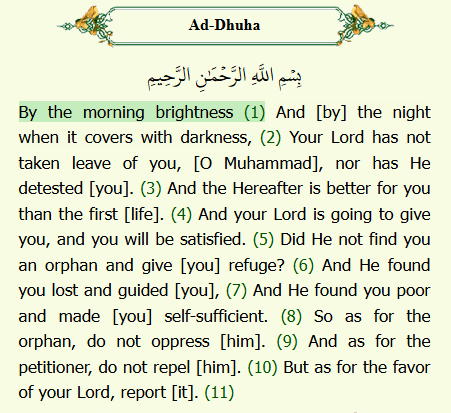
Surah Ad-Duha was revealed after a period when revelation had paused, and the Prophet ﷺ experienced profound grief, fearing he had been abandoned by Allah. This context alone tells us something critical: even the greatest human being experienced a form of spiritual desolation — and Allah responded with an entire surah.
وَٱلضُّحَىٰ وَٱلَّيْلِ إِذَا سَجَىٰ مَا وَدَّعَكَ رَبُّكَ وَمَا قَلَىٰ
Wad-duhaa. Wal-layli idhaa sajaa. Maa wadda’aka rabbuka wa maa qalaa.
“By the morning brightness (1) And [by] the night when it covers with darkness, (2) Your Lord has not taken leave of you, [O Muhammad], nor has He detested [you].” (Ad-Duha 93:1–3)
These verses are a direct divine negation of abandonment — theologically the most powerful response to the core feeling of depression, which is disconnection.
The surah continues with the promise that what comes later will be better than what has passed — a Quranic declaration that the present suffering is not the final state.
2. Surah Ash-Sharh: The Quran’s Promise That Relief Always Follows Hardship
Surah Ash-Sharh contains one of the most structurally significant reassurances in the Quran.
The phrase “Indeed, with hardship comes ease” appears twice in consecutive verses (94:5–6). Classical scholars of Tafsir noted that the Arabic grammar here is deliberate: the word for “hardship” (العسر) carries the definite article both times — referring to the same hardship — while the word for “ease” (يسرًا) is indefinite both times, implying a new ease each time.
فَإِنَّ مَعَ ٱلْعُسْرِ يُسْرًا إِنَّ مَعَ ٱلْعُسْرِ يُسْرًا
Fa-inna ma’al-‘usri yusraa. Inna ma’al-‘usri yusraa.
“For indeed, with hardship [will be] ease. Indeed, with hardship [will be] ease.” (Ash-Sharh 94:5–6)
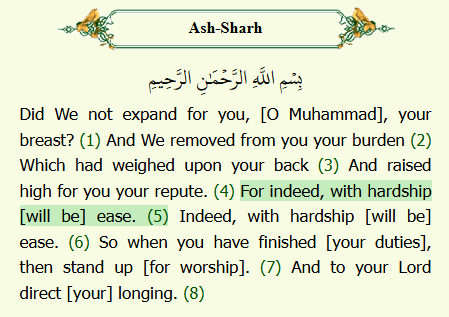
The repetition with grammatical variation is not accident — it is Quranic emphasis: one hardship, two eases. This is precision theological comfort, not vague reassurance.
In our sessions at Buruj Academy, we often introduce this surah early in our Hifz for Adults course— not only because it is short and accessible, but because students consistently report that the act of memorizing and understanding it brings genuine emotional steadiness during difficult seasons of life.
Book Your Free Trial Lesson with Burruj’s Hifz Course for Adults
What Does the Quran Say About Anxiety Directly?
The Quran addresses anxiety through both direct statements and contextual examples. The most direct Quranic verse addressing a worried, burdened heart is found in Surah Al-Baqarah, which covers the emotional reality of testing and gives believers a framework for understanding — not just surviving — difficulty.
لَا يُكَلِّفُ ٱللَّهُ نَفْسًا إِلَّا وُسْعَهَا
Laa yukallifullahu nafsan illaa wus’ahaa.
“Allah does not burden a soul beyond that it can bear.” (Al-Baqarah 2:286)
This verse is not merely comforting — it is a divine decree. For someone experiencing anxiety rooted in feeling overwhelmed, this verse reframes the situation theologically: the capacity exists, even when it does not feel that way.
Earlier in the same surah, Allah prepares believers for hardship with one of the Quran’s most famous promises:
وَبَشِّرِ ٱلصَّـٰبِرِينَ ٱلَّذِينَ إِذَآ أَصَـٰبَتْهُم مُّصِيبَةٌ قَالُوٓا۟ إِنَّا لِلَّهِ وَإِنَّآ إِلَيْهِ رَٰجِعُونَ
Wa bashshiris-saabireen. Alladheena idhaa asaabat-hum museebatun qaaloo innaa lillaahi wa innaa ilayhi raaji’oon.
“And give good tidings to the patient — who, when disaster strikes them, say, ‘Indeed we belong to Allah, and indeed to Him we will return.'” (Al-Baqarah 2:155–156)
The framing here is active — the one experiencing hardship speaks Inna lillahi. The response to grief is Quranic speech itself.
Read also: Forgiveness Ayat in Quran
Which Surah of the Quran Is for Depression Specifically?
Surah Ad-Duha is the surah most specifically connected to depression in classical Islamic scholarship. Its revelation context — the Prophet ﷺ experiencing what scholars describe as profound grief and a sense of divine distance — mirrors the defining features of depression: disconnection, loss of meaning, and fear that the painful state is permanent.
The surah contains three rhetorical questions that directly challenge the depressive thought pattern:
أَلَمْ يَجِدْكَ يَتِيمًا فَـَٔاوَىٰ
Alam yajidka yateeman fa-aawaa.
“Did He not find you an orphan and give refuge?” (Ad-Duha 93:6)
The Quran’s response to “I am alone and without support” is: look at what has already been provided. This is a Quranic cognitive reframe.
The surah closes with practical gratitude imperatives — do not oppress the orphan, do not rebuke the one who asks, and speak of the blessings of your Lord.
Classical Tafsir scholars observed that these closing commands redirect the grief-stricken person outward — toward others, toward action, toward expression of gratitude.
This is not accidental. It is the Quran’s prescribed antidote to inward-spiraling depression.
Excel in Your Quranic Studies
Join Buruj Academy and master the Quran with our structured, professional curriculum.
Book Your Free TrialSurah Ar-Ra’d Verse 28 is the Most Quoted Verse on Anxiety and the Heart
أَلَا بِذِكْرِ ٱللَّهِ تَطْمَئِنُّ ٱلْقُلُوبُ
Alaa bidhikrillahi tatma’innu al-quloob.
“Unquestionably, by the remembrance of Allah hearts are assured.” (Ar-Ra’d 13:28)
This verse is the Quran’s direct declaration on the mechanism of heart-peace: dhikr — remembrance — is not one option among many; the Arabic “alaa” is an affirmation particle emphasizing certainty.
This verse is not a surah on its own, but its recitation and memorization as a standalone ayah is widely recommended by Islamic scholars as a daily practice for those experiencing anxiety.
How to Use These Surahs as a Daily Practice for Anxiety and Depression?
Knowing which Quran surah helps with anxiety is only the beginning — the healing comes through consistent, understood recitation. The surahs above are most beneficial when recited with awareness of their meaning, not as incantations but as addressed speech from Allah to the believer.
| Practice | Surah/Verse | Best Time |
| Morning grounding | Ad-Duha (93) | After Fajr |
| Anxiety spike response | Ash-Sharh (94) + Ar-Ra’d 13:28 | In the moment of anxiety |
| Pre-sleep protection | Ayat al-Kursi (2:255) | Before sleep |
| After salah reflection | Al-Baqarah 2:286 | Post-prayer |
| Weekly deep recitation | Full Surah Al-Baqarah | Fridays or weekly Quran time |
Regarding Ayat al-Kursi, the Prophet ﷺ described its recitation before sleep as bringing divine protection through the night. This is recorded in Sahih al-Bukhari 2311 — a well-established authentic hadith establishing Ayat al-Kursi as a daily protection practice.
Buruj Academy’s Online Quran Recitation course includes direct instruction in reciting these healing surahs with proper Tajweed — because reciting with correct articulation deepens both the spiritual and emotional impact of the words.
Book your first FREE recitation lesson
Discover the Buruj Academy Difference
Step into our virtual classrooms and see how our expert instructors make learning Quran and Arabic intuitive and clear. We focus on overcoming the specific hurdles non-native speakers face, building your confidence and connection with the Quran.
Read also: Best Quran Surah for Sleep
Start Healing Your Heart with Buruj Academy’s Expert Quran Instructors
The Quran’s guidance on anxiety and depression is real, specific, and time-tested — but its full benefit comes through proper recitation, understood meaning, and consistent practice.
Buruj Academy offers:
- Ijazah-certified instructors and Al-Azhar University graduates with 12+ years teaching non-Arabic speakers
- The Buruj Method: Sound-before-rules in recitation, Consistency-before-speed in memorization
- Personalized 1-on-1 online sessions with flexible 24/7 scheduling
- Real-time correction and individualized progression plans
- Programs for every level — from complete beginner to advanced Hifz
Book your free trial lesson today and begin building the daily Quran connection that brings genuine heart-peace, Insha’Allah.
Take the next step in your learning journey today by enrolling in one of our specialized programs:
- Online Quran Classes
- Online Quran Classes for Beginners
- Online Quran Classes for Adults
- Online Quran Classes for Ladies
- Online Quran Classes for Kids
- Quran Reading Course
- Quran Recitation Course
- Online Ijazah Course
- Online Qirat Course
Don’t wait to transform your relationship with the Holy Quran. Join our global community of students and book your free evaluation session now!
Excel in Your Quranic Studies
Join Buruj Academy and master the Quran with our structured, professional curriculum.
Book Your Free TrialConclusion
The Quran does not offer vague comfort when addressing anxiety and depression — it offers specific surahs, revealed at specific moments of human suffering, with specific theological answers to despair. Surah Ad-Duha speaks to abandonment. Surah Ash-Sharh promises that hardship is never the final word. Al-Baqarah declares the soul’s capacity is never exceeded.
What transforms these surahs from beautiful words into lived healing is consistency — reciting them daily, understanding their meaning, and eventually carrying them through memorization. The heart finds rest in the remembrance of Allah, and the Quran itself is the most profound form of that remembrance.
If you want support building that connection — with proper recitation, guided memorization, and expert instruction — explore our benefits of reading Quran resources and consider starting your Quran journey with Buruj Academy today.
Frequently Asked Questions About Quran Surahs for Anxiety and Depression
Which surah in the Quran is best for depression?
Surah Ad-Duha (93) is most specifically connected to depression in classical Islamic scholarship. It was revealed when the Prophet ﷺ experienced profound grief and fear of divine abandonment — directly addressing the core feelings of depression: disconnection, loss of meaning, and the belief that painful conditions are permanent. Its 11 verses carry both theological reassurance and practical guidance.
Which surah of the Quran is for anxiety?
Surah Ash-Sharh (94) and Ar-Ra’d 13:28 are the most directly anxiety-targeted texts in the Quran. Ash-Sharh’s double promise of ease with hardship addresses the anxious mind’s fear that relief will never come. Ar-Ra’d 13:28 — “verily, in the remembrance of Allah do hearts find rest” — is the Quran’s direct declaration on the mechanism of heart-peace.
Can reciting the Quran actually help with anxiety and depression?
Consistent, understood Quran recitation has been a central Islamic therapeutic practice across centuries of scholarly tradition. The healing is not purely emotional — it is theological: the Quran provides a framework that reframes suffering, confirms divine care, and directs the believer toward action and gratitude. The practice is most effective when combined with understanding of meaning, not recitation alone.
Is there a specific surah to cure anxiety immediately?
No single surah functions as an instant cure — but Ayat al-Kursi (2:255) and Surah Ash-Sharh (94) are among the most commonly recommended for acute moments of anxiety. Their short length makes them immediately recitable. The Prophet ﷺ established Ayat al-Kursi as a daily protective recitation, as recorded in Sahih al-Bukhari 2311.