 Quran
Quran
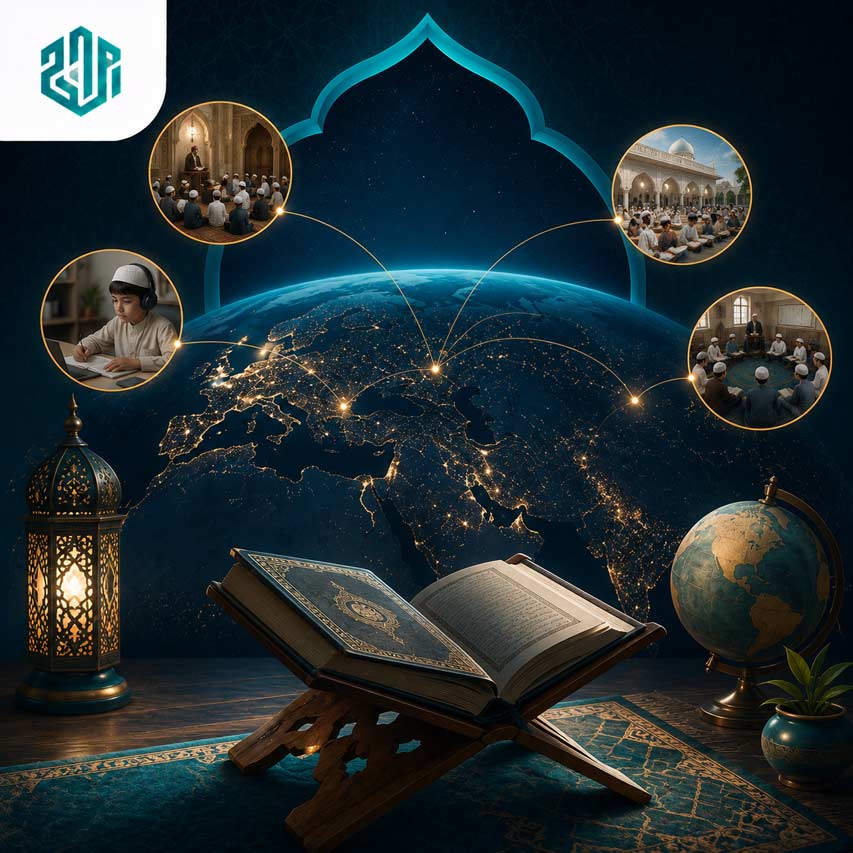
No single organization has ever counted the world’s Quran memorizers, and anyone offering you a confident global figure is guessing. That gap in the data is worth understanding before we look at what we can actually verify.
Table of Contents:
How Many People Have Memorized the Quran?
There is no official global count of huffaz. Some dawah speakers, including Dr. Yusuf Estes, have cited estimates as high as 200 million people have memorized the Quran, but no research institution or Islamic authority has confirmed this figure.
Why Does No One Know the Exact Number of Huffaz Worldwide?
Quran memorization happens through thousands of independent channels with no central reporting requirement, which makes a global count practically impossible. A child memorizing at home with a parent, a student at a village madrasa, and a graduate of a formal Hifz program all become huffaz through completely different, unlinked paths.
There is no single Islamic authority — not Al-Azhar, not any national ministry of religious affairs, not any international body — tasked with registering every person who completes memorization.
Unlike school enrollment or university graduation, hifz completion is rarely certified through a system that feeds into a shared database.
In our experience at Buruj Academy, this decentralization is actually a strength, not a weakness. Hifz has spread precisely because it doesn’t depend on institutional gatekeeping.
A grandmother in rural Indonesia and a scholar at a Cairo mosque can both produce a hafiz using entirely different methods, and both outcomes count equally in the eyes of the tradition.
This is also why any number you see quoted online should be treated as an estimate, not a statistic. Estimates travel fast on social media precisely because they sound authoritative, even when no one can trace them back to actual research.
Start Hifz today with a FREE trial session

What Does “200 Million” Actually Refer To?
The 200 million figure comes from statements by dawah speakers, not from any peer-reviewed study or institutional census. Dr. Yusuf Estes is among those who have referenced this number in lectures, but the original source of the calculation has never been publicly documented.
We mention this figure because readers will encounter it, not because we can verify it. Treat it the way you’d treat any unsourced statistic: plausible-sounding, widely repeated, and unconfirmed.
If a precise number matters for your own research or writing, the honest answer is that it doesn’t currently exist.
Read also: Who Is the Youngest Hafiz of the Quran?
How Do Scholars Verify Someone Has Actually Memorized the Quran?
Verification happens through oral examination by a qualified examiner who tests random passages across the entire Quran, not through self-reporting or written testing.
A candidate is asked to recite from any point the examiner selects, including transitions between surahs, which exposes gaps that selective practice can hide.
This is different from simply having read through the Quran multiple times. True hifz means the text is retained well enough to be recited on demand, in sequence, without a mushaf in front of you — and examiners are specifically trained to probe for the difference.
| Verification Method | What It Confirms |
| Oral examination by qualified examiner | Random-passage recall across the full Quran |
| Competition qualification rounds | Standardized testing before public competition |
| Ijazah certification with sanad | Verified chain of transmission back through teachers |
An Ijazah, specifically, confirms something a competition placement doesn’t: an unbroken chain of authorized teachers connecting the student back through history.
This is the closest thing Islamic tradition has to a formal, individually verifiable record of a completed memorization.
Read also:Who Is the Youngest Person to Memorize the Quran?
Why Does the Continuity of Hifz Matter More Than a Global Count?
The historical continuity of Quran memorization, unbroken since the time of the Prophet ﷺ, is a more meaningful and verifiable fact than any modern population estimate.
Companions memorized the Quran during the Prophet’s ﷺ lifetime, and that living chain of memorization has continued through every generation since, without interruption.
This continuity is why the Quran’s textual preservation is considered so remarkable by scholars regardless of religious background.
Manuscripts confirm the written text; parallel unbroken oral transmission through generations of memorizers confirms it independently, through a completely separate mechanism.
إِنَّا نَحْنُ نَزَّلْنَا ٱلذِّكْرَ وَإِنَّا لَهُۥ لَحَٰفِظُونَ
Inna nahnu nazzalnadh-dhikra wa inna lahu lahafizhun
“Indeed, it is We who sent down the Quran and indeed, We will be its guardian.” (Al-Hijr 15:9)
This verse is frequently cited regarding the Quran’s preservation, understood by scholars to encompass both its written and memorized transmission across generations.
In our sessions teaching memorization, we’ve noticed something students find genuinely motivating once they understand it: they aren’t just memorizing a book, they’re joining an active chain of transmission that has never once broken since the seventh century.
That framing changes how people approach the work, especially during the plateaus that hit every memorizer eventually.
Read also:Dua for Memorizing Quran
Discover the Buruj Academy Difference
Step into our virtual classrooms and see how our expert instructors make learning Quran and Arabic intuitive and clear. We focus on overcoming the specific hurdles non-native speakers face, building your confidence and connection with the Quran.
Excel in Your Quranic Studies
Join Buruj Academy and master the Quran with our structured, professional curriculum.
Book Your Free TrialIs Quran Memorization Still Growing or Declining Today?
Available evidence points to growth rather than decline, driven by online learning access, national hifz initiatives, and increased institutional investment across multiple countries. Countries including Saudi Arabia, the UAE, and Malaysia have expanded state-funded hifz programs over the past two decades specifically to increase participation.
Online learning has also removed a major historical barrier: geographic access to a qualified teacher. A student in a country with no local Hifz institution can now study with an Al-Azhar-trained instructor through a structured online Hifz program, something that simply wasn’t possible a generation ago.
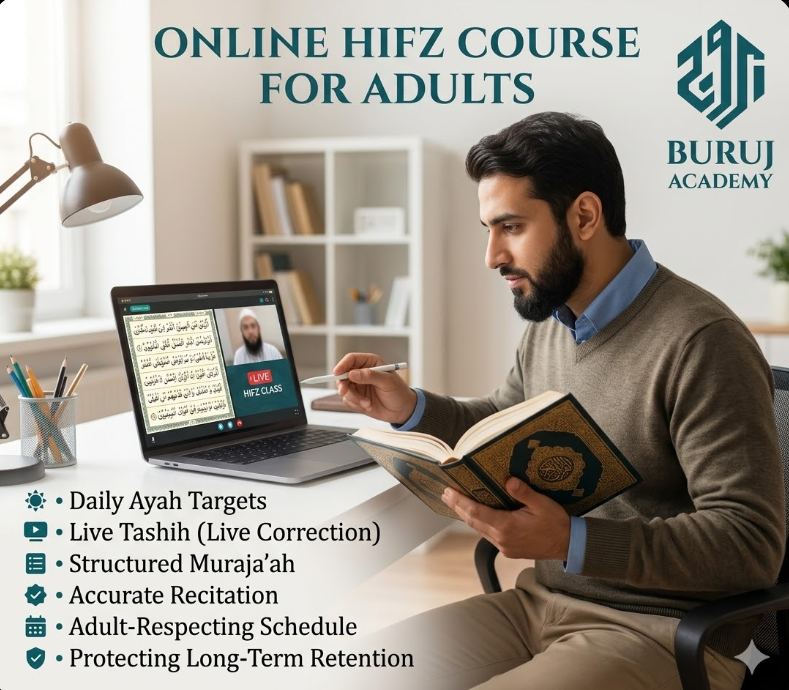
We’ve watched this shift directly in our own classrooms. A meaningful share of the adult students who join Buruj Academy’s online Hifz course for adults are reverts or heritage Muslims who had no access to in-person hifz instruction where they live, and online delivery is the only reason memorization became possible for them at all.
Book Your Free Trial Lesson with Burruj’s Hifz Course for Adults
Read also:Surah Al-Fath Benefits in Islam
What Does It Actually Take to Become a Hafiz?
Becoming a hafiz typically requires memorizing all 604 pages across the Quran’s 30 Juz through consistent daily sessions, paired with a structured, ongoing revision system that prevents earlier memorization from fading. The memorization itself is only half the work; retention is the harder, longer half.
Most full-time programs estimate 2 to 5 years for complete memorization, depending heavily on age, prior Arabic exposure, and daily time commitment.
A young child in an intensive full-time program often moves faster than a working adult fitting in 20 to 30 minutes a day, which is a completely normal and expected difference, not a sign of weaker ability.
In our experience, the students who complete hifz successfully are rarely the ones who memorize fastest — they’re the ones who protect their daily revision schedule most consistently, even when new memorization slows down.
Speed without revision produces huffaz who can recite a new page but have quietly lost an earlier one.
This is exactly why proper Tajweed matters from the very beginning of memorization, not as an afterthought. Memorizing text with incorrect pronunciation means re-training both memory and articulation later, which takes considerably longer than learning it correctly the first time.
What Age Groups Successfully Complete Hifz?
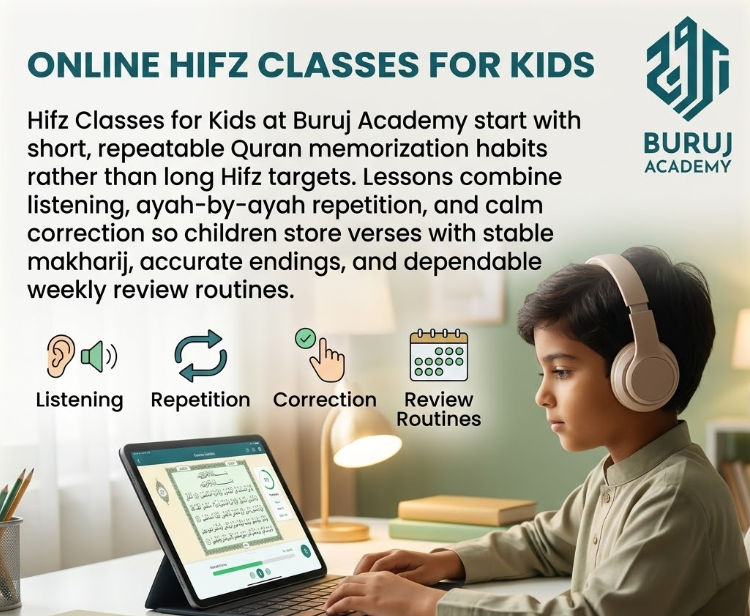
Successful huffaz span every age group, from young children in full-time programs to working adults memorizing in short daily sessions over several years. Children in our Hifz course for kids often benefit from stronger natural memory retention and fewer competing responsibilities, but consistency matters more than age for eventual completion.
We regularly see adult students worry that starting later in life puts hifz out of reach, and this concern rarely matches what we observe in practice.
A realistic revision schedule and consistent short daily sessions bring completion within reach at nearly any age, provided the pacing fits the student’s actual life.
Start your child’s Hifz classes with free session
Start Your Own Hifz Journey with Buruj Academy’s Expert Guidance
Whatever the true global number of huffaz turns out to be, becoming one yourself doesn’t depend on statistics — it depends on structured guidance and consistent revision. Buruj Academy’s Online Hifz Program pairs students with Al-Azhar-trained Hifz specialists who build memorization and revision schedules around each learner’s age, pace, and daily availability.
Our instructors are Ijazah-certified, bringing 12+ years of experience guiding non-Arabic speakers specifically, and every plan follows the Buruj Method’s consistency-before-speed approach.
Book a free trial lesson today and let our specialists design a hifz path suited to your actual life, not a generic template.
Take the first step toward this lifelong blessing by enrolling in a program tailored to your pace:
- Online Hifz Program (Comprehensive Quran Memorization)
- Juz 30 Memorization Course (Perfect for focused starts)
- Hifz Classes for Kids (Engaging and interactive)
- Hifz Classes for Adults (Flexible scheduling for busy lives)
- Hifz Classes for Sisters (Private, supportive learning)
- Short Surah Memorization Course (Ideal for daily prayers)
- Hifz Ijazah Course (For advanced students seeking certification)
Don’t let another day pass without moving closer to your goal. Join Buruj Academy today and schedule your free trial session to begin your Hifz journey!
Excel in Your Quranic Studies
Join Buruj Academy and master the Quran with our structured, professional curriculum.
Book Your Free TrialConclusion
Curiosity about how many people have memorized the Quran runs into an honest wall: no institution has ever counted them, and the widely shared 200 million figure traces back to speakers rather than research.
What can be traced — competition data, Ijazah verification systems, and an unbroken oral transmission chain reaching back fourteen centuries — tells a more solid story than any single number could.
That continuity, not a headcount, is the real evidence of the Quran’s preservation. Whether the true global figure is far smaller or genuinely enormous changes nothing about what memorization requires from an individual student: structured revision, patient instruction, and consistency sustained well past the initial memorization itself.
Frequently Asked Questions About Quran Memorization Numbers
Is There an Official Global Count of Huffaz?
No. No Islamic authority, government, or research institution maintains a global registry of Quran memorizers. Memorization happens through decentralized channels — home tuition, mosques, formal institutions — with no shared reporting system connecting them into a single verifiable total.
How Long Does It Typically Take to Memorize the Full Quran?
Most structured programs estimate 2 to 5 years, covering all 604 pages across 30 Juz, depending on age, prior Arabic exposure, and daily session length. Full-time child students often progress faster than part-time working adults, which is a normal, expected difference.
What Is the Difference Between Reading the Quran and Being a Hafiz?
A hafiz can recite the entire Quran from memory, in sequence, without a mushaf, and can be examined on any random passage. Reading fluently is a separate skill and doesn’t require the sustained retention and revision system that true hifz demands.
Does Online Learning Count Toward Becoming a Certified Hafiz?
Yes, provided the program includes qualified oral examination and, where pursued, verified Ijazah certification with an authentic chain of transmission. Delivery method doesn’t affect certification validity — what matters is the examiner’s qualifications and the verification process used.