 Arabic
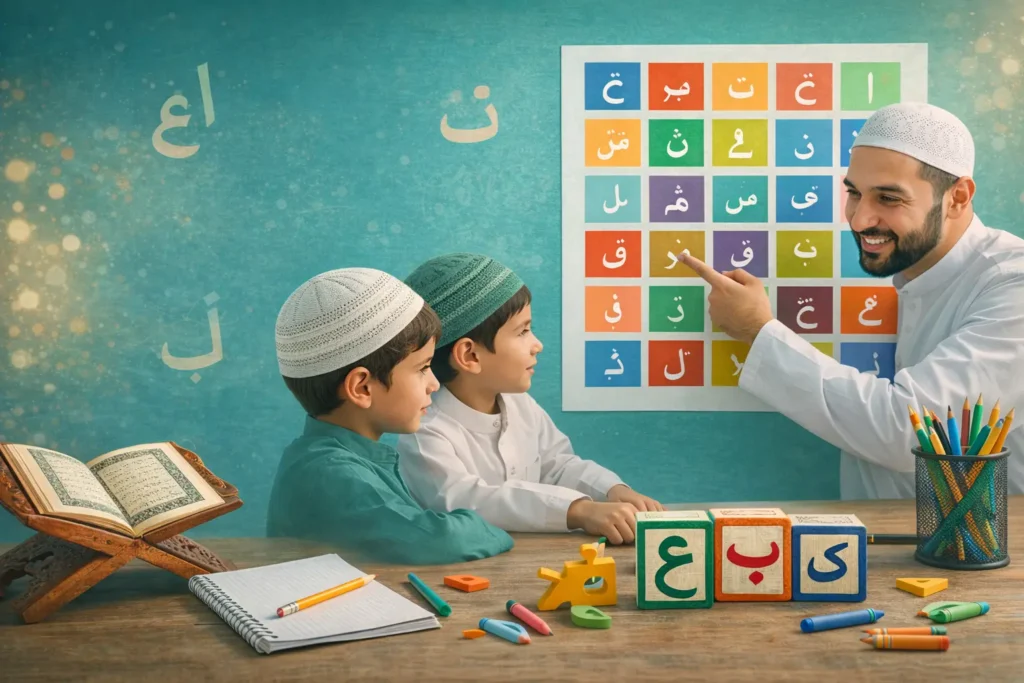
Most children can memorize a cartoon theme song after hearing it twice, yet parents feel stuck when Arabic letters simply won’t stick. The secret isn’t repetition — it’s making every letter feel like a discovery worth remembering.
Arabic alphabet learning becomes easier when letters are grouped by shared shapes, dots, and strokes rather than alphabetical order. With age-specific session lengths, daily five-minute reviews, interactive games, and guided online classes like those offered at Buruj Academy, children build recognition, pronunciation, and early reading skills naturally and confidently.
Arabic Alphabet for Kids
Teaching kids the Arabic alphabet becomes manageable when letters are organized by shared shapes and sounds.
I will break the alphabet into logical groups, provide age-specific strategies, and show parents exactly how to introduce each cluster in short, enjoyable daily sessions children genuinely look forward to.
1. The First Arabic Alphabet Group Kids Can Learn Contains the Easiest Letters
The best starting point for kids learning the Arabic alphabet is the group containing ا (Alif)، و (Waw)، ر (Ra)، ز (Zay).
These four letters have simple, distinct shapes with no connecting complexity on their right side, making them visually easy for young children to recognize and write.
Ages 4-7: Tracing Letters in Sand or Salt
Pour a thin layer of sand or salt onto a tray. Call out a letter name, then let your child trace it with one finger. This multi-sensory approach helps young children remember letter shapes through physical movement rather than visual memorization alone.
Ages 8-12: Letter Hunt in Simple Arabic Words
Write simple words containing ا، و، ر، ز and ask your child to circle each target letter. Words like وَرَدَة (rose) and زَيْت (oil) make excellent examples because children can connect abstract letters to real, familiar things they recognize.
2. Teaching Kids the Dot Letters Group Makes Arabic Alphabet Learning Click Visually
Dots are what make Arabic visually distinctive, and grouping dot-based letters together helps kids learn the Arabic alphabet with a clear mental framework. This group includes ب، ت، ث، ن، ي—letters sharing the same base shape but differing only in dot number and position.
Here is a simple comparison table parents can reference when teaching this group:
| Letter | Dots | Position | Example Word |
| ب | 1 | Below | بَيْت (house) |
| ت | 2 | Above | تُفَّاحَة (apple) |
| ث | 3 | Above | ثَعْلَب (fox) |
| ن | 1 | Above | نَجْمَة (star) |
| ي | 2 | Below | يَد (hand) |
The pattern here is powerful: once kids recognize the base shape, they only need to count and place dots correctly. Many children find this group easier than expected once the dot logic becomes clear to them.
A Dot Counting Game for Kids of All Ages
Draw the base shape of ب on a card. Hold it up and ask your child to add the correct number of dots in the right position to turn it into ت or ث. This simple activity builds both letter recognition and fine motor skills simultaneously.
Discover the Buruj Academy Difference
Step into our virtual classrooms and see how our expert instructors make learning Quran and Arabic intuitive and clear. We focus on overcoming the specific hurdles non-native speakers face, building your confidence and connection with the Quran.
3. The Curved Letters Group Helps Kids Learn Arabic Alphabet Shapes Through Familiar Comparisons
This group contains ج، ح، خ، ع، غ—letters with distinctive curved or cupped shapes. Many children learning the Arabic alphabet struggle here because these letters look unlike anything in the Latin alphabet. Using shape comparisons makes recognition faster and more natural for young minds.
| Letter | Shape Comparison | Sound Hint |
| ج | Fish curve | Like “j” in “jar” |
| ح | Open bracket | Breathy “h” |
| خ | Open bracket with dot | Like “ch” in “Bach” |
| ع | Tiny open cup | Deep throat “a” |
| غ | Cup with dot above | Like French “r” |
Children aged 8-12 particularly benefit from creating their own shape stories for each letter, which deepens memory retention far more effectively than simple repetition or copying exercises.
Through Buruj Academy’s Arabic Alphabet Learning Course, children learn ج through the image of a fish curve, and ع through the shape of a tiny open cup. Visual associations like these bypass rote memorization and help children recall letter shapes independently during reading practice.
Get your kid a free trial now in the Best Alphabet course
4. Straight and Angled Letters Give Kids an Arabic Alphabet Group That Builds Writing Confidence
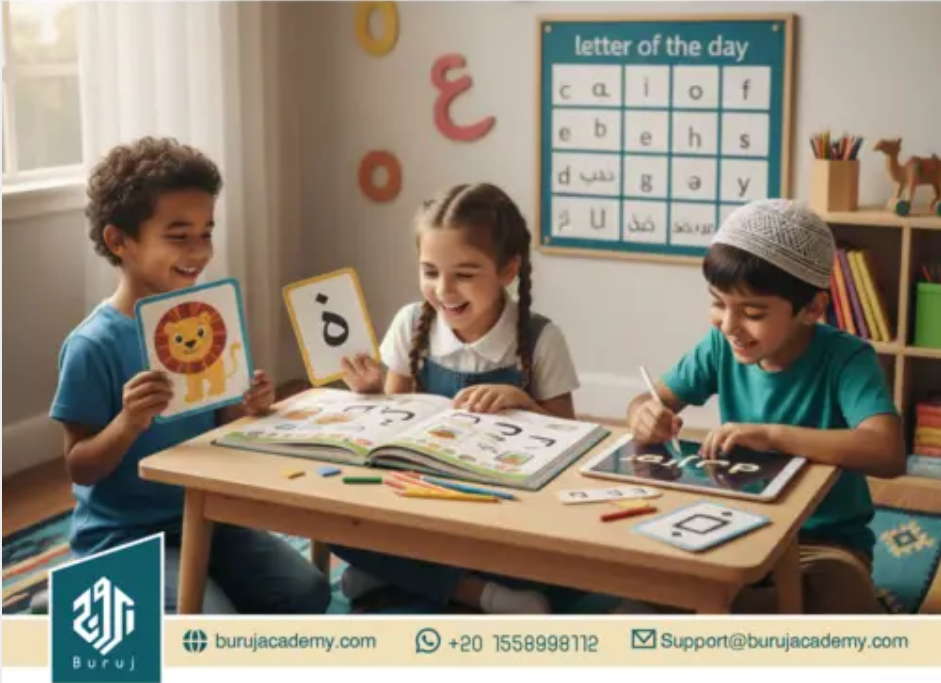
This group—د، ذ، ل، ك، ف، ق—features letters with straight lines, angles, or bold circular shapes. For kids learning the Arabic alphabet, these letters are satisfying to write because each stroke feels deliberate and clear, building handwriting confidence progressively.
How to Teach Arabic Letters for Kids Using Age-Appropriate Steps?
The arabic alphabet for kids contains 28 letters, each with up to four positional forms. Breaking this into manageable stages prevents overwhelm and builds genuine confidence at every age group.
Here is how learning milestones typically look across age ranges:
| Age Group | Focus Area | Session Length | Realistic Goal |
| Ages 4–7 | Letter shapes + sounds | 10–15 minutes | Recognize 5–7 letters per month |
| Ages 8–12 | All forms + joining rules | 20–25 minutes | Read short words within 3 months |
| Ages 13–15 | Reading fluency + vocabulary | 25–30 minutes | Short sentences within 6–8 weeks |
The table above shows that session length matters as much as content. Matching lesson duration to your child’s natural attention span prevents frustration and keeps arabic letters for kids feeling achievable.
Step One: Introduce Letters in Phonetic Families, Not Alphabetical Order
Start with letters that share shapes, such as ب، ت، ث, before moving to visually different letters. This grouping strategy reduces confusion and helps children feel they are learning three letters for the price of one visual shape.
Step Two: Use a Sound-Picture Anchor for Every Arabic Letter
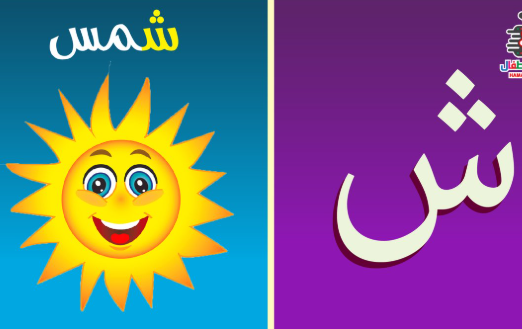
Connect each letter to one memorable image. The letter ش (shin) sounds like “sh” and looks like a tooth — pair it with the Arabic word شمس (shams, meaning sun) for instant retention. Children remember pictures long before they remember abstract symbols.
Step Three: Introduce Letter Positions Gradually After Shape Recognition
Once a child recognizes a letter in its isolated form, introduce beginning, middle, and ending positions one at a time. Rushing all four forms at once overwhelms young learners and stalls confidence before it builds properly.
Step Four: Review Daily Using Five-Minute Mini Sessions
Five consistent minutes every day outperforms a single weekly hour-long session. Short daily touch points keep arabic words for kids fresh in working memory without turning practice into a task children dread.
Master the Arabic Language
Develop reading, writing, speaking, and comprehension skills through interactive Arabic lessons for all levels.
Start Arabic ClassesRead Also: How to Learn Arabic for Kids?
How Online Arabic Classes for Kids Build Letter Skills Faster Than Self-Study?
Many parents attempt teaching arabic letters for kids independently, and their dedication is genuinely admirable. However, structured online arabic classes for kids offer specific advantages learn Arabic for kids that accelerate progress in ways solo practice cannot easily replicate.
Qualified instructors identify and correct pronunciation errors immediately. Mispronounced letters, if uncorrected early, can become habits that are difficult to undo before your child reads Quran.
Professional correction at the right moment protects your child’s long-term progress meaningfully.
At Buruj Academy, our Online Arabic Classes for Kids introduce letters through storytelling, songs, and games — children learn ب through بيت (house), ت through تفاحة (apple) — making Arabic alphabet mastery enjoyable rather than tedious, regardless of when your child begins.
Book your child’s free Arabic trial now!

What Arabic Words for Kids to Introduce Alongside Letter Learning?
Pairing arabic words for kids with each letter serves two purposes simultaneously: it reinforces letter recognition and begins building practical vocabulary your child will encounter in Quran and daily Islamic life.
The words below are ideal first vocabulary for young learners because they are short, phonetically clear, and connected to familiar concepts:
| Arabic Letter | Arabic Word | Transliteration | English Meaning |
| أ (Alif) | أسد | Asad | Lion |
| ب (Ba) | بيت | Bayt | House |
| ت (Ta) | تفاحة | Tuffaha | Apple |
| س (Sin) | سمك | Samak | Fish |
| ك (Kaf) | كتاب | Kitab | Book |
| م (Meem) | ماء | Ma’ | Water |
Starting with concrete, picturable nouns gives children immediate satisfaction — they learn a letter and a word in the same session. This dual approach makes arabic for kids feel productive from the very first lesson, Alhamdulillah.
Master the Arabic Language
Develop reading, writing, speaking, and comprehension skills through interactive Arabic lessons for all levels.
Start Arabic ClassesRead Also: Arabic Sentences for Kids
Help Your Child Master the Arabic Alphabet with Buruj Academy’s Expert Instructors
Consistent home practice lays the groundwork, but expert-guided, structured learning accelerates letter mastery in ways that solo effort rarely matches alone.
Buruj Academy’s Online Arabic Classes for Kids offer:
- Al-Azhar graduates with 12+ years teaching non-Arabic speaking children
- Age-appropriate curriculum designed for children aged 4–15
- Gamification, stories, and songs — not dry letter drills
- Short 20–30 minute sessions matched to children’s attention spans
- Patient, encouraging instructors who build confidence, not pressure
- Flexible scheduling that fits your family’s routine
Book your child’s free trial lesson today and watch Arabic letters become something your child genuinely loves learning.
Find your child’s perfect match among Buruj’s top courses for kids:
- Arabic Classes for Kids
- Alphabet course
- Noorani Qaida Course for Kids
- Quranic Arabic Course
- Islamic Studies for Kids
- Hifz Classes for Kids
- Quran Classes for Kids
- Tajweed for Kids
Get a free trial for your child today.

Conclusion
Organizing the Arabic alphabet into visual families—simple forms, dot letters, curved shapes, and straight strokes—reduces confusion and strengthens pattern recognition. Children progress faster when lessons match their age, attention span, and developmental stage.
Pairing each letter with concrete Arabic words, sound-picture anchors, and short daily practice builds both literacy and vocabulary at the same time. Gradual introduction of positional forms prevents overwhelm and supports steady, confident reading development.
Structured online Arabic classes for kids accelerate mastery through professional pronunciation correction, storytelling, and gamified lessons. With expert guidance from institutions like Buruj Academy, children transform letter practice into an engaging journey toward fluent Arabic reading.


Leave a Reply