 Arabic
| Key Takeaways |
| Arabic has 20 prepositions, and they exclusively govern nouns, placing them in the genitive case. |
| Each Arabic preposition carries multiple possible meanings depending on the sentence context and the verb it accompanies. |
| Arabic prepositions physically change a noun’s ending vowel to a kasra (ـِ) or equivalent genitive marker. |
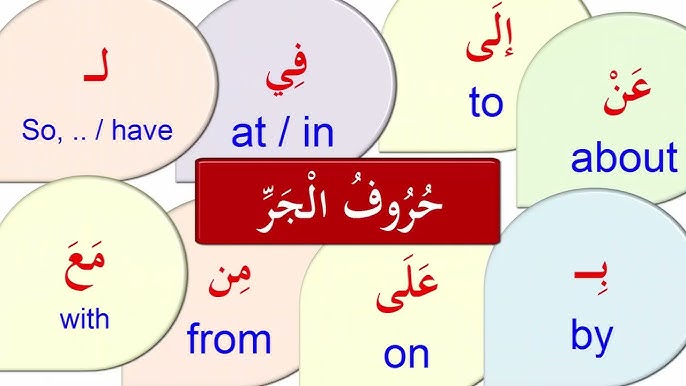
| The most versatile Arabic prepositions — مِن، إِلى، فِي، عَلى، الباء، اللام — cover the vast majority of daily usage. |
Arabic can feel like an intricate puzzle when you first encounter it, and prepositions are often where English speakers stumble hardest. They look short and simple on the page, yet each one carries several distinct meanings that shift entirely based on context.
Arabic prepositions — called حروف الجر (hurūf al-jarr) — are a closed set of exactly 20 particles that always govern nouns, triggering a grammatical change in the word that follows.
Understanding them is not optional; they are the connective tissue of Arabic sentence structure, and mastering them opens the door to both reading and speaking the language accurately.
Table of Contents:
What Are Prepositions in Arabic?
Arabic prepositions are short particles called حروف الجر (hurūf al-jarr), meaning literally “letters that pull down.” They are named this because every noun that follows them is grammatically pulled into the genitive case (مجرور — majrūr), marked by a kasra (ـِ) ending or its equivalent.
No other word class in Arabic carries this effect — verbs, adjectives, and adverbs cannot follow a preposition directly.
This is the first and most important structural difference between English and Arabic prepositions.
In English, prepositions can precede nouns, pronouns, gerunds, and noun phrases without changing their form.
In Arabic, the preposition is a grammatical trigger — it imposes a specific case ending on whatever noun follows. That noun becomes a مجرور (majrūr), and this status affects how the entire sentence is parsed.
At Buruj Academy, our Online Arabic Classes treat prepositions as a dedicated unit, because students who skip this foundation consistently misread sentence structure later.
In our instructors’ experience, the biggest error beginners make is treating Arabic prepositions as direct translations of their English equivalents — assuming في always means “in” or على always means “on.” That one-to-one thinking creates confusion within the first month.
Book your FREE Arabic trial online Arabic class at Buruj

How Many Prepositions Are There in Arabic?
Arabic has 20 prepositions (حروف الجر), they are divided into two groups based on which nouns they can precede.
1. Arabic Prepositions That Precede Explicit Nouns Only
These seven prepositions can only precede a visible, stated noun — never a pronoun:
| Arabic | Transliteration | Primary Meaning |
| رُبَّ | rubba | Often / rarely (context-dependent) |
| مُذْ | mudh | Since (for past, present context) |
| مُنْذُ | mundhu | Since / for (time duration) |
| حَتَّى | ḥattā | Until / so that |
| الكاف | al-kāf | Like / as (resemblance) |
| وَاوُ القَسَم | wāw al-qasam | By (oath) |
| تَاءُ القَسَم | tā’ al-qasam | By (oath — restricted to Allah) |
2. Prepositions That Precede Both Explicit Nouns and Pronouns
These thirteen prepositions are the most commonly used in everyday Arabic:
| Arabic | Transliteration | Core Meaning |
| الباء | al-bā’ | By / with / in |
| مِن | min | From / of / since |
| إِلى | ilā | To / toward |
| عَن | ʿan | About / from / away from |
| عَلى | ʿalā | On / upon / over |
| فِي | fī | In / at / within |
| اللام | al-lām | For / to / of |
| خَلا | khalā | Except |
| عَدا | ʿadā | Except |
| حَاشَا | ḥāshā | Except |
| كَي | kay | In order to / because |
| لَعَلَّ | laʿalla | Perhaps / hopefully |
How Do Arabic Prepositions Function in a Sentence?
An Arabic preposition functions as a grammatical trigger that places the noun following it into the genitive case (الجر — al-jarr). This means the final vowel of that noun changes to a kasra (ـِ), or to its equivalent marker depending on the noun type.
Genitive Case Markers by Noun Type
| Noun Type | Genitive Marker | Example | Translation |
| Singular noun | Kasra ( ِ ) | ذَهَبتُ إِلى البَيتِ | I went to the house |
| Broken plural | Kasra ( ِ ) | سَلَّمتُ عَلى الضُّيوفِ | I greeted the guests |
| Feminine sound plural | Kasra ( ِ ) | أُعجِبتُ بِالمُعَلِّماتِ | I was impressed by the teachers |
| Dual noun | Yā’ ( ي ) | أُعجِبتُ بِالصَّديقَينِ | I was impressed by the two friends |
| Masculine sound plural | Yā’ ( ي ) | سَلَّمتُ عَلى المُعتَمِرينَ | I greeted the pilgrims |
| Five special nouns | Yā’ ( ي ) | سَلَّمتُ عَلى أَخي | I greeted my brother |
| Defective noun (ends in ى/ي) | Estimated kasra | أُعجِبتُ بِالفَتى | I was impressed by the young man |
When a pronoun follows a preposition rather than a noun, the pronoun remains grammatically bound (مبني) but is understood to be in a genitive position.
For a fuller picture of how nouns operate in Arabic — including their gender and number patterns — our article on masculine and feminine nouns in Arabic and our guide to dual nouns in Arabic cover the foundational material that pairs directly with preposition usage.
At Buruj Academy, our Online Arabic Grammar Course covers this case system from the very first lessons, because students who understand why the kasra appears — not just when — progress significantly faster through Arabic sentence construction.
Understand the Arabic Grammar with Buruj’s free trial lesson
The Most Important Arabic Prepositions and Their Meanings
The six prepositions below cover the overwhelming majority of Arabic usage in both Modern Standard Arabic and everyday speech. Each carries several meanings — which one applies depends entirely on the surrounding sentence.
مِن — The Versatile Separation Marker
مِن primarily indicates starting points — spatial, temporal, and conceptual. It is among the most used prepositions in the Arabic prepositions list, and it covers far more ground than the English “from.”
| Meaning | Arabic Example | Translation |
| Starting point (place) | جِئتُ مِنَ المَكتَبَةِ | I came from the library |
| Starting point (time) | صُمتُ مِنَ الفَجرِ | I fasted from dawn |
| Partitive (of/some of) | قَرَأتُ سُورَةً مِنَ القُرآنِ | I read a surah from the Quran |
| Specifying type | اجتَنَبتُ الحَسودَ مِنَ النَّاسِ | I avoided the envious among the people |
| Reason/cause | مِن تَقصيرِكَ خَسِرتَ | Because of your negligence, you lost |
| Comparison | هَذِهِ السَّيَّارَةُ أَفضَلُ مِنَ الأُخرى | This car is better than the other |
إِلى — Direction and Conclusion
إِلى marks the endpoint of movement or extension — in space, time, or meaning.
- Spatial endpoint: وَصَلتُ إِلى المَطارِ — I arrived at the airport.
- Time endpoint: سَأَنتَظِرُ إِلى المَساءِ — I will wait until evening.
- Accompaniment: ضُمَّ هَذا المَالَ إِلى مَالِكَ — Add this money to your money.
- Meaning “with”: العَودُ إِلى العَودِ حَطَبٌ — Wood added to wood becomes firewood.
فِي — Containment and Circumstance
فِي is Arabic’s primary “container” preposition, covering physical location, time periods, and abstract circumstances.
- Physical location: قَضَيتُ الإِجَازَةَ فِي المُصيَّفِ — I spent the holiday at the summer resort.
- Abstract location: الغِنى كُلُّهُ فِي القَنَاعَةِ — All wealth is in contentment.
- Circumstance/cause: دَخَلَت امرَأَةٌ النَّارَ فِي هِرَّةٍ — A woman entered Hellfire because of a cat.
Read also: Double Vowel Words in Arabic
Discover the Buruj Academy Difference
Step into our virtual classrooms and see how our expert instructors make learning Quran and Arabic intuitive and clear. We focus on overcoming the specific hurdles non-native speakers face, building your confidence and connection with the Quran.
Master the Arabic Language
Join our expert-led courses and build a strong foundation in Classical and Modern Arabic.
Get Your Free Trialعَلى — Surface, Obligation, and Condition
عَلى covers physical surfaces, abstract relationships of responsibility, and conditional statements.
- Physical surface: وَضَعَ الكِتَابَ عَلى الطَّاوِلَةِ — He placed the book on the table.
- Obligation/condition: سَأُقرِضُكَ المَالَ عَلى أَن تَرُدَّهُ — I will lend you the money on the condition you return it.
- Despite: عَالِمٌ عَلى أَنَّهُ مُتَكَبِّرٌ — A scholar, despite being arrogant.
- Approximate “in”: سُرِقَت الأَغنَامُ عَلى غَفلَةٍ مِنَ الرَّاعِي — The sheep were stolen while the shepherd was inattentive.
الباء — Contact, Means, and Cause
الباء indicates connection — literal physical contact or figurative association through means, cause, or oath.
- Instrument/means: أَكَلتُ بِالمِلعَقَةِ — I ate with the spoon.
- Accompaniment: اذهَب بِسَلامٍ — Go in peace.
- Cause: بِبُخلِكَ ضَاعَ مَالُكَ — Because of your miserliness, your money was lost.
- Oath: أُقسِمُ بِاللهِ — I swear by Allah.
- Exchange/substitution: استَبدَلتُ الدِّرهَمَ بِالدِّينَارِ — I exchanged the dirham for the dinar.
اللام — Ownership, Purpose, and Benefit
اللام is always written with a kasra when functioning as a preposition (لِ) — this distinguishes it from the definite article (الـ).
- Possession/belonging: الكِتَابُ لِأَحمَدَ — The book belongs to Ahmad.
- Purpose/reason: سَافَرتُ لِلدِّرَاسَةِ — I traveled for studying.
- Endpoint: عُدتُ لِأَهلِي — I returned to my family.
- Exclamation: يَا لَلعَجَبِ — How astonishing!
Our Arabic for Beginners course builds prepositions, sentence structure, and case endings systematically — sound before rule, context before abstraction. Every session is personalized, 1-on-1, and flexibly scheduled.
Begin learning Arabic at Buruj with a FREE trial lesson

What Are the 3 Types of Arabic Prepositions?
Arabic grammar scholarship classifies the 20 prepositions into three distinct categories based on their functional role within the sentence.
Type 1 — Original Prepositions (حروف الجر الأصلية)
Original prepositions carry a genuine semantic meaning and cannot be removed from the sentence without breaking that meaning.
Examples include: مِن، إِلى، عَن، عَلى، الباء، اللام، الكاف، حَتَّى، وَاوُ القَسَم، مُذْ، مُنْذُ. If you remove one of these, the sentence either becomes meaningless or its meaning changes entirely.
Type 2 — Redundant Prepositions (حروف الجر الزائدة)
Redundant prepositions add no semantic content — the sentence remains complete and meaningful without them. The classic examples are مِن and الباء when used in specific grammatical contexts.
Example: مَا جَاءَ مِن أَحَدٍ — No one came. The مِن here is redundant; مَا جَاءَ أَحَدٌ carries the same meaning. The redundant use of مِن typically appears after negation particles.
Type 3 — Quasi-Redundant Prepositions (حروف الجر الشبيهة بالزائد)
These cannot be omitted grammatically or semantically, yet they do not function as full prepositions in the classical sense.
رُبَّ is the primary example. You cannot drop it from the sentence, yet it does not direct motion or location the way original prepositions do — it modifies meaning by adding frequency or quantity nuance.
Contrastive Analysis Between English and Arabic Prepositions
A contrastive analysis between English and Arabic prepositions reveals fundamental structural and semantic differences that explain why direct translation consistently fails.
Difference 1 — Grammatical effect
English prepositions do not change the form of the noun that follows. Arabic prepositions always do — they impose the genitive case, changing the final vowel of the governed noun.
Difference 2 — Set size and type
How many prepositions are there in the English language? Linguists count approximately 150 prepositions in English — a mix of single-word (in, on, at) and multi-word (because of, in front of, according to).
Arabic has exactly 20 classical prepositions, all single particles. Arabic compensates for this smaller set by assigning multiple meanings to each preposition.
Difference 3 — One-to-many mapping
A single Arabic preposition translates into several different English prepositions depending on context. فِي can mean “in,” “at,” “within,” “during,” or “because of.” مِن can mean “from,” “of,” “some of,” “than,” or “because of.” This is the core reason English speakers cannot rely on memorized equivalents.
| Arabic Preposition | Possible English Equivalents |
| مِن | from, of, than, because of, some of |
| فِي | in, at, within, during, because of |
| عَلى | on, upon, over, despite, according to |
| إِلى | to, toward, until, with, near |
| الباء | with, by, through, because of, for |
| اللام | for, to, of, belonging to |
Difference 4 — Pronoun attachment
In English, pronouns after prepositions are separate words: for him, with her, from us. In Arabic, pronouns attach directly to the preposition as suffixes: لَهُ (for him), مَعَها (with her), مِنَّا (from us).
This suffix system is essential to reading Arabic fluently — it appears constantly in Arabic sentence structure.
Read also: Hollow Verbs in Arabic
Practice Exercises to Master Arabic Prepositions
The following exercises move from recognition to production. Work through each set, then check the answer key below.
Exercise 1 — Identify the Preposition and Its Meaning
Read each sentence, identify the preposition, and state which meaning it carries in this context.
| Sentence | Your Answer | |
| 1 | ذَهَبتُ إِلى المَدرَسَةِ | Preposition: ___ Meaning: ___ |
| 2 | جَلَستُ فِي الغُرفَةِ | Preposition: ___ Meaning: ___ |
| 3 | أَكَلتُ بِالمِلعَقَةِ | Preposition: ___ Meaning: ___ |
| 4 | جِئتُ مِنَ المَسجِدِ | Preposition: ___ Meaning: ___ |
| 5 | الكِتَابُ عَلى المَكتَبِ | Preposition: ___ Meaning: ___ |
Answer Key:
1) إِلى — direction/to | 2) فِي — physical location/in | 3) الباء — means/instrument | 4) مِن — starting point/from | 5) عَلى — surface/on
Exercise 2 — Fill in the Correct Arabic Preposition
Choose the most appropriate preposition from the box to complete each sentence: (مِن — إِلى — فِي — عَلى — الباء — اللام)
- وَصَلتُ ___ المَطارِ صَبَاحًا. (I arrived at the airport in the morning.)
- سَافَرتُ ___ الدِّرَاسَةِ. (I traveled for studying.)
- وَضَعتُ القَلَمَ ___ الطَّاوِلَةِ. (I placed the pen on the table.)
- هَذَا الكِتَابُ أَفضَلُ ___ ذَاكَ. (This book is better than that one.)
- كَتَبتُ الرِّسَالَةَ ___ القَلَمِ. (I wrote the letter with the pen.)
- قَضَيتُ الوَقتَ ___ المَكتَبَةِ. (I spent time in the library.)
Answer Key:
1) إِلى | 2) (لِـ) | 3) عَلى | 4) مِن | 5) الباء (بِـ) | 6) فِي
Exercise 3 — Translate the Sentence Using the Correct Preposition
Translate the following English sentences into Arabic, paying careful attention to preposition selection and genitive case endings.
- I went to the school. → ________________
- The book is on the table. → ________________
- I came from the mosque. → ________________
- I studied with my friend. → ________________
Answer Key:
1) ذَهَبتُ إِلى المَدرَسَةِ | 2) الكِتَابُ عَلى الطَّاوِلَةِ | 3) جِئتُ مِنَ المَسجِدِ | 4) دَرَستُ مَعَ صَديقِي
Start Learning Arabic Prepositions Properly with Buruj Academy
Prepositions are short words with deep grammatical weight — and learning them correctly from the start prevents the compounding errors we see when students attempt to self-study without structured guidance.
At Buruj Academy, our Arabic Grammar Course is taught by Al-Azhar University graduates with 12+ years of experience teaching non-Arabic speakers.
Book your free trial lesson today and experience the Buruj Method firsthand.
Begin your transformation today by choosing the path that fits your goals:
- Online Arabic Classes (General & Comprehensive)
- Arabic Course for Beginners
- Arabic Alphabet Learning Course
- Online Arabic Classes for Kids
- Arabic Classes for Adults
- Arabic Grammar Course (Nahw & Sarf)
- Intermediate Arabic Course (B1/B2)
- Arabic Speaking Course (Conversational Fluency)
- Arabic Reading Course (Literary Excellence)
- Learn Arabic Writing Course (Calligraphy & Composition)
Ready to speak with confidence? Join the global community at Buruj Academy and book your free placement interview today!
Master the Arabic Language
Join our expert-led courses and build a strong foundation in Classical and Modern Arabic.
Get Your Free TrialConclusion
Arabic prepositions are a small, closed set — just 20 particles — but their grammatical and semantic complexity far exceeds anything a quick vocabulary list can capture. Each preposition triggers the genitive case in the noun that follows, and each carries multiple context-dependent meanings that cannot be resolved through English-equivalent thinking alone.
The path forward is systematic: learn the forms, understand the functions, practice in real sentences, and build the grammatical instinct that comes with structured repetition. With the right foundation in prepositions, reading Arabic sentences — and eventually Arabic texts — becomes significantly more manageable.
Frequently Asked Questions About Arabic Prepositions
How Many Arabic Prepositions Are There in Total?
Arabic has exactly 20 prepositions (حروف الجر) in classical Arabic grammar. They divide into two groups: seven that precede explicit nouns only, and thirteen that precede both explicit nouns and pronouns. This fixed count is established in traditional Arabic grammar scholarship and applies to Modern Standard Arabic as well.
How Do Arabic Prepositions Change the Noun That Follows?
Every Arabic preposition places the following noun in the genitive case (مجرور), changing its final vowel to a kasra (ـِ) or its equivalent. Dual nouns and masculine sound plurals use a yā’ (ي) instead. Pronouns that follow prepositions are grammatically in a genitive position but remain unchanged in form.
What Is the Difference Between Original and Redundant Arabic Prepositions?
Original prepositions (أصلية) carry real meaning and cannot be removed without changing or breaking the sentence. Redundant prepositions (زائدة), such as مِن after negation, add no new meaning — the sentence remains complete without them. The third type, quasi-redundant (شبيهة بالزائد), cannot be omitted grammatically but functions differently from full prepositions.
How Many Prepositions Are There in the English Language?
English has approximately 40–60 simple prepositions (such as in, on, from, to, by) and around 150 total when compound forms like “in front of” and “on behalf of” are included. Arabic achieves similar relational precision with only 20 particles, each carrying multiple context-dependent meanings.
Why Do Arabic Prepositions Have Multiple Meanings?
Arabic has only 20 prepositions compared to roughly 150 in English, so each Arabic preposition carries a wider semantic load. مِن, for example, can mean “from,” “of,” “than,” “some of,” or “because of” depending on context. This is why direct translation between the two languages fails — one Arabic preposition maps onto several English ones.
Which Arabic Prepositions Are Most Important for Beginners to Learn First?
The six most essential prepositions for beginners are مِن (from/of), إِلى (to), فِي (in/at), عَلى (on/upon), الباء (with/by), and اللام (for/of). These six cover the vast majority of everyday Arabic usage and appear constantly in both written and spoken Modern Standard Arabic.