 Arabic
| Key Takeaways |
| The Arabic word for “animal” is حيوان (ḥayawān), with the plural حيوانات (ḥayawānāt) used for groups. |
| Arabic animal vocabulary divides into five practical categories: pets, farm animals, wild animals, birds, and sea creatures. |
| Most Arabic animal nouns carry grammatical gender, and many form irregular “broken plurals” instead of adding a simple ending. |
| Common animals like قطة (qiṭṭa) for cat and كلب (kalb) for dog appear in everyday Arabic conversation, proverbs, and children’s stories. |
| Building animal vocabulary strengthens broader Arabic skills, including masculine and feminine noun patterns and sentence construction. |
Picture a child pointing at a picture book, asking what the lion says in Arabic, and you drawing a blank on a word you thought you’d mastered years ago.
Animal vocabulary is often the first real vocabulary set learners tackle, yet it’s also one of the most inconsistently taught.
The Arabic word for animal is حيوان (ḥayawān), plural حيوانات (ḥayawānāt). This guide organizes the most useful animal names by category — pets, farm animals, wild animals, birds, and sea creatures — with pronunciation, grammar notes, and practice exercises.
Table of Contents:
What Is the General Word for Animal in Arabic?
The word حيوان (ḥayawān) is the standard Modern Standard Arabic term for “animal,” used across formal writing, news media, and educational contexts. Its plural, حيوانات (ḥayawānāt), refers to animals collectively or as a category, such as in the phrase “zoo” (حديقة الحيوانات, ḥadīqat al-ḥayawānāt, literally “garden of the animals”).
You’ll see حيوان أليف (ḥayawān alīf, “tame animal”) for pet, حيوان بري (ḥayawān barrī, “wild animal”) for wildlife, and حيوان مفترس (ḥayawān muftaris, “predatory animal”) for predator.
حيوان is a masculine noun, and this matters more than it might seem. Arabic nouns carry grammatical gender, which affects the adjectives and verbs that pair with them. If you’re new to this concept, our guide on masculine and feminine nouns in Arabic breaks down the patterns clearly.
Many animal names also form what’s called a “broken plural” — an internal vowel change rather than a simple suffix. أسد (asad, lion) becomes أُسُود (usūd, lions), for example, not أسدات. This is a common trip-up point for English speakers used to adding “-s” for plurals.
A concrete, specific classroom observation about how students react to broken plurals when first learning animal vocabulary — to be added by an actual Buruj Academy instructor with a real example from teaching.
Structured, guided instruction makes patterns like these click far faster than self-study alone. Buruj Academy’s online Arabic classes teach vocabulary through the context-before-abstraction method, so grammar rules like broken plurals emerge naturally from real words rather than memorized charts.
Book your FREE Arabic trial online Arabic class at Buruj

How Do You Say Common Pets in Arabic?
The five most common household pets in Arabic are قطة (cat), كلب (dog), سمكة (fish), أرنب (rabbit), and طائر (bird). These words appear in everyday conversation, children’s books, and basic Arabic courses more than almost any other vocabulary set.
Pets hold a specific cultural weight in Arabic-speaking and Muslim communities. Cats in particular are treated with notable affection — the word for cat, قطة (qiṭṭa), shows up frequently in Arabic literature, idioms, and daily speech across dialects.
| English | Arabic | Transliteration | Gender |
| Cat | قطة | qiṭṭa | Feminine |
| Dog | كلب | kalb | Masculine |
| Fish | سمكة | samaka | Feminine |
| Rabbit | أرنب | arnab | Masculine |
| Bird | طائر | ṭā’ir | Masculine |
| Hamster | همستر | hamstar | Masculine |
| Turtle | سلحفاة | sulaḥfāh | Feminine |
| Parrot | ببغاء | babaghā’ | Masculine |
Notice the pattern: قطة and سمكة both end in the letter ة (tā’ marbūṭa), a common marker of feminine nouns in Arabic. This single letter changes how adjectives agree with the noun in a sentence, which is why recognizing it early saves confusion later.
Compare that to كلب and أرنب, which have no feminine ending and default to masculine. This isn’t arbitrary; it follows a consistent structural rule you’ll see repeated across hundreds of Arabic nouns once you know what to look for.
How Do You Say My Pet’s Name Is in Arabic?
To introduce your pet, say اسم [حيواني الأليف] هو… (ism [ḥayawānī al-alīf] huwa…), meaning “the name of my pet is…” For example, اسم قطتي هو لونا means “my cat’s name is Luna.”
This phrase combines the possessive pronoun ي (attached to حيوان, meaning “my animal”) with the noun اسم (name).
It’s a practical, real-world sentence structure you’ll use constantly once you own or discuss a pet in Arabic.
What Are the Most Common Farm Animals in Arabic?
Farm animals in Arabic — حيوانات المزرعة (ḥayawānāt al-mazra’a) — include historically significant words like جمل (camel), حصان (horse), بقرة (cow), خروف (sheep), and ماعز (goat). These animals carry deep roots in Arab agricultural and desert life.
The camel holds particular cultural and linguistic significance. Arabic reportedly contains dozens of specialized words distinguishing camels by age, color, and role — a reflection of how central this animal was to historical desert societies.
| English | Arabic | Transliteration | Plural Form |
| Camel | جمل | jamal | جمال (jimāl) |
| Horse | حصان | ḥiṣān | أحصنة (aḥṣina) |
| Cow | بقرة | baqara | أبقار (abqār) |
| Sheep | خروف | kharūf | خرفان (khirfān) |
| Goat | ماعز | mā’iz | معز (ma’iz) |
| Chicken | دجاجة | dajāja | دجاج (dajāj) |
| Rooster | ديك | dīk | ديوك (dīūk) |
| Donkey | حمار | ḥimār | حمير (ḥamīr) |
| Pig | خنزير | khinzīr | خنازير (khanāzīr) |
Farm animal vocabulary also introduces you to broken plurals in a very visible way. Notice how جمل becomes جمال, and بقرة becomes أبقار — the internal vowel structure shifts rather than a suffix simply being added.
A specific instructional observation about how learners commonly mispronounce or confuse ḥiṣān (horse) and ḥimār (donkey) due to similar consonant sounds — to be added by an actual instructor.
Mastering these patterns is far easier with structured grammar guidance. Buruj Academy’s Arabic Grammar course walks students through noun and plural patterns systematically, building a reliable framework instead of memorizing exceptions one at a time.
Understand the Arabic Grammar with Buruj’s free trial lesson
What Are the Names of Wild Animals in Arabic?
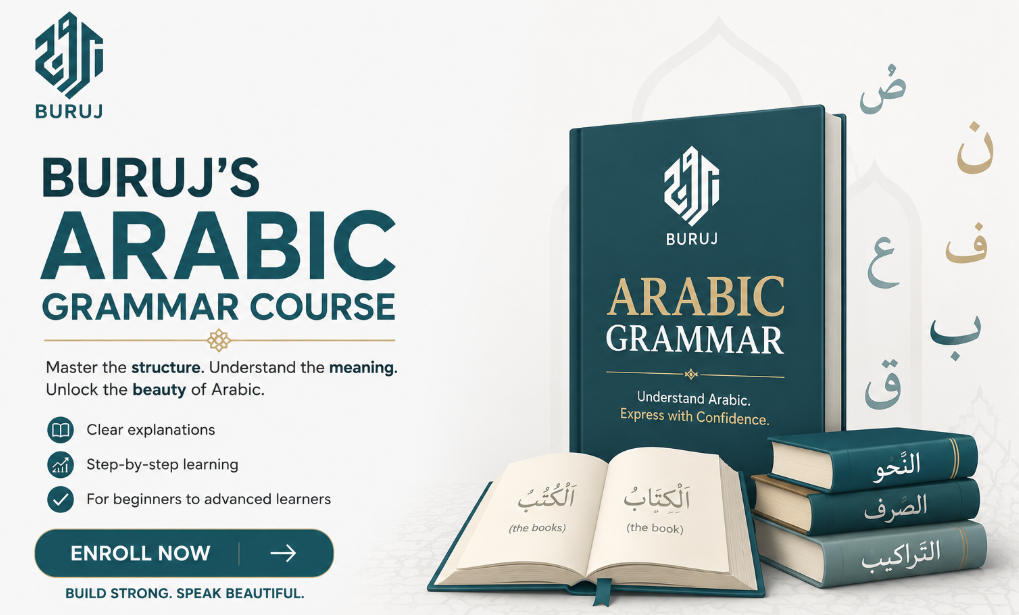
Wild animals — الحيوانات البرية (al-ḥayawānāt al-barriyya) — include أسد (lion), فيل (elephant), نمر (tiger), ذئب (wolf), and ثعلب (fox). Many of these words appear frequently in Arabic proverbs, poetry, and traditional storytelling.
The lion in particular carries symbolic weight across Arabic literature, often representing courage and strength. You’ll encounter أسد in names, idioms, and historical texts far more than most other animal words.
| English | Arabic | Transliteration | Cultural Note |
| Lion | أسد | asad | Symbol of courage |
| Elephant | فيل | fīl | Common in stories |
| Tiger | نمر | nimr | Also means “leopard” in some dialects |
| Wolf | ذئب | dhi’b | Appears in classical fables |
| Fox | ثعلب | tha’lab | Symbol of cleverness |
| Bear | دب | dubb | — |
| Giraffe | زرافة | zarāfa | — |
| Monkey | قرد | qird | — |
| Snake | ثعبان | thu’bān | — |
| Zebra | حمار وحشي | ḥimār waḥshī | Literally “wild donkey” |
Wild animal names often reveal how Arabic builds compound meanings. حمار وحشي for zebra literally translates to “wild donkey,” combining the familiar word for donkey with وحشي (waḥshī, “wild” or “savage”).
Read also: Kids Islamic Poems in Arabic With Translation and Meaning
How Do You Say Zoo in Arabic?
The Arabic word for zoo is حديقة الحيوانات (ḥadīqat al-ḥayawānāt), literally meaning “garden of the animals.” This phrase directly combines حديقة (garden) with the plural form of حيوان.
You’ll see this exact phrase on signage, in travel contexts, and in children’s educational materials across Arabic-speaking countries.
It’s a practical phrase worth memorizing early, since it opens the door to describing an entire outing.
Discover the Buruj Academy Difference
Step into our virtual classrooms and see how our expert instructors make learning Quran and Arabic intuitive and clear. We focus on overcoming the specific hurdles non-native speakers face, building your confidence and connection with the Quran.
Master the Arabic Language
Join our expert-led courses and build a strong foundation in Classical and Modern Arabic.
Get Your Free TrialHow Do You Say Common Birds in Arabic?
Common Arabic bird names include طائر (general term for bird), عصفور (sparrow), نسر (eagle), بومة (owl), and حمامة (dove or pigeon). Birds appear extensively throughout Arabic poetry, religious texts, and daily conversation.
The word عصفور (usfūr) deserves particular attention because it introduces a sound not found in English — the letter ع (ʿayn), produced deep in the throat. Mastering this sound is a foundational pronunciation milestone for Arabic learners.
| English | Arabic | Transliteration | Symbolic Association |
| Bird (general) | طائر | ṭā’ir | — |
| Sparrow | عصفور | ʿuṣfūr | Common, everyday |
| Eagle | نسر | nisr | Power, vision |
| Owl | بومة | būma | Wisdom in some traditions |
| Dove/Pigeon | حمامة | ḥamāma | Peace |
| Falcon | صقر | ṣaqr | Nobility, hunting |
| Parrot | ببغاء | babaghā’ | — |
| Duck | بطة | baṭṭa | — |
The falcon (صقر, ṣaqr) carries particular cultural significance in Gulf Arab traditions, where falconry remains a respected heritage practice. This is a good example of how vocabulary and culture intertwine in Arabic learning.
Pronouncing bird names correctly also means grappling with letters like ع and غ, both throat-based sounds absent from English phonetics.
These letters appear constantly across Arabic vocabulary, not just animal names, so early practice pays long-term dividends.
A specific observation about how long it typically takes non-Arabic speakers to correctly produce the ʿayn sound in words like ʿuṣfūr, based on real classroom pacing — to be added by an actual instructor.
Correct pronunciation from the start prevents habits that are harder to unlearn later.
Buruj Academy’s Arabic speaking course provides real-time instructor feedback specifically for sounds like these, ensuring students build accurate pronunciation from their very first lessons.
Book your free trial to start speaking Arabic fluently

What Are the Names of Sea Animals in Arabic?
Sea and aquatic animals in Arabic include سمك (fish, general/collective), حوت (whale), قرش (shark), دولفين (dolphin), and سرطان (crab). This vocabulary set is especially useful for coastal regions and marine-themed children’s content.
Note the distinction between سمكة (samaka), a single fish, and سمك (samak), the collective or general term for fish as a category. This singular-versus-collective distinction appears with several other Arabic nouns beyond just this one.
| English | Arabic | Transliteration | Notes |
| Fish (single) | سمكة | samaka | Countable form |
| Fish (collective) | سمك | samak | General/category term |
| Whale | حوت | ḥūt | — |
| Shark | قرش | qirsh | Also means “coin/piaster” |
| Dolphin | دولفين | dūlfīn | Loanword |
| Octopus | أخطبوط | ukhṭubūṭ | — |
| Jellyfish | قنديل البحر | qindīl al-baḥr | Literally “lamp of the sea” |
قنديل البحر for jellyfish is another excellent example of Arabic’s compound word logic, literally translating to “lamp of the sea” — a poetic reference to the creature’s glowing, lantern-like appearance.
Words like دولفين are direct loanwords, adapted phonetically from other languages rather than built from Arabic roots.
Recognizing loanwords helps you understand why some Arabic vocabulary sounds closer to English than others.
Read also: Arabic Colors with Masculine and Feminine Forms
Practice Exercises to Learn Animal Vocabulary in Arabic
Active recall exercises reinforce animal vocabulary far more effectively than passive reading alone. The three exercises below — matching, fill-in-the-blank, and categorization — target recognition, spelling, and semantic grouping simultaneously.
Exercise 1: Match the Arabic Word to Its English Meaning
Match each Arabic word to the correct English translation.
- أسد
- قطة
- حصان
- عصفور
- سمكة
A) Sparrow B) Cat C) Lion D) Fish E) Horse
(Answers: 1-C, 2-B, 3-E, 4-A, 5-D)
Exercise 2: Fill in the Blank
Complete each Arabic sentence with the correct animal word from the word bank: كلب، فيل، بقرة
- الـ ____ كبير جداً في حديقة الحيوانات (The ____ is very big at the zoo.)
- عندي ____ اسمه ماكس (I have a ____ named Max.)
- الـ ____ تعطينا الحليب (The ____ gives us milk.)
(Answers:
1-فيل,
2-كلب,
3-بقرة)
Exercise 3: Categorize the Animals
Sort these animal names into the correct category — pet, farm, wild, or sea: ذئب، خروف، دولفين، أرنب
(Answers: ذئب = wild, خروف = farm, دولفين = sea, أرنب = pet)
Working through exercises like these regularly builds the kind of retrieval-based memory that sticks. If you’d like more structured vocabulary drills, our guide on mastering Arabic vocabulary tips and tricks covers spaced repetition and memory techniques in depth.
Learn Animal Vocabulary and Beyond with Buruj Academy’s Expert Instructors
Animal vocabulary is a practical, motivating starting point, but real Arabic fluency requires structured grammar, pronunciation, and sentence-building guidance beyond any single word list.
Buruj Academy’s online Arabic classes teach vocabulary in meaningful context, guided by instructors with 12+ years of experience teaching non-native speakers.
Our Al-Azhar University graduate instructors use the Buruj Method’s context-before-abstraction approach, so words like the ones in this guide connect naturally into real sentences and conversations.
Every session includes personalized correction tailored to your specific pronunciation and comprehension needs.
Whether you’re building foundational vocabulary as a complete beginner or refining fluency as an advanced learner, our flexible 1-on-1 online sessions adapt to your schedule and goals.
Book a free trial lesson and experience the Buruj Method firsthand.
Begin your transformation today by choosing the path that fits your goals:
- Online Arabic Classes (General & Comprehensive)
- Arabic Course for Beginners
- Arabic Alphabet Learning Course
- Online Arabic Classes for Kids
- Arabic Classes for Adults
- Arabic Grammar Course (Nahw & Sarf)
- Intermediate Arabic Course (B1/B2)
- Arabic Speaking Course (Conversational Fluency)
- Arabic Reading Course (Literary Excellence)
- Learn Arabic Writing Course (Calligraphy & Composition)
Ready to speak with confidence? Join the global community at Buruj Academy and book your free placement interview today!
Master the Arabic Language
Join our expert-led courses and build a strong foundation in Classical and Modern Arabic.
Get Your Free TrialConclusion
Animal vocabulary offers a natural, memorable entry point into Arabic’s broader grammar system — gender rules, broken plurals, and compound word logic all show up clearly once you start paying attention to words like أسد and قطة. What begins as simple vocabulary memorization quietly builds the pattern recognition that makes the rest of Arabic grammar click faster.
Consistent practice with real sentences, not just isolated word lists, is what turns recognition into genuine recall. Revisit the exercises above regularly, and pair this vocabulary with structured grammar study for the fastest, most durable progress.
Frequently Asked Questions About Animals in Arabic
What Is the Arabic Word for Animal?
The Arabic word for animal is حيوان (ḥayawān), a masculine noun used in Modern Standard Arabic. Its plural form, حيوانات (ḥayawānāt), refers to animals as a group or category, as seen in the word for “zoo.”
How Do You Say Pet in Arabic?
Pet in Arabic is حيوان أليف (ḥayawān alīf), literally meaning “tame animal.” The word أليف (alīf) specifically describes domesticated or gentle animals, distinguishing pets from wild or farm animals in everyday speech.
What Is the Most Common Arabic Animal Word Used in Conversation?
قطة (qiṭṭa), meaning cat, and كلب (kalb), meaning dog, are among the most frequently used animal words in everyday Arabic conversation. Both appear regularly in children’s books, casual speech, and basic vocabulary courses.
Do Arabic Animal Names Have Different Forms for Male and Female?
Yes, many Arabic animal names change form based on grammatical gender, often by adding or removing the ة (tā’ marbūṭa) ending. For example, قط (qiṭṭ) refers to a male cat, while قطة (qiṭṭa) refers to a female cat.
Is It Difficult to Learn Arabic Animal Vocabulary as a Beginner?
Arabic animal vocabulary is considered beginner-friendly since many words are short, visual, and frequently repeated in early lessons. The main challenge for English speakers is adjusting to broken plurals and throat-based sounds like ع and غ, which improve quickly with guided practice.