 Quran
Quran

| Key Takeaways |
| Ijazah in Quran is a formal certification granted by a qualified scholar after the student recites the entire Quran accurately with proper Tajweed. |
| The most sought-after ijazah for non-Arabic speakers is Ijazah Hafs ‘an ‘Asim, the most widely recited riwayah globally. |
| Earning ijazah requires mastering Tajweed rules, completing full Quran recitation to a sheikh, and receiving a chain of transmission (sanad) back to the Prophet ﷺ. |
| Most dedicated adult students who study consistently need 1–3 years of focused preparation before they are ready to sit with a qualifying sheikh. |
| Online ijazah programs now make this certification accessible to non-Arabic speakers worldwide through verified, Ijazah-certified instructors. |
Ijazah in Quran recitation is one of the most honoured certifications a Muslim can pursue — a living chain of transmission connecting your recitation directly to the Prophet Muhammad ﷺ through verified teachers. Yet many students approach it without understanding what the path actually requires.
To get ijazah in Quran, you must master Tajweed to a scholar-approved standard, complete a full recitation of the Quran before a qualified ijazah-holding sheikh, and receive your sanad — the unbroken chain of transmission. The process demands real preparation, the right teacher, and a structured plan.
Table of Contents:
1. Understand What Ijazah in Quran Actually Means
Ijazah (إجازة) is a formal scholarly permission certifying that a student has recited the Quran — or a specific riwayah of it — with proper Tajweed to a qualified sheikh, who then grants them the right to teach and transmit it to others. The certificate includes the sheikh’s sanad, an unbroken chain of narrators reaching back to the Prophet ﷺ.
This is not simply a completion certificate or a Tajweed diploma. It is a living transmission — the same method by which the Quran has been preserved orally for over 1,400 years. When a sheikh grants you ijazah, your name is added to that chain, and you carry a serious scholarly trust.
There are two main types students pursue:
| Type | Description | Scope |
| Ijazah in Quran Recitation | Full Quran recitation with Tajweed | Most common for students |
| Ijazah in Tajweed (Teaching) | Authorization to teach Tajweed science | For teachers and instructors |
Most students pursuing ijazah in Quran recitation seek Ijazah Hafs ‘an ‘Asim — the riwayah used in the majority of the Muslim world. Some advanced students later pursue other riwayat of the ten Qira’at.
Read also: How to Learn Noorani Qaida with Tajweed?
2. Build a Solid Tajweed Foundation Before Anything Else
To get ijazah in Tajweed and recitation, your Tajweed must reach a level of automatic, consistent accuracy — not just theoretical knowledge of rules. This is where the majority of students underestimate the preparation required.
At Buruj Academy, our Online Ijazah Course begins with a thorough Tajweed assessment because the single most common reason students delay ijazah is starting the certification process before their recitation is ready. A sheikh examining you for ijazah will not grant it if basic rules are inconsistently applied.
Book your FREE trial lesson in your path to Ijazah
Which Tajweed Rules Must You Master for Ijazah?
Every rule of Hafs ‘an ‘Asim must be applied correctly and consistently. This includes:
| Tajweed Category | Rules Required |
| Noon Sakinah & Tanwin | Idhhar, Idgham, Iqlab, Ikhfa |
| Meem Sakinah | Ikhfa Shafawi, Idgham Shafawi, Idhhar Shafawi |
| Madd Rules | Madd Asli, Madd Far’i (all six types) |
| Lam Rules | Tafkhim and Tarqiq of Lam in Allah’s name |
| Ra Rules | Tafkhim and Tarqiq conditions for Ra |
| Idgham Rules | Idgham with Ghunnah, without Ghunnah |
| Qalqalah | Five letters, three levels of echo |
| Waqf & Ibtida | Rules of stopping and resuming correctly |
Beyond rule knowledge, your makharij (articulation points) must be precise. Letters that non-Arabic speakers habitually mispronounce — particularly ع، ح، خ، غ، ق، ض — require focused, sustained correction.
We recommend beginning with Buruj Academy’s Tajweed for Beginners course if you are still building foundations, then advancing to structured Tajweed classes before approaching ijazah preparation.
Book Your FREE Trial Lesson to Begin Your Tajweed Journey
Excel in Your Quranic Studies
Join Buruj Academy and master the Quran with our structured, professional curriculum.
Book Your Free Trial3. Complete Full Quran Memorization or Reading Fluency
There is an important distinction students must understand: ijazah does not require full Hifz (memorization). You may recite from the Mushaf during your ijazah session. However, your reading fluency must be at a level where you can recite any portion of the Quran smoothly, without hesitation, with correct Tajweed applied throughout.
Some students pursuing Ijazah Hafs ‘an ‘Asim are Huffaz, which makes the process smoother since they can recite without looking. However, many ijazah holders are not Huffaz — they are strong, fluent readers with mastered Tajweed.
What Reading Level Is Required for Ijazah?
You must be able to:
- Read any Surah or page of the Quran with proper Tajweed on first exposure
- Apply all rules automatically — not consciously thinking through each one
- Maintain consistent recitation across long sessions without errors accumulating
- Correct yourself immediately when a sheikh stops you, understanding the rule violated
If you are working on building this fluency, our guide on how to read Quran with Tajweed provides a practical progression framework.
Read also: Best App to Learn Quran with Tajweed
4. Find a Qualified Sheikh Who Holds an Authentic Sanad
The most critical decision in your ijazah path is choosing your sheikh. The entire validity of your ijazah depends on your teacher holding a verified, unbroken sanad themselves. A certificate issued by someone without an authentic chain carries no scholarly weight.
A qualified ijazah sheikh must:
- Hold their own ijazah with a documented, traceable sanad
- Be recognized within established Islamic scholarly circles
- Have experience examining students for ijazah
- Teach the specific riwayah you are seeking (Hafs ‘an ‘Asim, or others)
Buruj Academy’s Hifz Ijazah Course connects students with Ijazah-certified instructors and Al-Azhar University graduates whose sanads are verified and documented. In our experience, students who attempt to find ijazah sheikhs independently without institutional vetting often encounter delays, unverifiable credentials, or instructors whose own preparation was incomplete.
Book your FREE trial lesson in your path to Quran memorization Ijazah
5. Enter a Structured Ijazah Preparation Program
Once you have identified a qualified sheikh or enrolled in a verified ijazah program, the preparation phase begins in earnest. This is not the same as general Quran classes — it is focused, rigorous recitation work under direct supervision.
What Does an Ijazah Preparation Program Look Like?
A structured program typically involves:
| Phase | Focus | Typical Duration |
| Tajweed Mastery Review | All rules assessed and corrected | 2–6 months depending on level |
| Recitation Practice (Juz by Juz) | Each section recited to sheikh with corrections | 6–18 months |
| Full Quran Recitation Sitting | Complete recitation or approved portions | Single or multi-session |
| Sanad Documentation | Certificate with chain of transmission issued | After successful completion |
In our sessions at Buruj Academy, students who enter ijazah preparation with strong existing Tajweed progress significantly faster through the recitation phase. The bottleneck is almost always Tajweed accuracy, not reading speed.
A sheikh examining for ijazah will stop you for every rule violation — so the cleaner your recitation entering the program, the fewer sessions the correction phase requires.
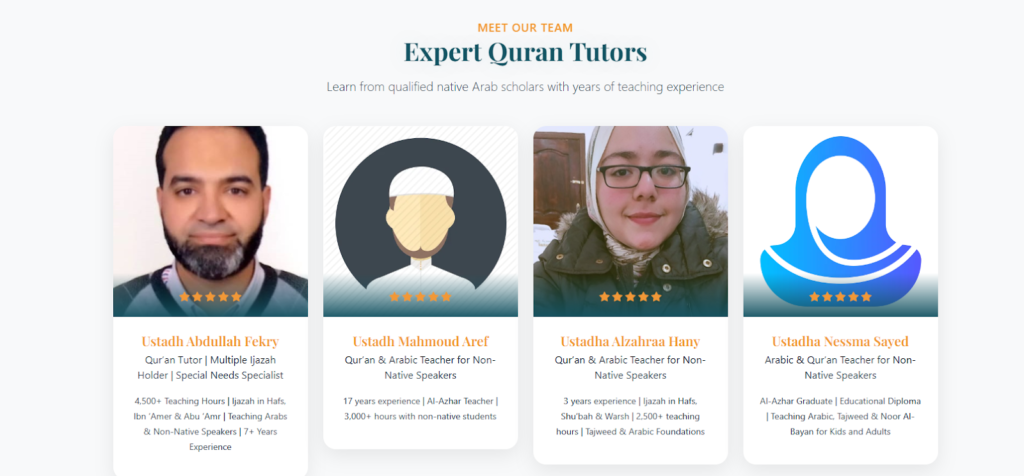
Buruj Academy’s Online Ijazah Course provides this structured progression with Al-Azhar-trained ijazah scholars, with sessions personalized to each student’s pace and current level.
Book a FREE trial session with one of Buruj’s Azhari Quran tutors
6. Recite the Quran to Your Sheikh for Formal Examination
The formal examination stage is where your preparation is put to the test. You will recite directly to your sheikh — either the full Quran or agreed-upon portions — with all Tajweed rules applied correctly and consistently throughout.
This stage is intentionally rigorous. Your sheikh will stop you at every error, require correction, and in some cases ask you to repeat sections. This is not a discouragement — it is the process by which the integrity of the transmission is protected across centuries.
What Happens During the Ijazah Recitation Session?
The sheikh evaluates:
- Correct makharij for every letter
- Consistent application of Tajweed rules without reminders
- Proper waqf (stopping) and ibtida (resuming)
- Ghunnah duration and accuracy
- Madd lengths held correctly
- Absence of lahn jali (major recitation errors)
The Prophet ﷺ said, as recorded in Sahih al-Bukhari (4937):
“The one who is proficient in the recitation of the Quran will be with the honourable and obedient scribes (angels), and the one who recites the Quran and finds it difficult to recite, doing his best to recite it in the best way possible, will have a double reward.”
This hadith reminds us that both the proficient reciter and the striving student are honoured — but for ijazah, the standard is genuine proficiency before transmission is granted.
Discover the Buruj Academy Difference
Step into our virtual classrooms and see how our expert instructors make learning Quran and Arabic intuitive and clear. We focus on overcoming the specific hurdles non-native speakers face, building your confidence and connection with the Quran.
7. Receive Your Sanad and Ijazah Certificate
Upon successful completion of the recitation examination, your sheikh issues you a formal ijazah certificate. This document includes your name, the riwayah you have been certified in, the full chain of transmission (sanad) from you through your sheikh, back through generations of scholars, to the Prophet ﷺ.
The sanad is the soul of the ijazah. It is what distinguishes a Quran ijazah certificate from any other recitation diploma or completion acknowledgment. Some sanads are shorter (fewer generations between you and the Prophet ﷺ), which is considered an elevated honour in Islamic scholarship — known as ‘Uluw al-Isnad.
What Rights Does Ijazah Grant You?
| Right Granted | Meaning |
| Right to Transmit | You may teach Quran recitation with scholarly authority |
| Right to Grant Ijazah | You may examine and certify qualified students yourself |
| Scholarly Recognition | Your recitation is recognized within the Islamic scholarly tradition |
With ijazah, you do not merely know Quran recitation — you are now a link in the preserved chain of transmission that has protected the Quran since the time of the Prophet ﷺ. Alhamdulillah, this is among the most profound responsibilities a student of knowledge can carry.
Excel in Your Quranic Studies
Join Buruj Academy and master the Quran with our structured, professional curriculum.
Book Your Free TrialEarn Your Quran Ijazah with Buruj Academy’s Verified Scholars
Getting ijazah in Quran requires the right foundation, the right teacher, and a structured path. Buruj Academy’s Online Ijazah Course provides all three.
Our Ijazah-certified instructors and Al-Azhar University graduates hold verified sanads and guide students from Tajweed assessment through full recitation examination. We offer:
- 1-on-1 personalized sessions at flexible times globally
- The Buruj Method: Sound-before-rules, Consistency-before-speed
- Verified sanad documentation upon successful completion
- 12+ years teaching non-Arabic speakers worldwide
Take the next step in your learning journey today by enrolling in one of our specialized programs:
- Online Quran Classes
- Online Quran Classes for Beginners
- Online Quran Classes for Adults
- Online Quran Classes for Ladies
- Online Quran Classes for Kids
- Quran Reading Course
- Quran Recitation Course
- Online Ijazah Course
- Online Qirat Course
Book your free trial lesson today and take your first step toward earning your ijazah.
Frequently Asked Questions About How to Get Ijazah in Quran
How Long Does It Take to Get Ijazah in Quran?
Most dedicated adult students need 1–3 years of consistent preparation, depending on their existing Tajweed level and recitation fluency. Students who enter with strong Tajweed foundations often complete the process in 12–18 months. Those beginning from an intermediate level should expect 2–3 years of focused, regular sessions with a qualified instructor.
Is It Possible to Get Ijazah Online?
Yes — online ijazah programs are fully valid provided the sheikh granting the ijazah holds an authentic, verified sanad. Scholarship has always recognized transmission through direct recitation regardless of physical location. Buruj Academy’s Online Ijazah Course connects students globally with verified Ijazah-certified scholars through structured 1-on-1 sessions.
Do I Need to Have the Quran Memorized to Get Ijazah?
No. Full memorization (Hifz) is not a requirement for ijazah in recitation. You may recite from the Mushaf during your examination. However, your reading fluency and Tajweed accuracy must be consistently high across the entire Quran. Students who want to pursue both paths can explore Buruj Academy’s Hifz Ijazah Course.
What Is the Difference Between Ijazah Hafs ‘an ‘Asim and Other Ijazahs?
Ijazah Hafs ‘an ‘Asim certifies the riwayah of Hafs, transmitted from ‘Asim ibn Abi al-Najud — the recitation used throughout most of the Muslim world and the standard in the majority of printed Mushafs. Other ijazahs certify different riwayat within the ten recognized Qira’at. For most students, Hafs ‘an ‘Asim is the appropriate and most accessible starting point.
What Tajweed Level Is Required Before Starting Ijazah Preparation?
Your Tajweed must be consistent and automatic — not just theoretically understood. All major rules (Noon Sakinah, Meem Sakinah, Madd, Waqf, Qalqalah, Lam and Ra rules) must be applied correctly without prompting. Review our article on Tajweed rules for a complete guide to assess your current readiness level.