 Quran
Quran
| Key Takeaways |
| The Ababil birds in Surah Al-Fil carried small stones to destroy a powerful army of elephants sent to demolish the Kaaba. |
| Hud Hud, the hoopoe bird in Surah An-Naml, served Prophet Sulayman and delivered a letter to the Queen of Sheba, Bilqis. |
| Both bird stories teach children that Allah uses the smallest creatures to accomplish the greatest tasks. |
| The story of the four birds in Surah Al-Baqarah shows Prophet Ibrahim’s trust in Allah’s power over life and death. |
| Crows appear in the Quran in Surah Al-Ma’idah, teaching the first humans how to treat the deceased with dignity. |
Children light up when they hear that birds — tiny, feathered creatures they spot every day — played powerful roles in Quranic stories. These are not fairy tales. These are real events that Allah preserved in His Book forever.
The Quran mentions birds in remarkable moments: armies defeated by small stones, secret messages carried across kingdoms, and lessons taught by a crow digging in the earth. Each bird story in the Quran for kids carries a lesson that stays with a child long after the story ends.
Table of Contents:
The Ababil Bird Story in the Quran
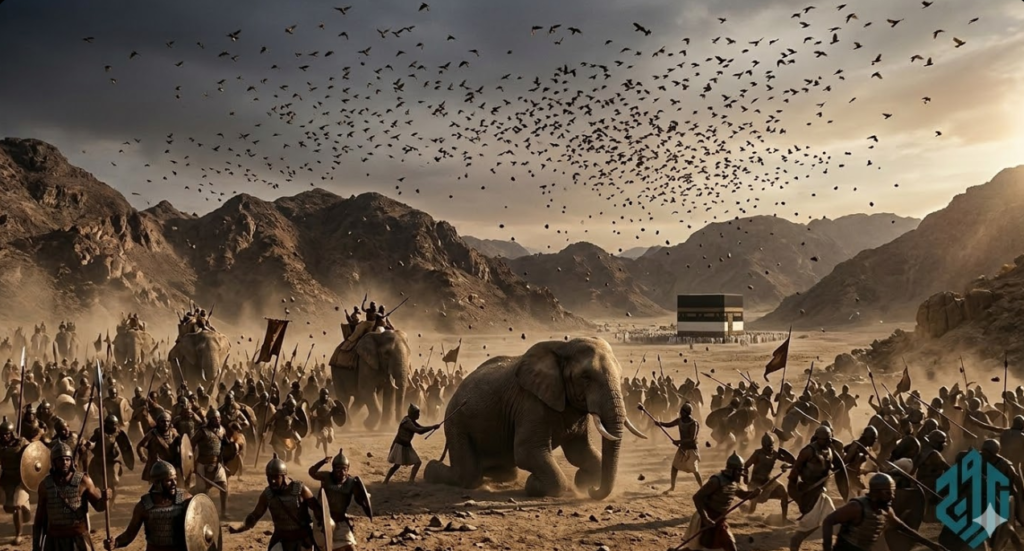
Imagine the most powerful army in the world — thousands of soldiers, massive war elephants, weapons, and armor — marching toward Makkah to tear down the Kaaba. This is exactly what happened, long ago, in the Year of the Elephant.
A king named Abraha ruled Yemen. He was proud, powerful, and very jealous. He built a grand church and wanted everyone to stop going to the Kaaba in Makkah. When people refused, he gathered his enormous army and marched toward Allah’s House, determined to destroy it.
1. The Elephants Refused to Move Forward
The lead elephant — a great beast named Mahmoud — was pushed and prodded toward Makkah. But every time his handlers urged him forward, he sat down. He turned in every other direction — north, south, east — and walked freely. But toward Makkah? He refused. Even the animals knew.
Abraha’s army grew frustrated. They could not understand why their mighty elephant would not move.
2. Tiny Birds Arrived from the Sea Carrying Three Stones Each
Then the sky changed. From the direction of the sea, a vast flock of birds appeared — birds no one had ever seen before. These were the Ababil: small, swift, and carrying something in their beaks and claws.
Each bird held three tiny stones — one in its beak and one in each claw. The stones were no larger than a chickpea or a lentil. The army looked up and laughed. What could small birds with pebbles do to trained soldiers?
Then the birds released their stones.
3. Every Stone Found Its Target and the Army Was Destroyed
Allah’s plan was precise. Each stone struck exactly where Allah willed. The soldiers fell. The great army — elephants, weapons, thousands of men — was made like eaten straw, scattered and destroyed.
Allah says in the Quran:
أَلَمْ تَرَ كَيْفَ فَعَلَ رَبُّكَ بِأَصْحَابِ الْفِيلِ ﴿١﴾ أَلَمْ يَجْعَلْ كَيْدَهُمْ فِي تَضْلِيلٍ ﴿٢﴾ وَأَرْسَلَ عَلَيْهِمْ طَيْرًا أَبَابِيلَ ﴿٣﴾ تَرْمِيهِم بِحِجَارَةٍ مِّن سِجِّيلٍ ﴿٤﴾ فَجَعَلَهُمْ كَعَصْفٍ مَّأْكُولٍ ﴿٥﴾
“Have you not considered, [O Muhammad], how your Lord dealt with the companions of the elephant? (1) Did He not make their plan into misguidance? (2) And He sent against them birds in flocks, (3) Striking them with stones of hard clay, (4) And He made them like eaten straw. (5)” (Al-Fil 105:1)
The entire Surah Al-Fil tells this story — five short verses that every child can memorize.
The lesson for your child: Allah does not need big things to defeat big enemies. He used tiny birds with tiny stones to protect His House. Nothing is too small for Allah to use.
If your child loves this story, they will be thrilled to know there are many more like it. At Buruj Academy, our Online Quran Classes for Kids bring these stories alive during lessons, connecting children to the Quran through wonder and meaning — taught by Ijazah-certified instructors trained in child pedagogy.
Help your child start learning the Quran with a Free trial

Discover the Buruj Academy Difference
Step into our virtual classrooms and see how our expert instructors make learning Quran and Arabic intuitive and clear. We focus on overcoming the specific hurdles non-native speakers face, building your confidence and connection with the Quran.
Read also: The Story of Yakub in the Quran for Kids
The Story of Hud Hud the Hoopoe Bird in the Quran
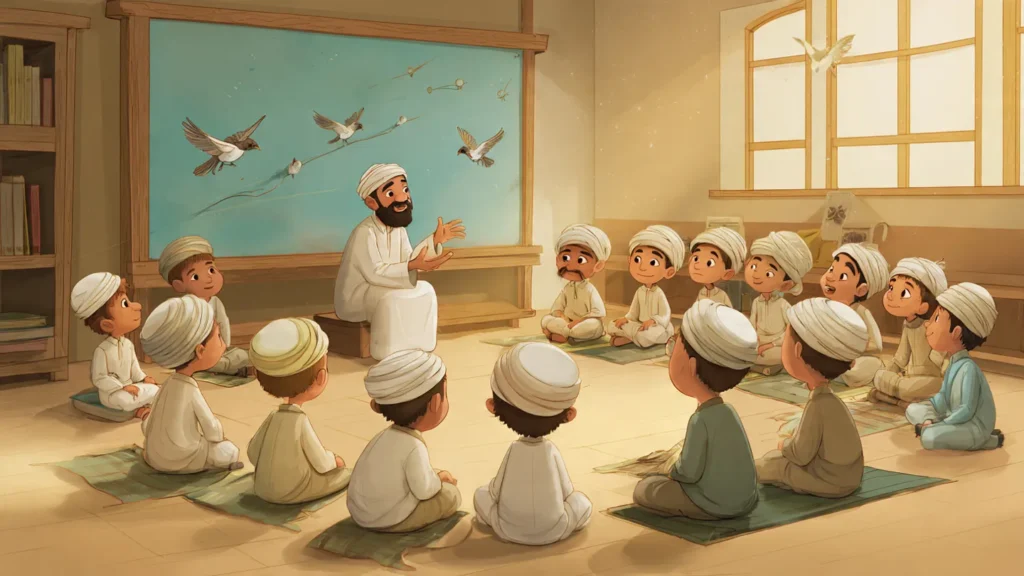
Prophet Sulayman (peace be upon him) was no ordinary king. Allah gave him one of the most extraordinary gifts ever given to a human being: he could understand and speak to animals and birds.
His army included humans, jinn, and birds — and the birds had their own ranks and roles.
Among all these birds, one small bird stood out. He was Hud Hud — the hoopoe.
1. Prophet Sulayman Noticed That Hud Hud Was Missing
One day, Prophet Sulayman was reviewing his army and checking that everyone was in place. He looked across the ranks of birds and noticed something. Hud Hud was gone.
This made Sulayman (peace be upon him) displeased. A king runs a kingdom with order and trust. He said firmly that he would punish Hud Hud — unless the little bird had a very good reason for being absent.
2. Hud Hud Had Discovered a Kingdom That Did Not Know Allah
Hud Hud returned — and he had news. He had flown far and discovered a great kingdom: the land of Sheba (Saba), ruled by a powerful queen named Bilqis. The people there were wealthy and advanced, but they worshipped the sun instead of Allah.
Hud Hud described the queen’s magnificent throne and her beautiful palace. He told Sulayman (peace be upon him) everything he had seen — with confidence, clarity, and conviction.
Allah records Hud Hud’s words in the Quran:
وَجَدتُّهَا وَقَوْمَهَا يَسْجُدُونَ لِلشَّمْسِ مِن دُونِ ٱللَّهِ
Wajadtuhā wa qawmahā yasjudūna lishshamsi min dūnillāh
“I found her and her people prostrating to the sun instead of Allah.” (An-Naml 27:24)
3. Sulayman Sent a Letter with Hud Hud to the Queen of Sheba
Prophet Sulayman believed Hud Hud. He wrote a royal letter — beginning with Bismillah ir-Rahman ir-Raheem — and gave it to Hud Hud to deliver to Queen Bilqis. The letter invited her to leave sun worship and submit to Allah.
Hud Hud flew across the distance, entered the palace, and delivered the letter. The queen was astonished. She gathered her advisors, consulted them, and eventually decided to visit Sulayman herself. The story ends with her accepting Islam.
A small bird changed the direction of an entire kingdom.
The lesson for your child: Never think you are too small to do something important. Hud Hud was a tiny bird — but he was honest, observant, and brave. He saw something wrong and spoke up. That is what Muslims do.
You can explore more remarkable Quran stories for kids on the Buruj Academy blog, where we share these narratives in parent-friendly formats.
Excel in Your Quranic Studies
Join Buruj Academy and master the Quran with our structured, professional curriculum.
Book Your Free TrialThe Story of Birds with Prophet Ibrahim
This story is one of the most powerful moments in the Quran — and children absorb it with wide eyes, because it answers one of the biggest questions a child can ask: Can Allah really bring the dead back to life?
Prophet Ibrahim (peace be upon him) believed in Allah completely. But his heart wanted to see — not because he doubted, but because seeing would bring even deeper peace to his heart. So he asked Allah directly.
1. Allah Told Ibrahim to Take Four Birds and Cut Them into Pieces
Allah instructed Ibrahim (peace be upon him) to take four birds, train them to come to him, then cut them into pieces and place a portion of each bird on separate mountains around him.
Ibrahim (peace be upon him) followed the instruction. Four birds. Cut and separated. Placed on different mountaintops. The birds were gone — their parts spread far apart, each piece on a different hill.
2. Prophet Ibrahim Called the Birds and They Came Running Back to Life
Then Allah told Ibrahim (peace be upon him) to call the birds.
He called. And the birds — every feather, every wing, every piece — came rushing back together. They flew back to him, fully alive, restored, and whole.
Allah says:
فَخُذْ أَرْبَعَةً مِّنَ ٱلطَّيْرِ فَصُرْهُنَّ إِلَيْكَ ثُمَّ ٱجْعَلْ عَلَىٰ كُلِّ جَبَلٍ مِّنْهُنَّ جُزْءًا ثُمَّ ٱدْعُهُنَّ يَأْتِينَكَ سَعْيًا
Fakhudh arba’atan mina at-tayri fasurhunna ilayka thumma ij’al ‘alā kulli jabalin minhunna juz’an thumma ud’uhunna ya’tīnaka sa’yā
“Take four birds and incline them toward you, then put on each hill a portion of them; then call them — they will come to you in haste.” (Al-Baqarah 2:260)
The lesson for your child: This is a living proof — shown to a prophet, recorded in the Quran forever — that Allah has full power over life and death. When we die, He will bring us back, just as He brought back those four birds. Nothing is beyond Him.
For parents looking to deepen their child’s connection to the Quran and its stories, our Islamic Studies Classes for Kids at Buruj Academy teach Tafsir in age-appropriate language, helping children understand why these stories matter — not just what happened.
The first session is free in Buruj’s Islamic Studies Classes for Kids
Read also: The Story of Maryam in the Quran for Kids
A Crow Taught the First Son of Adam How to Bury His Brother
This story in the Quran is tender, heartbreaking, and deeply human. It takes place at the very beginning of human history, when the children of Prophet Adam (peace be upon him) first walked the earth.
Two of Adam’s sons — Habil (Abel) and Qabil (Cain) — each made an offering to Allah. Allah accepted Habil’s offering but not Qabil’s.
Jealousy filled Qabil’s heart, and in his rage, he did something that had never been done before in human history. He killed his brother.
1. Qabil Did Not Know What to Do After His Brother Died
Qabil stood there, staring at the body of his brother. He felt the weight of what he had done — but he did not know what to do next. No one had ever died before. There was no example to follow. He carried his brother’s body, confused and lost.
Then Allah sent a teacher — not an angel, not a prophet — but a crow.
2. The Crow Scratched the Earth to Show Qabil How to Bury the Dead
Allah sent two crows. One crow killed the other. Then the living crow began to scratch and dig at the earth with its feet — covering the dead crow in the soil. It was demonstrating something.
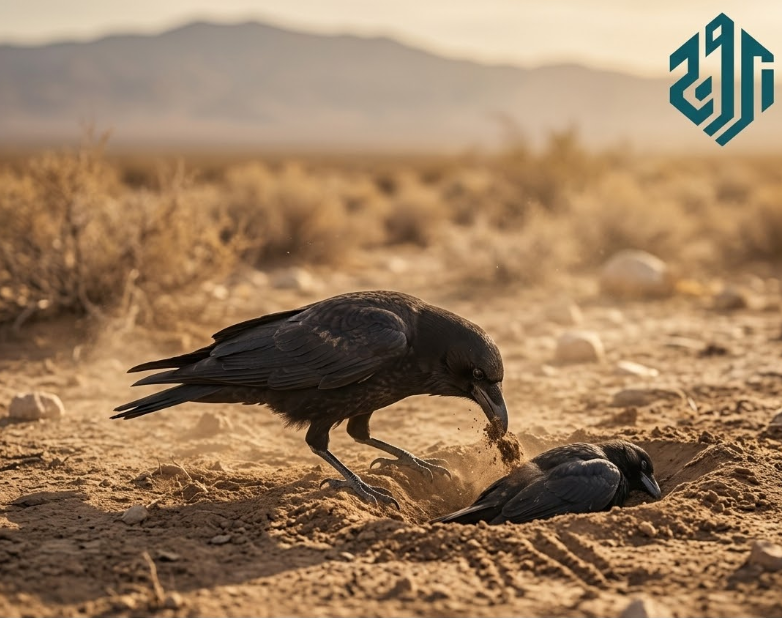
Qabil watched. And suddenly, he understood.
وَبَعَثَ ٱللَّهُ غُرَابًا يَبْحَثُ فِى ٱلْأَرْضِ لِيُرِيَهُۥ كَيْفَ يُوَٰرِى سَوْءَةَ أَخِيهِ
Waba’atha Allāhu ghurāban yabhathu fī al-ardi liyuriyahu kayfa yuwārī saw’ata akhīhi
“So Allah sent a crow searching in the ground to show him how to hide the disgrace of his brother.” (Al-Ma’idah 5:31)
The lesson for your child: Allah teaches through all of creation — even a crow. Every creature has a purpose. And this moment — one crow digging in the earth — gave humanity the dignity of burial that we still practice today.
This story connects beautifully to broader Islamic stories for kids that teach children how early humans learned right from wrong.
Comparing the Bird Stories in the Quran
| Story | Bird | Surah | Core Lesson for Kids |
| Army of the Elephant | Ababil (flock of birds) | Al-Fil (105) | Allah protects His House with the smallest creatures |
| Hud Hud the Messenger | Hoopoe (Hud Hud) | An-Naml (27) | Honesty and observation can change kingdoms |
| Ibrahim’s Four Birds | Four unnamed birds | Al-Baqarah (2) | Allah has complete power over life and death |
| The Crow’s Lesson | Crow (Ghurāb) | Al-Ma’idah (5) | Allah teaches humanity through every part of creation |
Each story sits in a different Surah, covers a different era of history, and carries a distinct lesson — yet they all point to one truth: Allah is in control of every creature, great and small.
Excel in Your Quranic Studies
Join Buruj Academy and master the Quran with our structured, professional curriculum.
Book Your Free TrialGive Your Child a Bright Future with Inspiring Quranic Learning
Spark a lifelong love for the Quran and the Arabic language in your child’s heart. At Buruj Academy, we specialize in making sacred knowledge accessible, engaging, and fun for young learners.
Our expert tutors use child-friendly teaching methods—including interactive tools and personalized pacing—to ensure your little ones build a strong spiritual foundation while developing a deep connection to their faith and heritage.
Whether they are taking their very first steps in the alphabet or beginning the noble journey of memorization, we provide a safe and supportive environment where every child can thrive.
Enroll your child in one of our specialized, kid-friendly tracks today:
- Online Quran Classes for Kids
- Tajweed Classes for Kids
- Hifz Classes for Kids
- Online Arabic Classes for Kids
- Quranic Arabic Course for Kids
- Noorani Qaida Course for Kids
- Islamic Studies Classes for Kids
Ready to watch your child grow in knowledge and character? Join the Buruj Academy family and book a free trial session for your child today!
Frequently Asked Questions About Bird Stories in the Quran for Kids
What Is the Story of the Ababil Bird in the Quran?
The Ababil were small birds sent by Allah to destroy the army of Abraha, who marched toward Makkah with war elephants to demolish the Kaaba. Each bird carried three tiny stones. When released, the stones destroyed the entire army. This story is told in Surah Al-Fil (Chapter 105) in just five verses.
What Is the Story of Hud Hud Bird in the Quran?
Hud Hud was a hoopoe bird in the army of Prophet Sulayman (peace be upon him). He discovered that the Kingdom of Sheba worshipped the sun instead of Allah and reported this to Sulayman. Sulayman sent a letter with Hud Hud to Queen Bilqis, which ultimately led her to accept Islam. This story is in Surah An-Naml (Chapter 27).
Why Are Bird Stories Important for Teaching Kids About the Quran?
Birds are familiar and beloved creatures for children, making these Quranic stories immediately relatable. Each story carries a concrete moral — trusting Allah, being honest, understanding Allah’s power — through vivid events. Children remember narratives far longer than abstract lessons, and these stories plant seeds of faith naturally.
How Many Times Are Birds Mentioned in the Quran?
Birds appear in multiple places throughout the Quran — in Surah Al-Fil, An-Naml, Al-Baqarah, Al-Ma’idah, Al-Mulk, and others. They serve as messengers, armies, teachers, and signs of Allah’s power. For a deeper understanding of Quranic themes, explore easy Tafseer in English with your child.
What Age Is Suitable for Telling These Quran Bird Stories to Children?
These stories are appropriate from ages four and up, with simple language for younger children and richer detail for older ones. The Ababil and Hud Hud stories work particularly well for ages four to eight. The story of Ibrahim’s four birds and the crow can be introduced to children aged seven and above, as their themes of death and resurrection require gentle, age-appropriate framing.