 Arabic

Children learn new languages fastest between ages 4 and 12, yet many Muslim parents outside the Arab world struggle to find Arabic books that actually hold their child’s attention. The right book does more than teach letters — it builds a connection to the language your child will carry for life.
Choosing quality arabic kids books means looking for strong visuals, clear tashkeel (vowel markings), and age-appropriate topics. This guide covers seven verified, widely used books for children aged 4 to 15 that parents and teachers across the English-speaking world genuinely rely on, with practical guidance for each.
Table of Contents:
1. Alif Baa Taa Is One of the Most Beginner-Friendly Arabic Books for Kids
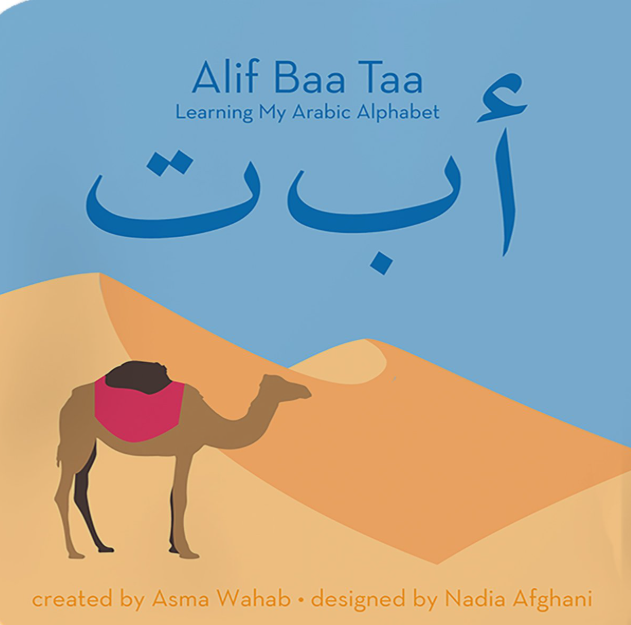
Alif Baa Taa: Learning My Arabic Alphabet by Asma Wahab is a beautifully illustrated board book introducing each Arabic letter through an adorable animal character and a short accompanying story.
Every page pairs the letter with a bold illustration and pronunciation guidance, making it ideal for non-Arabic-speaking parents reading alongside their toddler. The tashkeel is clear, and English transliterations help parents who haven’t yet mastered the letters themselves.
What makes this book particularly effective for young children is its storytelling approach. Rather than presenting dry letter drills, each letter feels like a mini-adventure. Children aged 4–6 especially respond to the bright visuals and memorable animal associations.
Read one or two pages daily before bedtime. The short, story-based format fits perfectly into a 5-minute routine that young children actually look forward to.
2. The Arabic Club Readers series Gives Kids Structured Arabic Reading Practice
The Arabic Club Readers series from Oxford University Press is a set of banded, color-coded readers specifically designed to grow with your child’s reading level.
The series spans multiple color bands — from Pink (beginner) through Red, Yellow, and Blue — so children progress naturally without feeling overwhelmed.
Each book contains colorful, engaging stories about everyday situations children recognize: going to school, visiting the zoo, playing with toys. This relatable content keeps young readers motivated to reach the next level.
| Color Band | Approximate Level | Age Range | Sample Title |
| Pink | Complete Beginner | Ages 5–6 | I Have Toys |
| Red | Early Reader | Ages 6–7 | Time for School |
| Yellow | Developing Reader | Ages 7–9 | What Did the Lion Eat? |
| Blue | Confident Reader | Ages 8–10 | Ahmed’s Favorite Hobby |
The banded progression is the series’ greatest strength. Parents can clearly track their child’s progress, and children feel genuine pride moving from one color to the next. This milestone structure is especially motivating for ages 6–9.
Aim for one reader per week. Reading aloud together before your child reads independently builds both comprehension and confidence.
At Buruj Academy, our Online Arabic Classes for Kids follow a similar philosophy — letters introduced through stories and relatable images so children build genuine connections to the Arabic alphabet, not just rote memorization.
Book your child’s free Arabic trial now!

3. Noor Al-Bayan Is a Proven Arabic Kids Book for Foundational Quranic Reading
Noor Al-Bayan was developed by Egyptian Sheikh Tarek Al-Saied specifically to teach children and beginners Arabic reading through Quranic verses. Rather than teaching Arabic and Quran separately, this method weaves both together from the very first lesson.
The book follows seven progressive levels: starting with individual Arabic letters and moving through vowel markings (harakat), elongation sounds (mudood), sukoon, tanween, shaddah, and basic Tajweed rules. Each level builds directly on the previous one.
This structured progression means a child aged 5 can genuinely begin with Level 1 and move forward at their own pace. Children who complete all seven levels can read Quranic text with correct pronunciation — a meaningful milestone for Muslim families.
For ages 5–7, work through Level 1 slowly — five minutes of daily practice with full focus beats an hour of rushed reading every time.
Through Buruj Academy’s Noorani Qaida for Kids, we use similarly phonics-based methods, introducing Arabic letters systematically through short 20–25 minute sessions that match young children’s natural attention spans.
Sign up your son for a free Noorani Qaida lesson.

4. The I Love Arabic Series Is the Most Comprehensive Arabic Curriculum for School-Age Kids
I Love Arabic (أحب العربية) is arguably the most widely used structured Arabic curriculum for non-native-speaking children in the Western world. It is used by Islamic schools across North America and Europe, and covers Pre-K through advanced levels, making it suitable for children aged 4 all the way through 18.
Each level contains a student textbook and a workbook. Lessons cover listening, reading, writing, and speaking — all four language skills — using illustrated vocabulary, structured conversations, and writing practice. The tashkeel throughout ensures children read correctly from the start.
| Level | Age Group | Focus |
| Pre-K | Ages 3–5 | Letter shapes, basic vocabulary |
| Levels 1–6 | Ages 6–11 | Full reading, writing, grammar |
| Levels 7–12 | Ages 12–18 | Intermediate to advanced Arabic |
For families seeking a long-term Arabic education roadmap, I Love Arabic provides genuine continuity from kindergarten through secondary school. Islamic schools in the US highly recommend this series for structured classroom or home use.
If your child is starting at age 8 or older with no Arabic background, begin at Level 1 — do not skip ahead based on age alone. Solid foundations matter more than catching up.
Discover the Buruj Academy Difference
Step into our virtual classrooms and see how our expert instructors make learning Quran and Arabic intuitive and clear. We focus on overcoming the specific hurdles non-native speakers face, building your confidence and connection with the Quran.
5. My First Arabic Words Makes Building Arabic Vocabulary Fun for Kids
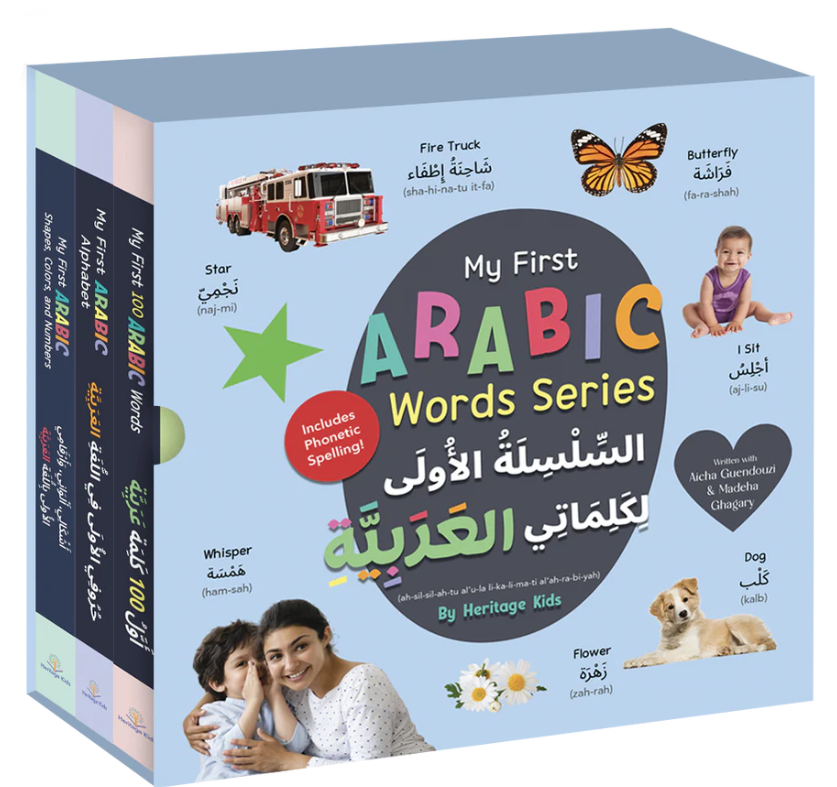
The My First Arabic Words series by Heritage Kids Press covers over 300 words across topics children love — colors, numbers, shapes, animals, and everyday objects. Written in Modern Standard Arabic (MSA) with full tashkeel and English transliterations, it supports families where neither parent reads Arabic fluently.
These are durable board books designed for toddler hands. The thick pages, vibrant illustrations, and bilingual format make them equally useful for parents sitting beside their child and pointing to words, which reinforces learning through interaction and conversation.
The thematic organization is especially helpful. Rather than learning random words, children build vocabulary in connected clusters — all fruit words together, all color words together — which mirrors how children naturally acquire language.
Point to real objects around your home that match the book’s themes. Saying كِتَاب (kitaab — book) while holding the actual book creates lasting word memory far better than page-only practice.
6. Kalimaatee Al-Oola Bridges the Gap Between Letters and Real Arabic Words for Kids
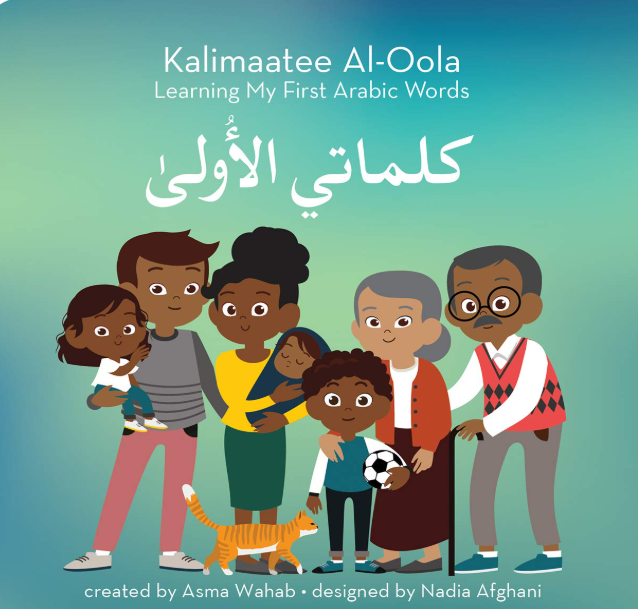
Kalimaatee Al-Oola: Learning My First Arabic Words is the follow-up to Alif Baa Taa by the same author. Once a child knows the letters, this book introduces them to full vocabulary words through modern illustrations and traceable letters on every page.
Written in classical Fus-ha Arabic with tashkeel and full English transliterations, the 6″×6″ board book format is easy for small hands. Dry-erase tracing means children can practice writing each word repeatedly without needing new materials — a practical benefit for home use.
The book’s strength is its beautiful, contemporary illustrations that feel fresh and relevant to children growing up outside the Arab world. Topics include everyday vocabulary children encounter at home and school, making the language feel immediately applicable.
After your child traces a word, ask them to say it aloud three times. The combination of writing and speaking together speeds up retention significantly for ages 4–7.
Read Also: Arabic Sentences for Kids
7. The Arabic Letters Activity Book Gives Kids Hands-On Arabic Practice Through Coloring and Tracing
Activity-based Arabic books fill a crucial gap that story books and readers cannot. The Arabic Letters Activity Book format — available from multiple publishers — combines coloring, tracing, matching exercises, and letter-positioning practice (initial, medial, and final forms) into tasks children genuinely enjoy completing.
Unlike passive reading books, activity books require a child to produce Arabic — tracing a ب, coloring a picture that starts with ت, or matching a letter to its word. This active engagement builds muscle memory and letter recognition simultaneously.
These books also suit different skill levels within a single age group. A 6-year-old just starting Arabic and an 8-year-old reviewing letters can both use activity books productively at their own pace without feeling behind or bored.
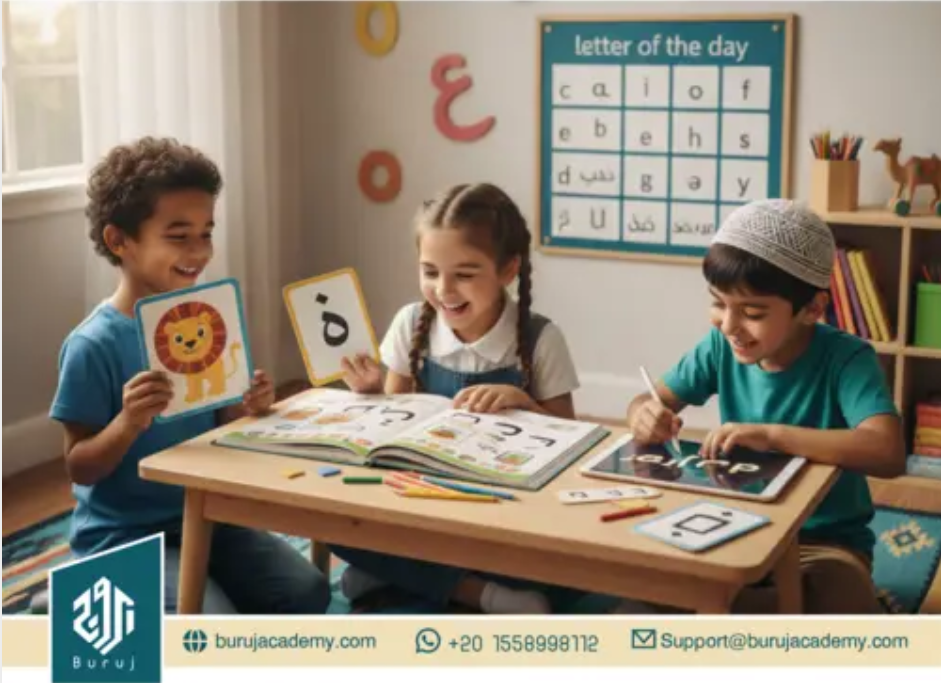
Buruj Academy’s Arabic Alphabet Learning Course uses similar activity-based methods alongside teacher guidance — children learn ب through بيت (house) and ت through تفاحة (apple) — making letter–sound–word connections stick through playful, interactive practice.
Get your kid a free trial now in the Best Alphabet course
Read Also: Learn Arabic Alphabet for Kids
Set a short 10-minute activity session, not an open-ended one. Completing two or three focused exercises with full attention outperforms a longer session where concentration drifts.
Master the Arabic Language
Develop reading, writing, speaking, and comprehension skills through interactive Arabic lessons for all levels.
Start Arabic ClassesRead Also: How to Learn Arabic for Kids?
Start Your Child Learning Arabic Path with Buruj Academy’s Expert Kids Instructors
Choosing the right Arabic kids books is a wonderful first step, but consistent expert guidance helps children progress faster and develop genuine language confidence.
- Instructors are Al-Azhar graduates with 12+ years teaching children from non-Arabic families
- Age-appropriate curriculum designed for kids aged 4–15
- Short lessons of 20–30 minutes matching children’s natural attention spans
- Gamification, songs, and stories — not dry letter drills
- Patient, encouraging instructors who build confidence, not pressure
- Flexible scheduling to fit your family routine
Book a free trial lesson for your child at Buruj Academy today through our Online Arabic Classes for Kids.
Find your child’s perfect match among Buruj’s top courses for kids:
- Arabic Classes for Kids
- Alphabet course
- Noorani Qaida Course for Kids
- Quranic Arabic Course
- Islamic Studies for Kids
- Hifz Classes for Kids
- Quran Classes for Kids
- Tajweed for Kids
Get a free trial for your child today.
Conclusion
The best arabic kids books combine clear tashkeel, relatable visuals, and age-appropriate topics. Board books like Alif Baa Taa suit toddlers aged 2–5, while structured curricula like I Love Arabic serve school-age learners through their teenage years.
Activity-based formats and phonics methods like Noor Al-Bayan build the foundational reading skills children need to connect with the Quran. Pairing reading practice with writing and speaking exercises accelerates vocabulary retention at every age.
Short, consistent daily sessions — even five to ten minutes — produce far stronger results than occasional long study periods. Insha’Allah, the right book paired with genuine enthusiasm from parents creates a love of Arabic that stays with children for life.
Related Articles
Arabic






Leave a Reply