
Lessons From Prophets Stories: Timeless Guidance from the Quran
The human experience, with its trials, triumphs, and profound moments of decision, finds its most perfect mirrors in the Lessons From Prophets Stories. These narratives, detailed vividly within the Quran, are not mere historical accounts; they form the bedrock of Islamic theology and moral teaching. Consequently, studying them offers believers a practical, enduring blueprint for navigating life’s complexities. The Quran elevates these sacred biographies, transforming them into a constant source of inspiration and spiritual sustenance. Therefore, we must approach these accounts not just as stories, but as direct, divine instructions for success in both this world and the Hereafter.
Free trail Session Contact Us
Nuh (Noah): Lessons From Prophets Stories in Persistence
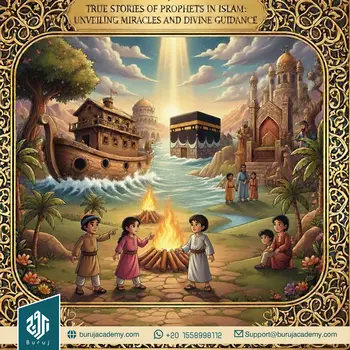
The story of Prophet Nuh, peace be upon him, illustrates the monumental power of perseverance against overwhelming rejection. Nuh called his people to monotheism for 950 years. Imagine that dedication. This was not a short-term campaign; rather, it was a test of faith lasting nearly a millennium. In fact, his community relentlessly mocked him, calling him delusional and refusing to listen to his clear warnings.
Building the Ark: A Lesson in Divine Certainty
The Quran explicitly mentions Nuh’s commitment, even when the response was apathy and scorn. God commanded Nuh to build the Ark, a ship of salvation, in an arid land far from the sea. This instruction seemed illogical to his people, intensifying their mockery. Consequently, their disbelief became their downfall. Nuh, however, trusted the divine command absolutely. This unwavering certainty teaches us a crucial lesson: Lessons From Prophets Stories consistently emphasize absolute reliance on God’s plan. True success hinges on obedience to the Creator, even if the righteous path invites ridicule.
Ibrahim (Abraham): The Pillars of Faith and Lessons From Prophets Stories in Submission
Prophet Ibrahim, known in the Quran as Khalilullah (The Friend of God), embodied the highest form of tawhid, or absolute monotheism. His life was a series of profound tests designed to challenge the very core of his belief system. Furthermore, he faced both family opposition and the tyranny of a king, Nimrud, yet his faith never wavered.
Ibrahim’s Confrontation: Lessons in Monotheism
Ibrahim’s initial struggle involved intellectually dismantling the false gods worshipped by his father and his tribe. He used observation—first pointing to the stars, then the moon, then the sun—only to reject them all as temporary and reliant on a greater power. Finally, he declared his devotion to the Creator of the heavens and the earth. This rational and fearless confrontation with polytheism sets a powerful precedent for intellectual honesty in faith.
Moreover, his readiness to sacrifice his son, Isma’il, stands as the ultimate test of submission. He prepared to execute the command without hesitation, demonstrating a submission that transcended natural affection and personal comfort. This moment powerfully transmits another of the Lessons From Prophets Stories: genuine faith requires us to place God’s will above all else, even our most cherished worldly possessions or relationships.
Yusuf (Joseph): Lessons From Prophets Stories in Sabr and Purity
The narrative of Prophet Yusuf, often called the most beautiful story (Ahsan al-Qasas) in the Quran, serves as an extended masterclass in patience (Sabr) and purity. Yusuf endured betrayal by his brothers, slavery, false accusation by Zulaikha, and subsequent unjust imprisonment.
Choosing Purity: Yusuf’s Lesson in Integrity
Yusuf’s test of purity in the house of the powerful minister highlights the importance of maintaining moral integrity under immense pressure. The Quran details how he sought refuge in God when temptation became overwhelming. He chose prison over sin. His steadfastness demonstrates that integrity is not passive; it requires an active choice, a fierce resistance against vice. Consequently, his eventual rise from prisoner to the highest-ranking official in Egypt became a testament to how God rewards unwavering patience and virtue. We learn that our darkest moments often contain the seeds of our greatest elevations.
Musa (Moses): Leading Against Empire – A Lesson From Prophets Stories
The epic of Prophet Musa and his confrontation with the Pharaoh is perhaps the most action-packed of the Lessons From Prophets Stories. It teaches us about courage, the fight against oppression, and the certainty of divine intervention when all human means seem exhausted.
The Power of Two Words: Musa’s Lesson in Tawakkul
Musa was known for his courage and, crucially, for his deep reliance on God. When he stood at the edge of the Red Sea, with the Pharaoh’s mighty army closing in behind him, his followers panicked. Musa, however, simply declared, “Kalla! Inna ma’iya Rabbi sayahdin.” (“Nay! Indeed, my Lord is with me; He will guide me.”) That simple declaration of faith, spoken at the moment of peak crisis, demonstrates the true nature of Tawakkul (trust in God). Immediately after, the sea parted. This shows that when we act with moral courage and place our complete reliance on God, seemingly impossible obstacles crumble.
Ayyub (Job): Resilience and Unwavering Gratitude – Core Lessons From Prophets Stories
Prophet Ayyub’s story stands as the premier example of human resilience and steadfastness in the face of profound hardship. He was a wealthy, blessed, and righteous man. Then, everything vanished—his health, his wealth, and his family. He endured years of agonizing sickness and poverty, yet his tongue remained moist with the remembrance of God.
Ayyub’s Model: The Lesson of Sabr and Shukr
Ayyub never complained about his suffering. In fact, his wife once suggested he ask God for relief, but Ayyub reminded her of the decades of comfort and health they had enjoyed. He said he felt ashamed to ask for relief before his period of suffering had lasted as long as his period of prosperity. This is true patience combined with an unwavering sense of gratitude (Shukr). When Ayyub finally supplicated, he did so gently, simply acknowledging his affliction. God responded by restoring his health and doubling his wealth and family. The core lesson here: the believer’s state is always one of gratitude in times of ease and patience in times of difficulty. The Lessons From Prophets Stories reveal that life’s difficulties purify the soul.
Muhammad (PBUH): The Final Messenger and Apex of Lessons From Prophets Stories
The life of the Prophet Muhammad, the seal of the prophets, provides the most comprehensive model, encompassing the resilience of Nuh, the submission of Ibrahim, the patience of Yusuf, and the leadership of Musa. His biography is the final, perfect implementation of all previous divine guidance.
Mercy in Victory: Muhammad’s Lesson in Leadership
Muhammad’s life exemplifies mercy (Rahmah) even in victory. Consider his entry into Mecca after years of exile and persecution. He had the power to punish those who had tormented him and his followers, but he chose forgiveness, declaring, “Go, for you are all free.” This act of supreme mercy transformed bitter enemies into devoted allies. Furthermore, his leadership demonstrated perfect governance—he served as a judge, a commander, a husband, a father, and a statesman, all while maintaining humility and devotion. His character, his Sunnah, offers an inexhaustible source of practical wisdom.
Conclusion: Embodying the Lessons From Prophets Stories
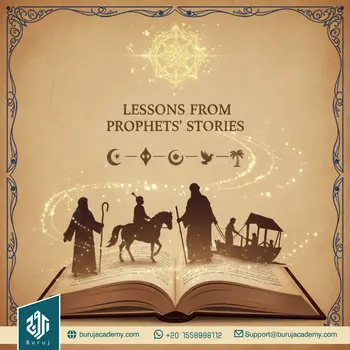
The Lessons From Prophets Stories are truly the light that guides us through our own complex journeys. Each prophet’s life reveals a different facet of faith: the persistence of Nuh, the submission of Ibrahim, the purity of Yusuf, the courage of Musa, and the resilience of Ayyub. The Prophet Muhammad (PBUH) synthesized all these virtues into the final, complete model for humanity.
We recognize that our lives will inevitably include tests of poverty, health, temptation, and rejection. Consequently, we should view the Quran’s narratives as a direct manual, encouraging us to internalize these virtues and reflect them in our daily lives. Truly, these are more than just stories; they are the enduring, actionable Word of God.
Enrich Your Journey with Lessons from Prophets Stories:
If these stories resonate deeply with you, consider furthering your understanding of the Islamic tradition. Continuing to read the biographies of other prophets like Yunus (Jonah), Sulayman (Solomon), and Isa (Jesus) will significantly enrich your spiritual journey.
We highly recommend exploring structured learning to fully grasp the wisdom in these divine accounts. Start your path with introductory courses today:
- Islamic Courses: Deepen your knowledge of Quranic context and meaning.
- Quran Courses: Quran courses cover a range of topics, including recitation with Tajweed, memorization, understanding the Quran, Islamic studies, and the Arabic language.
Connect with Us: Do you find inspiration in these narratives? Join our community! Facebook, Youtube and Instagram