 Quran
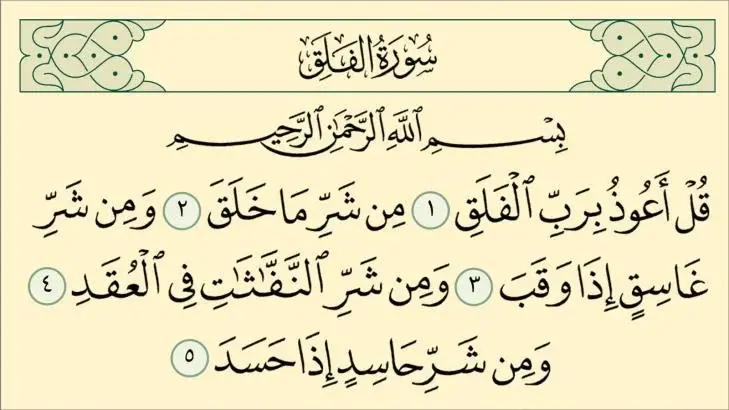
Many Muslims turn to Surah Al-Falaq during moments of fear, sickness, or unseen harm, unsure which practices around it are actually rooted in the Sunnah.
We have taught this Surah to hundreds of students, and the same question surfaces again and again: what does authentic guidance actually say, apart from folk traditions passed down without any source.
Surah Al-Falaq is one of the two Mu’awwidhatayn (Surahs of Refuge) that the Prophet ﷺ himself called unmatched in the Quran. Its authenticated benefits center on protection from evil, magic, envy, and darkness, verified through Sahih Muslim, Sahih al-Bukhari, and Sunan an-Nasa’i.
Table of Contents:
1. Reciting Surah Al-Falaq Brings Barakah Because it Was Praised by the Prophet Muhammad ﷺ
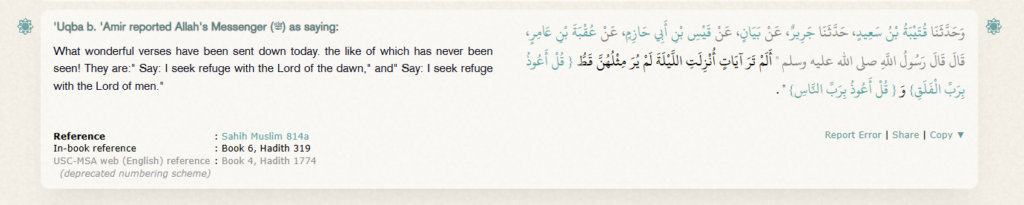
‘Uqbah ibn ‘Amir reported that the Prophet ﷺ said no verses like these had ever been revealed before, referring directly to Surah Al-Falaq and Surah An-Nas together. This is not a minor virtue mentioned in passing; it is a direct, personal declaration from the Prophet ﷺ himself about these two chapters.
‘Uqbah ibn ‘Amir reported that the Messenger of Allah asked whether they had seen the verses revealed to him in the night, adding that no one had seen the likes of them before, referring to Surah Al-Falaq and Surah An-Nas. This narration is recorded in Sahih Muslim 814, graded authentic.
In our sessions at Buruj Academy, we have noticed that students often assume “short Surah” means “minor Surah.” This hadith corrects that assumption immediately.
Knowing the weight the Prophet ﷺ himself placed on these verses is often the turning point that makes students take their memorization and recitation seriously, something we build into every online Quran course for beginners from day one.
The Surah’s brevity does not diminish its status. Scholars of Tafsir note that its five concise verses carry comprehensive protection, covering general evil, darkness, witchcraft, and envy in a single breath.
This density of meaning in minimal wording is part of why Al-Azhar-trained instructors emphasize reflecting on the Surah’s meaning, not just its recitation.
Begin Learning Quran With a FREE Trial Lesson
2. Surah Al-Falaq Brings Protection of Allah
Surah Al-Falaq ranks among the most powerful verses a Muslim can recite for protection, according to explicit prophetic teaching. The Prophet ﷺ told a companion he would never recite anything greater for seeking refuge before Allah than this Surah paired with Surah An-Nas.
‘Uqbah ibn ‘Amir narrated that he asked the Prophet ﷺ to teach him Surah Hud and Surah Yusuf instead, longer, more narrative-rich chapters. The Prophet ﷺ replied that he would never recite anything greater for refuge before Allah than Surah Al-Falaq and Surah An-Nas. This is recorded in Sunan an-Nasa’i 953.
This response is instructive. The companion wanted longer, storied Surahs; the Prophet ﷺ redirected him toward these two short chapters specifically because of their unmatched protective function. Length does not equal spiritual weight in the Quran.
3. The Prophet Muhammad ﷺ Recited Surah Al-Falaq Every Night Before Sleep
Reciting Surah Al-Falaq before sleep is an authenticated nightly Sunnah, not a folk custom. Aisha (RA) reported that the Prophet ﷺ performed this practice every single night without exception, making it one of the most consistently documented habits in his entire life.
Aisha reported that whenever the Prophet went to bed every night, he would cup his hands together and blow into them after reciting Surah Al-Ikhlas, Surah Al-Falaq, and Surah An-Nas, then rub his hands over whatever parts of his body he could reach, starting with his head, face, and the front of his body, doing that three times. This is recorded in Sahih al-Bukhari 5017.
What the Prophetic Nightly Practice Involves
| Step | Action | Number of Repetitions |
| 1 | Cup both hands together | Once |
| 2 | Recite Al-Ikhlas, Al-Falaq, An-Nas into hands | Three times each |
| 3 | Wipe hands over head, face, and reachable body | Three times |
This table breaks down a practice many students perform incorrectly, either skipping the physical wiping or reciting only once instead of three times.
Consistency, not intensity, defined the Prophet’s ﷺ approach to this Surah. This mirrors the Buruj Method’s principle of consistency-before-speed, something we reinforce constantly with students building any nightly Quran habit through our Online Hifz Program.
Start Hifz today with a FREE trial session

4. Surah Al-Falaq Provides Barakah for Patients
Surah Al-Falaq was among the last verses the Prophet ﷺ relied on during the illness that preceded his death, according to Aisha’s direct testimony. This shows the Surah was not reserved for minor discomforts but trusted during the most serious moments of his life.
Aisha narrated that during the Prophet’s fatal illness, he would recite the Mu’awwidhat, Surah Al-Falaq and Surah An-Nas, and then blow his breath over his body, and when his illness worsened she recited these two Surahs and rubbed his hands over his body seeking their blessing. This is recorded in Sahih al-Bukhari 5016.
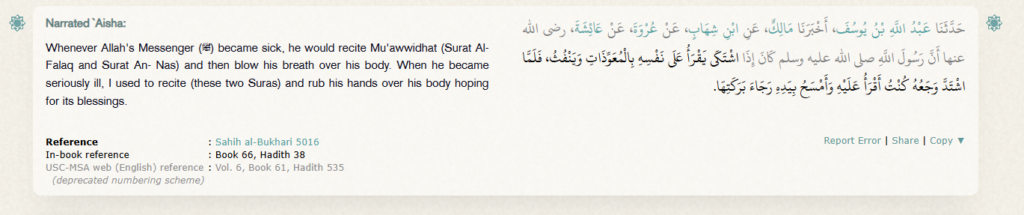
This narration carries emotional weight beyond its legal ruling. Aisha, watching her husband in his final days, chose these specific verses as her means of comfort and care. This was not experimentation; it was reliance on something already proven through years of practice.
We remind students who feel these practices are “just tradition” that this hadith documents a living, lived choice made under real distress. It was not theoretical.
Read also: Benefits of Ayatul Kursi
5. Reciting Surah Al-Falaq and An-Nas Offers Comprehensive Protection Against All Harm
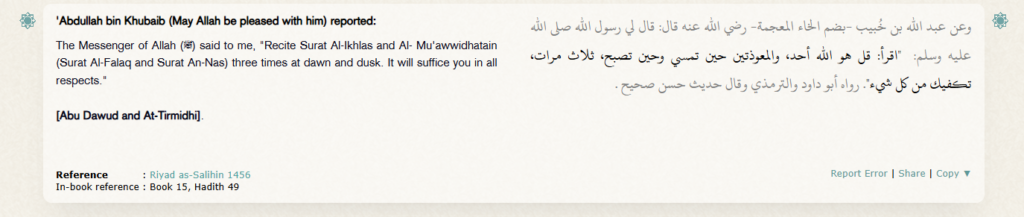
A specific hadith promises that reciting Surah Al-Ikhlas along with the Mu’awwidhatayn three times in the morning and evening will “suffice you against everything.”
This is one of the strongest blanket promises of protection found anywhere in authenticated hadith literature.
‘Abdullah bin Khubaib reported that the Prophet ﷺ told him to recite Surah Al-Ikhlas and the Mu’awwidhatain three times at dawn and dusk, stating it would suffice him in all respects.
This is recorded in Riyad as-Salihin 1456, sourced from Abu Dawud and At-Tirmidhi, graded hasan sahih.
Why “Three Times” Matters and What It Does Not Mean
The specific number given by the Prophet ﷺ is three, morning and evening. This is the authenticated figure, and no hadith extends this number into the hundreds or thousands for a fixed daily target.
Students frequently ask us whether reciting more repetitions multiplies the protection. We explain that the Prophet ﷺ specified three deliberately; adding invented numbers on top of a clear prophetic instruction is not devotion, it is innovation.
This is precisely the kind of nuance our Online Tajweed Classes cover when teaching proper Ruqyah recitation alongside correct Tajweed application.
Discover the Buruj Academy Difference
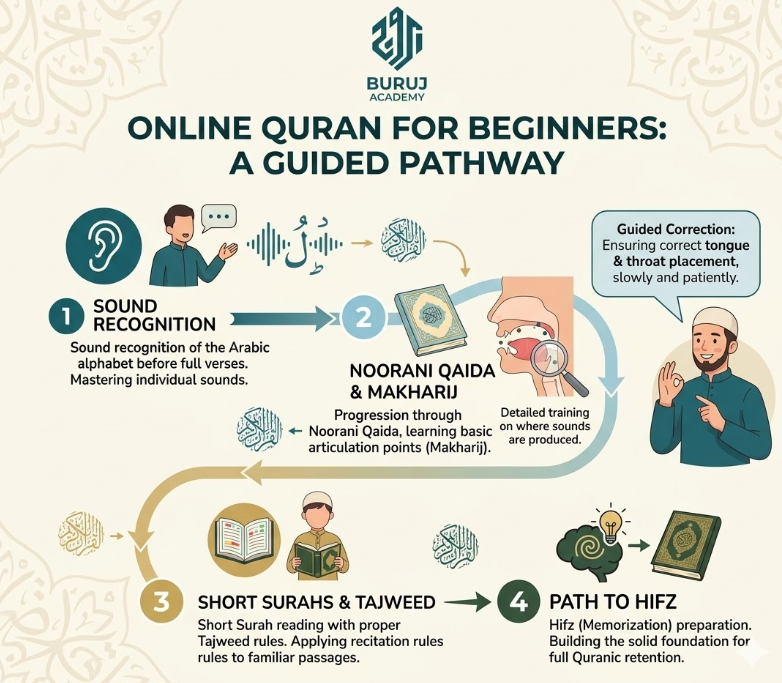
Step into our virtual classrooms and see how our expert instructors make learning Quran and Arabic intuitive and clear. We focus on overcoming the specific hurdles non-native speakers face, building your confidence and connection with the Quran.
Excel in Your Quranic Studies
Join Buruj Academy and master the Quran with our structured, professional curriculum.
Book Your Free Trial6. Surah Al-Falaq Cures the Cases of Black Magic
Surah Al-Falaq and Surah An-Nas were revealed in connection with protection from sihr (witchcraft), and the Prophet ﷺ relied on them specifically once they were revealed, abandoning other forms of seeking refuge he had used before.
Abu Sa’id Al-Khudri reported that the Prophet ﷺ used to seek refuge from the jinn and from the evil eye until the Mu’awwidhatan were revealed, after which he took to them and left everything besides them. This is recorded in Jami’ at-Tirmidhi 2058.
This is significant: before these Surahs existed, the Prophet ﷺ used other supplications for the same purpose.
Once Al-Falaq and An-Nas were revealed, he replaced those earlier practices entirely, indicating their superior protective function was recognized immediately.
مِن شَرِّ ٱلنَّفَّـٰثَـٰتِ فِى ٱلْعُقَدِ
Min sharrin-naffathati fil-‘uqad
“And from the evil of the blowers in knots.” (Al-Falaq 113:4)
This verse directly references the practice of witchcraft involving knots, which is the exegetical basis scholars cite for the Surah’s connection to protection from sihr.
We tie this directly into our Islamic studies classes, where students study Tafsir context like this alongside the Arabic text itself, rather than memorizing verses without understanding their revelation background.
Begin Your Islamic Knowledge Journey With a FREE Trial Lesson

Read also: Benefits of Surah Yaseen
What Is the Truth Behind Claims of Reciting Surah Al-Falaq 100 Times for Benefits?
There is no authentic hadith instructing Muslims to recite Surah Al-Falaq exactly 100 times for any specific benefit. This number appears in folk circulation and informal ruqyah guides, but it cannot be traced to Sahih al-Bukhari, Sahih Muslim, or any recognized hadith collection.
The authenticated numerical instruction from the Prophet ﷺ is three times, recited in the morning and evening, as established in the hadith from ‘Abdullah bin Khubaib above. Any figure beyond this, including 100 repetitions, reflects a practice added later without prophetic origin.
We caution students against treating invented numbers as spiritually superior to the Sunnah’s actual instructions.
Reciting the Surah 100 times is not sinful in itself as general dhikr, but presenting it as a prescribed ritual with guaranteed outcomes misrepresents what the Prophet ﷺ actually taught.
Is Reciting Surah Al-Falaq 1,000 Times an Authentic Islamic Practice?
Reciting Surah Al-Falaq exactly 1,000 times is not supported by any authentic hadith and should be recognized as an unauthenticated folk claim rather than prophetic guidance. No collection among Sahih al-Bukhari, Sahih Muslim, Sunan an-Nasa’i, or Jami’ at-Tirmidhi records this figure in connection with the Surah.
Claims involving extremely high repetition counts, whether 1,000 or higher, often circulate in informal ruqyah communities promising specific outcomes like wealth, marriage, or guaranteed healing.
These promises function more like folk incantation formulas than the Quranic worship the Prophet ﷺ modeled.
One detailed breakdown of similar inflated repetition claims calculated that even reciting continuously for an entire ten-hour night at an unrealistic pace of one recitation every two seconds would produce only around 18,000 repetitions, far short of numbers some innovators demand.
This kind of mathematical scrutiny exposes how impractical, and unfounded, these inflated figures really are.
We consistently redirect students toward the Prophet’s ﷺ own documented practice: three repetitions, morning and evening, paired with sincere reflection on the meaning. Depth of heart matters more than an arbitrary count.
Does Reciting Surah Al-Falaq 313 Times Have Any Basis in Authentic Sources?
The claim that reciting Surah Al-Falaq 313 times produces special spiritual or protective effects has no foundation in Sahih hadith literature. The number 313 is sometimes associated in folk tradition with the number of fighters at the Battle of Badr, but this symbolic connection has never been linked to Surah Al-Falaq by the Prophet ﷺ in any authenticated narration.
This is an important distinction for students to understand: symbolic numerology is not the same as prophetic instruction.
The Prophet ﷺ was explicit and specific when he gave numerical guidance, as seen in the three-times instruction already discussed.
Table Comparing Authenticated Versus Unauthenticated Claims
| Practice | Status | Source |
| Recite 3 times, morning and evening | Authentic | Abu Dawud, At-Tirmidhi (Hasan Sahih) |
| Recite before sleep, blow on hands, wipe body | Authentic | Sahih al-Bukhari 5017 |
| Recite exactly 100 times for benefit | Unauthenticated folk claim | No hadith source |
| Recite exactly 1,000 times for benefit | Unauthenticated folk claim | No hadith source |
| Recite exactly 313 times for benefit | Unauthenticated folk claim | No hadith source |
We understand why these numeric practices spread. They offer a sense of certainty and control during genuinely difficult, frightening experiences like suspected black magic or illness. But authentic Islamic practice does not require inventing numbers Allah and His Messenger ﷺ never specified.
The Special Virtues of the Qur’an’s Chapters and Verses collection, compiled specifically to exclude weak and fabricated narrations, contains no such reference either.
Read also: Benefits of Surah Baqarah
Master Authentic Quran Recitation and Ruqyah Practice with Buruj Academy
At Buruj Academy, our Ijazah-certified instructors and Al-Azhar University graduates bring 12+ years of experience teaching non-Arabic speakers this exact Surah correctly.
Through the Buruj Method’s sound-before-rules approach, students learn precise articulation before layering in Tajweed rules, supported by personalized 1-on-1 sessions with flexible 24/7 scheduling and real-time correction.
Whether you’re a beginner learning to recite Al-Falaq for the first time or refining your Ruqyah practice, our online Quran classes for beginners meet you where you are.
Book your free trial lesson today and begin learning this protective Surah the way the Prophet ﷺ taught it.
Take the next step in your learning journey today by enrolling in one of our specialized programs:
- Online Quran Classes
- Online Quran Classes for Beginners
- Online Quran Classes for Adults
- Online Quran Classes for Ladies
- Online Quran Classes for Kids
- Quran Reading Course
- Quran Recitation Course
- Online Ijazah Course
- Online Qirat Course
Don’t wait to transform your relationship with the Holy Quran. Join our global community of students and book your free evaluation session now!
Excel in Your Quranic Studies
Join Buruj Academy and master the Quran with our structured, professional curriculum.
Book Your Free TrialConclusion
Surah Al-Falaq’s real power lies exactly where the Prophet ﷺ placed it: in sincere, consistent recitation rooted in authentic Sunnah, not in invented repetition counts borrowed from folk tradition. Its documented benefits, refuge from evil, protection during illness, and a nightly shield before sleep, are already remarkable without embellishment.
Approaching this Surah the way it was actually taught protects both your practice and your understanding. Sound knowledge, paired with proper recitation, is what transforms familiar verses into a lived source of daily protection.
Frequently Asked Questions About the Benefits of Surah Al-Falaq
Is It Authentic to Recite Surah Al-Falaq a Specific Number of Times for Protection?
The only authenticated number is three, recited in the morning and evening, based on hasan sahih hadith from Abu Dawud and At-Tirmidhi. Claims of 100, 1,000, or 313 repetitions have no basis in Sahih al-Bukhari, Sahih Muslim, or any recognized hadith collection.
What Is the Difference Between Surah Al-Falaq and Surah An-Nas?
Surah Al-Falaq (113) seeks refuge from external evils, darkness, witchcraft, and envy, while Surah An-Nas (114) seeks refuge from the internal whispering of Satan. Both were revealed together and are called Al-Mu’awwidhatayn, the two chapters of refuge.
Can Surah Al-Falaq Cure Black Magic?
Hadith confirms these Surahs were revealed in connection with protection from sihr, and the Prophet ﷺ relied on them specifically for this purpose. However, ruqyah should always be paired with sincere belief, cleanliness in one’s dealings, and, when needed, consultation with a knowledgeable practitioner.
When Did the Prophet Muhammad Recite Surah Al-Falaq?
He recited it every night before sleep, during illness, and specifically during his final illness, according to Aisha’s authenticated narrations in Sahih al-Bukhari. He also taught reciting it three times at dawn and dusk.
Is Surah Al-Falaq Better Than Longer Surahs for Protection?
The Prophet ﷺ explicitly told a companion he would never recite anything greater for refuge before Allah than Surah Al-Falaq and Surah An-Nas together, even when asked to teach longer Surahs like Hud and Yusuf. This establishes their unique status for this specific purpose.