 Quran
Many readers arrive searching for a specific promise tied to this Surah — protection, provision, or a blessing for a life event. What we’ve found after years of guiding non-Arabic speaking students through this text is that its real strength lies elsewhere.
Surah As-Saffat carries one directly authenticated virtue: the Prophet ﷺ recited it often in prayer. Beyond that, its benefit comes from the content itself — five prophetic stories that model patience, monotheism, and trust in Allah during hardship.
Table of Contents:
1. The Prophet ﷺ Regularly Recited Surah As-Saffat in His Prayers
This is the single most authenticated virtue tied to Surah As-Saffat, and it comes directly from the Sunnah rather than from folk tradition. Abdullah ibn Umar reported that the Messenger of Allah ﷺ would instruct his companions to keep prayers short, yet he himself would lead them while reciting this Surah.
The hadith reads: “The Messenger of Allah (ﷺ) used to enjoin upon us to make the prayer short, but he would lead us in prayer and recite As-Saffat” (Sunan an-Nasa’i 826).
This detail matters for two reasons.
First, it confirms the Prophet ﷺ valued this Surah enough to make an exception to his usual guidance on brevity.
Second, it tells us something about Prophetic teaching itself — that some content was worth the extra time, even for a congregation of mixed backgrounds and needs.
In our sessions at Buruj Academy, students preparing for Tahajjud or other voluntary prayers often ask which longer Surahs are backed by authentic practice rather than assumption.
As-Saffat is one of the strongest answers we can give with confidence. Its 182 verses divide naturally across two or more rak’ahs, making it manageable even for newer reciters.
Building the fluency to recite a Surah of this length smoothly is exactly what our Online Quran Recitation Course is designed to develop, moving students from hesitant word-by-word reading to connected, confident flow.
Book your first FREE recitation lesson
2. Surah As-Saffat Strengthens Core Belief in Allah’s Oneness
The Surah opens with three consecutive oaths that establish its central message within the first few verses: the absolute oneness of Allah, affirmed before any narrative begins. This structure is not accidental — it sets the theological frame for everything that follows.
وَالصَّافَّاتِ صَفًّا فَالزَّاجِرَاتِ زَجْرًا فَالتَّالِيَاتِ ذِكْرًا إِنَّ إِلَٰهَكُمْ لَوَاحِدٌ
Wa-ṣ-ṣāffāti ṣaffan, fa-z-zājirāti zajran, fa-t-tāliyāti dhikran, inna ilāhakum lawāḥid
“By those [angels] lined up in rows… Indeed, your God is One.” (As-Saffat 37:1-4)
The three oaths — ranks, restraint, and recitation — all point toward one conclusion: Tawhid.
This connects to an authentic hadith recorded in Sahih Muslim, where the Prophet ﷺ said we have been favored over other creation in three ways, including that “our ranks have been made like the ranks of the angels” during prayer — a direct echo of the Surah’s opening image.
Read also:Surah Al-Fath Benefits: 7 Authentic Virtues Every Muslim Should Know
3. Surah As-Saffat Teaches Patience Through the Story of Prophet Ibrahim
The narrative of Ibrahim (AS) confronting his people’s idol worship and later being tested with the command to sacrifice his son forms the emotional center of this Surah. It demonstrates that sincere faith is proven under real pressure, not in comfortable circumstances.
Ibrahim’s willingness to submit, followed by Allah’s mercy in providing a ransom, teaches that trust in divine wisdom precedes understanding of the outcome.
Non-Arabic speaking students often tell us this story reframes their own struggles — financial stress, family tension, health setbacks — as tests within a pattern Allah has always used with the righteous.
4. Surah As-Saffat Offers a Concentrated Declaration of Allah’s Glory in Its Final Three Verses
The last three ayat of Surah As-Saffat (180-182) function as one of the most complete tasbih formulas in the entire Quran, combining glorification, peace, and praise in a single breath.
سُبْحَانَ رَبِّكَ رَبِّ الْعِزَّةِ عَمَّا يَصِفُونَ وَسَلَامٌ عَلَى الْمُرْسَلِينَ وَالْحَمْدُ لِلَّهِ رَبِّ الْعَالَمِينَ
Subḥāna rabbika rabbi l-‘izzati ‘ammā yaṣifūn. Wa salāmun ‘ala l-mursalīn. Wa l-ḥamdu lillāhi rabbi l-‘ālamīn
“Exalted is your Lord, the Lord of might, above what they describe. And peace upon the messengers. And praise to Allah, Lord of the worlds.” (As-Saffat 37:180-182)
This structure — tanzih, salam, then hamd — is considered by scholars a complete statement of sound creed.
Classical tafsir attributes to Ali ibn Abi Talib (RA) the recommendation that whoever wishes greater reward on the Day of Resurrection should recite these three verses at the close of any gathering.
We want to be transparent here: this is a companion practice recorded in Al-Baghawi’s tafsir, not a direct hadith from the Prophet ﷺ, though it remains a widely respected practice among scholars.
Read also:Benefits of Surah Yunus
5. Surah As-Saffat Preserves the Honorable Remembrance of Prophet Nuh in Ayat 79
Ayat 79 of Surah As-Saffat records Allah’s promise that Nuh (AS) would be remembered with peace by every generation that follows him — a promise that has visibly held true across religious traditions to this day.
سَلَامٌ عَلَىٰ نُوحٍ فِي الْعَالَمِينَ
Salāmun ‘alā Nūḥin fi l-‘ālamīn
“Peace upon Noah among the worlds.” (As-Saffat 37:79)
The phrase confirms that sincere devotion is rewarded with lasting honor, a theme repeated for other prophets later in the same Surah.
The spiritual weight of this ayah lies in what it demonstrates rather than any ritual formula attached to it: patient endurance through decades of rejection did not go unnoticed by Allah. Nuh (AS) preached for centuries before the flood, and his reward was a name honored by Muslims, Jews, and Christians alike, long after his passing.
Read also:The Benefits of Reading Quran for Kids
6. Surah As-Saffat Describes Paradise in a Way That Builds Longing for the Hereafter
Verses 41 through 49 shift from prophetic narrative into a vivid description of the believers’ reward, contrasting sharply with the punishment described for disbelievers later in the same Surah. This section functions as motivation woven directly into a chapter about historical struggle.
Among its details is a description of a paradisiacal drink entirely free from the harms associated with worldly wine.
لَا فِيهَا غَوْلٌ وَلَا هُمْ عَنْهَا يُنزَفُونَ
Lā fīhā ghawlun wa-lā hum ‘anhā yunzafūn
“No bad effect is there in it, nor from it will they be intoxicated.” (As-Saffat 37:47)
Classical exegetes including Ibn Kathir note this verse deliberately negates the headache, stomach pain, and loss of reason associated with intoxicants in this world.
This passage teaches students that Quranic descriptions of Paradise are never vague comfort — they respond directly and specifically to the real, named flaws of worldly pleasure.
Discover the Buruj Academy Difference
Step into our virtual classrooms and see how our expert instructors make learning Quran and Arabic intuitive and clear. We focus on overcoming the specific hurdles non-native speakers face, building your confidence and connection with the Quran.
Excel in Your Quranic Studies
Join Buruj Academy and master the Quran with our structured, professional curriculum.
Book Your Free Trial7. Surah As-Saffat Teaches the Power of Sincere Dua
The account of Yunus (AS) being swallowed by a great fish after fleeing his people offers one of the Quran’s clearest lessons on the relationship between despair and sincere calling upon Allah.
His supplication from within the fish’s belly is referenced elsewhere in the Quran and remains one of the most recited duas in the Muslim world.
What makes this story distinct within As-Saffat is the surrounding tafsir detail: scholars note that Yunus (AS) had built a habit of righteous remembrance during times of ease, which is why his call was answered during extreme distress.
This is a lesson we return to often with adult students juggling careers and family life — consistency in ordinary moments is what sustains a person during crisis.
Read also:Authentic Child Protection Duas from the Quran and Sunnah
8. Surah As-Saffat Reinforces Correct Belief
A significant portion of this Surah’s later verses directly confronts a specific theological error held by the Makkan disbelievers — the claim that angels were female offspring of Allah. The Surah dismantles this through the angels’ own testimony that they exist purely in service and worship.
This refutation matters for readers today because it demonstrates the Quran’s method: correcting false belief not through mere denial, but through structured argument. Students working through Islamic Studies material benefit from seeing this pattern, since it recurs across many Surahs addressing shirk.
Our Online Islamic Studies Classes walk through exactly this kind of argumentative structure, connecting verses to their historical and theological context.
Begin Your Islamic Knowledge Journey With a FREE Trial Lesson
What Authentic Sources Say About Surah As-Saffat Benefits for Marriage?
No authentic hadith singles out Surah As-Saffat as a specific remedy or ritual for marriage matters. Claims circulating online that recitation guarantees a spouse or marital harmony are unverified folk tradition, not Sunnah.
What we can say responsibly is that the Surah’s themes of patience, trust in Allah’s timing, and vindication through steadfastness — as shown through Ibrahim’s family — are genuinely relevant reflections for someone navigating marriage decisions.
Sincere recitation paired with dua for a righteous spouse remains an act of worship regardless of any specific verse chosen.
For couples wanting a shared framework for daily recitation habits, our online Quran classes for beginners accommodate flexible scheduling around family life.
Begin Learning Quran With a FREE Trial Lesson
What Authentic Sources Say About Surah As-Saffat Benefits During Pregnancy?
There is no authentic hadith connecting Surah As-Saffat specifically to pregnancy, safe delivery, or a child’s future character. This claim, like the marriage claim, circulates widely without a verifiable Prophetic source.
Consistent Quran recitation throughout pregnancy is broadly encouraged as an act of worship and a means of seeking Allah’s protection, and As-Saffat’s affirmations of Allah’s absolute knowledge and control over creation make it a spiritually meaningful choice within that general practice.
Expecting mothers new to structured recitation often start with foundational guidance found in our article on reading the Quran for the first time before building toward longer Surahs.
Master Recitation of Surah As-Saffat with Buruj Academy’s Expert Instructors
Reciting a Surah this rich in meaning deserves accurate Tajweed and genuine comprehension, not just memorized sound.
Buruj Academy’s Ijazah-certified instructors and Al-Azhar University graduates bring 12+ years of experience teaching non-Arabic speakers exactly this kind of depth.
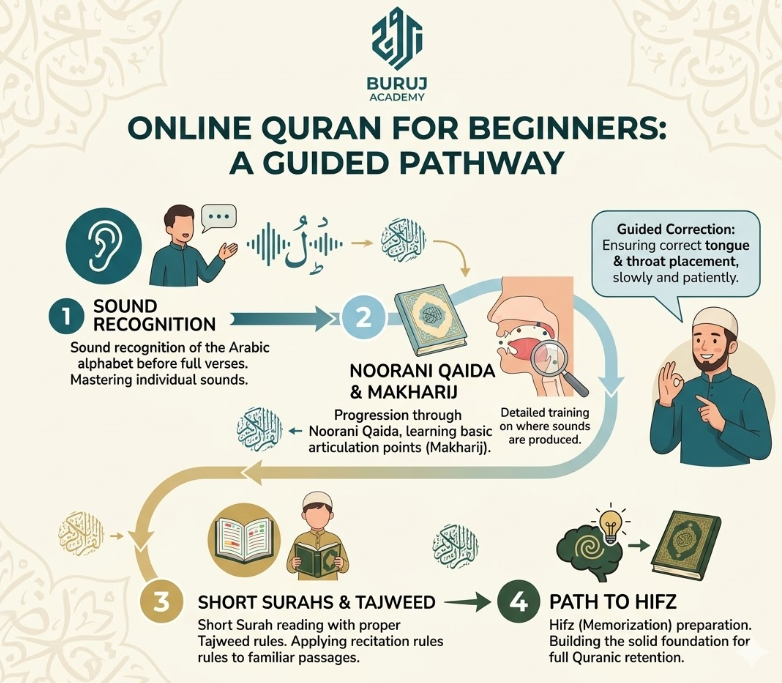
Through the Buruj Method’s sound-before-rules approach, students build correct pronunciation before tackling formal Tajweed terminology, supported by personalized 1-on-1 sessions with flexible 24/7 scheduling.
Whether you’re working toward fluent recitation through our Quran Reading Course or pursuing certification through our Online Ijazah Course, real-time correction accelerates genuine progress. Book a free trial lesson today and experience the difference firsthand.
Take the first step toward this lifelong blessing by enrolling in a program tailored to your pace:
- Online Hifz Program (Comprehensive Quran Memorization)
- Juz 30 Memorization Course (Perfect for focused starts)
- Hifz Classes for Kids (Engaging and interactive)
- Hifz Classes for Adults (Flexible scheduling for busy lives)
- Hifz Classes for Sisters (Private, supportive learning)
- Short Surah Memorization Course (Ideal for daily prayers)
- Hifz Ijazah Course (For advanced students seeking certification)
Don’t let another day pass without moving closer to your goal. Join Buruj Academy today and schedule your free trial session to begin your Hifz journey!
Excel in Your Quranic Studies
Join Buruj Academy and master the Quran with our structured, professional curriculum.
Book Your Free TrialConclusion
Surah As-Saffat rewards readers who engage with its actual content rather than searching for shortcuts to worldly outcomes. Its authenticated strength lies in the Prophet’s ﷺ own practice of reciting it, and in five prophetic stories that teach patience, sincerity, and trust in Allah’s timing.
Approaching this Surah honestly — separating verified Sunnah from circulating folk claims — protects both your practice and your understanding. That honest engagement, sustained through consistent study, is ultimately what transforms recitation into lasting spiritual benefit.
Frequently Asked Questions About Surah As-Saffat Benefits
Is There an Authentic Hadith About Reciting Surah As-Saffat on Fridays?
No authentic hadith recommends Surah As-Saffat specifically for Fridays. This claim appears in later folk collections without a verified chain back to the Prophet ﷺ, so it should be treated as unauthenticated tradition rather than Sunnah.
What Is the Main Theme of Surah As-Saffat?
Surah As-Saffat centers on Allah’s absolute oneness (Tawhid), demonstrated through angelic testimony, five prophetic narratives, and direct refutation of polytheistic beliefs held by the Makkan disbelievers, particularly regarding angels.
How Many Verses Does Surah As-Saffat Contain?
Surah As-Saffat contains 182 verses and is located in Juz 23 of the Quran. It was revealed in Makkah and takes its name from the opening oath referring to angels arranged in ranks.
Can Beginners Recite Surah As-Saffat Comfortably?
Yes, with proper guidance. Its length is manageable when divided across two or more rak’ahs, following the Prophet’s ﷺ own practice. Structured lessons through a Tajweed for Beginners course help new reciters build the fluency needed for longer Surahs like this one.