 Tajweed
| Key Takeaways |
| The Quran is divided into 30 equal Juz’ (plural: Ajza’), each containing approximately 20 pages of standard Mushaf. |
| Each Juz’ is divided into two Hizbs, giving the Quran exactly 60 Hizbs across its 30 divisions. |
| Each Hizb is further divided into four Rub’ (quarters), producing 240 Rub’ sections across the entire Quran. |
| Juz’ divisions are used most commonly for memorization scheduling and daily Quran reading routines. |
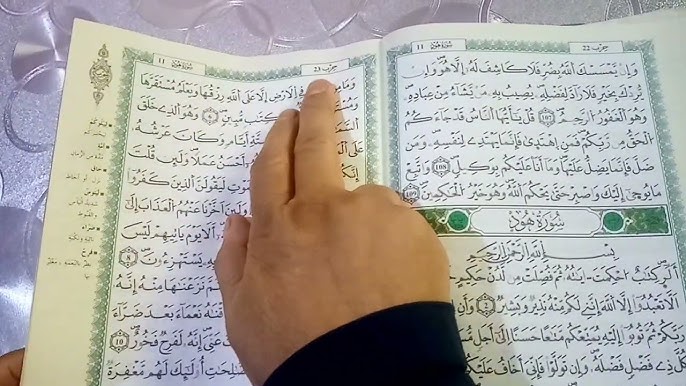
| Hizb and Rub’ markers appear printed in Mushaf margins, enabling precise tracking of recitation progress. |
The difference between Juz and Hizb is straightforward: a Juz’ (also spelled Juz) is one of 30 equal portions dividing the entire Quran, while a Hizb is a subdivision of each Juz’, with every Juz’ containing exactly two Hizbs.
Both systems exist to help Muslims organize recitation, memorization, and daily Quran reading with clarity and consistency.
Table of Contents:
What Is a Juz’?
A Juz’ (جُزْء, plural: Ajzaʾ أجزاء) is one of the 30 equal divisions of the Quran established by early Muslim scholars to facilitate structured recitation and memorization. The entire Quran spans 604 pages in the standard Medina Mushaf, meaning each Juz’ covers approximately 20 pages.
These divisions do not follow Surah boundaries — a single Surah may span multiple Juz’, and a single Juz’ may contain portions of several Surahs.
The 30-Juz’ system became the standard framework for Ramadan recitation, with many Muslims — and most Huffaz (memorizers) — completing one Juz’ per day across the 30 nights of Ramadan. This is why the Juz’ is the division most Western Muslim students encounter first.
Why Do Juz’ Boundaries Not Align with Surah Beginnings?
Juz’ divisions were designed for equal length, not thematic or Surah-based completeness. Juz’ 1 begins at Al-Fatihah and ends partway through Al-Baqarah. Juz’ 2 picks up mid-Surah.
This can surprise beginners, but the purpose is pragmatic: equal daily portions rather than chapter-aligned readings.
For students following a structured Quran memorization schedule, understanding this boundary matters. A student memorizing Juz’ 30 (the final division, containing short Surahs from An-Naba to An-Nas) experiences a Juz’ that happens to align neatly with Surah endings — but this is an exception, not the rule across the Quran.
What Is a Hizb?
A Hizb (حِزْب, plural: Ahzab أحزاب) is exactly half of one Juz’. Since the Quran has 30 Juz’, it contains exactly 60 Hizbs. The word “Hizb” comes from the Arabic root meaning a group or portion, and the system was designed by classical scholars to provide a more granular recitation unit than the full Juz’.
Each Hizb covers approximately 10 pages of the standard Medina Mushaf. This makes the Hizb a practical daily target for students who want to recite half a Juz’ per sitting — a common practice among dedicated Quran readers and those enrolled in structured online Hifz programs.
Start Hifz today with a FREE trial session

What Is the Rub’ and How Does It Further Divide the Hizb?
Each Hizb is divided into four equal Rub’ (رُبع, plural: Arba’) sections, meaning “quarter.” This gives the Quran exactly 240 Rub’ divisions in total. In many printed Mushafs, especially those published in Saudi Arabia and Egypt, Rub’ markers appear in the margin as small symbols — often a curved line or the Arabic letter “ع” — allowing reciters to track progress within a single sitting with precision.
The Rub’ is particularly useful for students reciting during Tarawih prayers, allowing the Imam to plan exactly how much of the Quran to cover per prayer unit.
How Does the Juz’, Hizb, and Rub’ System Work Together?
The three-tier structure creates a complete framework for Quran division. The table below shows the full relationship:
| Division | Arabic Term | Number in Quran | Approx. Pages (Medina Mushaf) |
| Juz’ | جُزْء | 30 | ~20 pages |
| Hizb | حِزْب | 60 (2 per Juz’) | ~10 pages |
| Rub’ | رُبع | 240 (4 per Hizb) | ~2.5 pages |
This layered system means a student can set a daily target at any level of detail. A beginner might aim for one Rub’ per day (roughly 2.5 pages).
An intermediate student might target one Hizb (10 pages). An advanced Hafiz maintaining full revision typically recites one or more Juz’ daily.
At Buruj Academy, our Al-Azhar-trained Hifz specialists help students build revision plans around this exact structure. Rather than guessing how much to recite, students in our Online Hifz Program receive a personalized daily target mapped to Hizbs and Rub’ sections based on their current level and available time.
Book a FREE trial session with one of Buruj’s Azhari Quran tutors

What Is the Difference Between Juz and Hizb in Practical Terms?
The Juz’ is the unit most relevant to memorization and monthly Quran completion goals, while the Hizb is the unit most relevant to daily recitation planning and Tarawih organization. Both come from the same scholarly tradition of structuring the Quran for accessibility.
| Practical Use | Best Division to Use |
| Ramadan completion (30-day plan) | Juz’ — one per day |
| Daily recitation (manageable portion) | Hizb — one or two per day |
| Tarawih prayer planning | Rub’ — precise within-prayer tracking |
| Hifz memorization scheduling | Juz’ for milestones; Rub’ for daily portions |
| Checking progress in Mushaf | Rub’ markers printed in margins |
For anyone learning to read the Quran for the first time, the Juz’ markers provide the most visible and motivating checkpoints.
Completing Juz’ 30 — the shortest and most commonly memorized section — is a milestone that gives students a measurable sense of progress.
Read also: The Best Tajweed Institute
Discover the Buruj Academy Difference
Step into our virtual classrooms and see how our expert instructors make learning Quran and Arabic intuitive and clear. We focus on overcoming the specific hurdles non-native speakers face, building your confidence and connection with the Quran.
Excel in Your Quranic Studies
Join Buruj Academy and master the Quran with our structured, professional curriculum.
Book Your Free TrialHow Did the Hizb System Originate in Islamic History?
The Hizb division system was formalized by Muslim scholars during the early Islamic period to enable systematic Quran recitation, particularly for those seeking to complete the Quran within a week (the “weekly Khatm” practice).
The Prophet Muhammad ﷺ is reported to have guided companions on reciting the Quran in regular portions, as narrated in Sahih al-Bukhari, where Abdullah ibn ‘Amr ibn al-‘As was advised on completing the Quran over seven days.
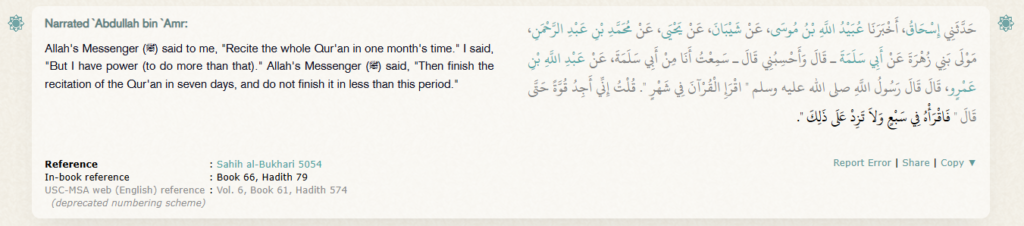
This prophetic guidance toward structured recitation laid the foundation for the Hizb and Juz’ systems later codified by scholars. The 60-Hizb framework allowed a Muslim completing the Quran weekly to recite approximately 8–9 Hizbs per day — a manageable target for devoted students.
The 30-Juz’ system, meanwhile, became associated specifically with Ramadan, enabling one full Khatm across the blessed month.
Both systems reflect the Islamic tradition of treating Quran recitation as a disciplined, structured act of worship — not a passive or irregular habit.
Read also: Tajweed Rules Explained With Examples
How to Use the Juz’ and Hizb System for Quran Memorization?
For Hifz students, the Juz’ serves as the primary memorization milestone, while the Hizb and Rub’ serve as the day-to-day operational units.
A student memorizing one Juz’ per month, for example, would divide that Juz’ into two Hizbs and then into eight Rub’ sections — targeting approximately one Rub’ every four days.
| Memorization Timeframe | Daily Target | Division Used |
| 1 Juz’ in 30 days | ~0.67 pages/day | Sub-Rub’ portions |
| 1 Juz’ in 20 days | ~1 page/day | Rub’ sections |
| Full Quran in 3 years | ~0.5 pages/day | Sub-Rub’ portions |
| Full Quran in 1 year | ~1.65 pages/day | Rub’ to Hizb |
These calculations are based on the standard 604-page Medina Mushaf. Students with Buruj Academy’s Hifz for Adults course receive a personalized schedule built precisely around this structure, accounting for review time alongside new memorization.
For students beginning with shorter portions, our Juz 30 memorization course provides an ideal structured entry point, covering the final Juz’ — which contains 37 Surahs across its 20 pages — through a systematic Hizb-based schedule.
For students looking for more guidance on how to memorize Quran faster, understanding these structural divisions is the essential first step.
Book Your Free Trial Lesson with Burruj’s Hifz Course for Adults

Start Your Quran Journey with Buruj Academy’s Structured Hifz Courses
Understanding the Juz’ and Hizb system is one thing — applying it in a structured, consistent memorization program is another. Buruj Academy’s expert instructors, all Al-Azhar University graduates and Ijazah-certified, build personalized Hifz schedules around these exact divisions, ensuring students make measurable progress at every stage.
Our programs offer:
- Ijazah-certified instructors with 12+ years teaching non-Arabic speakers
- The Buruj Method: Consistency-before-speed for sustainable memorization
- Flexible 1-on-1 online sessions with 24/7 scheduling
- Personalized learning plans mapped to Juz’, Hizb, and Rub’ targets
- Real-time correction and revision tracking
Book your free trial lesson today and begin a structured, expert-guided Hifz journey.
Take the next step in your learning journey today by enrolling in one of our specialized programs:
- Online Quran Classes
- Online Quran Classes for Beginners
- Online Quran Classes for Adults
- Online Quran Classes for Ladies
- Online Quran Classes for Kids
- Quran Reading Course
- Quran Recitation Course
- Online Ijazah Course
- Online Qirat Course
Don’t wait to transform your relationship with the Holy Quran. Join our global community of students and book your free evaluation session now!
Excel in Your Quranic Studies
Join Buruj Academy and master the Quran with our structured, professional curriculum.
Book Your Free TrialConclusion
The Juz’ and Hizb system represents centuries of scholarly wisdom condensed into practical markers printed right in the Mushaf margin. Each Juz’ spans approximately 20 pages, each Hizb covers 10, and each Rub’ brings that down to roughly 2.5 pages — giving every student, at every level, a precise unit to work with.
Whether you are planning a daily recitation habit, following a Ramadan completion schedule, or building toward full Hifz, aligning your goals to these divisions transforms an overwhelming task into a series of attainable, trackable milestones. The Quran was meant to be recited regularly and systematically — and this structure makes that possible.
Frequently Asked Questions About the Difference Between Juz and Hizb
What Is the Exact Difference Between a Juz’ and a Hizb?
A Juz’ is one of the 30 equal divisions of the Quran, covering approximately 20 pages of the standard Mushaf. A Hizb is exactly half a Juz’, covering approximately 10 pages. The Quran contains 60 Hizbs in total. The Juz’ is used for broad scheduling; the Hizb provides a more manageable daily recitation or memorization target.
How Many Hizbs Are in the Quran?
The Quran contains exactly 60 Hizbs — two per Juz’, across all 30 Juz’. Each Hizb is further divided into four Rub’ (quarter) sections, giving the Quran 240 Rub’ sections in total. These markers are printed in the margins of most standard Mushafs for easy reference during recitation and memorization.
Is the Hizb Division System Found in the Quran Itself?
The Hizb division is not part of the Quran’s revealed text — it is a scholarly organizational framework developed by early Muslim scholars to facilitate systematic recitation. The Quranic text itself is marked only by verse numbers (Ayat) and Surah boundaries. The Juz’, Hizb, and Rub’ markers are editorial additions printed in the Mushaf margins.